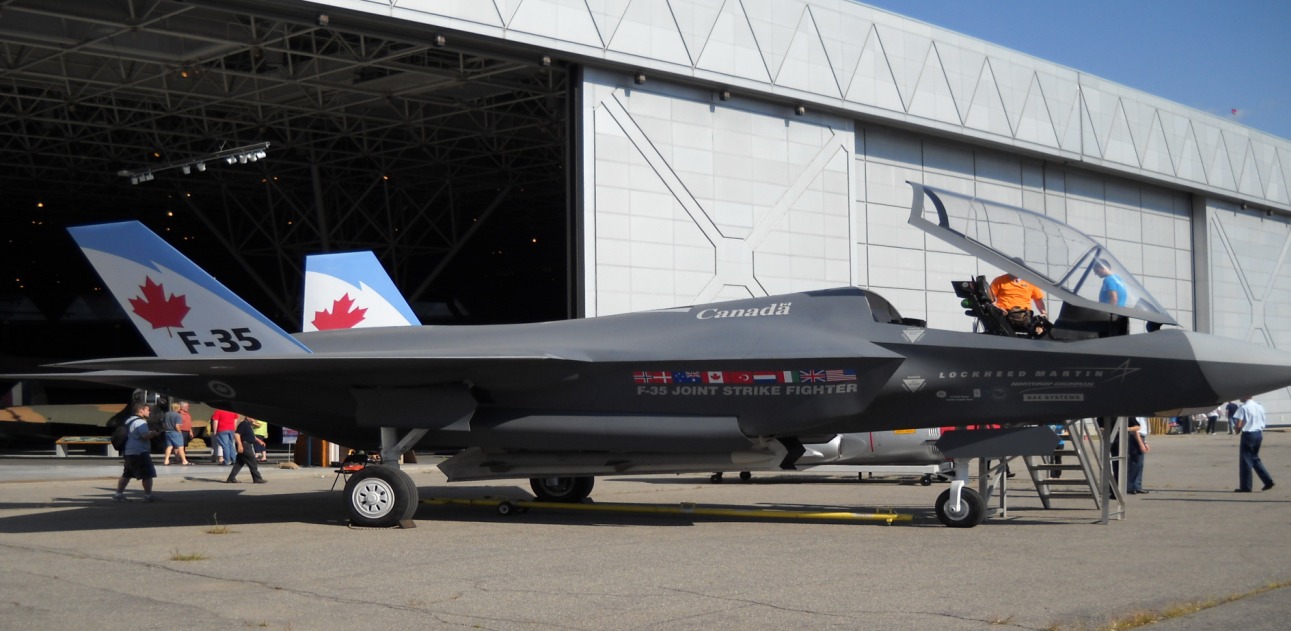
As Canada grapples with whether to complete its purchase of F-35A Lightning II stealth fighters, it is worth noting that the person leading Canadian defense procurement is a former critic of the American stealth aircraft.
One of the first things Mark Carney did after becoming Prime Minister of Canada in March 2025 was to put the F-35 purchase under review amid escalating tensions with the US President Donald Trump and his administration.
Canada is slated to take delivery of the 16 F-35As already paid for, while it decides on the future of the remaining 72.
In May 2025, Prime Minister Carney appointed David McGuinty as defense minister and former Royal Canadian Air Force (RCAF) fighter pilot Stephen Fuhr as Secretary of State for defense procurement, to oversee Canada’s defense acquisitions.
More than a year after the purchase was paused, Canada has yet to officially announce its final decision.
Against that backdrop, it is interesting to note that Stephen Fuhr, who now leads the Defense Investment Agency—an organization specifically created to speed up the procurement of tens of billions of dollars in military acquisitions—was earlier a fierce critic of the F-35A fighter when he was merely a retired RCAF pilot and not an active politician overseeing the country’s most significant military purchase in decades.
From Opposing To Overseeing F-35 Purchase
The F-35 program has a contentious history in Canada, especially since the Liberal government funded the aircraft’s development in the late 1990s but did not commit to buying the stealth fighter. In fact, it wasn’t until 2010 that the country, under Conservative Prime Minister Stephen J. Harper, expressed its intent to formally buy the F-35 fifth-generation stealth fighter.
However, the opposition Liberal Party and some veterans like Fuhr vociferously opposed the deal, arguing the F-35 was not the right fit for the RCAF.
Stephen Fuhr retired as the pilot of Canada’s CF-18, the combat aircraft that the RCAF is trying to replace, in 2009. He quickly became one of the more outspoken public critics of the Conservative government’s plan to buy the F-35.
In 2011, he publicly questioned the performance and the $75 million price tag per jet. “The people who are supporting it are in love with the idea of the F-35,” he was quoted as saying by the media outlet. “The problem with it is that it can’t deliver the capability it promises, on time and on budget. That’s extremely clear to everyone on the planet, except for our current government.”
Fuhr flagged the program’s developmental problems and huge cost overruns, arguing that the actual price would be at least twice as high. He pointed out that Lockheed was building just 30 airframes per year in 2011, rather than the planned 170, and emphasized that problems with the helmet-mounted sight and the tail hook persisted, among other issues.
More importantly, though, Fuhr said that RCAF needed a two-engine fighter jet to adequately patrol Canada’s vast territories. “We’ve got a massive airspace,” he says. “We need to be up north, for a lot of reasons, and we are up there more and more. If you have an engine failure in a single-engine airplane, the outcome is catastrophic.”
He questioned the cost of building infrastructure on top of the expensive F-35 purchase. “Is it going to be able to land on our runways? Not really. Does it work with our tankers? No, but maybe we’ll buy other tankers. There are all these unknown things. The fairest thing we can say about the cost of these things is we don’t know what they are going to cost.”
USS Lincoln, Pattaya & Sex Trade: How Sex Markets Have Followed U.S. Bases From Korea to Thailand
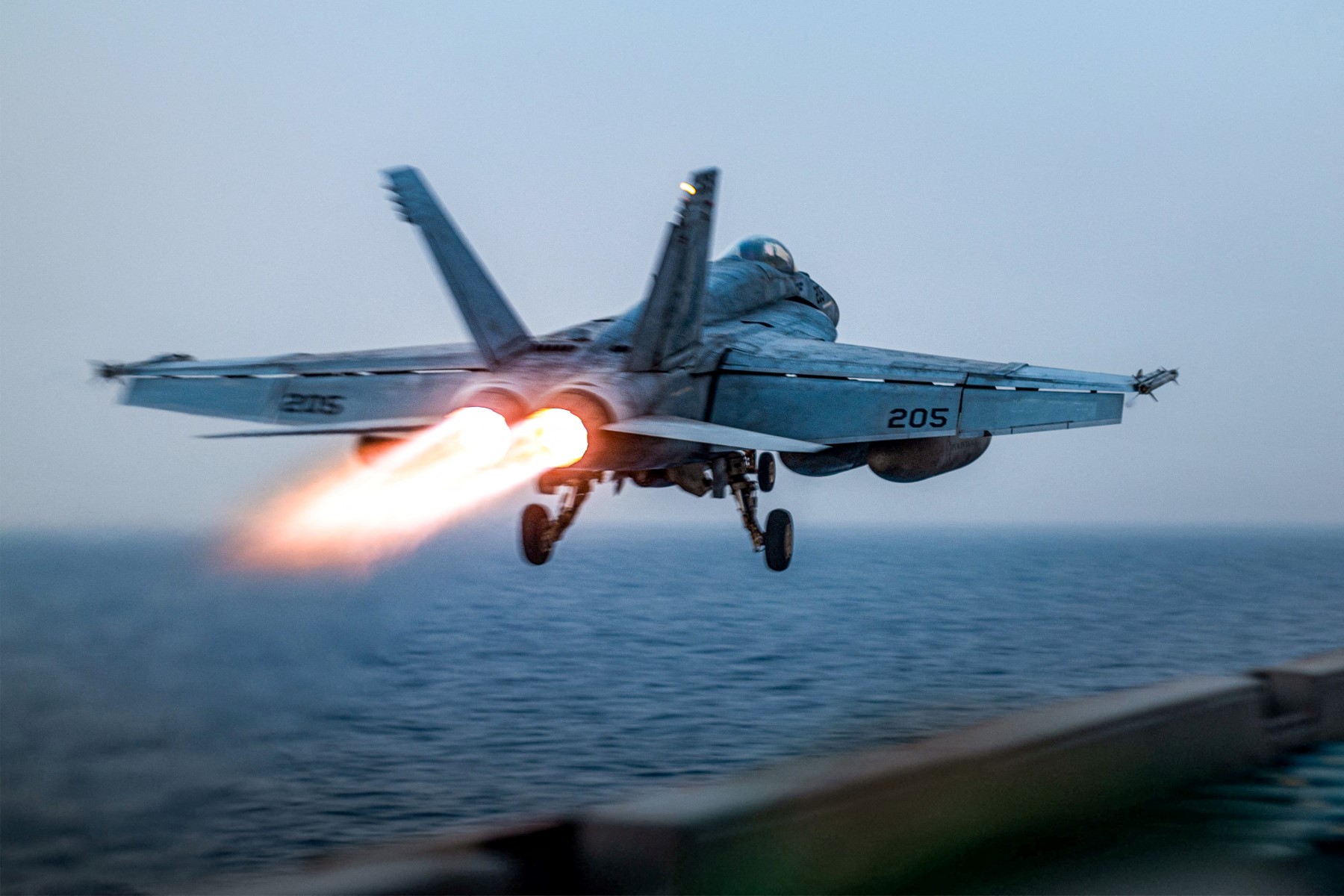
Instead of the F-35, Fuhr said the RCAF must buy F/A-18E/F Super Hornets that were less expensive, had been proven, and were the closest familiar thing to Canadian pilots.

Fuhr was widely mocked by members of the military community for vigorously opposing the purchase of American F-35 aircraft, according to a recent report by CBC News.
Citing sources, the report says ties between Fuhr and the RCAF remain strained to this day, whether over fighter jets, radar planes, or helicopter replacements.
As previously reported by the EurAsian Times, the RCAF’s top leadership backs completing the F-35 purchase, arguing it’s the best aircraft to challenge Russia and China, both of which operate fifth-generation stealth fighter jets.
“Both China and Russia have fifth-generation fighter aircraft and fifth-generation missiles that are able to go at much greater speeds and with much more, holding Western allies at risk at this moment in time,” Lt.-Gen. Jamie Speiser-Blanchet, Commander of the RCAF, earlier noted.
The EurAsian Times could not confirm what position Fuhr has taken with his colleagues in the RCAF, or whether he still thinks that the F-35 is not the right plane for Canada.
“From the fighter pilot community, the F-35 has basically been considered the be-all and end-all,” Mike Reyno, a military magazine publisher and friend of Fuhr, was quoted as saying in the CBC report. “What Stephen has done, and this is all with publicly available documentation, is [point out] the F-35 has actually failed to meet almost every critical point along its development.”
Years after the public exhibition of his disapproval of the F-35, Fuhr stood alongside Justin Trudeau in the 2015 federal election as a Liberal Party candidate, partly attracted by the Liberal pledge to halt the F-35 acquisition.
Fuhr won the Kelowna-Lake Country seat in 2015, but was defeated by the Conservatives in 2019. After the electoral loss, he began working as a consultant for Boeing in 2021 and continued to call the F-35 an “unaffordable” choice for Canada. Fuhr returned to politics last year, this time alongside Carney, who paused the F-35 deal.
AfD, Champion of Germany-Russia Ties, Wins Big. Berlin’s Ukraine Blank Check Just Got Smaller: OPED
Despite his past stance, Fuhr has never publicly called for abandoning the F-35 deal.
In contrast, he has taken a more optimistic line on operating a mixed fleet comprising the F-35 and probably the Gripen, as opposed to analysts who have stated that it could be a logistical nightmare. “Many of our allies … run a mixed fleet with fighters,” Fuhr stated. “I don’t necessarily subscribe to the fact that we can’t do it. We certainly can, and we’ve done it, and our allies do it now. So it’s a function of ‘do we want to do this or not?”
In recent times, though, the open hostility the Trump administration has shown toward Canada, Fuhr seems to have taken a more pragmatic approach.
In a recent interview, Fuhr said the Canadian public would not be happy about sole-source military contracts awarded to American companies under the current conditions. Although Fuhr still views the US as a vital defense ally, he said Canada has realized the dangers of “putting all our eggs in one basket” and backed building new strategic partnerships or becoming more independent in military manufacturing.
Canada did not target the US defense industry in its retaliatory tariffs, but Fuhr’s remarks apparently pointed to a growing reluctance to purchase American military equipment, as the EurAsian Times explained in a detailed report. In fact, some local politicians—such as British Columbia Premier David Eby—have called for shelving the F-35 deal.
Despite the latest tit-for-tat tariffs imposed by the US and Canada on one another, Ottawa has not formally indicated it would give up on the F-35. On the contrary, Canadian Defense Minister David McGuinty pushed back against the suggestion that the government must forfeit the F-35 deal due to rising anti-US sentiment, saying, “Canada has a responsibility to obtain an appropriate fighter jet fleet for our own responsibilities, to acquit ourselves of our responsibilities domestically, continentally, and internationally.”
As for Fuhr, he could soon be given further authority as director of the Defense Investment Agency under the Liberal government’s Bill C-31, which would grant sole-source contracts to safeguard Canada’s economic security. “He would have more power than Mélanie Joly at industry or [David] McGuinty at national defense, because he would combine many of the powers that were usually or historically delegated across several departments,” Justin Massie, a defense expert at Université du Québec à Montréal, told the CBC News.
Nonetheless, sentiment within the RCAF and among Canada’s leadership seems to favor the F-35, as the EurAsian Times explained earlier. This is because the US is Canada’s NORAD (North American Aerospace Defense) partner and its most significant security ally.
US ‘Kill Switch’ Fear Returns as Japan To Move Classified Military Data to American Clouds in 2027
That said, Fuhr’s role at the Defense Investment Agency gives him significant influence over procurement processes, and proposed legislation could further expand the agency’s authority, including greater flexibility for sole-source contracts tied to economic security. Ultimate decisions on a high-profile acquisition such as fighters, however, rest with the prime minister and cabinet and will face intense political scrutiny.
For now, an eerie sense of uncertainty continues to grip the North American country as it decides which aircraft will become the cornerstone of its defense for decades.
Editor’s Note: Retired pilots speaking as private citizens can criticize a fighter program; that is normal, often useful, and carries few institutional costs. The moment they take a formal role directing national defense procurement, the dynamics change. They inherit responsibility for interoperability with allies, the trust of serving commanders, industrial strategy, and cabinet-level politics. Prior opinions do not disqualify them, yet they now demand extra care: decisions must rest on current evidence rather than old convictions, and public comments must reflect the office rather than the cockpit.
- Contact the author at sakshi.tiwari13 (at) outlook.com
- Follow EurAsian Times on Google News