Amid stiff competition from Silicon Valley-based, AI-focused defense companies, Northrop Grumman, part of the US defense market’s ‘Big Five,’ has posted better-than-expected sales and a record order backlog of US$ 109.6 billion.
Notably, at nearly $110 billion, the company’s order backlog is nearly 1.4 times its US$78 billion market cap and equals about two and a half years of sales.
Northrop Grumman’s record backlog suggests that traditional prime contractors in the US defense-industrial complex continue to win substantial new orders even as their leadership faces increasing pressure from AI-focused defense firms such as Palantir and Anduril.
For instance, Anduril, founded in 2017, is already worth US$ 90 billion, more than Northrop Grumman’s and General Dynamics’ market caps.
Meanwhile, Palantir, founded in 2003, is already worth nearly US$480 billion, more than any of the Big Five.
Northrop Grumman’s steady sales and record US$109.6 billion backlog should reassure investors that traditional defense primes can continue to thrive alongside the rapid growth of AI-focused defense companies.
The Virginia-based defense contractor reported third-quarter revenue of US$11.12 billion, up 7% from US$10.42 billion a year earlier.
Net income rose to US$1.12 billion from US$1.10 billion a year earlier.
However, the biggest surprise came in the company’s backlog order book. The company received US$16.4 billion in net contract awards during the third quarter (Q3) of 2026, pushing its net outstanding backlog to US$109.6 billion.
A year ago, at the end of Q3 2025, the company’s backlog stood at US$91.4 billion. Since then, it has received new contracts worth US$18.2 billion.
“In a complex world with the growing need for solutions that scale and perform, our customers continue to turn to Northrop Grumman,” Chair, Chief Executive and President Kathy Warden said in the earnings announcement.
According to company filings, the company’s third-quarter contracts totaled US$16.4 billion, which included US$4.6 billion for classified programs, US$2 billion for the Sentinel intercontinental ballistic missile program, and US$1.4 billion for Virginia-class submarines.
The company also received US$1.3 billion in awards related to the F-35 fighter jet and US$1 billion for the E-2 Hawkeye airborne early warning aircraft.
The Q3 contracts show strong demand for the company’s products in fighter jets, AWACS, missiles, submarines, and space programs.
Overall, Defense Systems accounted for the largest portion of the company’s backlog at US$36.5 billion, followed by Aeronautics Systems at US$26.8 billion and Space Systems at US$26.3 billion.
Strong Demand for Northrop Grumman’s Aeronautics Systems
In Q3, Northrop Grumman reported aeronautics systems revenue of US$3.58 billion, up 14% year-on-year, and won new contracts worth over US$3 billion.
Strong aeronautics systems performance is driven by demand for the F-35 fighter jet, progress on the B-21 Raider program, maintenance work on the B-2 Spirit bomber, and work on Army helicopters such as the AH-64 Apache, CH-47 Chinook, UH-60 Black Hawk, and others.
Northrop Grumman is a principal contractor on the F-35 Lightning II program, with Lockheed Martin as the prime contractor. The company contributes roughly 25% of the aircraft and produces or supports several major structural and mission systems for all three variants – F-35A, F-35B, and F-35C.
Northrop Grumman designs and produces critical F-35 components, including the center fuselage, AN/APG-81 AESA radar, communications subsystems such as the AN/ASQ-242 Integrated Communications, Navigation, and Identification (CNI) system, and the EO/IR Distributed Aperture System.
It also leads mission systems development, pilot and maintenance training courseware, and low-observable technology support to ensure readiness and modernization across all three F-35 variants.
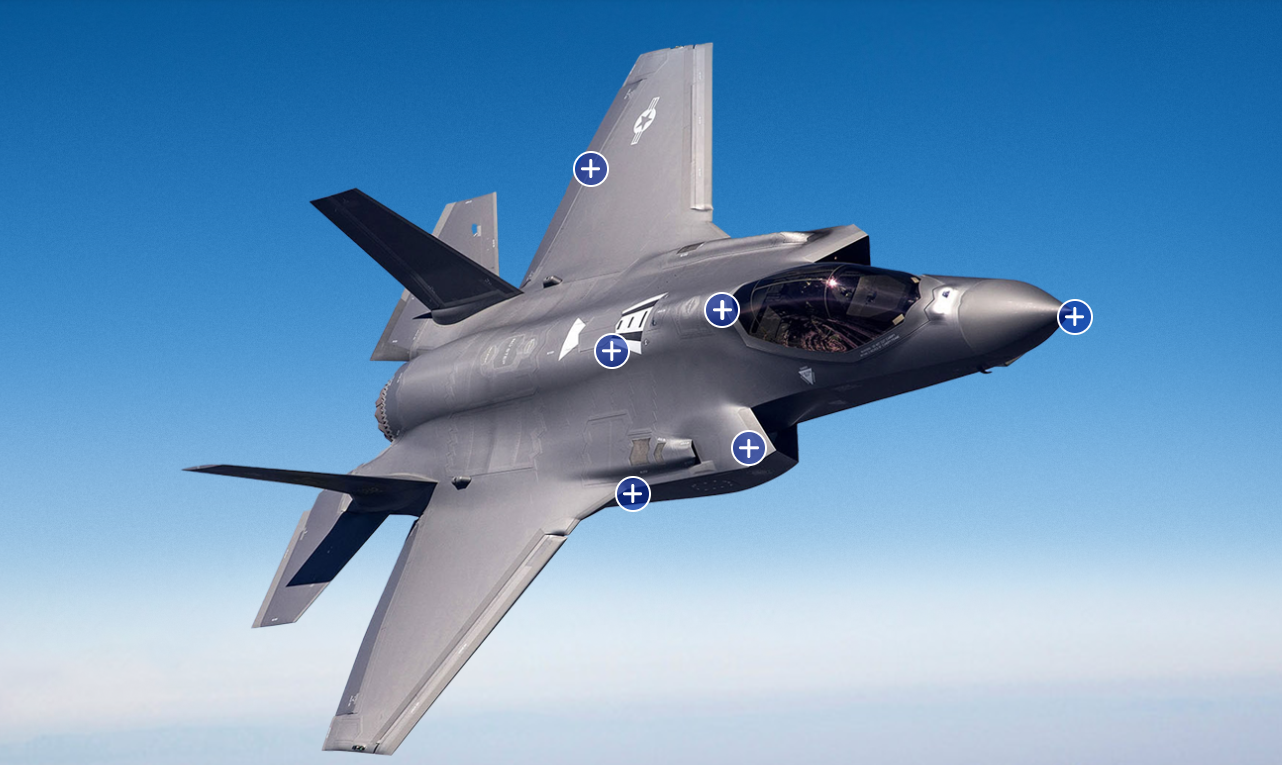
The company also received new contracts worth US$1.3 billion for F-35 fighter jets.
It also won contracts worth US$1 billion for the E-2 Hawkeye airborne early warning aircraft.
Northrop Grumman is the prime contractor, Original Equipment Manufacturer (OEM), and sole designer, developer, and manufacturer of the E-2 Hawkeye family, including the current E-2D Advanced Hawkeye.
Northrop Grumman is also the prime contractor for both the B-2 Spirit and the B-21 Raider.
In 2024, Northrop won a US$7 billion award for the B-2 Spirit modernization and sustainment program, including programmed depot maintenance of the fleet, sustaining engineering, software maintenance, support equipment, logistics elements, and interim contractor support.
This B-2 Spirit modernization and sustainment work continues at Palmdale, California; Whiteman Air Force Base (AFB), Missouri; Tinker AFB, Oklahoma; Wright-Patterson AFB, Ohio; Edwards AFB, California; and Hill AFB, Utah, and is expected to be completed by May 2029.
In 2015, Northrop Grumman won the Long Range Strike Bomber (LRS-B) program, also known as the B-21 Raider.
However, the US Air Force has deliberately withheld detailed pricing for the program.
Earlier this year, the USAF and Northrop agreed to expand B-21 Raider production capacity by about 25% with roughly US$4.5 billion in government funding.
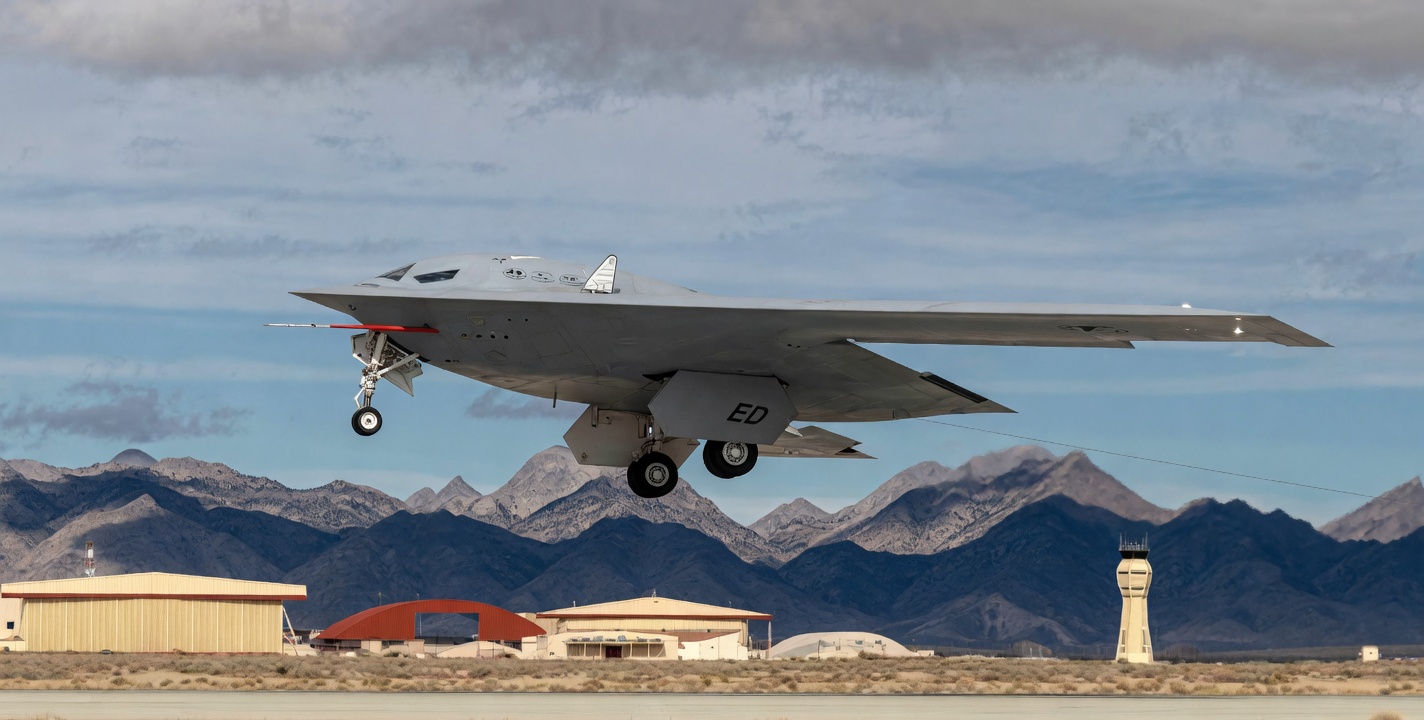
A 2021 Pentagon Cost Assessment and Program Evaluation (CAPE) study estimated that developing, procuring, and operating a fleet of 100 B-21 Raider aircraft could cost about US$203 billion over the next 30 years.
In September, Northrop Grumman also won a US$4.84 billion Army contract for CIRCM (Common Infrared Countermeasure) laser-based missile defense systems to protect Army helicopters, such as the AH-64 Apache, CH-47 Chinook, UH-60 Black Hawk, and others, from infrared-guided missiles. The program will run through 2035.
Another critical program is Northrop’s role in the Sentinel missile program, a key part of the US Nuclear triad.
In the third quarter, the company won a US$2 billion contract for the Sentinel intercontinental ballistic missile program.
Northrop Grumman is the prime contractor for the LGM-35A Sentinel program, also known as the Ground Based Strategic Deterrent (GBSD).
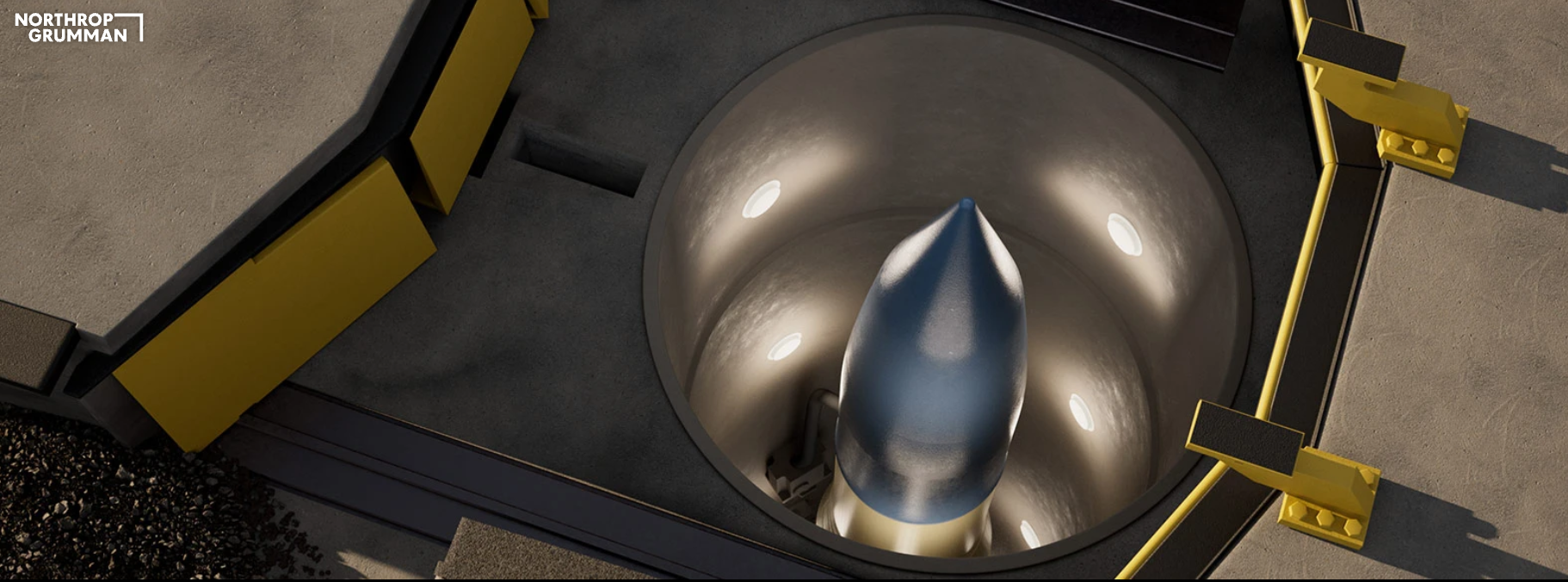
Under the program, Northrop will design and produce a new three-stage solid-propellant ICBM with improved range, accuracy, reliability, and modularity compared with Minuteman III.
It will also construct hundreds of new or heavily modernized hardened launch silos and related facilities across multiple states, and new nuclear command-and-control networks. Sentinel will provide the US with on-alert nuclear deterrence through 2075.
Northrop Grumman is also a major supplier and Original Equipment Manufacturer (OEM) for key components on Virginia-class submarines. It won a US$1.4 billion contract in Q3 for the Virginia-class submarines.
Northrop also plays an important role in the Patriot missile defense system. It supplies the solid rocket motors, ignition safety devices, and related propulsion elements for PAC-3 MSE missiles.
Patriot interceptors are in global demand due to the two ongoing wars in Ukraine and the Middle East.
In August, the Department of War (DoW) signed framework agreements worth US$3 billion for expanding Patriot interceptor missile production.
The contract allocates nearly US$2 billion for solid rocket motors and ignition safety devices, in which Northrop will play a key role.
Northrop is also the prime contractor for the Integrated Battle Command System (IBCS), which integrates Patriot with other air- and missile-defense assets.
The company is also executing many of the USAF’s classified space-segment programs.
Many of these contracts, such as the B-21 Raider, F-35, Sentinel, and Patriot PAC-3 MSE interceptors, will run for decades, providing Northrop with a steady source of income. However, execution risk remains.
Demand for many of the company’s products, such as aircraft, missiles, and space systems, remains strong; however, investors’ key question is whether Northrop can turn its record US$109.6 billion backlog order book into improved margins and earnings.
- Sumit Ahlawat has over a decade of experience in news media. He has worked with Press Trust of India, Times Now, Zee News, Economic Times, and Microsoft News. He holds a Master’s Degree in International Media and Modern History from The University of Sheffield, UK.
- He can be reached at ahlawat.sumit85 (at) gmail.com