

In a major demonstration of European collaboration, five countries have signed an agreement to procure the Swedish-origin CV90 Infantry Fighting Vehicles (IFVs).
Five NATO states—Sweden, Finland, Norway, Lithuania, and the Netherlands—have signed a landmark joint procurement for more than 400 CV90 infantry fighting vehicles (IFVs), valued at approximately $6 billion (€5.5 billion).
The contracts were reportedly formalized on 27 November 2026 at the Swedish Army Museum in Stockholm, led by Sweden’s Defense Materiel Administration (FMV).
Notably, the vehicles will be produced by BAE Systems Hägglunds in Örnsköldsvik, Sweden, with a distributed supplier network involving industry in the participating countries
The procurement is based on a common CV9035 MkIV “Nordic Edition” configuration—the latest evolution of the combat-tested CV90 family—intended to maximize interoperability and simplify long-term support.
BAE Systems classifies the Nordic edition as a fifth-gen version of the combat-proven platform, with considerable enhancements in crew capabilities, electronic architecture, mobility, and cargo capacity.

The configuration has the 35 mm Bushmaster III cannon, digital architecture, protection packages, and lethality upgrades. However, the equipment will vary by country, including combat management systems, electronic warfare, and communications.
Swedish officials and BAE Systems described the arrangement as a “world first” in bringing five countries under one agreement while allowing separate national purchase orders. Deliveries of these cutting-edge systems are expected between 2029 and 2032.
The purchase is one of the largest multinational land-systems purchases in recent European history and could serve as a blueprint for rebuilding the continent’s armored forces as NATO looks to bolster its defenses against growing security threats from Russia.
A Common IFV For European Countries
The latest CV90 agreement is noteworthy for two reasons.
First, it deliberately establishes a common combat platform among five NATO members with important roles in the Alliance’s northern and eastern flank. Second, it reflects the growing influence of operational lessons from the Ukraine war on European military modernization programs.
Traditionally, European countries have acquired equipment through separate national programs.
These differences in vehicle configurations, maintenance arrangements, ammunition supplies, training systems, and procurement schedules have often complicated cooperation.
By coordinating their acquisition around a common configuration, the five countries can potentially reduce logistical complexity and improve their ability to operate together.
A shared IFV will reduce the friction of multinational operations by allowing crews to transition more easily between national fleets, rationalizing spare-parts pools, standardizing training, and coordinating future upgrades. But more importantly, it will ensure interoperability between the states, which are key NATO members facing the fallout from the return of war to Europe with the Russian invasion of Ukraine.
Swedish Defense Minister Pål Jonson highlighted this aspect, saying, “This joint procurement of the CV90 strengthens NATO’s capabilities and creates opportunities for both effective and close cooperation around the system between our five countries.”
Notably, the group’s geographical location is also significant.
The security environment in Finland and Norway is closely connected to developments in Russia’s military posture and the defense of NATO’s northern territories. Meanwhile, Lithuania occupies an important position on NATO’s eastern flank, where strengthening conventional deterrence remains a central defense priority. The Netherlands, on the other hand, demonstrates that the initiative extends beyond a narrowly Nordic arrangement.
The latest agreement will also make the CV90 the most widely operated IFV in Europe. In addition to these five countries, Denmark, Estonia, and Switzerland already operate the IFV, and the Czech Republic and Slovakia have also placed procurement orders.
The five-country acquisition may be linked to the ongoing conflict in Ukraine. The conflict has demonstrated the need for protected mobility, firepower, battlefield awareness, and the ability to adapt military equipment to a rapidly changing operational environment.
IFVs may be vulnerable to mines and cheap drones, but they are vital for ground combat because they allow secure troop movement, provide fire support, and work in tandem with other mechanized units.
The CV90, for one, has already gained operational experience in Ukraine. Sweden had previously supplied older CV90 vehicles to Kyiv as part of its military assistance, giving the platform exposure to high-intensity combat against a capable adversary.
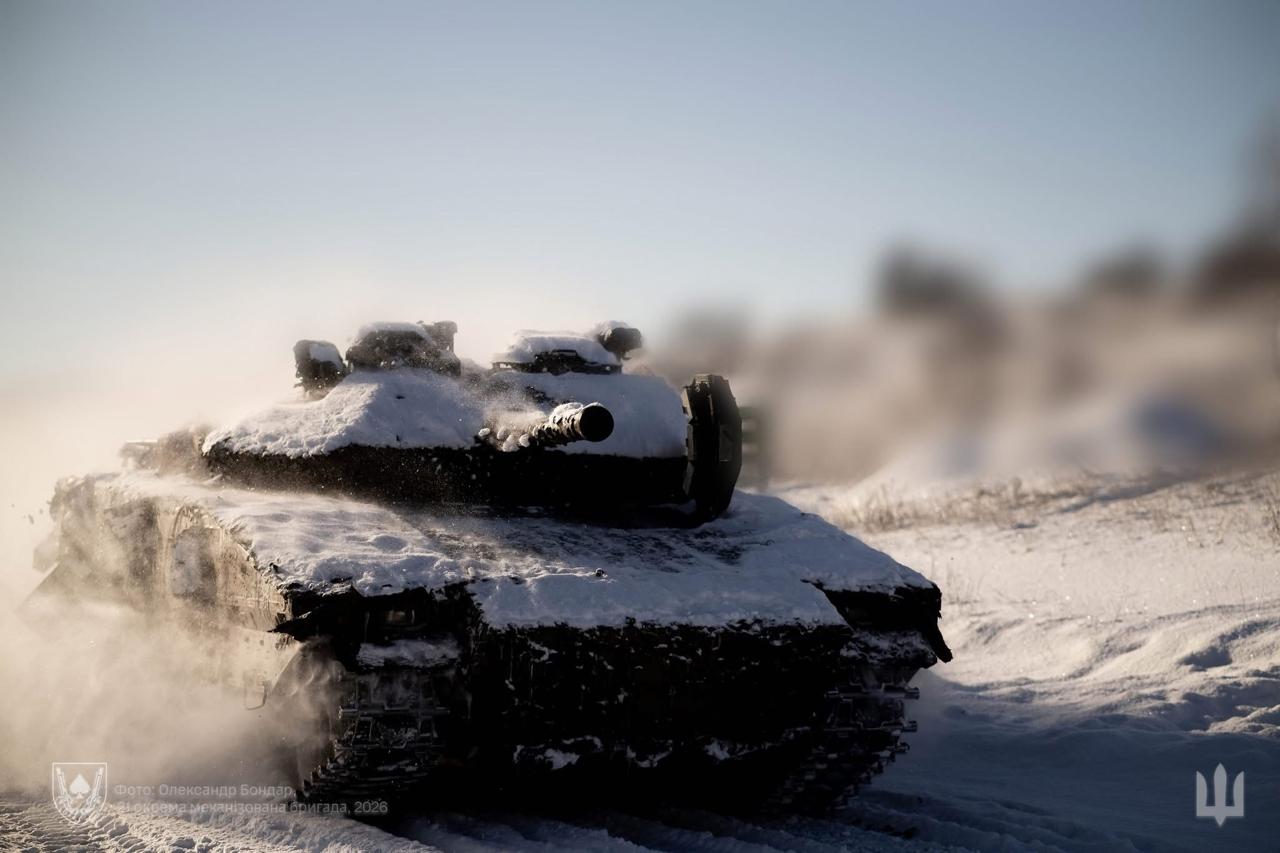
To Stockholm’s own benefit, Ukraine’s operational experience has shown the importance of the vehicle’s protection, mobility, sensors, and fire-control systems.
Based on lessons from the war in Ukraine, the Nordic Edition configuration incorporates anti-drone capabilities, upgraded digital architecture, improved protection systems, and enhanced lethality, among other things.
That said, the five-country procurement is particularly noteworthy as European governments place greater emphasis on defense-industrial cooperation amid uncertainty over transatlantic relations.
Disagreements with the Donald Trump administration over NATO burden-sharing, European defense spending, and the future of US security commitments have reinforced calls for greater European strategic autonomy. In fact, European countries are increasingly seeking to diversify suppliers, expand domestic production, and ensure Europe can sustain critical military capabilities.
Needless to say, the CV90 procurement demonstrates how that aspiration could translate into a large-scale multinational acquisition. At the same time, however, it is the clearest sign that Swedish-developed platforms are finding customers amid rising security threats.
From GlobalEye To CV90
The CV90 pact further boosts Sweden’s growing influence in Europe. Earlier in July 2026, NATO announced a multinational procurement initiative involving Saab’s GlobalEye airborne early warning and control (AEW&C) system, as the EurAsian Times also reported.
The alliance operates a joint airborne early warning fleet, and a press release published at the time noted that 11 NATO states, including Belgium, Canada, Denmark, Germany, Latvia, Lithuania, Luxembourg, the Netherlands, Norway, Romania, and Sweden, will jointly procure 10 aircraft. “This will ensure we keep NATO’s… surveillance and early warning capability strong and credible for decades to come,” Rutte stated at the event.
The GlobalEye will replace the aging Boeing E-3A Sentry AWACS aircraft, which have been in service since the 1980s and are operated by the NATO Airborne Early Warning & Control Force (NAEW&CF) based at Geilenkirchen Air Base, Germany.
“GlobalEye is an advanced multi-domain AEW&C solution with an array of active and passive sensors that provide long-range detection and identification of objects in the air, at sea, and over land.
By providing real-time information to units in air forces, armies, and navies, GlobalEye enhances situational awareness of surrounding areas and enables early threat detection,” states the manufacturer. It offers real-time air, sea, and land surveillance over a range of about 650 kilometers by combining Saab’s Erieye Extended Range (ER) radar, marine surveillance radar, and a multi-domain Command and Control (C2) system.
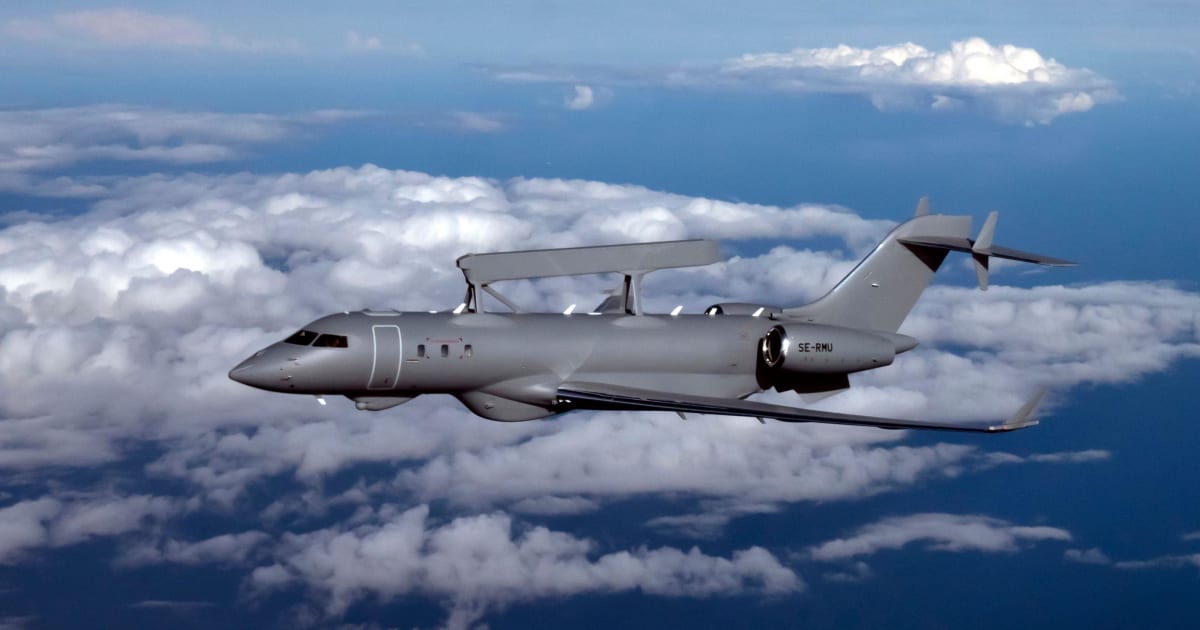
Interestingly, NATO chose the aircraft over the American Boeing E-7 Wedgetail, highlighting the growing competitiveness of Swedish-developed defense technology.
Separately, France ordered two GlobalEye aircraft to replace its aging Boeing E-3F AWACS. Meanwhile, the Netherlands signed a letter of intent with Sweden to acquire a GlobalEye system, with delivery planned for 2031.
This signals that the Swedish early warning aircraft is emerging as a frontrunner among European countries looking to modernize their fleets.
The growing adoption of GlobalEye and CV90 highlights Sweden’s ability to develop sophisticated military systems that meet different operational requirements while integrating international industrial capabilities.
While the GlobalEye addresses the requirement for advanced airborne surveillance, early warning, and command capabilities, the CV90 addresses the need for modern mechanized infantry forces and protected battlefield mobility.
However, together the two platforms illustrate how Swedish-origin technology can contribute to NATO’s capabilities across multiple operational domains.
Neither GlobalEye nor CV90 is exclusively a Swedish industrial product. GlobalEye uses a Canadian-built Bombardier aircraft platform, while CV90 is manufactured by BAE Systems’ Swedish subsidiary.
This means that both depend on international industrial cooperation and supply chains.
Interestingly, this is an important part of their success, as it shows that Sweden’s growing defense-industrial influence does not rest solely on its ability to manufacture military equipment domestically.
Further, it also reflects its capacity to develop cutting-edge military tech, integrate components from international suppliers, and manufacture systems that meet the requirements of multiple allied countries. From the skies with GlobalEye to the battlefield with CV90, Sweden is showing that its defense industry can actively contribute to NATO, which is dominated by American weaponry.
- Contact the author at sakshi.tiwari13 (at) outlook.com
- Follow EurAsian Times on Google News