

After cracking the European market by selling its FA-50 light combat aircraft to Poland, Korea Aerospace Industries (KAI) is now pitching its T-50 Golden Eagle advanced jet trainer to the United Kingdom.
Notably, KAI is marketing the T-50 as a “Swiss Army knife” platform—a common airframe family capable of handling multiple roles, including advanced jet training, lead-in fighter training, light combat, and Red Arrows display flying through specialized variants.
Until now, the British Royal Air Force (RAF) has relied on separate platforms for these missions.
The RAF Aerobatic Team, known as the Red Arrows, currently flies the BAE Systems Hawk T1/T1A, while the UK’s fast-jet training relies primarily on the BAE Systems Hawk T2 and the Beechcraft Texan T1.
The UK’s Ministry of Defence’s Jet Training System (JTS) program is intended to replace the Hawk T1 and T2 fleets.
The UK’s Jet Training System (JTS) Program
Announced under the 2026 Defense Investment Plan, the JTS program aims to replace the RAF’s aging Hawk T1 (including the Red Arrows fleet) and Hawk T2 trainer aircraft, with new capabilities expected to begin entering service around 2030.
The Hawk T1/T1A have been in service with the Red Arrows since the 1980s and are based at RAF Waddington.
Due to fleet availability and maintenance constraints, the Red Arrows flew a seven-jet display for much of the 2026 season rather than their traditional nine-aircraft Diamond Nine formation.
The Red Arrows also completed a spectacular London flypast in May 2025 to mark 80 years since the end of the Second World War in Europe.
The RAF also operates 28 Hawk T2s for advanced fast-jet training programs, preparing pilots for frontline aircraft like the Typhoon and F-35B.
The Hawk T2 fleet has also faced a series of problems with its Rolls-Royce/Safran Adour 951 engines, severely restricting aircraft availability and adding urgency to the UK’s replacement plans.
The UK is now pursuing the JTS program to replace both Hawk variants, although the precise Hawk T2 withdrawal timetable will depend on the procurement and transition arrangements.
Notably, in recent years, the UK has also been sending some of its pilots overseas for advanced jet training, including to Italy.
The UK government has allocated an initial £360 million ($470 million) for the JTS initiative.
“With the Hawk T1 (Red Arrows) out-of-service date (2030) rapidly approaching, the investment will include new jets for a modernised fast-jet training system which will also allow the Red Arrows to replace the ageing Hawk aircraft,” the UK’s Defence Procurement Agency said in a statement.
The JTS program is designed to bridge the training gap for fifth-generation fighters like the F-35, as well as future sixth-generation platforms.
The UK is currently developing a sixth-gen crewed combat aircraft under the Global Combat Air Program (GCAP), alongside Japan and Italy.
According to the British MoD, the new system will “support the transition to 5th and 6th generation air systems, ensuring RAF pilots are equipped with the skills needed for modern and future combat environments.”
The Contenders
BAE Systems, in partnership with Boeing and Saab, has already positioned the T-7A Red Hawk for the JTS program.
“BAE Systems is bringing together decades of expertise in fast jet training to offer a next-generation training system for the UK. Centered on the T-7 advanced jet trainer, it is designed to prepare pilots for the demands of future combat air operations and the technologies that will define them,” BAE said in a statement on November 24.
According to reports, other companies interested in the JTS requirement include Leonardo with its M-346 Master and Turkish Aerospace Industries (TAI) with the Hürjet trainer.
Notably, Spain has already selected the TAI Hürjet for its own advanced jet trainer program. In December 2025, Madrid awarded Airbus Defence and Space a contract worth approximately €1.56 billion as part of a wider €2.6 billion program to acquire and integrate 30 Hürjet aircraft to replace its ageing F-5 trainer fleet.
Meanwhile, a small batch of UK pilots have already been training on Leonardo M-346 trainers at the International Flight Training School in Italy.
Now, South Korea’s KAI is actively marketing the T-50 for the JTS program, partnering with Lockheed Martin.
KAI placed advertisements in the monthly publication AirForces Monthly promoting the aircraft as the TF-50 and claiming it could provide a “common high-performance foundation” for advanced jet training, lead-in fighter training, light combat, and aerobatic display roles.
The advertisement added that KAI is ready to work with the UK “to shape a Jet Training System around Britain’s training, operational and industrial priorities.”
In a statement to Aviation Week, KAI said it was “interested in the UK trainer program and is currently exploring potential partnerships with various local companies in the UK.”
However, KAI did not specify a local UK partner, mentioning only Lockheed Martin. This omission is notable, as the JTS program explicitly requires significant UK industrial workshare.
KAI has previously partnered with Babcock to offer the T-50 in European markets.
To date, KAI has secured export orders for the T-50 trainer and its derivatives from Indonesia (22 units), Iraq (24 units), and Thailand (14 units).
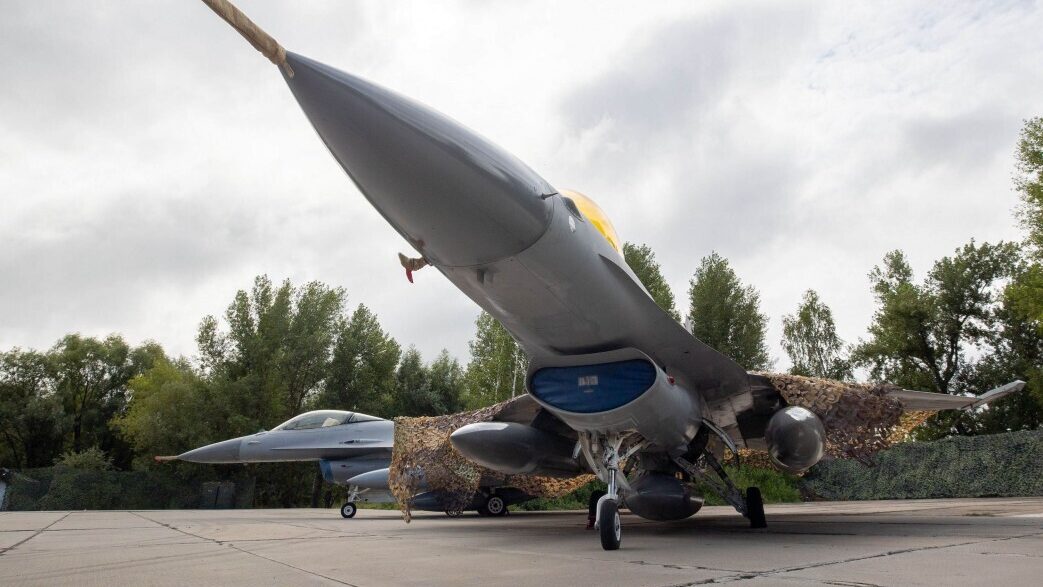
Additionally, the FA-50, a light combat variant in the T-50 family, has won export contracts from the Philippines (24 units), Poland (48 units), and Malaysia (18 units).
KAI has also pitched the FA-50 to Egypt and Mexico.
The T-50’s Multirole Advantage
Meanwhile, the Korean aerospace company is reportedly considering responding to India’s requirement for 150 advanced jet trainers, although the status and details of the reported RFI need clarification.
One key advantage of the T-50 family is its multirole design.
As KAI highlighted in its advertisement, the jet offers a “common high-performance foundation” across a single aircraft family—capable of handling advanced jet training, lead-in fighter training, light combat, and aerobatic display roles through specialized variants.
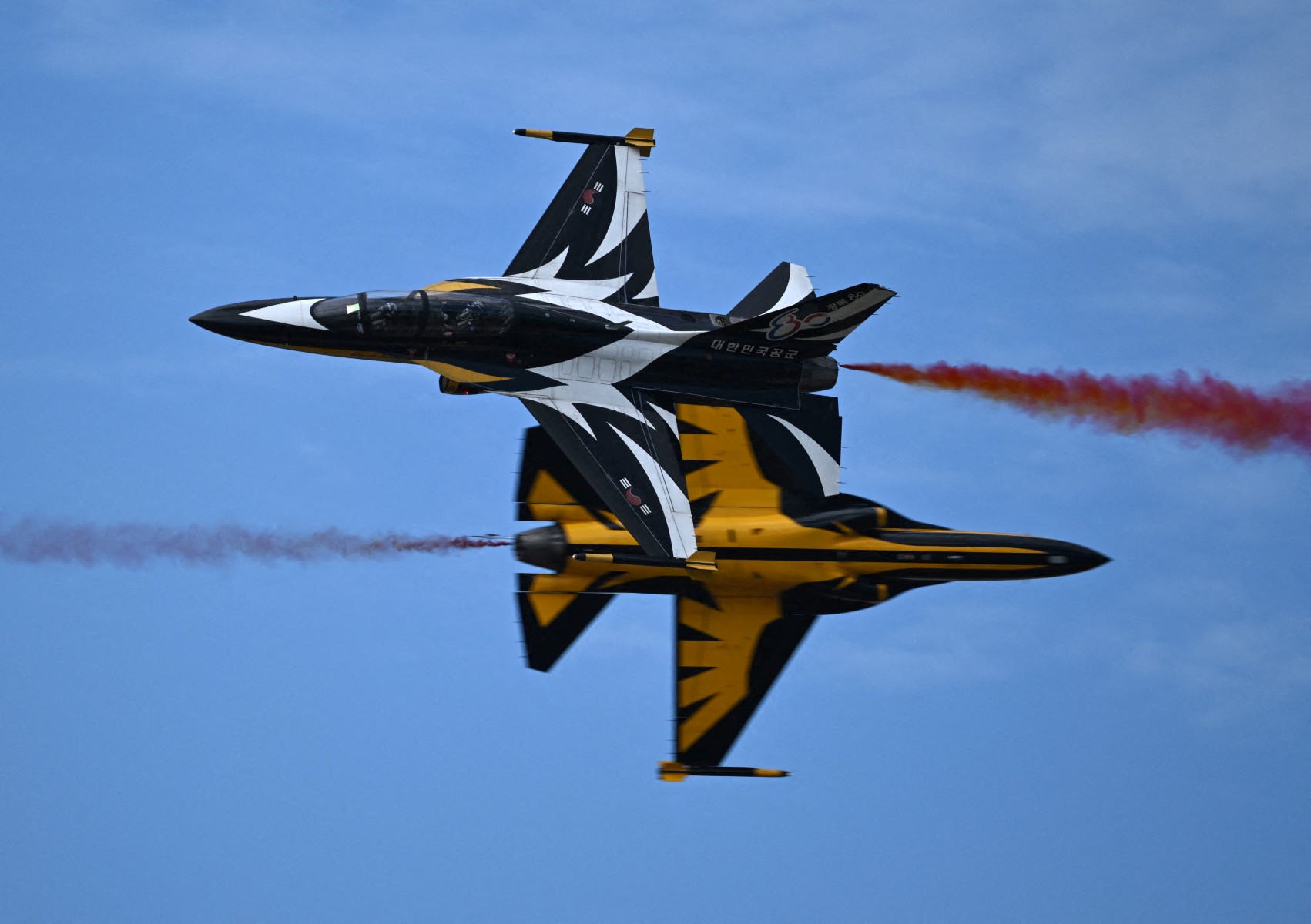
South Korea already operates a specialized variant of the T-50, the T-50B, for its own premier aerobatics team, the Black Eagles. Other derivatives, including the TA-50 and FA-50, are configured for lead-in fighter training and light combat missions.
Currently, the British RAF splits these duties across separate fleets, operating the Hawk T1 for the Red Arrows, the Hawk T2 for advanced fast-jet training, and the Beechcraft Texan T1 for basic fast-jet training.
Each fleet has distinct maintenance regimes, availability pressures, and operational requirements.
KAI is offering a single family of aircraft with specialized versions for training, aerobatics, and light combat. This would make maintenance easier and simplify logistics for the RAF, since they wouldn’t have to manage multiple different aircraft types.
The FA-50 configuration also offers light-combat capabilities that could potentially be adapted for emerging operational requirements, including certain counter-drone missions, subject to suitable sensors, weapons and mission-system integration.
However, the Red Arrows serve as a premier national soft-power asset for the UK.
It remains an open question whether London would choose to build the Royal Air Force’s most visible symbol around a South Korean platform, especially one also marketed for light combat.
- Sumit Ahlawat has over a decade of experience in news media. He has worked with Press Trust of India, Times Now, Zee News, Economic Times, and Microsoft News. He holds a Master’s Degree in International Media and Modern History from the University of Sheffield, UK.
- He can be reached at ahlawat.sumit85 (at) gmail.com.