

Has Australia corrected its “worst foreign policy blunder in the Indo-Pacific since the end of World War II” by curbing China’s military ambitions?
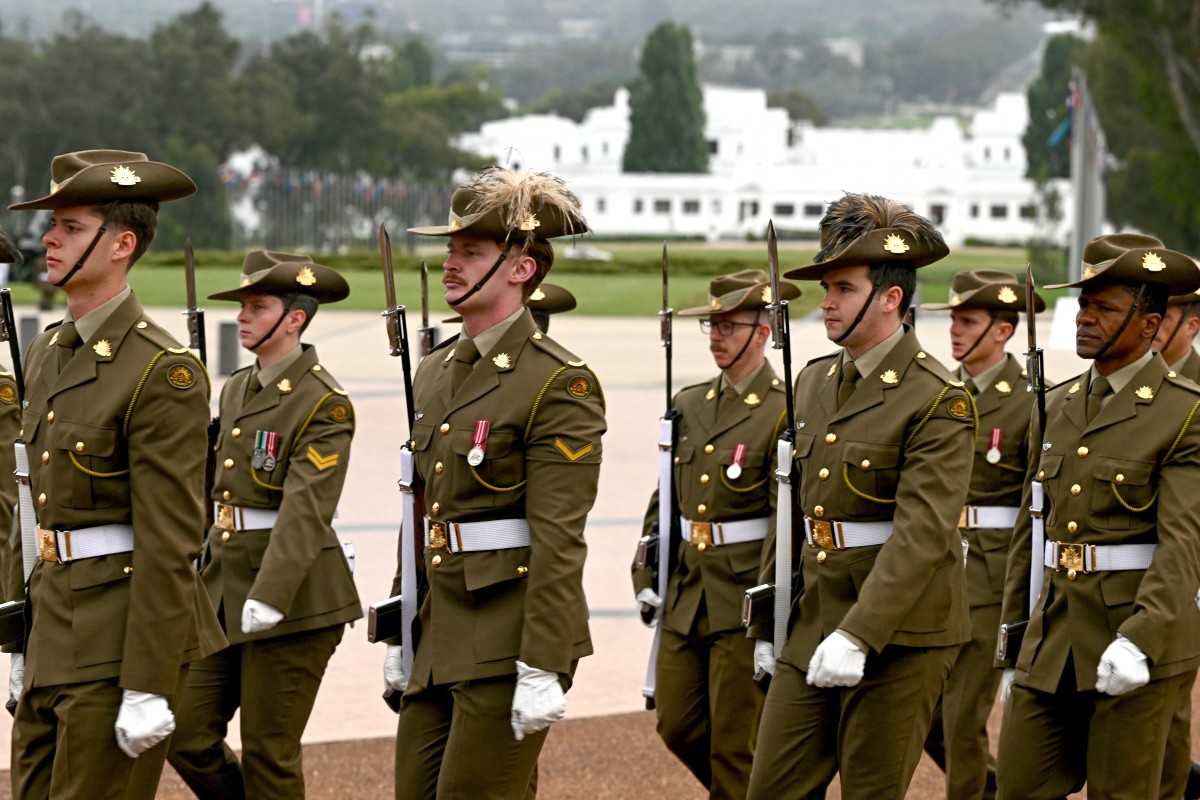
This question has come to the forefront after Solomon Islands Prime Minister Matthew Wale and Australian Prime Minister Anthony Albanese signed a sweeping bilateral security and economic Treaty in Canberra on November 25, 2026, formally naming Australia as the island nation’s “primary security partner.”
Of the Treaty’s 10 (ten) Articles, Article 5—titled “Peace and Security”—carries the sharpest geopolitical weight. Under this provision, both nations commit to deepening intelligence sharing, sustaining an Australian-supported policing partnership for the Royal Solomon Islands Police Force, and protecting critical national infrastructure—including ports, airports, energy grids, and telecommunications networks—from foreign interference or militarization.
The agreement formally affirms Australia’s role and responsibilities as the Solomon Islands’ primary security partner, supporting the island nation’s security requirements when mutually agreed.
This collaboration also involves enhancing bilateral intelligence sharing on issues of mutual concern and sustaining a long-term, Solomon Islands-led, and Australian-supported policing partnership designed to build a strengthened, modern, versatile, and self-reliant Royal Solomon Islands Police Force.
Crucially, Honiara has bound itself to two major restrictions: it will not permit any foreign government or external entity to establish a military or security base on its territory, and it will source security cooperation exclusively from fellow members of the 18-nation Pacific Islands Forum (which includes Australia and New Zealand), turning to outside partners only when Forum members cannot meet a specific need.
Article 5 seems a clear message to China, which in 2022 concluded a controversial Security Pact with the island nation, then under the Prime Minister, who is now the Leader of the Opposition, Manasseh Sogavare.
Now, local press say that days before the latest agreement with Australia, the Solomon Islands told China it would pull out of the 2022 pact.
Incidentally, on November 24, the day before the Treaty was concluded, Australian foreign minister Penny Wong had called the 2022 agreement Australia’s “worst foreign policy blunder in the Pacific since the end of World War II”.
In her major foreign policy address to the Senate on Tuesday, she said Australia had since offered “reliability and credibility” to Pacific partners. “We have offered partnership that is enduring, that is practical, that is respectful, that strengthens Pacific regionalism to answer the region’s challenges,” she added.
According to Australian think tank Lowy Institute Pacific Islands program director Oliver Nobetau, news of the scrapping of the China-Solomon Islands deal was a “massive win” for Australia. “Getting Solomon Islands to turn their backs on China has been the holy grail of all the Pacific engagement under the Albanese government,” Nobetau pointed out.
The Solomon Islands sit 2,000 km northeast of Australia, astride the sea lanes that connect Australia to the United States, to Japan and to Southeast Asia. In World War II, Guadalcanal, in the Solomons, was where America stopped Japan’s advance toward Australia. Experts say that whoever holds the Solomons can threaten Australia’s lifeline, monitor its navy, and project power deep into the South Pacific.
It may be noted that after the Solomon Islands switched diplomatic recognition from Taiwan to Beijing in 2019, then Prime Minister Manasseh Sogavare signed the security pact with China in 2022, but what was really surprising was that its content was not made public. Sogavare justified the non-disclosure by citing a legally binding non-disclosure clause in the pact.
The draft that was subsequently leaked spoke of China sending police, military personnel, ships and forces to protect Chinese personnel and projects, and of Chinese ships being able to visit and replenish.
For Canberra, this was a nightmare scenario. A Chinese naval base, or even a dual-use port, capable of hosting intelligence ships, submarines and surveillance facilities was at just 2,000 km from Brisbane. The worry was understandable, as for the first time since World War II, a hostile great power would have a military foothold in Australia’s immediate neighborhood.
No wonder why the 2022 pact sent shockwaves through not only Canberra but also Wellington, Tokyo and Washington.
China’s increasing presence in the South Pacific, particularly since President Xi Jinping took office in 2013, has been very subtle. It has been through the signing of “security and development agreements” with regional countries through economic cooperation, elite capture, and policing assistance.
These countries include the Solomon Islands, Vanuatu, Kiribati, Samoa, and now the Cook Islands, some of which had to snap their ties with Taiwan.
As the EurAsian Times had once explained, from Honiara to Tarawa, from Port Vila to Suva, Beijing has combined infrastructure investment, wooing the elites, security agreements, and diplomatic pressure into a single coherent strategy. While presented as development assistance for small island developing states, this campaign carries a powerful and deliberate message for audiences in Canberra, Wellington, Taipei and Washington.
The first element of China’s strategy is the systematic dismantling of Taiwan’s diplomatic space. The Pacific was long one of Taiwan’s last strongholds of formal diplomatic recognition. In 2019, Beijing scored a double breakthrough when both the Solomon Islands and Kiribati switched recognition from Taipei to Beijing within a week of each other.
The methods were instructive. In both cases, Beijing promised massive infrastructure, budget support, and development funds that Taipei could not match.
The second Chinese element is economic and informational coercion, demonstrated at a small scale to preview a larger campaign. The Pacific Islands provide a perfect laboratory for tactics China would use against Taiwan and to deter the US.
When Palau, which recognizes Taiwan, refused to switch, Beijing banned Chinese package tours to Palau in 2017, devastating its tourism sector, which had been 50 percent reliant on Chinese visitors. On the other hand, when the Solomon Islands experienced anti-government riots in 2021, Beijing quickly offered riot gear, police training, and surveillance technology, showing Pacific elites that China provides regime security without human rights lectures.
The third element of China’s South Pacific strategy has been security normalization with island nations, conveying, as noted above, unmistakable messages to other littoral countries, including the US. It may not have obtained any full-fledged military bases in these countries.
But by obtaining access to these countries, legal cover, and a permissive environment, its commercial port with a Chinese state-owned operator, a police training center with a small permanent security liaison, and an airstrip that can receive a Y-20 transport aircraft in a humanitarian emergency, China could alter America’s strategic calculations in any crisis involving Taiwan or any other country in this part of the world.
Against this background, Wednesday’s Treaty, China’s goal of a South Pacific base, or at least a reliable logistics hub for the People’s Liberation Army Navy, is now blocked by the treaty. China can still send fishing fleets, research vessels, and police trainers, but it cannot build a base. It cannot station forces, and it cannot militarize a port without triggering a treaty crisis with Australia.
However, it would be a mistake to write China off completely. Beijing still has deep economic leverage in the Solomons, built since 2019. Chinese companies built roads, the 2023 Pacific Games stadium, and telecommunications networks. Chinese loans still exist. Chinese diplomats are still active.
Under the Treaty, Australia has pledged A$740 million (roughly US$490 million) over 10 years—comprising A$670 million in grants and A$70 million in concessional loans—for policing, infrastructure, education, and budget support. This seems to assure the island that the loss of Chinese economic help and assistance can be offset.
But if Australia’s A$740 million is delayed, or if its projects are seen as slow and bureaucratic, Beijing can stage a comeback. And China can still offer what Australia cannot: massive, fast, no-questions-asked infrastructure without governance conditions typical of liberal, developed, and rich democracies.
Finally, there are domestic political challenges to Prime Minister Wale. Opposition Leader and former Prime Minister Manasseh Sogavare, the main architect of the 2022 agreement with China, has accused the government of the consequences of undermining ties with China. He has warned that Wale, who has already faced one motion of no confidence, is likely to face challenges in Honiara.
Nbobetau makes sense when he says: “ He (Wale) will have to be very confident that he can stay in power by doing this. He’s picking a side here, and for Australia, it’s good. But it could lead to another challenge.”
It remains to be seen how Wale takes on Sogavare’s seemingly China-backed challenge in the days ahead.
- Author and veteran journalist Prakash Nanda is Chairman of the Editorial Board of the EurAsian Times and has been commenting on politics, foreign policy, and strategic affairs for nearly three decades. He is a former National Fellow of the Indian Council for Historical Research and a recipient of the Seoul Peace Prize Scholarship.
- The author can be reached at prakash.nanda (at) hotmail.com