The intense Indo-Pakistan conflict of May 2025 may have caused instability in the already vulnerable subcontinent, but it has also sparked interest in the weapons deployed by both sides, including the BrahMos supersonic cruise missile and Pakistan’s JF-17 fighter jet.
Both BrahMos and the JF-17 were deployed in the conflict last year, which began on May 7, 2025, with the Indian Air Force (IAF) launching precision strikes on terror infrastructure in Pakistan and Pakistan-occupied Kashmir (PoK) as part of “Operation Sindoor” and Pakistan responding with its counter-operation, “Operation Bunyan al-Marsus,” almost immediately.
Both BrahMos and JF-17, produced by India and Pakistan in collaboration with their respective allies, i.e., Russia and China, have since seen a noticeable surge in popularity.
India, for instance, signed a new export deal for the BrahMos cruise missile with Indonesia during Indian Prime Minister Narendra Modi’s visit to Jakarta on July 7, 2026.
An agreement for “cooperation on BrahMos System” was struck during the visit, Indian foreign ministry spokesman Randhir Jaiswal wrote in a post on social media platform X. The two countries also reached an agreement on air-to-air missile cooperation that “enhances technology collaboration and defense capabilities”, he added. With this, Indonesia became the third country to acquire the BrahMos, after the Philippines and Vietnam.
BrahMos is a supersonic cruise missile jointly developed by a joint venture launched in 1998 by India’s DRDO (Defense Research and Development Organization) and Russia’s NPO Mashinostroyeniya. It is one of the world’s fastest supersonic cruise missiles and the only one that can be fired from land, air, and sea.
The Indian government has aggressively promoted the missile for export, as EurAsian Times has repeatedly noted. In January 2021, India outlined a list of “friendly nations” deemed potential buyers of the missile, including the Philippines, Indonesia, Vietnam, Saudi Arabia, the UAE, and South Africa.
Indonesia had shown interest in acquiring the BrahMos cruise missile for years, but the Indian military’s use of the supersonic missile during the Indo-Pakistan clash may have given a fresh momentum to Jakarta’s procurement plans.
Although tested for years, Operation Sindoor marked the BrahMos system’s first real combat deployment, in which its speed, accuracy, and deep-strike capability were demonstrated with devastating effect.
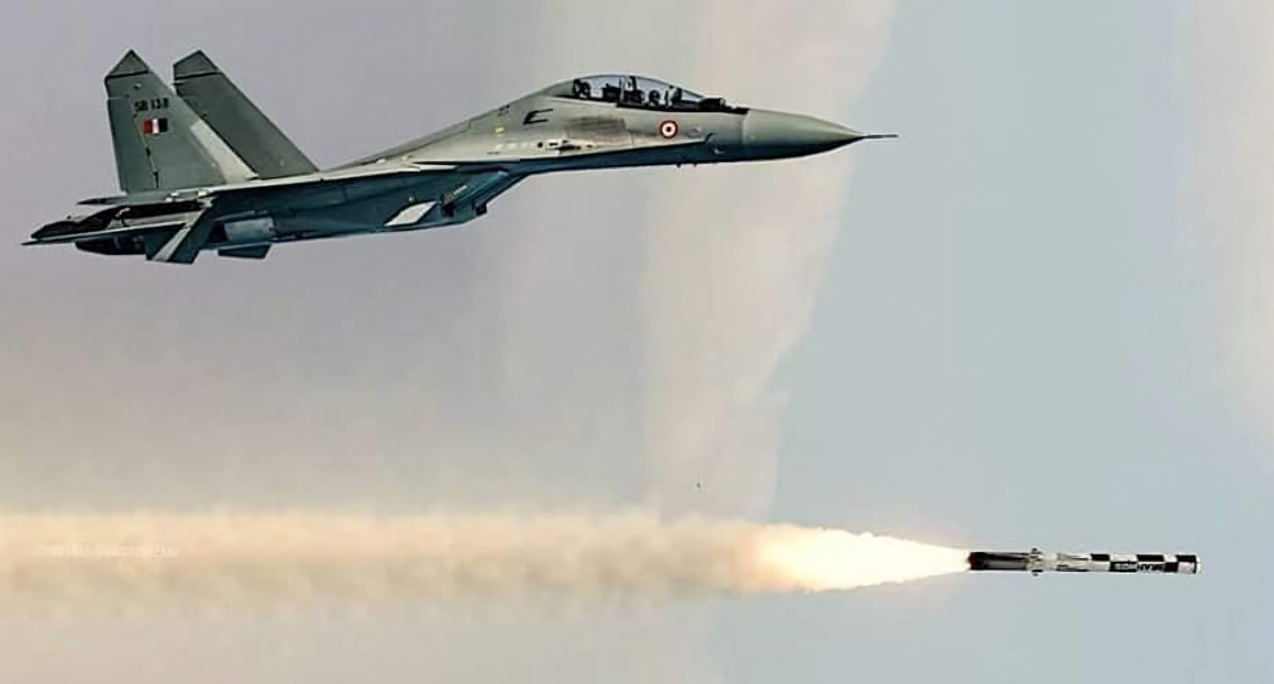
India reportedly launched 15-19 BrahMos missiles during the four-day conflict, causing considerable damage to the Pakistan Air Force (PAF) infrastructure and temporarily degrading its air operations.
Six months after the Indo-Pakistan conflict, Indian Defense Minister Rajnath Singh and his Indonesian counterpart, Sjafrie Sjamsoeddin, discussed a potential BrahMos deal during the Defense Cooperation Dialogue, organized in New Delhi in November 2025. At the time, Sjamsoeddin received a replica of the missile, and BrahMos Aerospace personnel briefed the Indonesian team on the missile.
Finally, in March 2026, the spokesperson for the Indonesian Ministry of Defense (MoD), Rico Ricardo Sirait, announced the country’s decision to acquire the cruise missile as part of the modernization of military hardware and defense capabilities, particularly in the maritime sector, as explained in detail by the EurAsian Times.
There is currently no information on which variant of the BrahMos Indonesia is acquiring, but BrahMos Aerospace CEO Atul D. Rane had said in March 2023 that the company was in advanced discussions with Jakarta on a deal under which it had offered to supply shore-based missiles and a version that can be mounted on warships.
During his visit to Singapore in May 2026, Indian Defense Secretary Rajesh Kumar Singh disclosed that Vietnam had also inked an agreement to buy BrahMos. The official did not specify when the deal was signed, but it was likely inked in the aftermath of the Indo-Pakistan conflict.
Not just that, Rajnath Singh said in July 2025 that 14 to 15 countries had since expressed interest in the supersonic cruise missile. According to reports, countries showing interest in BrahMos include Thailand, Singapore, Brunei, Egypt, Saudi Arabia, the UAE, Qatar, Oman, Brazil, Chile, Argentina, and Venezuela, to name a few.
Like BrahMos, the JF-17 fighter—a key platform developed by Pakistan in close cooperation with its ally, China—has seen a noticeable surge in demand.
JF-17 Thunder
Developed jointly by China’s Chengdu and the Pakistan Aeronautical Complex (PAC), the JF-17 is a lightweight fighter jet marketed by the China-Pakistan consortium as an affordable, sustainable, and combat-proven platform, free of political strings, and much more economical than Western alternatives.
Since its use in the war with India, Pakistan has aggressively marketed the JF-17’s “combat-proven” status to allies, partners, and other prospective customers. These claims and marketing pitches are endorsed by China and supported by Beijing’s political capital.
According to Pakistani sources, Pakistan used the JF-17 extensively during aerial combat with the Indian Air Force.
The PAF has claimed that the JF-17s, including Block 3 variants, reportedly launched air-launched cruise missiles and stand-off munitions against Indian targets, such as airbases, logistical nodes, and weapon storage sites, etc.
In fact, Islamabad went so far as to claim that a PAF JF-17 had managed to take out an S-400 battery at Adampur Air Base using a CM-400AKG hypersonic missile, a claim India outrightly rejected.
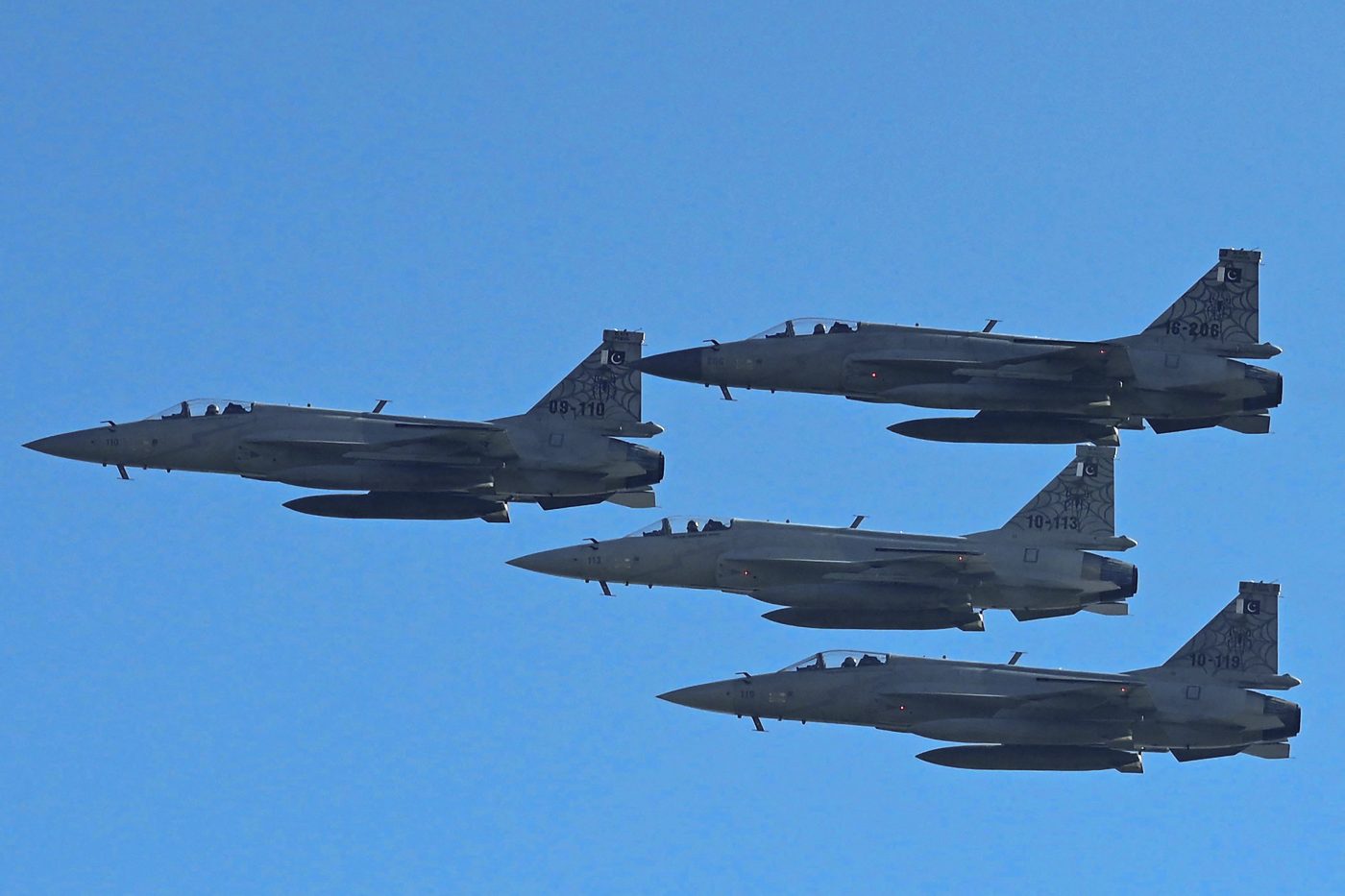
On the contrary, Indian Air Force chief, Air Chief Marshal A.P. Singh, claimed in October 2025 that the IAF had destroyed 12 to 13 Pakistani aircraft, including 9-10 fighter jets. This included the US-made F-16s and the Chinese co-produced JF-17s. In addition, Animesh Patni, a Group Captain in the Indian Air Force, reportedly shot down a JF-17 with his S-400, as per New Delhi.
Despite all this, JF-17’s popularity appears to be steadily increasing. For example, Libya placed an order for the JF-17 in December 2025, and Bangladesh is currently mulling its acquisition.
The order has reportedly been placed by the Libyan National Army (LNA), which operates as a rival authority to the United Nations-recognized Government of National Unity in Tripoli. Notably, Libya remains under an international arms embargo, keeping Western weapons off the charts, and making the JF-17 an appropriate alternative.
In January 2026, reports emerged that Saudi Arabia was negotiating to swap $2 billion in loans for debt-strapped Pakistan in exchange for JF-17 Thunder fighter jets. The reports highlighted that this would help Pakistan avoid defaulting on its financial obligations amid acute economic pressures, while Saudi Arabia would be able to recoup its investment through military hardware rather than cash repayments.
Days later, another report claimed Pakistan was in the final phases of striking a $1.5-billion deal to supply weapons and jets to Sudan.
Bangladesh has also shown sustained interest in acquiring the JF-17 Thunder fighter jet from Pakistan. The air chiefs of the two countries reportedly met in Islamabad to discuss a potential defense pact and the procurement of JF-17 aircraft as part of efforts to modernize Bangladesh’s aging fleet.
Meanwhile, JF-17s are now in active service with the Azerbaijani Air Force; it was confirmed on 6 July, when the country released a video showing the new jet for the first time. The single-seat JF-17s 24-501 and 24-502 were shown taking off with three external fuel tanks and no weapons. Patches worn by the pilots identified the Azerbaijani variant as the JF-17C Block III.
- Contact the author at sakshi.tiwari13 (at) outlook.com
- Follow EurAsian Times on Google News