The BrahMos Joint Venture has indicated that the corporation would be willing and ready to supply the lethal cruise missile to Russia, should Moscow make a formal request.
“We are ready to fulfill an order if we receive a request from the Russian side. These will be either missiles for the Navy or missiles for ground forces. We have sufficient capacities, and we understand what the Russian side wants,” BrahMos Aerospace Joint Venture Managing Co-Director Alexander Maksichev told Russian state news agency TASS on June 10 at the sidelines of the Fleet 2026 International Maritime Defense Show.
The joint venture was launched in 1998 by India’s DRDO and Russia’s NPO Mashinostroyeniya to develop and produce the BrahMos, one of the world’s fastest supersonic cruise missiles and the only one that can be fired from land, air, and sea.
It is a two-stage weapon — the missile launches with a solid-fuel booster, which detaches after take-off, and is then propelled at speeds approaching Mach 3 by a liquid-fuelled ramjet engine. The missile operates on a “fire and forget” principle, meaning that once launched, no further guidance is required, as previously explained by EurAsian Times. It is very hard to intercept due to factors such as terrain-hugging trajectories, low radar signatures, and high kinetic energy.
The latest assertion by Alexander Maksichev is intriguing, particularly because Russia has never formally sought to purchase BrahMos for its armed forces, even though it is jointly produced by Moscow and New Delhi and has been extensively adopted and integrated across all three branches of the Indian military.
India has been aggressively promoting the BrahMos in the export market, with two favorable deals already signed and several others in the pipeline.
The first deal was signed with the Philippines in 2022, while a second deal was signed with Vietnam recently, as announced by Indian Defense Secretary Rajesh Kumar Singh in Singapore last month. Meanwhile, talks with Indonesia are currently at an advanced stage, and an agreement is expected to be signed soon.
Will Russia Purchase BrahMos?
Russia’s purchase of the BrahMos is merely a hypothetical scenario, given that the country has refrained from requesting the missile despite reeling from the consequences of international sanctions imposed on its arms industry since the invasion of Ukraine in 2022.
When asked whether Russia could take the plunge and order the missile, Indian Air Force veteran and a popular Russia watcher, Squadron Leader Vijainder K. Thakur (retd), told the EurAsian Times, “Russia cannot afford the BrahMos. Its cost is outrageous! Also, it has no pressing operational need for it.”
According to reports, the per-unit cost of a BrahMos supersonic cruise missile is typically in the range of roughly US$3–4.2 million, depending on the variant. If Russia decided to buy these missiles, it would have to place a large order to use them decisively in the ongoing conflict, which would impose an unprecedented cost on the already strained Russian economy.
Experts believe Russia will prioritize cheaper, mass-produced munitions over premium supersonic cruise missiles such as the BrahMos in a high-attrition conflict like that in Ukraine. In fact, cheap one-way attack drones and not precision missiles currently make up the bulk of Russia’s regular aerial strikes on Ukrainian cities.
It is pertinent to note that Russia already has a large inventory of P-800 Oniks missiles—the weapon from which BrahMos has been derived. Oniks missile is a primarily anti-ship weapon fired from Russia’s Bastion-P coastal missile defense system, but Russia has used the weapon to launch strikes on ground-based targets in Ukraine.
In 2024, reports indicated that Moscow was planning to upgrade the missile with new active homing devices to enhance precision. This essentially removes the operational need for acquiring the BrahMos.
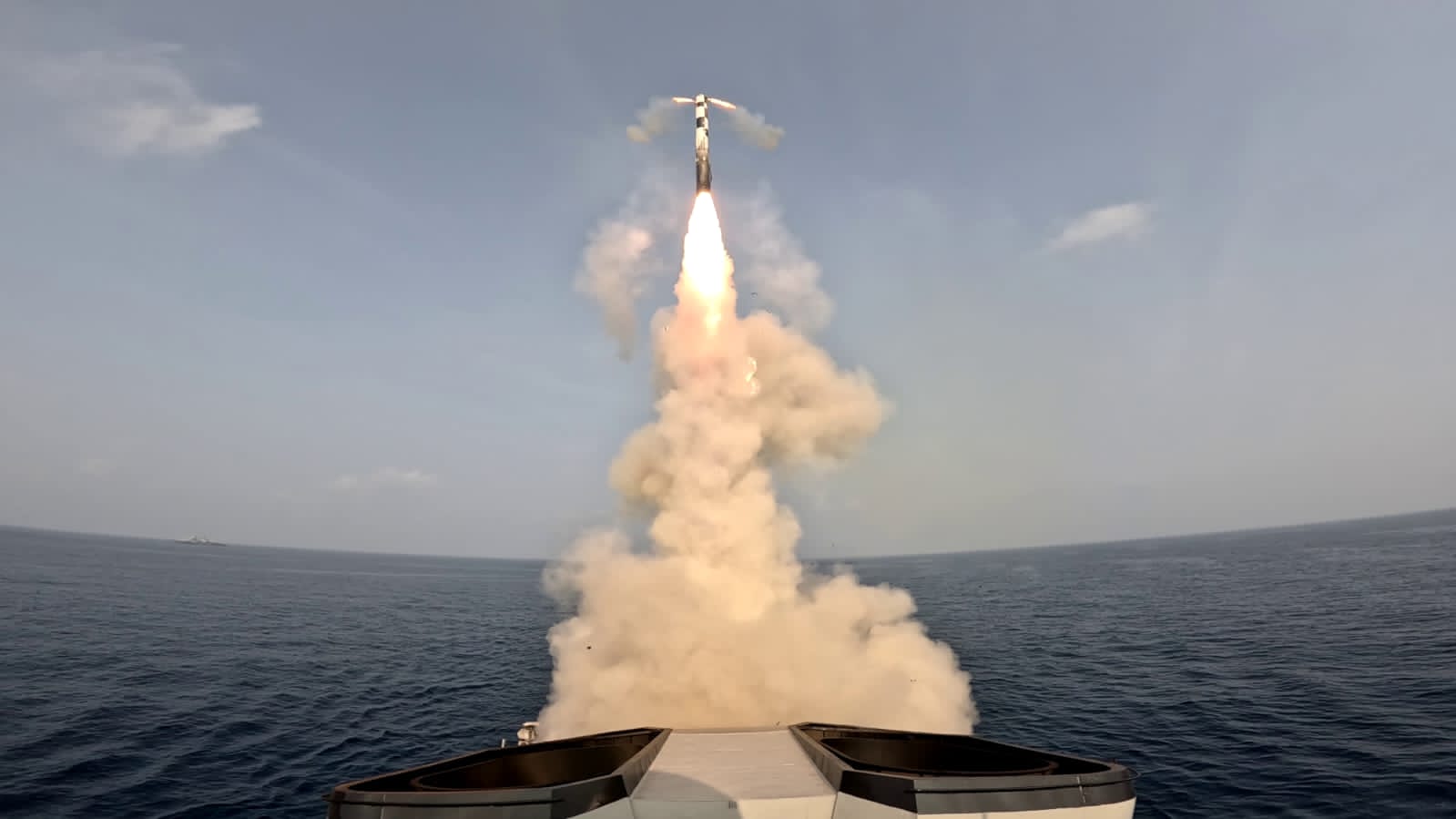
Moreover, Russia already has a variety of missiles and a diverse range of launch platforms. It employs air-launched land-attack cruise and ballistic missiles such as the Kalibr, Kh-101, Kh-69, the Kinzhal, and Zircon hypersonic missiles, as well as Iskander, to target Ukraine. Therefore, adding the expensive BrahMos missile does not make much sense.
BrahMos offers marginal improvements in guidance or accuracy, but not enough to justify integrating a new system during wartime. The purchase of the new missile is also not viable for Russia at this point because it would require modifications to the platforms and training, as well as lengthy integration timelines.
Rather than buying new weapons at a painstaking cost, Moscow is currently focused on replenishing stocks of existing weapons, drones, and artillery amid ongoing operations.
Even if Russia sought the BrahMos cruise missile, it would be challenging for the BrahMos JV and India to approve such a purchase, particularly as the West is working to strengthen the existing sanctions on Russia and has repeatedly called upon Russian allies, such as India, to refrain from arming its war machine.
Some Indian companies were previously sanctioned for helping Russia access restricted dual-use technologies, microelectronics, and CNC tools, and for evading export controls.
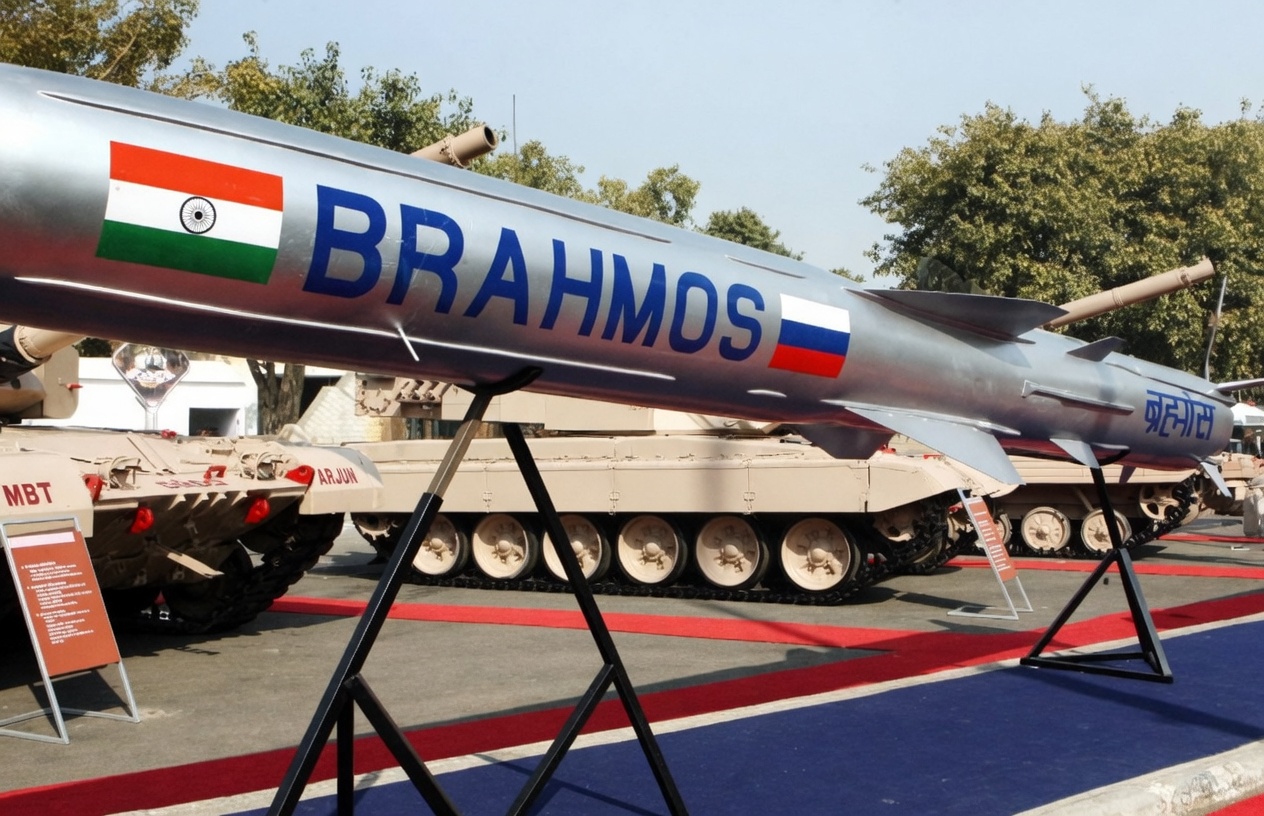
So far, the Western-led sanctions against Russia have not affected BrahMos production or planning, primarily because the missile’s local content has risen to over 70% from around 15% at the start of the venture, giving India greater control over the supersonic missile. However, the JV is unlikely to escape sanctions if it sells BrahMos to Russia, especially since it would likely be viewed as directly supporting Russia’s war against Ukraine.
The sanctions on BrahMos Aerospace would directly impact Indian defense export, and put New Delhi in a tricky position vis-à-vis the United States, which had earlier slapped tariffs on New Delhi for buying Russian oil.
Notably, every BrahMos sale must be approved by both Russia and India, and New Delhi is unlikely to greenlight the sale of BrahMos to Moscow, lest it be seen as an accomplice in the war.
India is currently promoting the missile for export to allies and partners in Southeast Asia and the Middle East, banking on its impressive combat performance during the May 2025 Indo-Pakistan conflict, as earlier noted in a detailed EurAsian Times report.
- Contact the author at sakshi.tiwari13 (at) outlook.com
- Follow EurAsian Times on Google News