President Prabowo Subianto is hosting PM Modi in Jakarta during a three-day state visit.
An agreement for “cooperation on BrahMos System” was struck during the visit, Indian foreign ministry spokesman Randhir Jaiswal said in a post on X.
The two countries also reached an agreement on air-to-air missile cooperation that “enhances technology collaboration and defense capabilities”, he said.
Modi hailed the “growing trust” between Jakarta and New Delhi after his meeting with Prabowo, which he said underpinned cooperation in “defense, security and maritime affairs”.
“Today, we reached an agreement to enhance defense exchanges, disaster management, and industrial cooperation,” Modi told reporters.
The coast guards of the two countries will also work together on maritime safety and security in the Indian Ocean, Modi said.
Earlier, the spokesperson for the Indonesian Ministry of Defense (MoD), Rico Ricardo Sirait, told Reuters on March 9 that Jakarta has agreed to acquire the BrahMos missile system from India.
The agreement is “part of the modernization of military hardware and defense capabilities, especially in the maritime sector,” he stated.
Sirait stopped short of specifying the number of missiles that Jakarta has decided to procure and the estimated cost. However, previous reports had pegged the cost of the potential deal at $450 million.
Earlier in September 2024, a high-level Indonesian delegation led by Maj. Gen. Yunianto from the National Resilience Institute of Indonesia visited BrahMos Aerospace to discuss potential military cooperation. Later that year, in December 2024, the potential sale of BrahMos was discussed during Indian Navy Chief Dinesh Kumar Tripathi’s visit to Indonesia.
However, things started moving quickly last year, indicating that the BrahMos sale was imminent. The deal for the BrahMos supersonic cruise missile was discussed between the two countries in November last year at the Defense Cooperation Dialogue, organized in New Delhi by Indian Defense Minister Rajnath Singh for his Indonesian counterpart, Sjafrie Sjamsoeddin.
Additionally, the Indonesian team was briefed on the missile by representatives of BrahMos Aerospace, and Defense Minister Sjamsoeddin received a model of the missile.
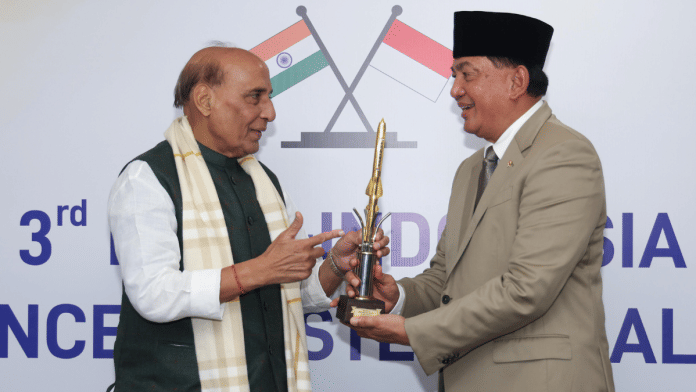
Indonesia has not become the second country to acquire the Indo-Russian missile.
In 2022, the Philippines signed a US$375 million deal with India for three batteries of the shore-based, anti-ship variant of the BrahMos missile for its naval forces. Additionally, previous reports suggested that Manila was considering purchasing additional batteries as part of the Horizon 3 military modernization program for land-based coastal defense.
More Customers for BrahMos?
The Indian Navy inducted its first BrahMos system in 2005 aboard INS Rajput. The Indian Army followed in 2007 with its own regiments, and the Air Force later introduced an air-launched version from the Sukhoi-30MKI aircraft in 2019. In fact, India launched 15-19 BrahMos missiles during the four-day conflict with Pakistan.
The original range of the BrahMos supersonic cruise missile, developed under an Indo-Russian Joint Venture, was 290 kilometers. In 2023, the IAF successfully tested an extended-range BrahMos cruise missile with a range of 450 kilometers fitted on a Sukhoi-30 MKI fighter jet.
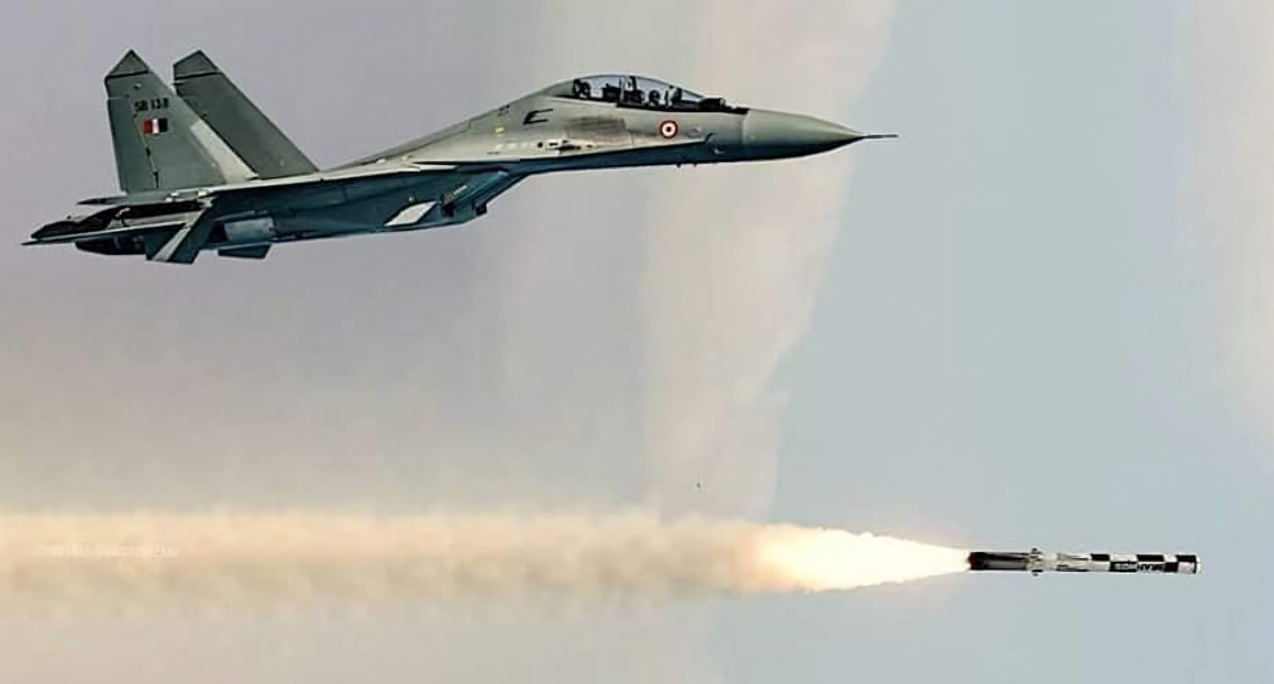
Additionally, tests are underway to develop an 800-kilometer-range variant of the BrahMos high-supersonic cruise universal missile.
Over the years, BrahMos has undergone multiple upgrades, including software and hardware improvements that have enhanced its range.
In January 2021, India outlined a list of “friendly nations” deemed potential buyers of the missile, including the Philippines, Indonesia, Vietnam, Saudi Arabia, the UAE, and South Africa. The list has since changed, with several countries dropping interest and others queuing up to assess the combat-tested missile system.
India reportedly started talks with Vietnam to sell off the supersonic cruise missile in 2023. An official with BrahMos Aerospace Ltd told the EurAsian Times at the time: “Vietnam had shown interest in the system. But the negotiations have just started.”
Further indication of the BrahMos’s widespread appeal in Southeast Asia is Malaysia’s sustained interest in the missile system, particularly the air-launched variant, which could be integrated with the Royal Malaysian Air Force’s Su-30MKM fighter jets.
By 2025, amid heightened regional tensions in the South China Sea, Malaysia appeared in lists of countries “queuing up” or actively negotiating for BrahMos. In fact, in August that year, reports suggested that Malaysia had begun preliminary negotiations with Russia and India for the missile, with an eye on revolutionizing its Indo-Pacific airpower projection.
Besides Southeast Asia, the Middle East could be a potential market for the BrahMos missile.
Alexander Maksichev, Co-Director of BrahMos Aerospace, explicitly highlighted the UAE as a prospective buyer of the missile.
Additionally, the UAE has been repeatedly listed among “friendly nations” by India that are eligible for the export-variant BrahMos. The Emirati kingdom’s interest in the missile was confirmed again in early 2025, as noted in multiple reports across Indian media.
Other countries in the Middle Eastern region that have reportedly shown interest in the missile include Saudi Arabia, Qatar, Oman, and Egypt. Additionally, the missile has made an impression in Latin America, with countries such as Brazil, Chile, Argentina, and Venezuela showing interest.
Indonesia’s purchase comes after the missile made its combat debut against Pakistan during Operation Sindoor in May 2025.
India reportedly launched 15-19 BrahMos missiles during the four-day conflict, and none of them could be intercepted. The weapon was reportedly used to strike key military bases, including the Nur Khan Base in Rawalpindi.
- Contact the author at sakshi.tiwari9555 (at) gmail.com
- Follow EurAsian Times on Google News