On July 7, Chinese and Japanese coast guard ships faced off near the disputed islands, called Senkaku in Japan and Diaoyu in China, with each side claiming it drove out the other’s vessels that had intruded into its territorial waters.
The uninhabited islands sit between Taiwan and Japan and are claimed by both Beijing and Tokyo.
While China and Japan have often clashed over these islands, the latest clash came on an important day, as July 7 also marks the 89th anniversary of the Lugou Bridge Incident, also known as the July 7 Incident of 1937, which marked the start of China’s resistance against Japanese aggression during World War II.
Together with Pearl Harbor (December, 1941) and the German invasion of the Soviet Union (June, 1941), this was one of the defining moments of the Second World War, even though the war in Europe had not started yet.
While the narratives of the Second World War in Asia are dominated by Pearl Harbor and the use of the atomic bombs by the US in August 1945, the main theatre of the war in Asia was China.
Chinese official data shows that more than 35 million soldiers and civilians died during the war, accounting for nearly 8% of China’s total population in 1928.
In fact, China and the Soviet Union accounted for nearly half of the 70 to 80 million deaths during the war.
The Lugou Bridge Incident and the Beginnings of the Sino-Japanese War
Japan’s rapid modernization after the Meiji Restoration (1868) fueled aggressive imperialism aimed at resources, territory, and influence in East Asia.
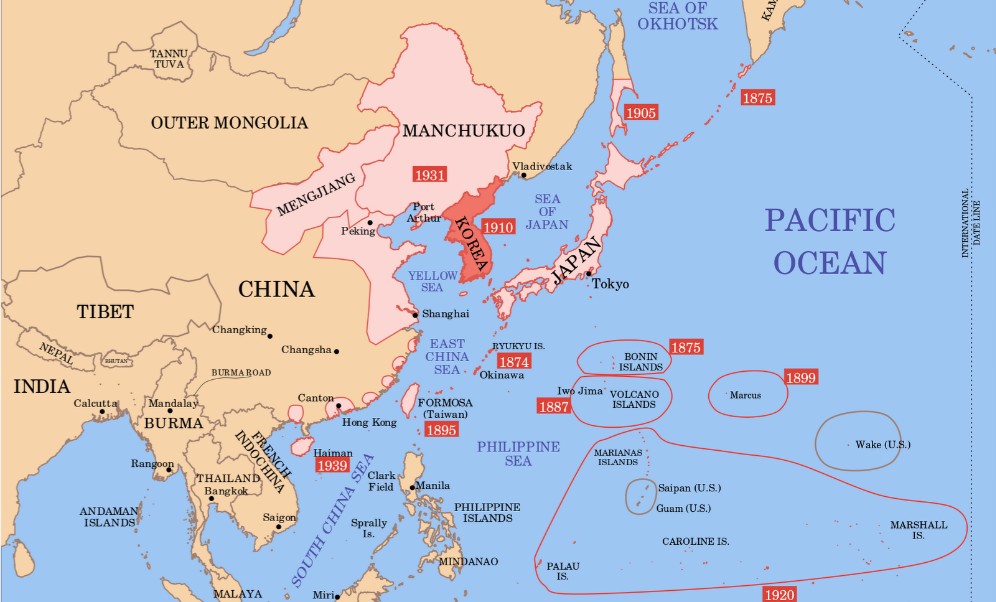
The campaign against China began with Taiwan, then part of the Qing Empire, and escalated into full-scale war on the mainland by the 1930s.
In 1894-1895, the first Sino-Japanese War occurred. After losing the war, China ceded Taiwan and the Penghu Islands to Japan, recognized Korean independence, and paid a huge war indemnity to Japan.
Japan modernized Taiwan to supply its industries with raw materials, such as sugar and rice.
In 1931, Japan occupied Manchuria. Heavy fighting took place in Shanghai in 1932.
During this period, China was itself undergoing a civil war between the nationalist Chinese Kuomintang party and the Communist Party of China.
Japan took advantage of these internal divisions to chip away at Chinese territories.
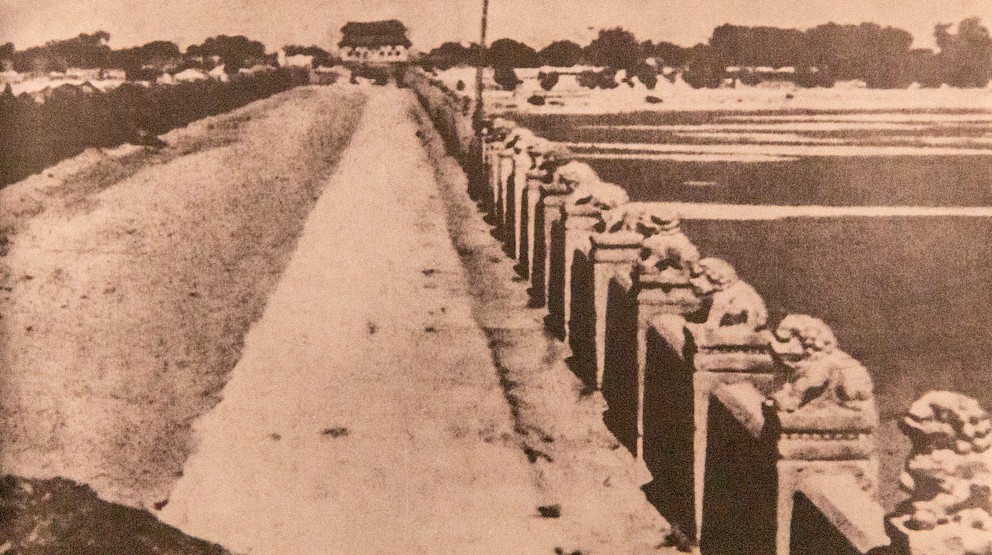
In 1937, clashes broke out between Japanese and Chinese forces near the strategic Lugou Bridge, known in the West as the Marco Polo Bridge, after Marco Polo’s 13th-century description of Beijing.
Though a minor clash, it ignited the Second Sino-Japanese War (1937–1945), also called the War of Resistance Against Japan in China.
In fact, many historians argue that the Lugou Bridge incident on July 7, 1937, should be treated as the start of the Second World War and not 1939.
They argue that the Pacific War (1941-1945), which began with Pearl Harbor and ended with the August 1945 atomic bombings of Hiroshima and Nagasaki, was largely a continuation and expansion of the Sino-Japanese conflict that began in 1937.
They also argue that the war in China tied down hundreds of thousands of Japanese troops for years, weakening Japan’s position when it later attacked the United States and European colonies in 1941–42.
The traditional 1939 date, they argue, stems from Eurocentrism that overlooks the fact that war was already underway between two major powers in Asia.
In fact, according to the National WWII Museum, “World War II began on July 7, 1937—not in Poland or at Pearl Harbor, but in China. On that date, outside of Beijing, Japanese and Chinese troops clashed, and within a few days, the local conflict had escalated to a full, though undeclared, war between China and Japan.”
Following the incident in southwest Peiping (Beijing), the city was captured by the Japanese army on July 29, 1937. Over 10,000 civilians were killed or went missing during the fall of the city.
The fall of the capital city was a wake-up call for the country, prompting the Chinese Kuomintang and the Communist Party of China to join hands against Japanese aggression and marking the beginning of China’s national resistance.
By 1941, Japan controlled most of East China’s coastline, including major urban cities, such as Beijing, Tianjin, and Shanghai.
Japanese occupation in China was marked by oppression, torture, and exploitation. Atrocities included biological warfare (Unit 731), forced labor, comfort women, and mass killings, according to Chinese accounts.
In recent days, newly released archival materials have provided further evidence of atrocities committed by the Japanese military during the war.
For instance, a report archived at the Exhibition Hall of Evidences of Crimes Committed by Unit 731 of the Imperial Japanese Army in northeast China’s Heilongjiang Province, authored by Japanese military surgeon Tsutomu Saito, confirmed that in 1938, Japanese forces used blood drawn from horses, sheep, dogs, rabbits, and chickens to conduct live experiments on 23 prisoners of war, China’s state-owned China Global Television Network (CGTN) reported.
To mark the occasion and preserve the historical memory of Japanese brutalities and China’s resistance movement against it, China is releasing new archival material that exposes the details of Japan’s biological warfare against Chinese citizens.
Historian Jin Chengmin’s book “Black Box: Unit 731” was officially released on July 5 at the Exhibition Hall of Evidences of Crimes Committed by Unit 731 of the Japanese Imperial Army. The book presents previously unpublished archival materials that reveal the germ warfare crimes committed by the notorious Japanese Unit 731 during World War II.
Chinese scholars are also using the occasion to highlight the historical revisionism in Japan, which they allege is trying to deny or downplay the crimes committed by the imperial Japanese Army during the war.
Kumiko Haba, professor emeritus at Aoyama Gakuin University, noted that the newly approved history textbooks in Japan further reduce coverage of the Nanjing Massacre and the issue of “comfort women.”
Lyu Yaodong, a researcher at the Institute of Japanese Studies at the Chinese Academy of Social Sciences, said revising history textbooks has long been one of Japan’s standard tactics for denying, downplaying, and whitewashing its history of aggression.
“When a generation is raised on a selectively edited version of history, its understanding of the brutality of war and a nation’s responsibility for past actions is inevitably incomplete,” Lyu said.
Notably, relations between China and Japan are at their lowest point in decades.
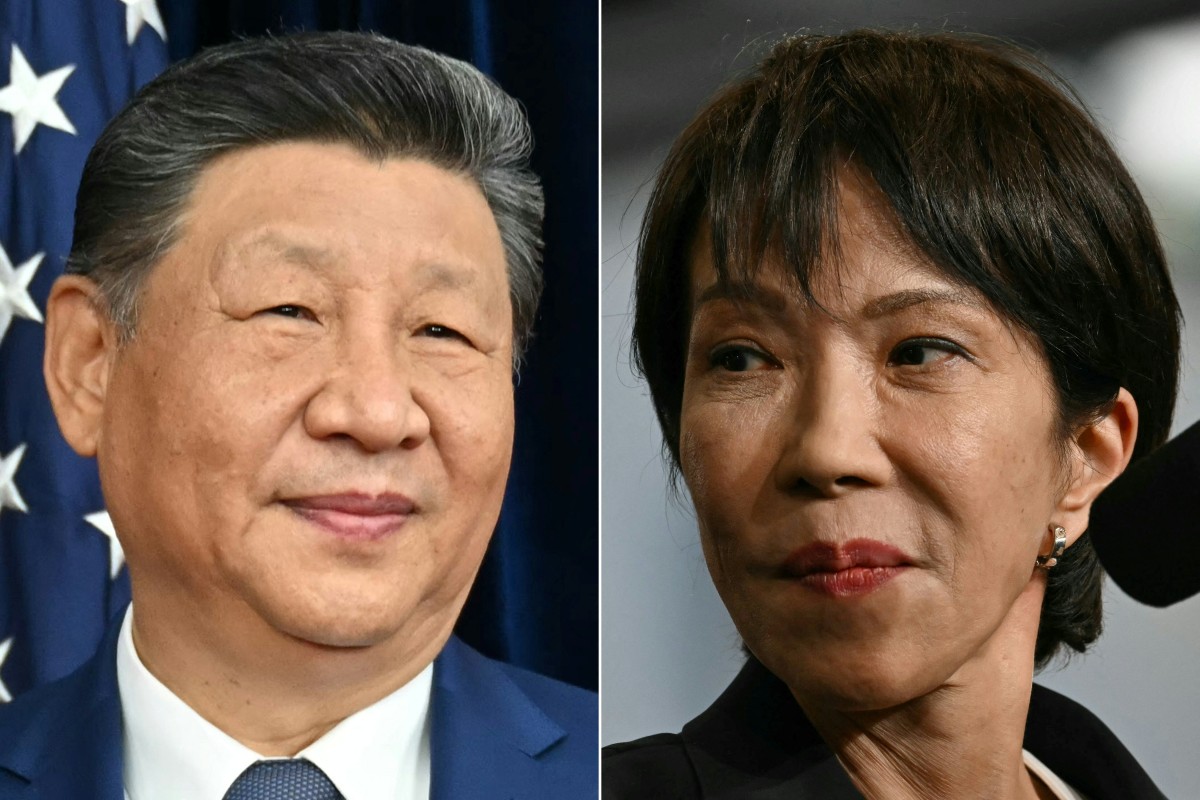
In November last year, Japanese Prime Minister Sanae Takaichi angered Beijing when she said that China’s use of force against Taiwan could constitute a threat to Japanese survival.
“If it were to involve the use of warships and the exercise of force, then by any measure, it could constitute a situation threatening Japan’s survival.”
Takaichi’s choice of words was significant, as under Japan’s 2015 Legislation for Peace and Security, such a designation of a “survival-threatening situation” could allow Japan to exercise the right of collective self-defense.
Nearly 130 years ago, in 1895, Japan invaded Taiwan, which triggered a nearly half-century-long Sino-Japanese war that killed millions of people. Now, it seems that the two major Asian powers are again at odds over Taiwan.
- Sumit Ahlawat has over a decade of experience in news media. He has worked with Press Trust of India, Times Now, Zee News, Economic Times, and Microsoft News. He holds a Master’s Degree in International Media and Modern History from the University of Sheffield, UK.
- He can be reached at ahlawat.sumit85 (at) gmail.com