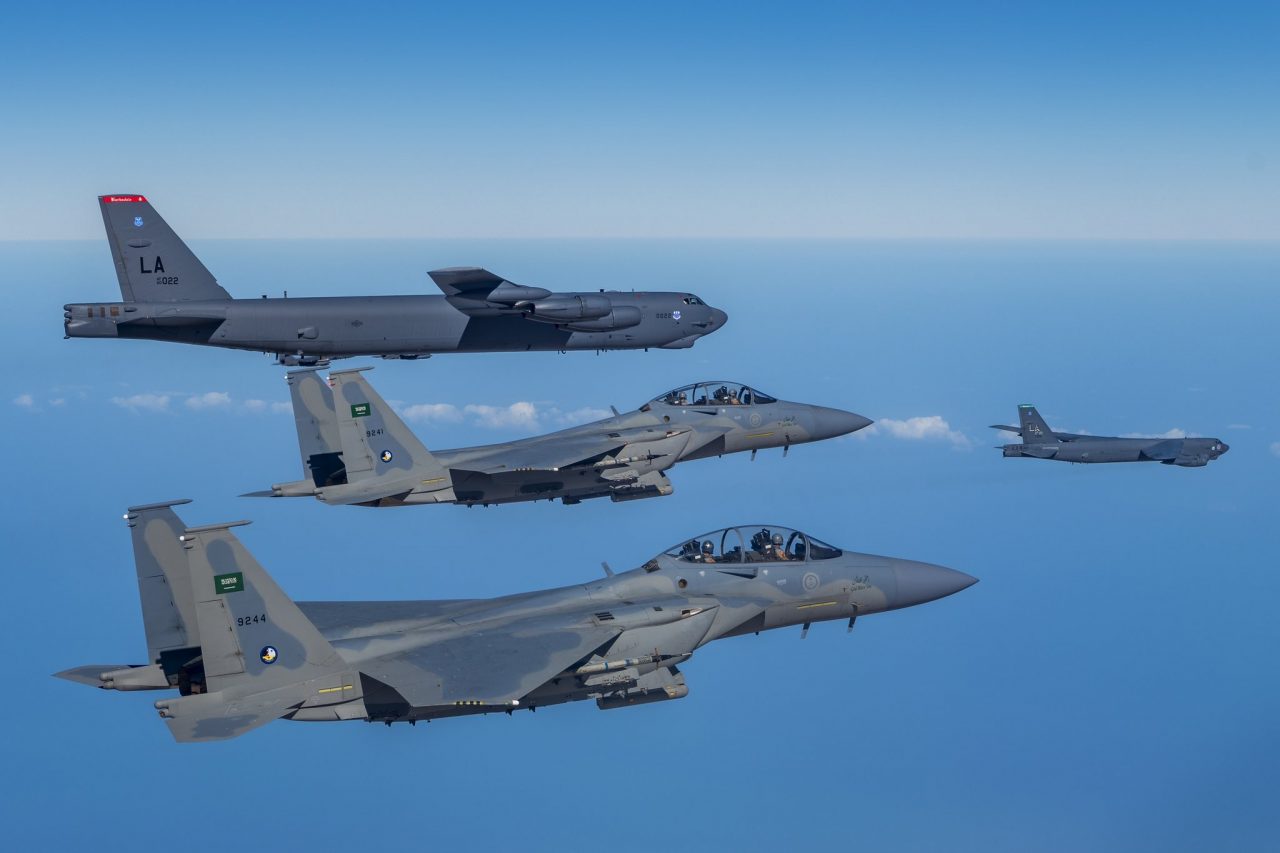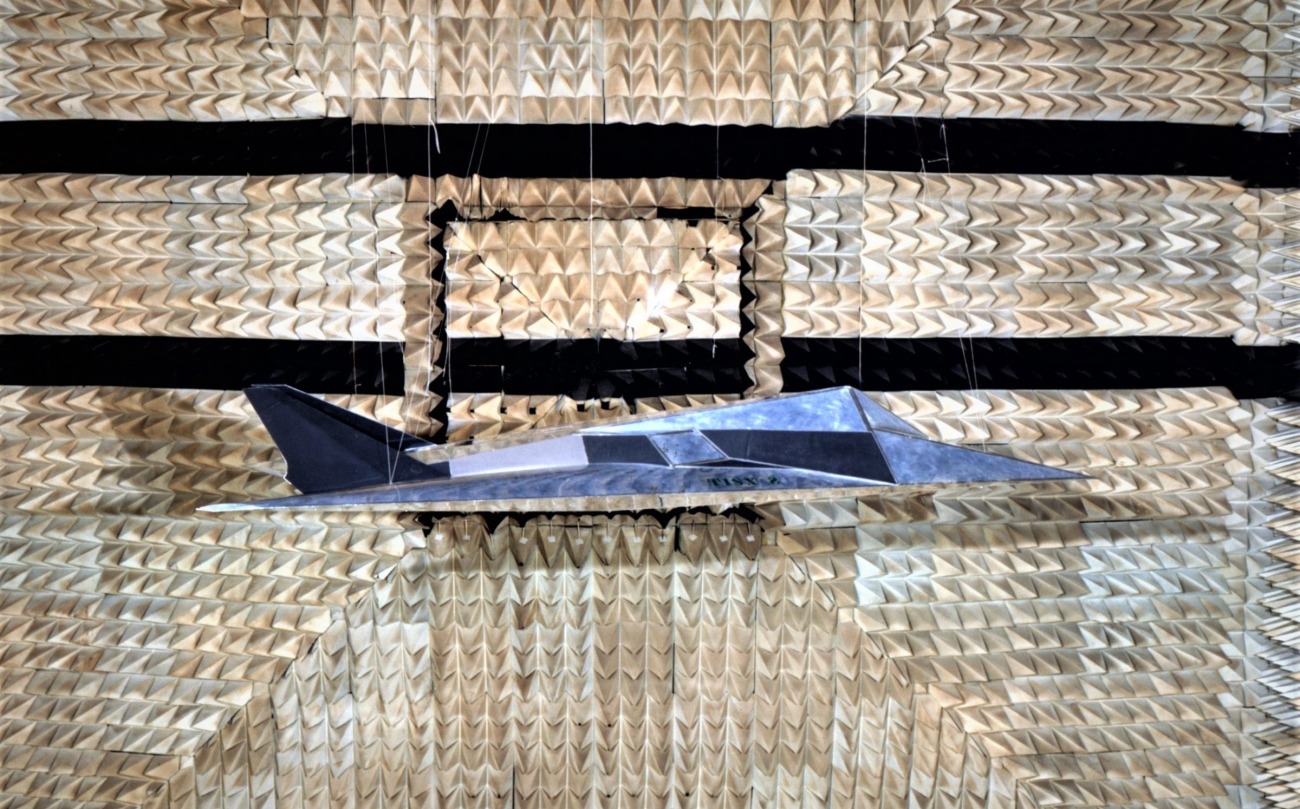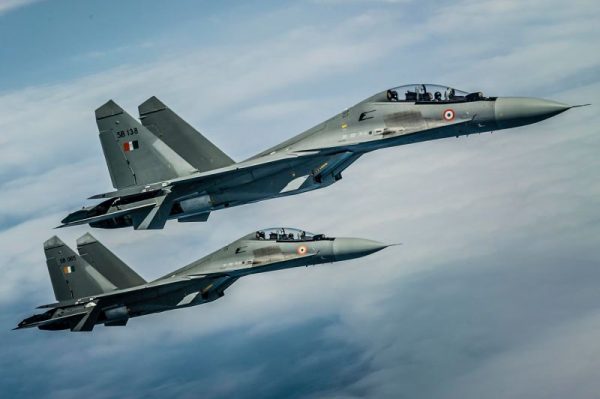
Many people believe that the US Air Force’s (USAF) greatest advantage is its stealth fighter jets, which can penetrate adversary airspace without getting detected. However, the USAF’s entire stealth fleet could be literally ineffective in the Indo-Pacific theatre without its tanker fleet.
Stealth helps penetrate enemy airspace, but the USAF’s tanker fleet gives these fighter jets global reach.
In other words, the USAF’s global power projection is incomplete without its tanker fleet. In the Pacific, where Guam sits 1,920 miles from Shanghai, the criticality of the US’s tanker fleet can hardly be overstated.
China, however, has long understood this strength and vulnerability of the USAF and is working on methods to neutralize its tankers.
China has reportedly developed hypersonic glide vehicles that can launch air-to-air weapons targeting high-value targets such as command-and-control aircraft and tankers thousands of miles away. It could threaten aircraft such as aerial refueling tankers, AWACS, and EW aircraft.
If this report is accurate, this would make China the world’s only country to operate hypersonic glide vehicles capable of launching air-to-air missiles.
A hypersonic glide vehicle deployed from a DF-17 missile could travel about 1,500 miles and could target aircraft operating from Guam.
Hypersonic glide vehicles (HGVs) are warheads that can maneuver in the atmosphere en route to a target, extending range and making interception difficult.
An IAF expert, who wished not to be quoted, told EurAsian Times, “China’s big claims—whether issued directly or floated indirectly via ‘people with knowledge’—should not be treated as 100% fact. Progress in hypersonics and long-range missiles is real; an unverified leap from a 2021 test projectile to an operational, Guam-range tanker-killer is still a claim, not a confirmed capability.”
The USAF’s Tanker Fleet Advantage
For any Air Force, no matter how large and modernized, global force projection is possible only with a large fleet of aerial refueling tankers.
Aerial tankers are the unsung enablers of modern airpower: without them, fighter jets, irrespective of their generation, stealth features, sensor fusion, or firepower, are tethered to their own bases, and their combat range is limited to a maximum of 700 nautical miles.
While the USAF’s bombers and stealth fighter jets hog all the limelight and fascinate aviation enthusiasts, it’s the aerial refueling tankers that are the silent enablers of global force projection. Tankers, not fighters, ultimately determine whether an air force can project power beyond its borders.
However, despite their criticality in aerial combat, the global imbalance in the tanker fleet is mind-boggling.
Global Aerial Refueling Tanker Fleet
The US Air Force has the largest aerial refueling tanker fleet, accounting for 75% of the global “active” service tanker fleet. According to Global Firepower, the US has an active fleet of 610 aerial refueling tankers.
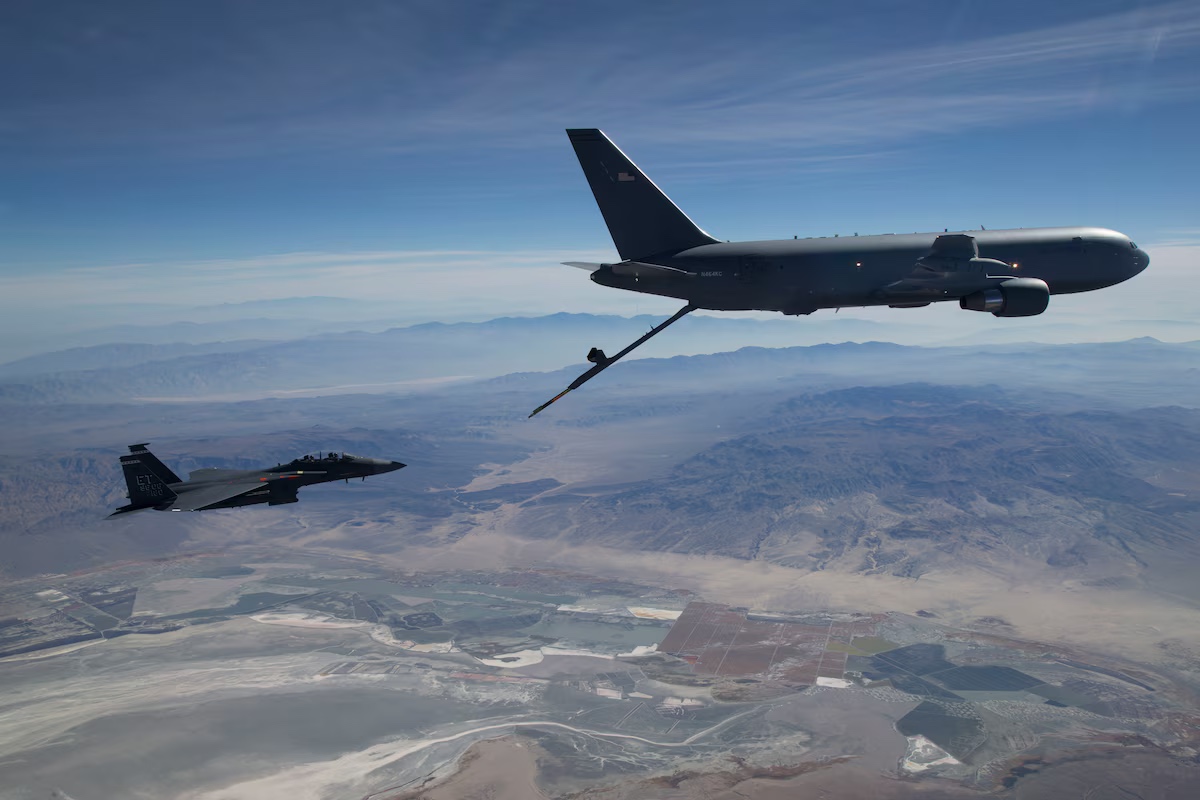
The USAF is mandated to maintain a minimum strength of 502 tankers at all times.
The next country with the second-largest tanker fleet is Saudi Arabia with a fleet of 22 tankers. It is followed by Russia (18) and China, with 9 aerial refueling tankers.
Tanker Fleet’s Criticality in the Pacific
While the tanker fleet is critical for global power projection, its importance in the Pacific theatre is hard to overstate.
The unrefueled combat radius of the F-22 Raptor is 590 nautical miles and of the F-35C around 600 nautical miles.
However, Guam is placed some 1900 miles from China. Basically, without aerial refueling, the USAF’s stealth fighter jets are useless in the Pacific theatre.
Now, here comes the paradox.
The US has invested billions of dollars in developing stealth technology. For instance, the lifecycle cost of the F-35 Joint Strike Fighter (JSF) program is over US$ 2 trillion.
However, every one of these stealth jets still has to depend on an unstealthy, non-maneuvering 200-foot aluminum tube flying in a predictable orbit.
These large tankers are detected by long-range radars and datalink networks for hours.
Earlier, the operational tactic was to keep these large, non-stealthy tankers out of the range of the adversary’s long-range air-to-air missiles.
However, the operational range of AAMs has been increasing for some time.
China’s PL-15 has a claimed range of 200–300 km, and the PL-17 could target aircraft from over 400 km away. Russia’s R-37M has a range of 300-400 km.
Earlier this week, the US Navy also revealed its ultra-long-range air-to-air missile AIM-424 Malice, which has a claimed range of nearly 463 km.
The Lockheed Martin AIM-260 missile, which is in production but not yet in service, is also expected to have extremely long range. MBDA Missile Systems Services Meteor, widely used in Europe, is ramjet-powered and can hit targets more than 160 kilometers away.
However, tankers could still theoretically stay beyond the range of these ultra-long-range BVR AAMs.
But China’s new hypersonic glide vehicle (HGV), which can launch air-to-air weapons, flips this script by allowing it to target aircraft flying thousands of miles away.
Through these weapons, China can shoot US tankers near Guam. Hitting just one tanker can disrupt the entire operation, as it would compel the USAF to shift tanker operations beyond the second island chain, reducing the combat radius of the USAF’s stealth fighter jets.
Nor is targeting the tanker fleet merely theoretical. For instance, during the Iran War, an Iranian-aligned Iraqi militia group claimed two separate SAM attacks on USAF KC-135s overflying Iraq.
Furthermore, Iran targeted USAF tankers at the Prince Sultan Air Base in Saudi Arabia and damaged at least five parked KC-135s.
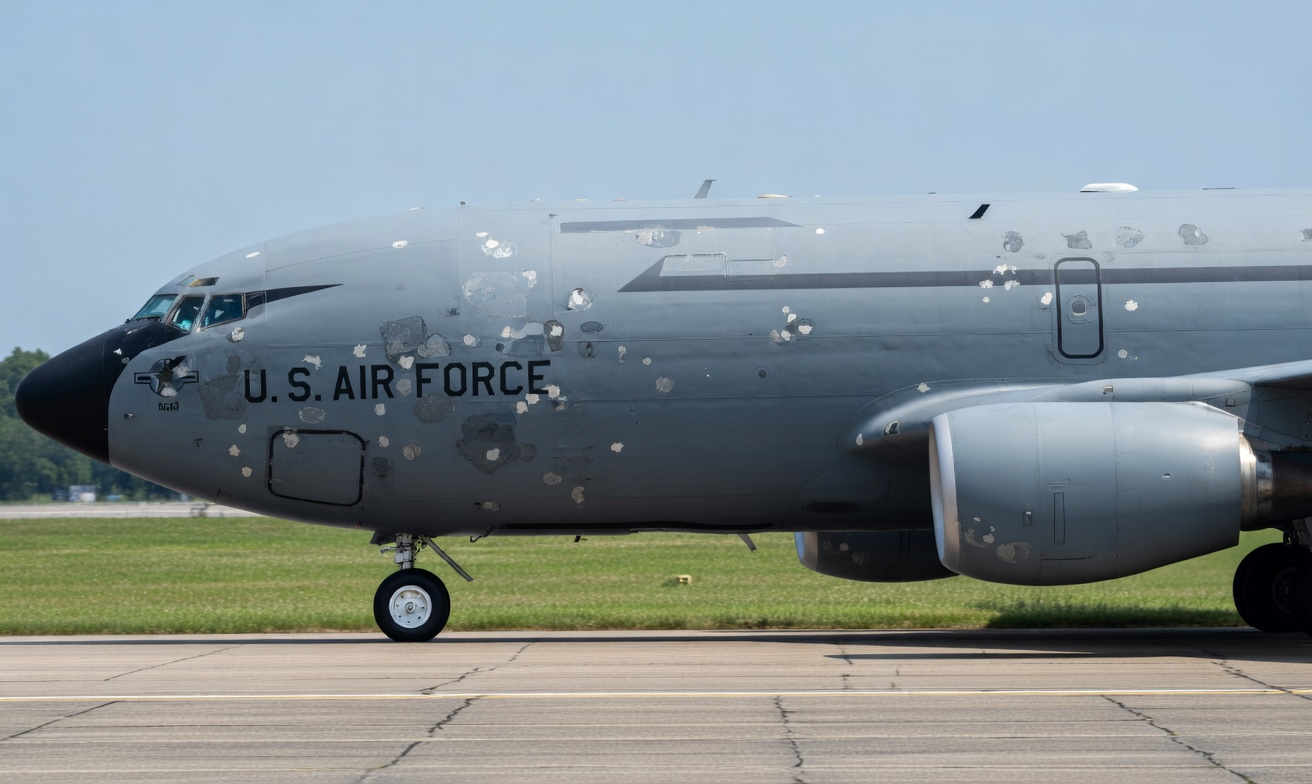
Iranian strategy shows that downgrading the operational capabilities of the USAF’s stealth fighter jets, such as the F-22 Raptor and the F-35 Lightning II, is no longer a matter of detecting them on radar. One can essentially push them out of their airspace by targeting the USAF tanker fleet.
China’s HGV-launched AAMs do precisely that.
This does not mean that the USAF’s tanker fleet has become inoperable in the Pacific theatre.
However, the USAF must devise new countermeasures to neutralize the threat posed by this new ultra-long-range Chinese weapon.
These countermeasures could involve pairing an electronic warfare jet with the tanker aircraft, or pairing it with loyal wingman drones that could shield the vulnerable tanker aircraft.
- Sumit Ahlawat has over a decade of experience in news media. He has worked with Press Trust of India, Times Now, Zee News, Economic Times, and Microsoft News. He holds a Master’s Degree in International Media and Modern History from the University of Sheffield, UK.
- He can be reached at ahlawat.sumit85 (at) gmail.com