Russia is prepared to halt attacks on Ukraine for a single day to allow presidential elections but will not agree to a longer ceasefire, the Kremlin said on Monday.
But had the Russian attack on Ukraine, as planned, succeeded in the initial days, the Ukraine-Russia war would not have dragged into the fifth year, and there would have been no talks of changes in leadership.
Dmitry Peskov said President Vladimir Putin would order Russian forces not to strike Ukraine on polling day if elections were held. “If they truly want to hold elections in Kyiv, then the president of Russia, the commander-in-chief, will be ready to give an order not to launch strikes on Ukraine on election day, specifically on election day,” Peskov told reporters.
He rejected Zelenskiy’s call for a 60-day ceasefire, saying Russia seeks a lasting peace agreement rather than a temporary halt.
“In the Kremlin, both President Putin and officials at other levels have repeatedly stated that we do not want a ceasefire,” Peskov said. “We want long-term peace and are prepared to do everything possible to achieve it.”
Zelenskiy made the 60-day offer on Sunday in an ABC News interview. He said Ukraine would organize elections if Russia agreed to a full ceasefire lasting two months.
“Please tell Putin, give us two months, 60 days of total ceasefire, 60 days, and we will organize elections,” Zelenskiy said.
His comments came a day after U.S. President Donald Trump said Ukraine should replace its President. Trump told reporters that Zelenskiy had failed to reach a deal with Russia and that it was time for a change.
“I think it’s time for Ukraine to get a new president,” Trump said. He criticized Ukraine’s strikes on Russian oil refineries, which followed a U.S. agreement to ease restrictions on Russian diesel exports.
Why Putin Failed To Seize Kyiv?
Russia had a clear plan to capture Kyiv and force a surrender.
On 24 February 2022, Russia’s Airborne Forces launched an operation toward Kyiv, supported by missile strikes and air cover, using attack and transport helicopters.
The objective of this blitzkrieg-style maneuver was to seize Antonov Airport in Hostomel, north of Kyiv, establish a bridgehead, create a secure air corridor for additional airborne troops, and then rapidly advance toward Kyiv.
The plan was to quickly deploy Russian Special Forces and military equipment at Hostomel and then overwhelm Ukrainian resistance after a couple of hard strikes.
If successful, Russian troops, armor, artillery, and supplies could be flown into the airport, allowing them to deploy into Kyiv and overthrow the Ukrainian government.
To execute this mission, Russia tasked its elite Airborne Forces (VDV), particularly the 31st Guards Air Assault Brigade, a unit with extensive combat experience from operations in Chechnya, Crimea, and Donbas.
The operation began on February 24 with a coordinated attack involving numerous Russian Ka-52 “Alligator” attack helicopters, which used low-flying tactics to avoid radar detection.
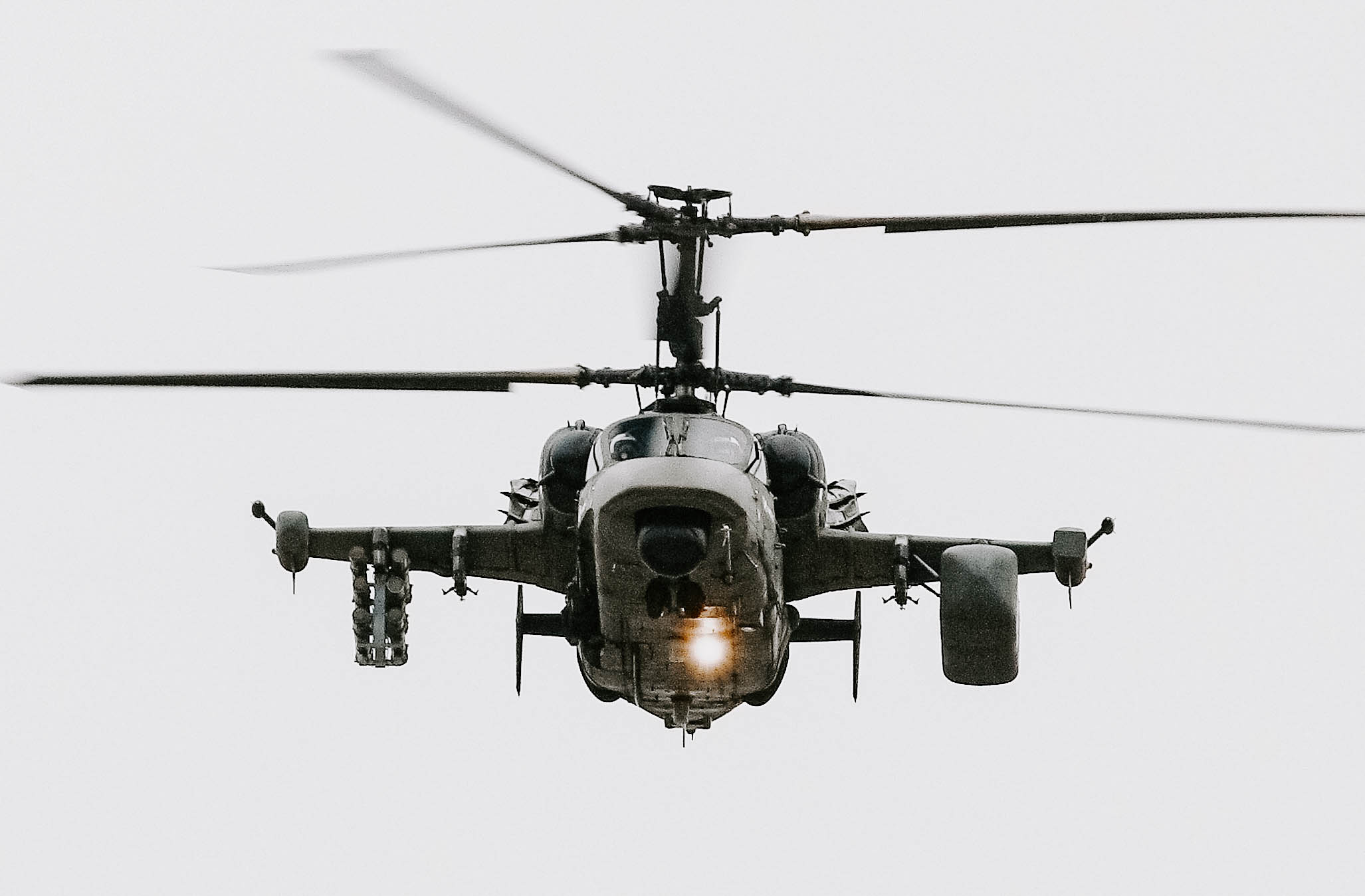
These helicopters fired guided missiles and cannons at the airport’s defenses to suppress Ukrainian forces. Despite intense resistance that cost Russia several helicopters, the assault continued for several hours.
Russian forces seized Hostomel Airport on February 25, 2022. Afterward, the Russian Army and its Airborne Forces tried to turn the airport into a critical forward operating base for their planned push toward Kyiv.
However, Russia’s offensive soon faced considerable setbacks. Russia’s failure to clear the area around the airport quickly led to catastrophe. Ukrainian forces, including special operations units from Ukraine’s Ministry of Defense Main Intelligence Directorate, launched a counteroffensive.
Local fighters and Ukrainian forces on the ground inflicted heavy damage on the Russian troops. In one of the most noteworthy junctures of the battle, a sniper killed Major General Andrei Sukhovetsky, the commanding general of the Russian 7th Airborne Division, by the end of February 2022.
The invasion’s initial momentum slowed, leading to the infamous 40-mile-long convoy and entire units of Russian troops stalling due to fuel shortages.
By March 4, Russian state television aired footage showing large numbers of destroyed Russian military equipment, struck by Ukrainian artillery, scattered across the base. Russian forces became immobilized without clear orders to advance or retreat.
The situation remained dire until March 29, when Russian commanders finally ordered a retreat from Kyiv Oblast. This marked the beginning of the Russian withdrawal from Hostomel, with damaged equipment that could not be evacuated. Ukrainian artillery fire targeted the retreating forces, further complicating their situation.
Among the equipment left behind were 16 modern BMD-4M armored fighting vehicles and a 1L262E Rtut-BM electronic warfare system. These items were either destroyed during the retreat preparation or intentionally blown up by Russian forces.
When Ukrainian troops reentered Hostomel, they found evidence of the hastily abandoned Russian positions, with remnants of daily life scattered around.
These included unopened food packages, personal items like passports and bank cards, and even Ukrainian armored vehicles that had been captured by Russian forces but could not be taken with them.
The loss of surprise, the inability to clear surrounding areas, and the vulnerability of airborne operations to counterattacks demonstrated how quickly airborne missions can go wrong.
The Russian failure to capture Hostomel Airport proved fatal for Moscow’s overall military strategy in Ukraine. After the Hostomel disaster, Russia withdrew from Kyiv oblast and then regrouped in Ukraine’s southern and eastern provinces to stabilize the frontlines.
This initial failure to seize Hostomel and then proceed to Kyiv also allowed Western countries to mobilize support for Ukraine and resume supplying Kyiv with critical military and humanitarian aid.
- Sumit Ahlawat has over a decade of experience in news media. He has worked with Press Trust of India, Times Now, Zee News, Economic Times, and Microsoft News. He holds a Master’s Degree in International Media and Modern History from the University of Sheffield, UK.
- He can be reached at ahlawat.sumit85 (at) gmail.com