The U.S. Air Force has donated an F-117A Nighthawk, the world’s first operational stealth aircraft, to the Smithsonian Institution, where it will be on permanent public display later this month.
The Nighthawk, serial number 85-0818 and nicknamed “The Overachiever,” is the only F-117 known to have flown combat missions in all four major conflicts, including Operation Just Cause in Panama (1989), Operation Desert Storm (1991), Operation Allied Force over Yugoslavia (1999), and Operation Iraqi Freedom (2003).
It first flew in 1986 and was withdrawn from combat service around 2007.
The Air & Space Forces Association announced the donation on Sept. 14 at its Air, Space & Cyber Conference. Lockheed Martin’s Skunk Works prepared the aircraft for display in a museum. Air Force Reserve crews from the 512th Airlift Wing then flew the partially disassembled Nighthawk from California to Virginia aboard a C-5M Super Galaxy, arriving around Oct. 6.
The National Air and Space Museum’s Steven F. Udvar-Hazy Center near Washington Dulles International Airport will reassemble the aircraft. Visitors can watch the reassembly through the glass overlook of the Mary Baker Engen Restoration Hangar before the aircraft joins the permanent collection in late October, alongside other icons such as the SR-71 Blackbird and the B-29 Enola Gay.
Museum officials described the F-117 as the world’s first true operational stealth combat aircraft and said adding it fills a longstanding gap in the national collection. It is the 16th F-117 transferred for public display.
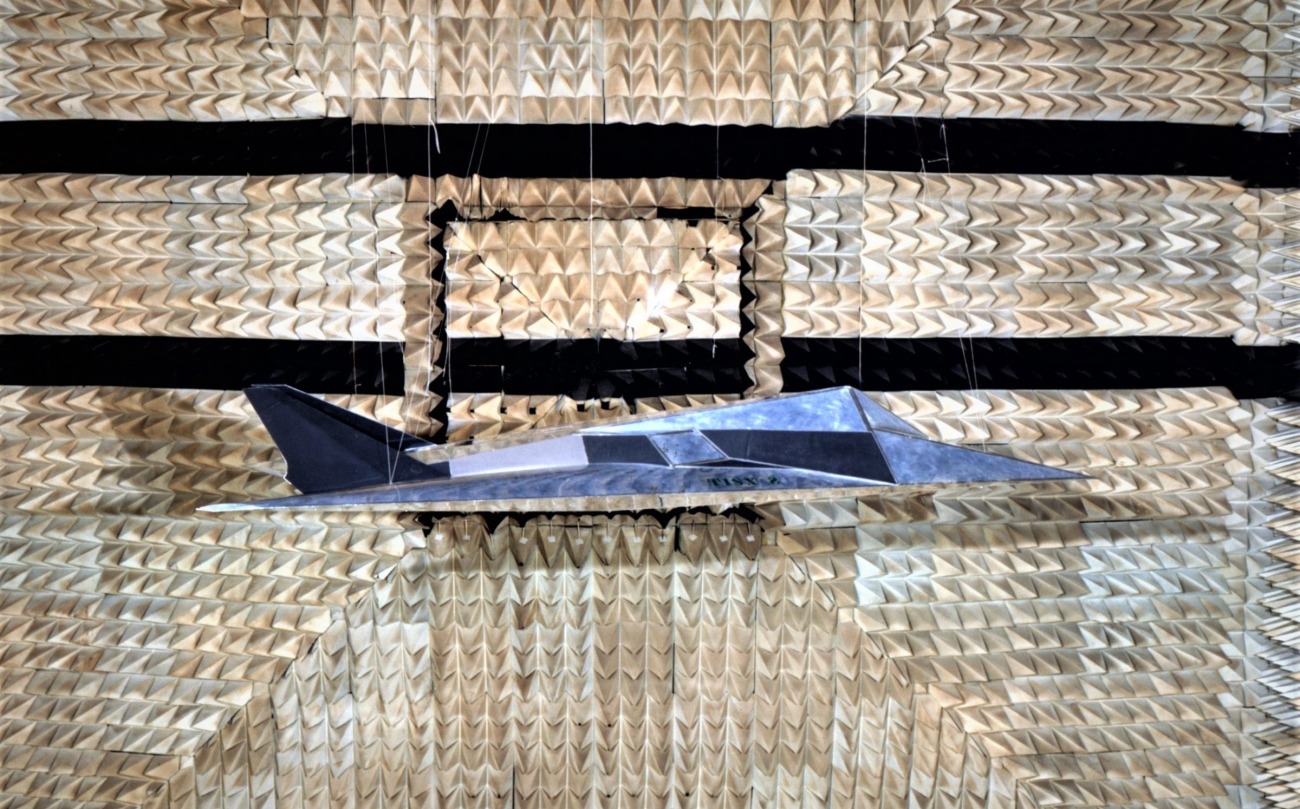
World’s 1st Stealth Aircraft
Aerospace analysts have long admired the F-117 Nighthawk’s distinctive design. A GE blog post describes the Nighthawk’s features and says the aircraft looks less potent alongside other advanced American fighters.
The aircraft has no afterburners. The aircraft is unstable on all three flight axes and requires an onboard computer for control
Despite that, the GE also noted one advantage: the aircraft is practically invisible to enemy radar.
According to General Electric, it was the first stealth aircraft to see the light of day during the Cold War and used a pre-existing engine modified to meet the requirement.
Despite the US technological advantage during the Cold War, contested airspace posed a substantial threat to pilots and their aircraft. Developing enemy technology could allow the enemy’s air force to lock on to American fighter jets and shoot them down at an alarming rate.
Although Lockheed Martin built the F-117 Nighthawk, GE built the engine that could power a stealth warplane. GE created the F404 engine exclusively for the F/A-18 Hornet, and it quickly became a compelling alternative for the F-117, a top-secret aircraft that needed an engine.
The engine was almost identical to the F/F404 A-18’s variant. GE constructed roughly 100 of these engines on a separate assembly line with only government-approved workers. That engine soon earned its stripes by being dependable, maintainable, lightweight, and inexpensive.
The Nighthawk
The US Air Force retired the F-117 Nighthawk in 2008.
The F-117s are reportedly used as developmental and “red air” training platforms a decade after their retirement. Certain aircraft act as aggressors in air-to-air combat during red-air training.
This raised eyebrows because it was unlikely that an archaic aircraft retired a decade ago would resurface for war games. The US Air Force later revealed that it had resurrected the Nighthawk.
Speculation suggests the USAF has brought these aircraft back to life because of their stealth capabilities. The USAF needs to train its fighter pilots against adversary stealth fighters, the Russian Su-57 and the Chinese J-20, as well as cruise missiles.
As a result, USAF pilots may be able to better find and intercept stealth aircraft in future operations and counter enemy cruise missiles if they train against Nighthawks as part of an advanced program.
When the US planned to develop the F-117 Nighthawk, the main challenge was reducing the aircraft’s radar cross-section and electromagnetic signature.
The aircraft had to fly subsonically to reduce obnoxious sonic booms. The aircraft had no afterburners or large exhaust plumes from infrared-emitting engines. It referred to flat surfaces that reflected radar radiation. The result was an otherworldly-looking black jet the US government didn’t recognize until 1988.
Despite the F-404’s ability to fly supersonically, the Nighthawk was limited to subsonic speeds because using afterburners to breach the sound barrier would compromise the aircraft’s stealth.
GE engineers designed the F-117’s unusual exhaust to scatter hot exhaust and evade radar and heat-seeking missiles.
“Really, it was the beauty of it. They could modify an existing engine, the F404, to provide the required thrust and weight. Minor adjustments were made to meet the F-117’s unique intake, and F404-F1D2 was ready to power the stealth attack aircraft,” said Bill Formosi, a former project manager of the F1D2 program.
Unlike other planes of the period, the F-117’s air intakes were grilled and coated with a unique radar-absorbent coating. Spring-loaded doors also opened on the ground to let in more air to the engine. However, once in flight, the hatches would be closed again to maintain the aircraft’s stealth.
According to Formosi, the tailpipe was the engine’s most distinctive feature.
“If you look at an F-117 from behind, you’ll notice that the engines aren’t visible like they are in other aircraft,” he said. “It was done on purpose, and it had everything to do with keeping it quiet. There was a 12-stage tailpipe that went from circular at the engine’s end to flat at the end of the exhaust, rather than an afterburner as the F404 had on the F/A-18.”
“This was done to spread the hot exhaust air over a larger region, reducing its heat signature,” Formosi said.
This is probably why the F-117 Nighthawk, commissioned over 40 years ago and retired over a decade back, has staged a comeback, this time for public viewing.
- Contact the author at editor (at) eurasiantimes.com
- Follow EurAsian Times on Google News