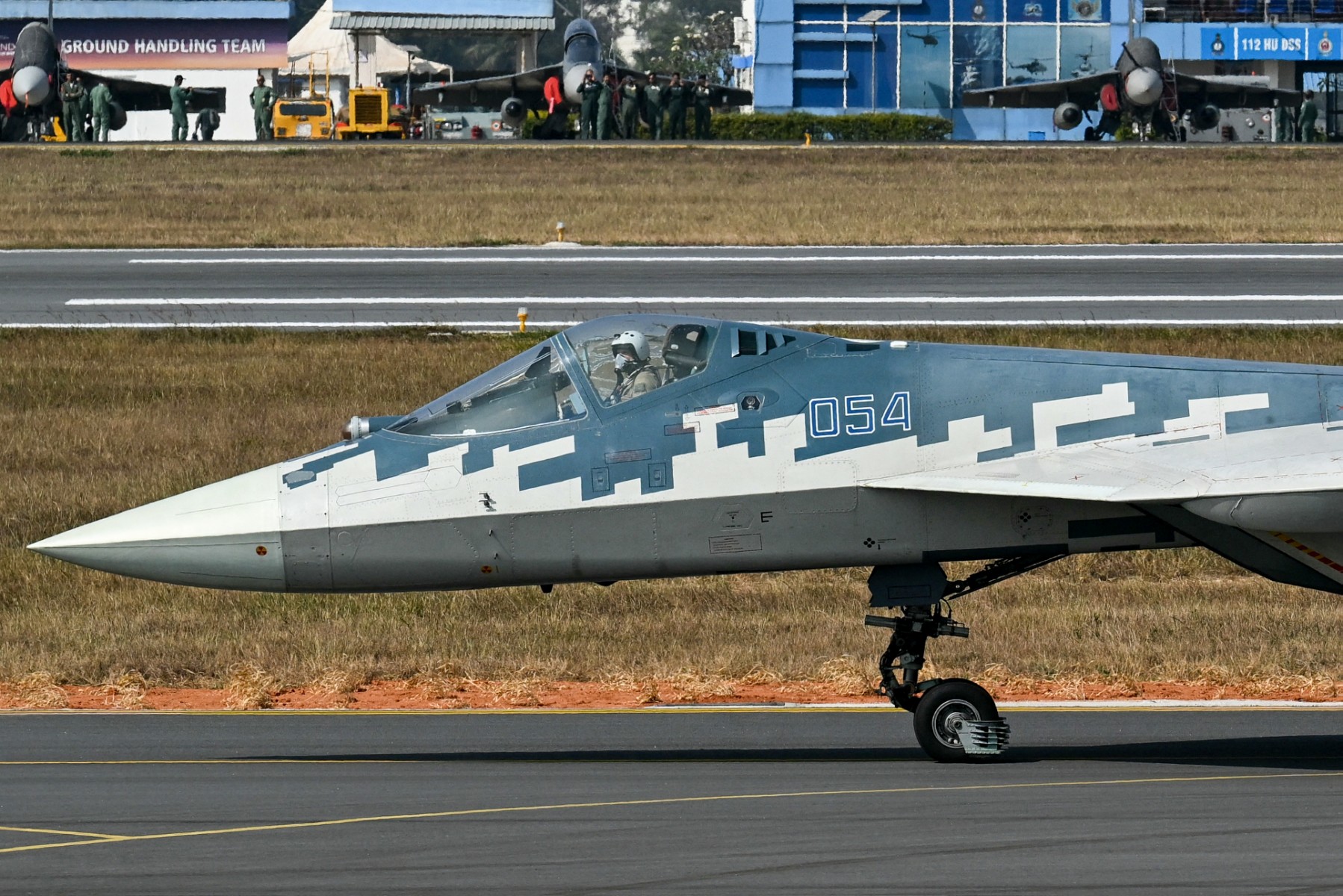
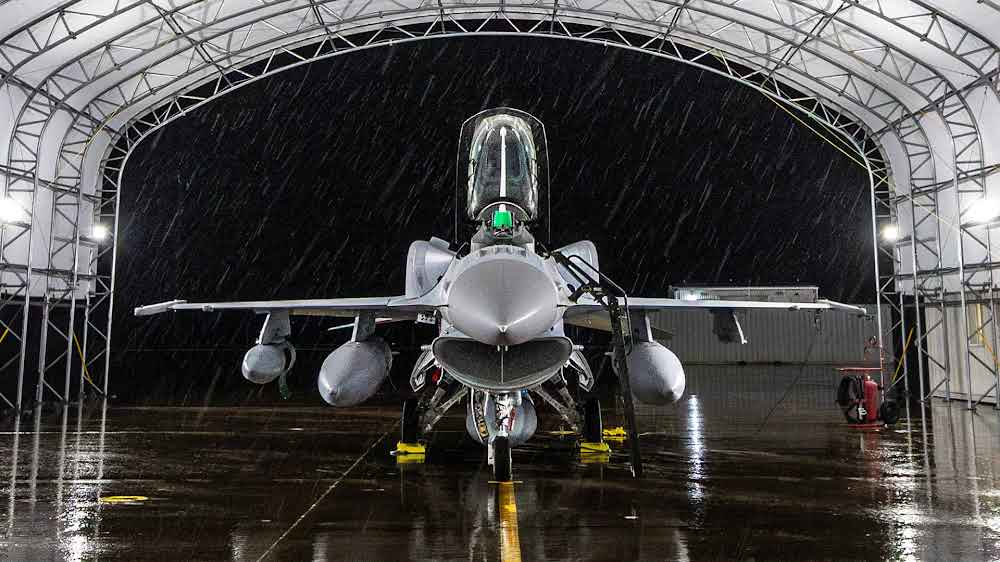
As EurAsian Times recently reported, the U.S. Air Force crew denied Indian officials cockpit access to its F-35 stealth fighter during the recent Tarang Shakti exercise, Indian Air Force Chief Air Marshal AP Singh said. Interestingly, the IAF did something similar with its cutting-edge Su-30 MKIs in 2008.
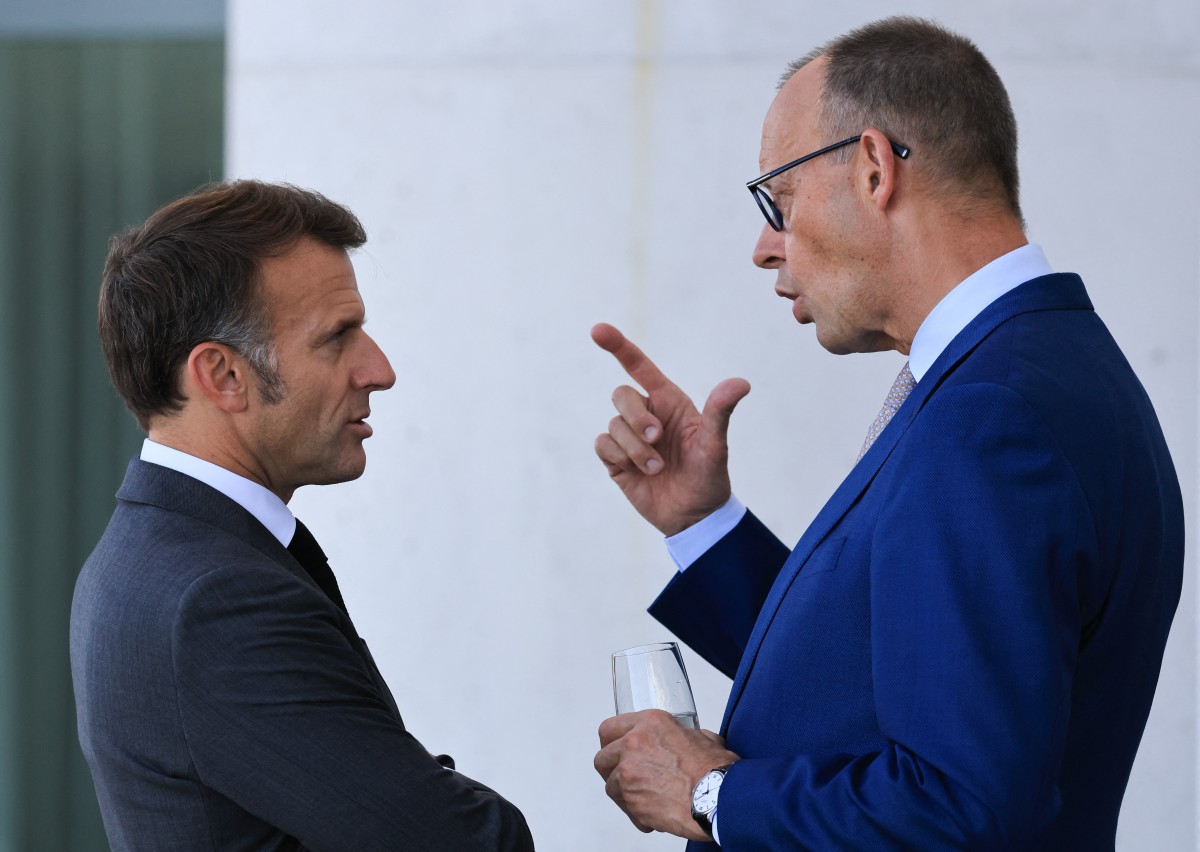
Speaking at a press conference alongside U.S. Pacific Air Forces Commander General Kevin Schneider, Air Chief Marshal Singh said the U.S. had made no formal offer to sell the F-35 to India, despite all the media buzz and speculation.
“Your people don’t even let us go near the aircraft, and you are talking about selling it to us,” Singh said when asked about any official offer for F-35s.
He added that Indian personnel were not shown the cockpit.
“The US did not show us the cockpit, but allowed us to fly in close formation,” Singh said. He later described his remarks as a joke that should not be taken too seriously and noted that countries protect sensitive technologies, including systems India does not share with the United States.
General Schneider said he did not make decisions on information sharing for programs such as the F-35. “There are program-level security classification guides that determine what we can share, when we share it, as well as how we protect it,” Schneider said.
USAF had deployed six F-35 stealth jets for Tarang Shakti. This was the first time U.S. stealth jets trained against Indian jets and operated from the indian soil. This was a rare opportunity for the Indian military to study and evaluate a stealth fighter using Indian ground radars.
Experts like Air Marshal Anil Chopra, writing for the EurAsian Times, believe it would be a good opportunity for the IAF to prepare for a potential J-20 scenario operated by China.
Chopra wrote: “The F-35A is the only fifth-gen fighter in the exercise. In mock drills, it is much better than China’s J-20, with stealth, low observability, sensor fusion, and first-look, first-shot tactics, and it will better simulate the J-20. That does not mean the IAF will see the F-35’s classified technologies; however, it does mean that the IAF can practice studying a stealth jet from an Indian base—to understand the Chinese J-20 better.”
Parallel from Red Flag 2008
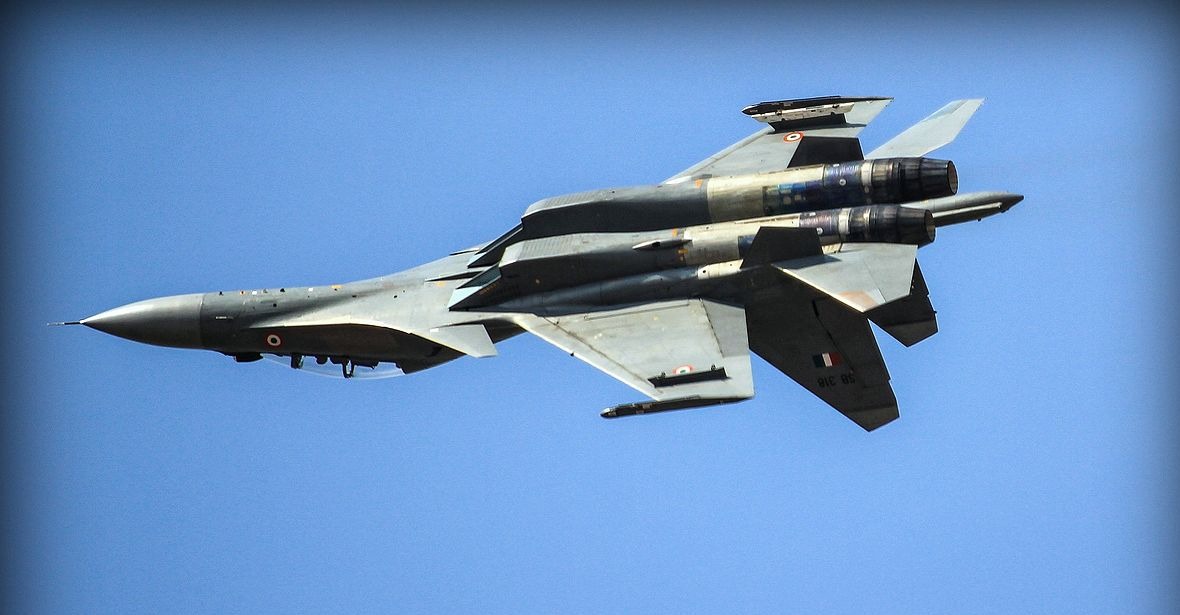
In 2008, India sent its most advanced Su-30 MKI fighters to the US for the Red Flag exercise at Nellis Air Force Base in Nevada.
To protect the Flankers’ classified NIIP N011M Bars passive electronically scanned array (PESA) radar, the Indian Ministry of Defense directed pilots not to use the radar in full operational mode.
IAF stated at the time that “the radar frequencies are top secret, as they can be used to block vital functions of the fighter” and that “while we have a good equation with the USA, we have to be careful about the future.”
The Bars radar was operated only in a limited “training mode” that restricted its range and capabilities, preventing detailed mapping of its frequencies by host forces.
Other limitations during Red Flag 2008 included restrictions on data-links, chaff, flares, and simulation of the R-77 BVR missile. Indian pilots operated without a full cockpit data picture to protect its sensitive technology.
While Indian crew had limited exposure to the F-35s at Tarang Shakti 2026, with the jets kept in a segregated area, the USAF has previously been given noteworthy access to the MKIs.
During the familiarisation phase ahead of Red Flag 2008, Su-30MKI crews exchanged rides with their American counterparts, allowing U.S. pilots to fly in the Flanker’s rear seat, according to reports.
During Exercise Cope India 2023 at Kalaikunda, then-PACAF Commander General Kenneth S. Wilsbach flew a training mission in the rear seat of an IAF Su-30MKI alongside an Indian pilot—an engagement the IAF publicly confirmed.
Earlier Cope India iterations also saw USAF pilots fly in Su-30 trainer variants.
During the just-concluded Tarang Shakti, F-35s operated extensively alongside Su-30MKIs, Rafales, and Tejas in joint tactical missions, large-force engagements, and mixed formations, giving the USAF tremendous exposure to the Flanker’s performance envelope, radar behavior, and tactics in a realistic environment.
Su-30 MKI vs. F-15 at Red Flag
After the 2008 exercise, a video of a private briefing by USAF Colonel Terrence Fornof, an F-15 pilot and director of requirements and testing at the Air Force Warfare Center at Nellis, circulated online.
Fornof was addressing a group of retired military pilots.
Fornof claimed F-15 pilots “dominated” the Su-30 MKI in one-versus-one engagements. He described Indian pilots as “amazed” and “floored,” saying they didn’t want more one-versus-one fights after the first few days.
He claimed the F-15 exploited a vulnerability in the Su-30’s thrust-vectoring by waiting for the aircraft to enter post-stall maneuvering, after which it “starts falling out of the sky,” allowing the F-15 to close and engage with guns.
Fornof also claimed the Su-30 MKI’s engines were highly susceptible to foreign object damage, leading Indian pilots to request one-minute spacing between takeoffs, and he noted concerns about engine reliability.
He claimed Indian pilots had a high rate of fratricide and that, on paper, the Su-30 had superior radar, thrust, thrust vectoring, and weapons range. He added that once Indian pilots fully mastered the aircraft, they could regularly defeat F-15s and F-16s, but the Su-30 was “nowhere near” the F-22.
USAF later said Fornof’s comments were his personal opinion and that he did not intend to offend allies.
Indian accounts and subsequent reporting rejected Fornof’s points. They claimed that the Sukhois held their own against top USAF pilots and maintained a high serviceability rate throughout the exercise.
“Our pilots were functioning on a stand-alone basis while the USAF pilots were part of a network and were getting inputs on navigation, target information and enemy details. We were getting all our inputs manually and were fighting fit even against all these odds,” a top IAF officer had said at that time.
Other Indian accounts claimed that no Su-30 MKI was shot down in the approximately 10 one-versus-one engagements, and that the IAF was credited with most kills.
All engagements were recorded on ACMI systems. Thrust-vectoring performance differed from Fornof’s account, and U.S. aircrew said they appreciated the IAF’s maneuvers.
Fratricides occurred on both sides. Indian sources attributed theirs largely to periods when AWACS support was unavailable and to poor ground control by U.S. controllers (acknowledged in debriefs), noting that the IAF lacked Link-16 and advanced IFF while the U.S. side had them.
Serviceability was reported above 90 percent, with no confirmed foreign object damage incidents of the type described; a tire burst was quickly repaired. Engines were NPO Saturn (not Tumansky, as Fornof said). The one-minute takeoff spacing was a deliberate safety measure because damaged engines had to be returned to Russia for repair, with no local replacements available.
IAF reported a mission achievement rate above 90 percent and said they performed well in large-force engagements despite operating far from home and under restrictions.
In conclusion, the F-35 access limits and the 2008 Su-30 MKI restrictions highlight standard practice among air forces seeking to protect classified tech during wargames.
- Mail the author at: editor (at) eurasiantimes.com
- Connect with us on X at: EurAsian Times