OPED by Ambassador (R) Raghu Gururaj
At the Freedom 250 reception in Mumbai recently, US Secretary of State Marco Rubio declared that “the relationship between the United States and India is defining, in many ways”.
Yet, against the gathering contradictions of the Trump administration’s foreign policy, the assertion seemed to ring hollow across the conference hall. Now, Donald Trump’s America First politics has suffered a major setback in the midterm elections.
By handing over control of both chambers of Congress to the Democrats, American voters have delivered a strong political rebuke to Trump and placed significant constraints on his remaining tenure.
For India, however, the more consequential question is not whether Trump has been weakened politically, but whether the transactional approach that has characterized his dealings with New Delhi represents a temporary presidential preference or a more enduring change in America’s conception of strategic partnerships.
Rubio’s visit visibly emphasized advancing Washington’s energy and commercial interests. His discussions with Reliance leadership focused on energy, data centers, and commercial opportunities, while his visit to Jamnagar highlighted the refinery’s capacity to process Venezuelan crude. While these may be legitimate subjects of economic diplomacy, the prominence of such engagements, alongside the visit’s less visible political dimension, invites scrutiny.
The bilateral economic relationship is fraught with its own irritants. The much-anticipated India-US trade agreement still hangs in the balance, with disagreements over tariffs, market access and sensitive sectors such as agriculture.
Conflicting indications by ministers on both sides about the status of the free trade negotiations point to a stalemate. The Trump administration’s immigration crackdown, uncertainty over H-1B visas and the controversial deportation of Indian nationals in restraints have also caused unease. India accepts its responsibility to address illegal migration, but expects its citizens to be treated with dignity.
The irony here is that a country whose technology sector depends heavily on Indian talent is making their professional mobility increasingly uncertain. The more consequential contradictions, however, concern India’s core security interests—Russia, China, Pakistan and Kashmir.
On Russia, Washington has repeatedly rebuked India and imposed punitive tariffs in an effort to reduce its purchases of Russian oil, arguing that the revenues fund Moscow’s war against Ukraine. Yet, on October 23, Reuters reported that a shipment of Russian diesel was heading towards New York following an arrangement between Donald Trump and Vladimir Putin. When American consumers face expensive fuel, Washington is prepared to negotiate with Moscow.
But when India confronts its own energy-security imperatives, it faces pressure and economic penalties.
The China paradox is equally revealing. Trump has engaged Xi Jinping at the highest level, with their September 2026 Washington summit seeking to manage trade and other disputes despite continuing strategic differences.
The US realizes China is too economically consequential to deal with through confrontation alone. But while America retains the freedom to negotiate with its strategic rival, India is expected to accommodate American demands over Russia, despite its own energy and defense requirements.
The Trump administration may no longer regard India as a sufficiently valuable counterweight to China to justify the political investment and strategic sensitivity such a partnership demands. But India itself has never aspired to become America’s front-line counterweight to China at any cost. No doubt, it wants to prevent Chinese hegemony in Asia, but will not become an instrument of American containment.
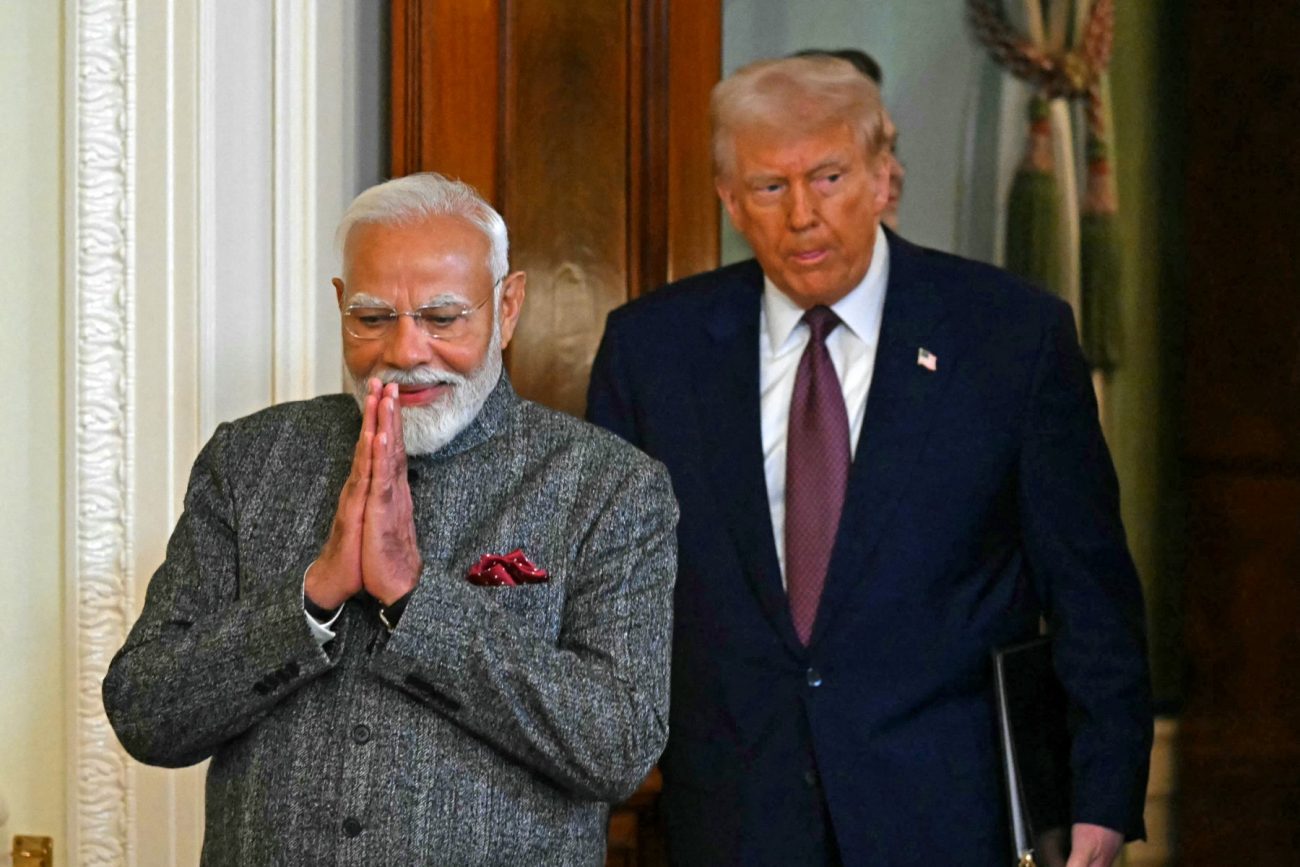
New Delhi has its own unresolved territorial dispute with Beijing, security concerns along the Line of Actual Control, and calculations concerning Pakistan. It will not subordinate these core interests to Washington’s Indo-Pacific strategy.
The fundamental asymmetry is that Washington wants the strategic benefits of India’s geography and military weight without necessarily assuming corresponding security obligations.
India, meanwhile, expects its concerns to be understood and taken seriously. Kashmir illustrates this divergence. India does not need Washington to resolve the issue. It merely wants the US to respect its position that India-Pakistan disputes should be addressed bilaterally. Naturally, Trump’s repeated claims of having mediated the May 2025 ceasefire caused considerable unease in New Delhi.
Washington, however, is unlikely to surrender its diplomatic flexibility with Pakistan, given its own regional and counter-terrorism interests. On Kashmir, it wants flexibility; on Russia, it wants Indian conformity.
The contradiction is also visible in America’s continuing security relationship with Pakistan. Washington’s proposed $686 million package to modernize Pakistan’s F-16 fleet has revived Indian concerns. It prompted Defense Minister Rajnath Singh to raise concerns directly with US Defense Secretary Pete Hegseth in Cebu on October 28.
Yet the same meeting saw both sides reaffirm their ten-year defense framework. Hegseth also reaffirmed American support for India against terrorism emanating from across its borders.
The juxtaposition captures the relationship’s complexity. While strategic cooperation is deepening, the two countries do not necessarily share the same security priorities. Washington may regard its Pakistan policy as a separate tactical calculation, but New Delhi cannot afford to view it in isolation from China’s strategic relationship with Islamabad.
Jaishankar’s pointed observation at the G20 Foreign Ministers’ meeting in Atlanta that “tactical calculations should not lead to overlooking the dangers of terrorism” was an unmistakable reminder of this disconnect.
The uncomfortable truth is that India’s options are also constrained by its own choices.
Dependence on imported energy, Russian-origin military equipment and Western technology limits its room for maneuver. China’s economic weight and military power further complicate the regional environment. India cannot afford to alienate Washington, but neither can it exchange one strategic dependency for another.
The larger lesson of Rubio’s visit is that strategic importance does not automatically guarantee diplomatic consideration. India may remain important to American calculations in the Indo-Pacific, but the Trump administration’s immediate commercial and domestic priorities increasingly shape the relationship. This is not necessarily a failed partnership, but one that is marked by mismatched expectations and the absence of a fully shared grand strategy.
India has wisely avoided both reflexive anti-Americanism and a blind embrace of Russia. It is diversifying energy sources, strengthening domestic defense production, building technological capacity and cultivating partnerships with Europe, Japan and others. But diversification takes time, and dependence on external markets, technology and energy will not disappear overnight.
Rubio’s vision of an India-US relationship as a defining one of the 21st century is ambitious. But a relationship cannot be defining merely because Washington says so. For India, the challenge extends beyond navigating the remaining years of the Trump presidency.
It must negotiate a relationship with an America whose strategic priorities may transcend administrations and political parties. Washington, in turn, must recognize that India can be a consequential strategic partner without becoming a subordinate one. The durability of this partnership will ultimately depend not on how much alignment America can extract from India, but on how much mutual trust it is prepared to build.
- Raghu Gururaj is a former Indian foreign service officer. He most recently retired as India’s Ambassador. His diplomatic assignments include Yemen, Singapore, Argentina, Switzerland, Saudi Arabia, Vietnam, Kazakhstan, Indonesia, and the Republic of Saotome and Principe. He holds a master’s in economics and political science and a diploma in journalism.
- This is an Opinion Article. Personal views of the Author
- He can be reached on X: @Rgururaj7