OPED by Raghu Gururaj, Retired Ambassador and former Indian diplomat
The Gulf crisis has crossed the boiling point. As Donald Trump bombarded key Iranian infrastructure targets this week to force a negotiation, defiant Tehran promptly retaliated, killing three US soldiers at a military base in Jordan and attacking a desalination plant and an oil facility in Kuwait
Few wars in recent history have threatened to inflict such enduring damage on the global economy while offering so little strategic payoff. Until recently, one of the world’s busiest and most critical maritime corridors, Hormuz, had been a theatre for geopolitical confrontation.
Prosperous Gulf economies, long regarded as islands of stability, now find themselves under the constant shadow of missile strikes.
Irrespective of the eventual military outcome, the economic costs of the ongoing Gulf war will far outlive its battlefield gains. Even if one accepts that Israel and the United States initiated the military confrontation, Iran is now compounding that error by widening the battlefield to Gulf states.
Iran is playing a dangerous game and may have crossed a strategic Rubicon. There are many reasons why this war is working against Tehran’s long-term interests.
Iran cannot change its location
Firstly, Iran’s decision to militarily attack Gulf countries is strategically perplexing. Even those Gulf states that had sought a pragmatic modus vivendi with Iran now view it through a harsher security lens. Israel has the backing of the United States.
The Gulf monarchies possess enormous financial reserves and can rebuild damaged infrastructure. Global shipping will eventually find alternative routes. But Iran cannot change its geography. It will remain surrounded by the very Gulf states whose trust it is now eroding.
Throwing away painstaking regional diplomacy
Secondly, Iran may well remember where it was only a few years ago. Ironically, it entered this decade with an opportunity to escape years of isolation. The restoration of diplomatic ties with Saudi Arabia (brokered by China), improved relations with the UAE and a broader desire for regional deescalation offered Tehran a chance to re-enter Gulf politics as a legitimate regional stakeholder.
By widening the conflict, Iran now risks throwing away years of diplomatic rehabilitation.
Iran’s structural economic weakness
Third, Iran’s own economy cannot sustain permanent confrontation. It entered the conflict from a position of structural weakness. Years of sanctions, inflation, currency depreciation and under-investment have left little margin for prolonged regional confrontation. Every additional crisis further discourages investment, accelerates capital flight and youth unemployment, and delays economic recovery.
Iran’s ability to influence regional disparities is a double-edged sword
Fourth, a strategic advantage which Iran possesses is that it derives influence from regional divisions. But any future reconciliation between Israel and an Arab neighbor, every settlement in Yemen or Lebanon, every alternative trade and energy corridor to the Strait of Hormuz reduces Tehran’s strategic relevance.
The most effective response to Iranian coercion is therefore not more coercion, but making Iran gradually less central to the region’s security and commerce.
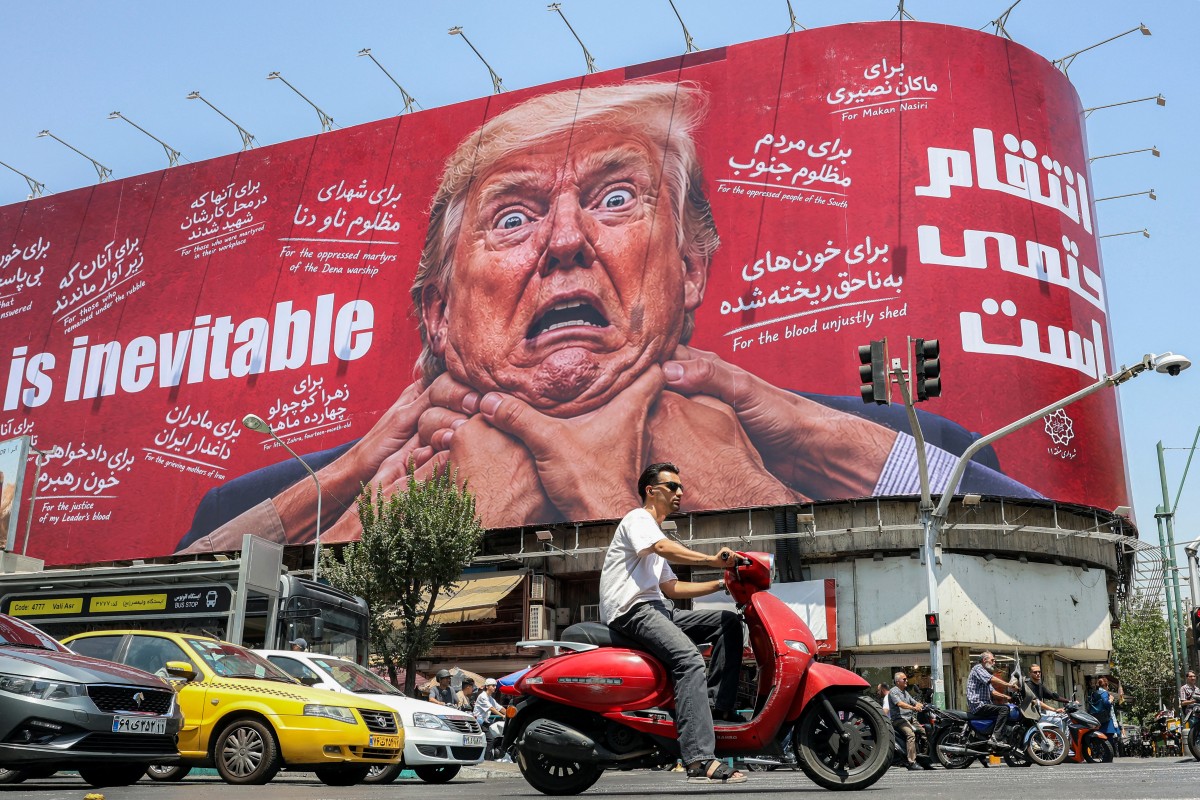
Iran’s control over Hormuz is not absolute
Fifth, Iran is possibly making a strategic mistake forcing the rest of the world to find a sustainable and structural solution to get around the Hormuz problem. No doubt, Hormuz gives Iran leverage that cannot simply be wished away overnight.
The question, then, is how to reduce Iran’s ability to weaponize that leverage? This disruption has already compelled many Gulf States to launch or revitalize alternate energy infrastructure corridors. The UAE’s construction of a new pipeline and a new deep-water port on its east coast in Fujairah aims to reduce dependence on Hormuz.
A pipeline project to connect Iraq to Jordan to provide Kuwait, Bahrain, and Qatar alternative outlets for their energy exports is under serious discussion. If the India-Middle East-European Economic Corridor (IMEC) takes off, it will boost Gulf corridor connectivity.
During the Cold War, the West never tried to eliminate the Soviet Union’s strategic advantages overnight. Instead, it invested in alternatives until those advantages mattered less. The same logic could apply to Hormuz.
Iran’s post-war diplomacy faces challenges
Iran will find its post-war diplomacy challenging as long as it continues to threaten the security of the Gulf nations. India’s interests are already directly harmed through attacks affecting Indian nationals, shipping, or energy security.
The USA, Europe,and Israel remain firmly opposed to Tehran anyway. In this scenario, Iran’s diplomatic options narrow considerably. It would increasingly depend on China for energy purchases and investment and Russia for military, diplomatic, and technological cooperation.
It could also depend on a limited network of partners such as Iraq, Syria (contingent on developments), and some non-state allies. That is not an enviable position to be in. Excessive dependence on China and Russia also weakens Iran’s strategic autonomy because Beijing and Moscow will prioritize their own interests over Tehran’s in the long run.
What US strategy can alter Iran’s incentives?
Whatever one’s assessment of how this conflict began, the United States also has choices to make to create an acceptable off-ramp for the major stakeholders. It has many levers, but only some are likely to change Iran’s strategic calculus. Iran’s economic reintegration is the strongest positive lever.
Iran desperately needs sanctions relief (even though it has lived under sanctions for decades), foreign investment, access to international banking, and modernization of its oil and gas sector. The US cannot offer these unconditionally, but it can make them contingent on Iran ending attacks on Gulf shipping, proxies, and regional infrastructure.
Iran wants recognition as a legitimate regional power. The US can either facilitate or block Iran’s entry into regional security dialogues and international economic forums. This matters because Iran has long argued that it deserves a seat at the regional table. The implicit bargain is that Iran can either remain isolated and economically stagnant or become a normal regional power. That is probably the most powerful long-term incentive.
The paradox is that Washington need not defeat Iran to change Iranian behavior. It only needs to convince Tehran that every attempt to exploit geography accelerates the world’s search for alternatives, weakens Iran’s regional standing and leaves it increasingly dependent on a shrinking circle of partners.
For that to happen, the US will have to find ways to gain some trust with the Iranian leadership. Iran will most likely dismiss American pressure with hostility, but may find it harder to ignore simultaneous pressure from a coalition comprising India, Japan, South Korea, the UAE, Saudi Arabia, the EU and others that have traditionally tried to maintain working relations with it.
A coalition in defense of freedom of navigation and regional stability would appear more reasonable to Iran than a coalition against itself. China’s influence is often overlooked. It buys Iranian oil in bulk and wants uninterrupted Gulf trade. If Iran keeps threatening Hormuz, Beijing eventually has an incentive to pressure Tehran because instability hurts Chinese energy security.
A key insight for Iran
The key insight for Iran is that it can weaponize Hormuz only so long as the world remains highly dependent on it. Every missile that threatens the Gulf accelerates investments that reduce Iran’s leverage.
Every attack on shipping strengthens international resolve to diversify away from Hormuz. Every strike on a neighboring state diminishes the diplomatic goodwill Tehran will desperately need once the guns fall silent. Iran can hold the world hostage for a while, but cannot build its future by doing so.
is the strategic paradox Tehran has to consider. That is why this is ultimately Iran’s war to lose.
- Raghu Gururaj is a former Indian foreign service officer. He last retired from the post of Ambassador of India. His diplomatic assignments include Yemen, Singapore, Argentina, Switzerland, Saudi Arabia, Vietnam, Kazakhstan, Indonesia, and the Republic of Saotome and Principe. He has a master’s in economics and political science and a diploma in journalism.
- This is an Opinion Article. Personal views of the Author
- He can be reached on X: @Rgururaj7