OPED by Wg Cdr J P Joshi (Retd)
In 2025, the Chiefs of the three services met at the Army War College, Mhow, on 26-27 Aug at the Ran Samvaad inaugural conclave. During this meeting, for the first time, the Chiefs were engaged in a structured public dialogue on theatreisation.
The Services had differing views over how best to structure the country’s defense organization to strengthen India’s national combat capability. The Chief of Naval Staff (CNS), Admiral D K Tripathi, said that the Navy is committed to integrating with the Army and Air Force to align with the theatreisation goal.
Air Chief Marshal A P Singh said, “Joint planning and coordination are essential, but joint structures are not necessary at this stage.”
The first Chief of Defense Staff (CDS), General Bipin Rawat, had emphasized that Integrated Theatre Commands (ITC) were the means to bring about integration, jointness and interoperability between the three services. He had described the role of the Indian Air Force (IAF) in the following words, “IAF continues to remain a supporting arm just as artillery or engineers support the combatant arm in the Army. They will be a supporting arm.”
In an interview to PTI on 25 October 2026, just prior to his retirement at the end of the month, Chief of Air Staff (CAS) Air Chief Marshal A P Singh emphasized that “IAF is fully committed to jointness and integration.”
He further stated that “future conflicts will be multi-domain by their very nature; three services will operate together far more closely than ever before.” He also opined that the IAF is “not viewing theatreisation as an exercise to permanently divide fighter assets geographically.” That being so, the question that comes to mind is: how can airpower be employed to produce its “greatest effect within an integrated structure”?
Chief of the Army Staff (COAS), General Dhiraj Seth, stated during the NDTV Summit on 27 Sep 2026 that “land victory is the only indisputable marker of war victory.”
Leaders at the apex level of each service have made similar statements. These statements reflect institutional thinking about theatreisation across the three services, and they need reconciliation.
Admiral Arun Prakash, former Chief of Naval Staff, opined in a recent article published on 28 Oct 2026 that the services should “finish arguing” and reach a “settlement” before the next crisis. He rationalized that the sole change would be that “control would shift from an IAF commander to the theatre commander.”
It is pretty evident now that all three services are agreeable to theatreisation but are not on the same page as far as ‘how’ to go about it. The issue is the different mental pictures they hold, shaped by the medium in which each operates.
Wars Begin in the Mind
It is pertinent to mention that wars are fought in the minds of warriors much before they are fought on the battlefield. Military professionals’ understanding of war is shaped by their training, learning, experiences, operational environment, and the capabilities they command. Thus, an armored corps commander and an infantry commander view the same battlefield differently. Both are valid perspectives.
The same is true of the Army, Navy and Air Force. Their perspectives are complementary but are not identical or interchangeable.
India’s debate on Integrated Theatre Commands (ITCs) must recognize this. The objective is not to establish the superiority of one service’s perspective, but to bring their strengths together to enhance total combat power with the sole aim of achieving national military objectives, based on the political directive, as “war is a mere continuation of policy (politics) by other means,” as per Clausewitz.
Jointness is essential and has never been in question. The question is how best to achieve it.
The Case – Control of Air, With India Being a Single Theatre
The strongest form of the opposing case must first be heard. A theatre commander is accountable for a campaign’s outcome. If he cannot count on the air assets his plan depends on, he is held responsible for results he cannot control. Land and naval commanders have long felt that air support is something to negotiate for, rather than plan around. A central allocator from one service, however well-intentioned, can become a bottleneck, or perpetuate service-level control.
These concerns are serious, and this article accepts part of them. A theatre commander must have assured, predictable air resources for his core tasks, and have a voice in deciding them. The real point of contention is not who commands air assets once the central allocator assigns them to a theatre.
It is who decides the allocation between competing campaigns, across multiple theatres; how quickly it can be revisited, and whether any theatre can permanently hold what the nation needs elsewhere. A theatre holding more than it needs while another front starves for the same does not augur well for the national war effort.
Deconflicting – Control of the Medium
The principle is simple. Everything that travels through the medium of air, under its own power – aircraft, helicopters, unmanned systems, loitering munitions, cruise and ballistic missiles, long-range guided rockets – should be subject to centralized control, dispersed command and decentralized execution, irrespective of whether it belongs to the Army, Navy or Air Force.
Ownership decides who raises, trains, and sustains an asset, and who executes with it. Deconflicting the medium, outside certain volumes of defined airspace, should logically remain central.
The reason is physical, not institutional. Air is one shared space. A massed strike must arrive together to saturate defenses; a dispersed one must arrive in coordination from multiple directions, at timed intervals. Either requires sequencing, separating, and protecting the aircraft, missiles, and drones from each other and from friendly air defenses.
Done piecemeal, by each owner for itself, the result is either wasted combat power or fratricide. Done centrally, it produces optimal results from the same inventory.
This also answers a fair objection. An Army long-range rocket or a naval cruise missile may well be owned and fired by the service that raised it. The claim is that its flight through the shared medium must be coordinated with every other object in it. Centralized control means prioritization, timing, and deconfliction.
Decentralized execution means the owner, closest to the target and the tactical picture, decides how and when to conduct the task within that framework. Guns and other non-self-propelled fires, whose shells do not maneuver through the medium, sit outside it.
Guns-Free Areas
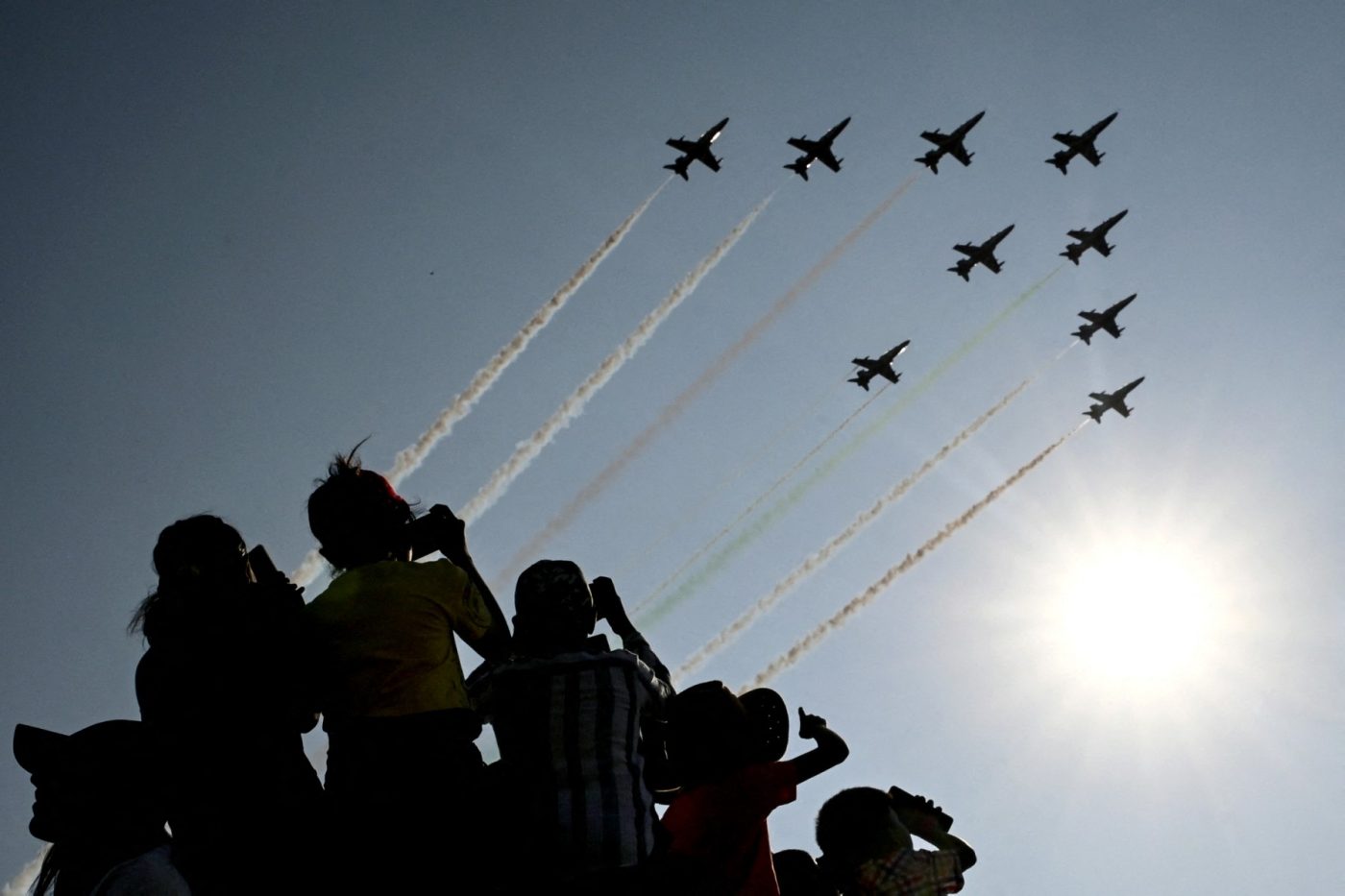
The proposed structure to cater for the above is the Guns-Free Area (GFA) – an area in which the Army and Navy are free to fire without informing the Air Force. Within a GFA, airpower stays out, and no coordination is required. Outside it, self-propelled fires and air operations are controlled as described above.
GFAs would be designated not by the Air Force or any single service, but by a Joint Forces Headquarters (JFHQ) formed at the Ministry of Defense. JFHQ is a neutral authority that keeps the national interest paramount, based on the need to achieve the laid-down objective.
Finer details will need to be worked out. The GFA will be a volume of airspace with a defined ceiling, or no vertical limits, depending on the weapons envisaged for use within it. Transit, surveillance, helicopter, air defense, and casualty evacuation flights will need to be accommodated. GFAs will change as the ground battle progresses, so the JFHQ should set the framework, criteria and rules, while theatre-level authorities adjust boundaries within them.
If every change must travel to the Ministry, the arrangement becomes the bottleneck this article warns against. Reciprocity is also needed – air operations, in case transiting through GFAs, require protected corridors and timed windows in which surface launches are restricted. These are critical coordination issues for joint operations.
Airpower is Not Merely a Support Arm
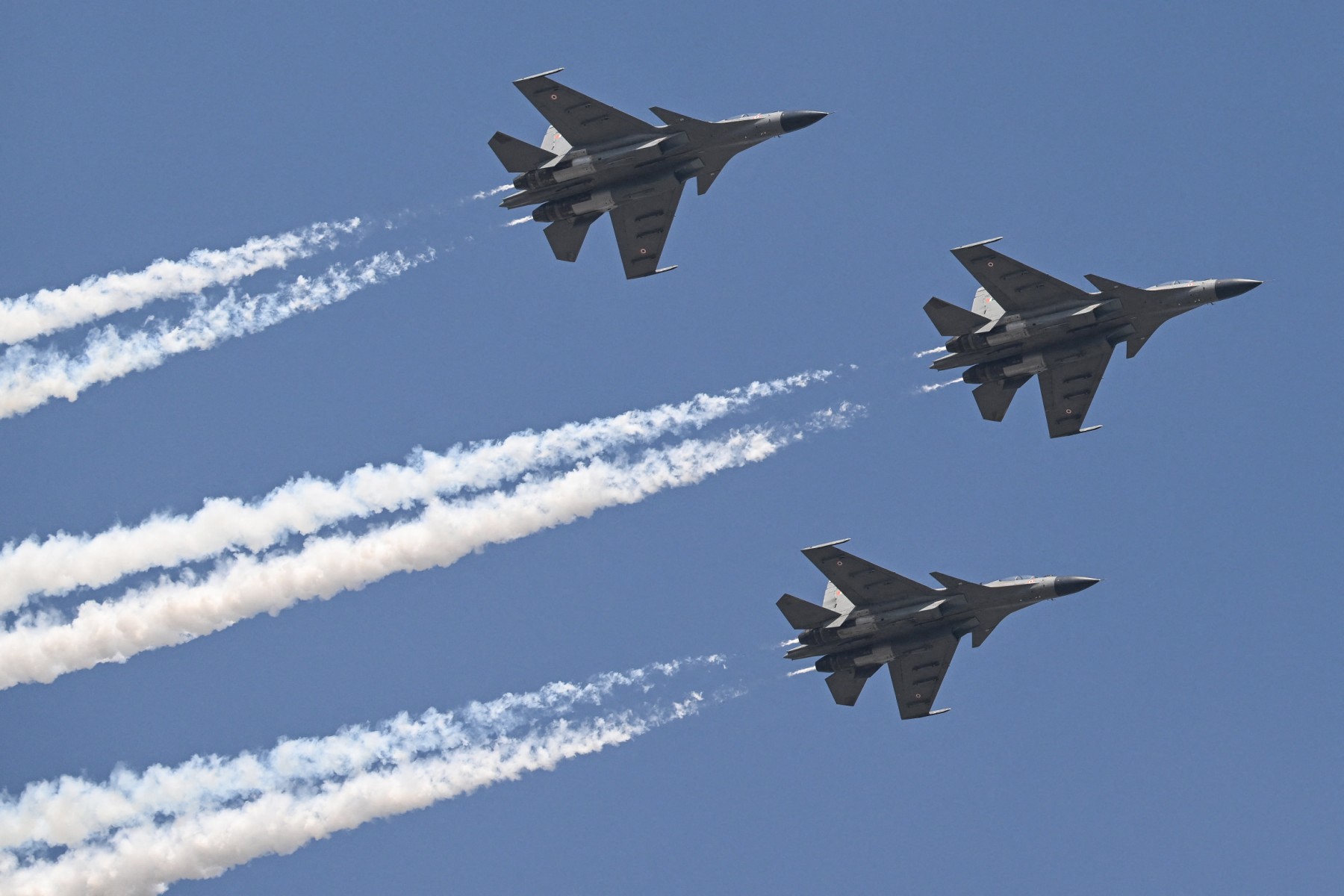
Airpower supports land and maritime campaigns, but its role is not confined to support. It can counter enemy airpower, interdict enemy logistics, strike important vital area and vital point targets, conduct surveillance and create conditions in which own air, land and naval forces can operate more effectively.
In suitable circumstances, it can shape a campaign, as happened during Operation Sindoor in May 2025. The 88-hour operation ended after the Pak Director General Military Operations (DGMO) called his Indian counterpart on the hotline on 10 May 2025 and pleaded, “Bas karo, bahut maara hai (please stop the attack, you have hit too hard).”
PM Modi recalled this in parliament, during a debate on Op Sindoor in the Lok Sabha. He further categorically stated that “no leader in the world asked us to stop Operation Sindoor.”
The 1971 war offers a fuller illustration. In the Eastern sector, the IAF moved from a favorable air situation to air supremacy, giving the Army near-complete freedom of movement and enabling even Tangail air drops and heliborne operations; the Meghna heli-bridge was the most daring.
On 14 December 1971, pinpoint rocket attacks were carried out by MiG-21s and Hunters on the Governor’s residence in Dhaka while an important meeting was in progress, which led to the immediate resignation of the Governor and his cabinet, accelerating the collapse of civil administration in East Pakistan. This hastened the surrender of 93,000 personnel, the majority of whom were fully armed troops.
In Kargil, air attacks were conducted under severe constraints, because of the political directive not to cross the LoC; high-altitude mountainous terrain; and an enemy armed with shoulder-fired missiles.
Airpower successfully interdicted the main supply camp at Muntho Dhalo on 16 Jun1999, which became the turning point of the war. Other major targets attacked were Point 4388 and Tiger Hill. Together with the Army’s ground action and diplomatic pressure, the air attacks contributed to the enemy’s early collapse and withdrawal.
1971 also teaches a second lesson. Squadrons were shifted from East to West once the air situation in the East permitted, because national priorities had changed. The lesson is not that one structure is superior, but that the ability to reallocate air effort even during a war, rapidly, is a national asset and must be a consideration in whatever structure is designed and adopted.
Airpower’s strengths are that it can act at the tactical, operational, and strategic levels at once, and its effects extend well beyond the boundaries of the theatre from which it operates. An air strike can be tactical in its target, operational in its effect on the campaign and strategic in its message, all at the same time. That does not make airpower more important than land or sea power.
It means the three cannot always be organized on identical principles, and it is why control of the medium should not be fragmented by geography.
Basing is Not Ownership
A critical distinction in the theatreisation debate is between geographical basing and operational ownership. India’s combat aircraft are already dispersed across airbases, based on factors like range, infrastructure, maintenance, readiness, logistics and response times.
An aircraft based in one region may support operations elsewhere, subject to practical constraints. Location does not, by itself, determine who owns an aircraft operationally. Dispersal may be necessary for effectiveness; permanent assignment to separate theatres could make it difficult to concentrate airpower where it is most needed.
Consider a simplified illustration. A crisis begins on the northern border, and air effort is rightly weighted there. Within days, activity on the Western Front rises, and a maritime development demands surveillance and strike support in the Indian Ocean.
No peacetime division of assets will match the shifting demands of all three. The nation must decide, in hours rather than weeks, which front gets how much, for how long, and what risk is accepted elsewhere. No single theatre commander can weigh the needs of the other two. Scarce enablers – airborne surveillance, aerial refueling, electronic warfare – cannot be an unlimited pool for every theatre.
What Other Country Systems Tell Us
United States of America (US) is a superpower and has global military deployment, for which they currently have 11 unified combatant commands – four functional and seven geographic.
Unified Combatant Commanders directly operate in their areas, and an air component commander normally employs the air forces assigned to them.
However, one command oversees the defense of the entire North American region: U.S. North Command.
The Air Defense (AD) of the entire North American region, including Alaska and Canada, falls under a single command: the binational North American Aerospace Defense (NORAD) Command. Its mission is to conduct aerospace warning, aerospace control, and maritime warning in the defense of North America. Even the US model works on the principle of a single theatre for its own territory.
At the national level, leaders decide how to assign scarce forces among combatant commands because demand always exceeds supply. The recent Iran war demonstrates this – the only aircraft carrier, USS George Washington, was pulled out from the Asia-Pacific region to operate in the western region.
China’s theatre commands each have air components, but its geography and threat set differ materially from India’s; the model should be studied, not copied. Even the best-known theatre systems retain a national layer for allocating scarce forces. The debate in India is therefore not theatres versus no theatres, but how to design and staff that national layer.
A National Framework
The suggested way forward distinguishes national-level control from theatre-level execution. The proposed Joint Forces Headquarters (JFHQ) at the Ministry of Defense, working with the Chief of Defense Staff, would designate GFAs, set rules for controlling self-propelled fires and air activity, and assign scarce air assets between theatres according to national priorities.
Professional airpower expertise within it would be essential to advise on required capabilities, the consequences of allocations, and the risks of committing scarce assets to one theatre at another’s expense.
Within each theatre, an air component under the theatre commander would plan and execute the air campaign using assigned assets, with the owners of other self-propelled systems executing within the control framework. The credibility of this arrangement depends on it being genuinely joint – clear criteria, a standing cell with air, land, and maritime expertise, a defined role for each theatre commander in presenting his requirement, and fixed timelines for review.
The objective is not to place every operational decision in a central headquarters, but to establish a coherent process for deciding priorities and giving commanders the authority to act.
Theatres may also hold organic unmanned systems for surveillance, reconnaissance, and strike tasks. The theatre can own and execute them, while coordinating their flight through the shared medium.
Air Defense and the National Air Picture
AD is the clearest application of the principle. India’s airspace cannot be treated as disconnected geographical compartments; civil aircraft, both domestic and international, operate throughout the country in peacetime and, subject to restrictions, during conflict too.
This demands that civil air traffic services must function alongside military surveillance, identification and AD activities. Missiles, drones and aircraft do not respect geographical theatre boundaries, and any gaps between separately managed AD zones are ones an adversary will exploit. India should therefore operate as a single AD theatre, and proposals for a dedicated air defense command deserve the same scrutiny as the ITCs.
In today’s era of hybrid warfare, AD needs an integrated national air picture combining air activity, surveillance, identification and AD information, disseminated to the ITCs in time to act on. It is fundamentally a command, control, communications, computers, intelligence, surveillance and reconnaissance (C4ISR) challenge.
The architecture must enable information-sharing across services and civil-military interfaces, while accounting for security, resilience and disrupted communications too. Each organization need not see the same information or exercise identical authority; each must receive what its responsibilities require, within a coherent national framework.
Organize for War, Not the Map
India needs greater jointness, but jointness should not be confused with creating geographic theatre structures, nor should geographical theatres be treated as the objective in themselves. The objective is to translate political direction into coherent military objectives, allocate national capabilities according to priorities, while giving commanders the authority and means to execute. The command structure should flow from these requirements, not substitute for them.
This requires a distinctly Indian solution, informed by international experience but shaped by India’s geography, threat perceptions, resources and likely contingencies.
The starting thought must be the National Security Strategy and the higher defense organization. These and other factors will form the foundation on which ITCs need to be envisaged through a top-down approach. Admiral Prakash is right that the services must settle this before the next crisis. They should do so by evaluating each proposal against realistic contingencies, and judging it by its effect on readiness, responsiveness, and the ability to concentrate combat power.
The Air Force belongs to the nation, and so do the Army and Navy.
The Air Force has important support roles, just like other roles that are not visible but still support each arm of the military and contribute to national objectives. The discussion on theatreisation and airpower should focus on how India can best use air to meet its national objectives.
Centralized control, dispersed command, and decentralized execution, and clear rules on who may fire freely where – that is a settlement every service can live with. The test of theatreisation is how effectively India can bring to bear its military power when and where the national objectives demand it, and not how neatly the theatres are carved out on the map.
- Wg Cdr J P Joshi is a veteran of the IAF, a regular contributor, who has commanded a front-line fighter squadron; is a graduate of Air Command and Staff College, Maxwell AFB, AL, USA; and has been a Directing Staff at the Defense Services Staff College, Wellington.
- THIS IS AN OPINION ARTICLE
- Contact the author at: jpjoshiindia (at) yahoo.co.in