In 1941, British Prime Minister Winston Churchill described the US-Canada border as “that long frontier from the Atlantic to the Pacific Ocean, guarded only by neighbourly respect and honourable obligations… an example to every country and a pattern for the future of the world.”
Two decades later, US President John F. Kennedy, while addressing the Canadian Parliament, said that “Geography has made us neighbors. History has made us friends. Economics has made us partners. And necessity has made us allies.”
The special US-Canada relationship also manifested itself in multiple security and economic alliances.
Canada and the US are two of the founding members of NATO. They are also part of the “Five Eyes” intelligence-sharing alliance, which includes the US, Canada, Australia, New Zealand, and the UK.
Ottawa and Washington have also signed NORAD, a binational defense command for North American airspace and maritime approaches, and Canada is also planning to join the Golden Dome project, US President Trump’s ambitious ground-and-space-based missile defense system.
However, in the uncertain times of today, it seems that “neighbourly respect and honourable obligations” are no longer reliable guarantees, even between the US and Canada.
According to reports, despite being part of several security and intelligence-sharing alliances, the Canadian military is developing a military response to a potential US invasion of the country.
While President Trump has often threatened to make Canada the 51st state of the United States of America, these threats were earlier dismissed as unrealistic.
However, in the aftermath of Venezuelan President Nicolas Maduro’s capture by the US military and Trump’s overt moves to invade Greenland, these threats have assumed a new dimension.
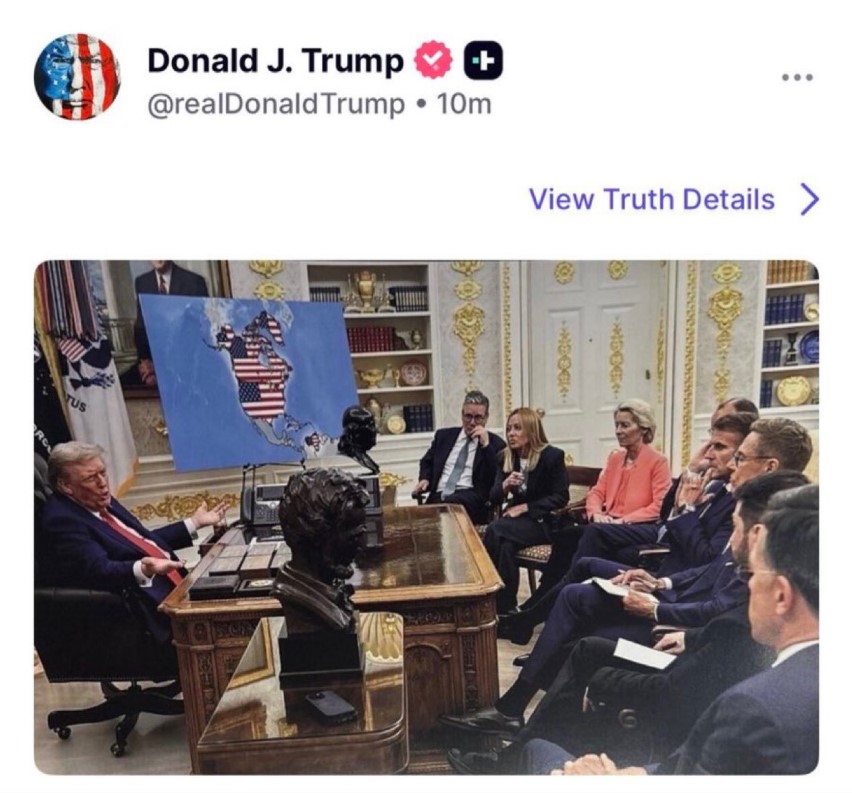
On January 20, Trump posted an image on his social media platform of a map showing Canada and Venezuela covered in the US flag, implying a full American takeover of both countries.
Expectedly, the Canadian military realizes that it is no match for the US military, the world’s strongest military force, and therefore envisions insurgency tactics like those used by Afghan mujahedin first against the Russians and later against the Americans, and by the Ukrainians against the Russians, as its only realistic option.
From Ironclad Friend To Potential Threat
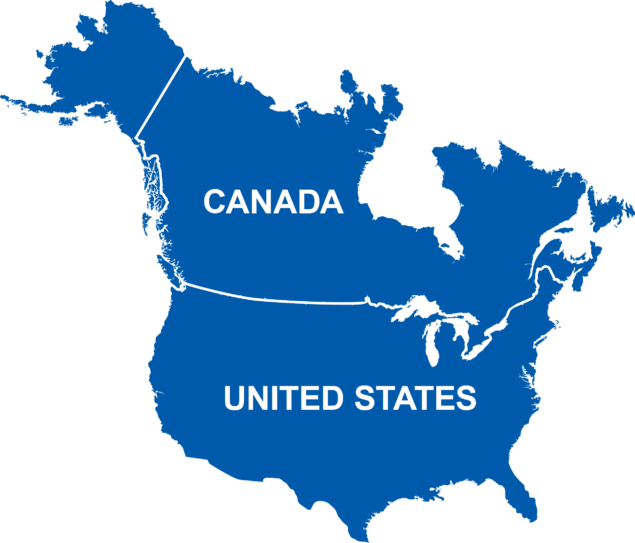
Canada and the US share a 8,891-km long border, running from the Atlantic to the Pacific (6,416 km) and in Alaska (2,475 km), making it the largest land border in the world.
However, the border is largely unmanned due to the special relationship between the US and Canada, saving both countries tremendous resources in both weapons and manpower.
However, in view of the rising tensions, the Canadian Armed Forces have modelled a hypothetical U.S. military invasion of Canada and the country’s potential response, the Canada-based Globe and Mail reported.
This would be the first time in a century that the Canadian Armed Forces has created a model of an American assault on the country.
The development comes as Canada is considering sending a small contingent of troops to Greenland to join a group of eight European countries holding military exercises as a show of solidarity with Denmark, and as Trump threatens tariffs on countries opposing the US’s takeover of Greenland.
Two senior government officials who spoke to the Globe and Mail said that the military planners are modelling a U.S. invasion from the south.
The modeling is based on a realistic analysis of the Canadian military strength.
The model expects American forces to overcome Canada’s strategic positions on land and at sea within a week, possibly as quickly as 2 days.
According to the Global Firepower Index, while the US is the strongest military power globally, Canada is ranked much behind at number 28. Similarly, while the US military has more than 1.3 million soldiers, the Canadian military has nearly 100,000 soldiers.
The US has 11 nuclear-powered aircraft carriers; Canada has none.
And while the US has over 2,300 combat aircraft, Canada has only around 66.
Clearly, Canada cannot hold off a US invasion for more than two or three days. Canada’s best bet to resist is to insurrect an Afghanistan-style insurgency.
Canada does not have the number of military personnel or the sophisticated equipment needed to fend off a conventional American attack, they said. So, the military envisions unconventional warfare in which small groups of irregular military or armed civilians would resort to ambushes, sabotage, drone warfare, or hit-and-run tactics.
One of the officials said the model includes tactics used by the Afghan mujahedin in their hit-and-run attacks on Russian soldiers during the 1979-1989 Soviet-Afghan War. These were the same tactics employed by the Taliban in their 20-year war against the U.S. and allied forces that included Canada.
The aim of this strategy would be to impose high casualty figures on the US military, making the occupation of Canada a costly affair.
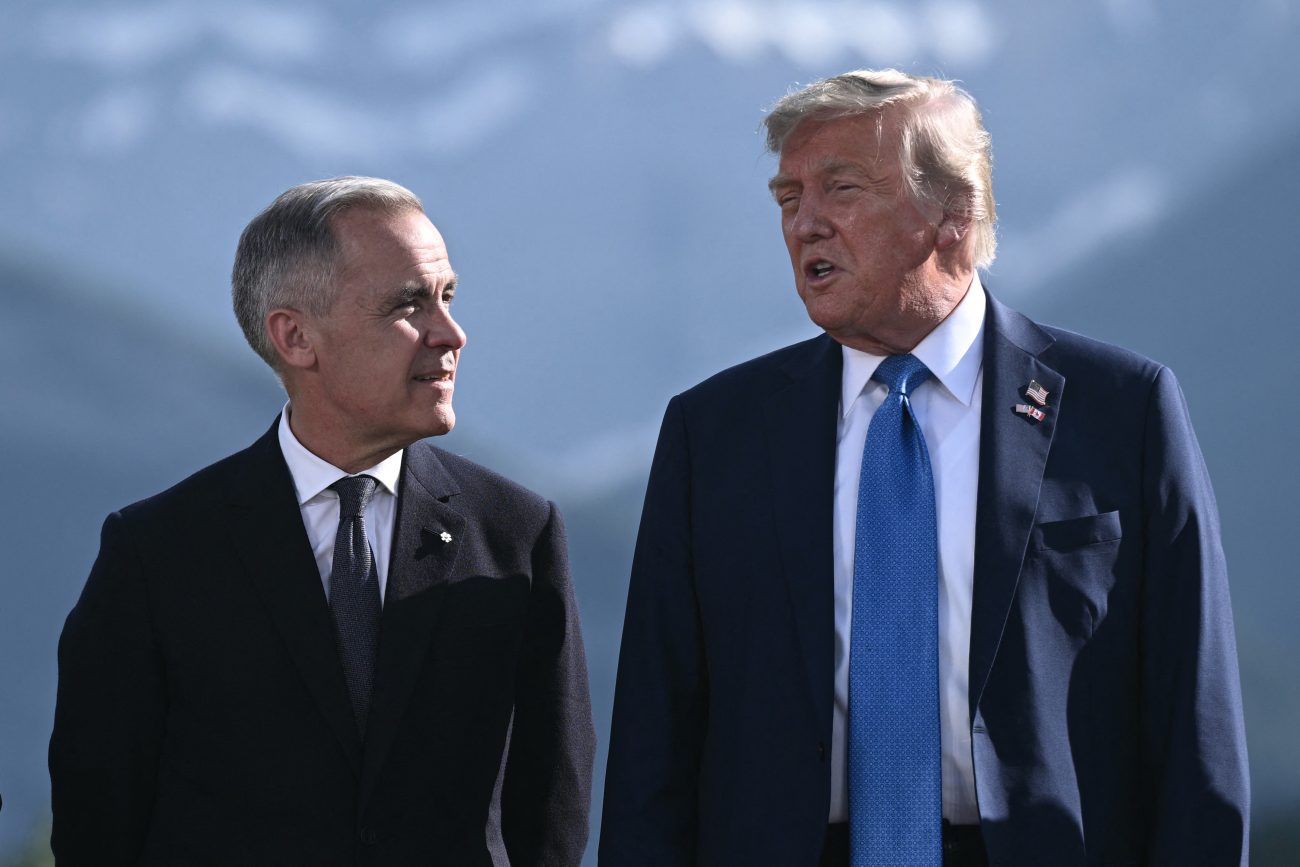
According to military planners, if the US were to invade Canada, it would be preceded by certain clear signaling, such as an intimation that Washington was ending the two countries’ partnership in NORAD, the North American Aerospace Defense Command.
For now, the Canadian authorities have ruled out conscription as a means to address such an eventuality.
However, General Jennie Carignan, Chief of the Defense Staff, has already announced her intention to create a reserve force of volunteers numbering 400,000 or more. The officials said they could be armed or asked to provide disruptions if the U.S. becomes an occupying power.
Furthermore, Canada could ask the UK and France, the two European nuclear powers, for help if it is attacked by the US.
Retired Major-General David Fraser, who commanded Canadian troops in Afghanistan alongside the United States, said Canada could also use drones and tank-killing weapons like the Ukrainians used against the Russians to blunt their invasion in February 2022.
Fraser also said that if the US attacks, Canada will get support from democratic countries such as the UK, France, Japan, and Germany.
“You know if you come after Canada, you are going to have the world coming after you, even more than Greenland. People do care about what happens to Canada, unlike Venezuela,” Fraser said. “You could actually see German ships and British planes in Canada to reinforce the country’s sovereignty.”
Retired Lieutenant-General Mike Day, who headed Canadian Special Forces Command and served as chief strategic planner for the future of the Canadian Armed Forces, said that the U.S. would have great difficulty occupying a country the size of Canada.
“We wouldn’t be able to withstand a conventional invasion. We would, for a limited period of time, be able to defend a very small civilian population, like the size of Kingston,” he said.
“Notwithstanding the size of the American military, however, they do not have the force structure to occupy, let alone control every major urban centre in Canada.”
“Their only hope would be a Russian-like drive to Kyiv and hope that works and the rest of the country capitulates once they seize the seat of power in Ottawa,” he added. “Like Ukraine, it would be inconceivable to me that we would give up if they seized our capital.”
However, even Canadians realize they cannot resist a full-scale conventional invasion by the US.
Therefore, creating a military response model, or raising a 400,000-strong armed volunteer force, is more about strategic signalling that Canadians will resist any attempt by their southern neighbour to occupy any part of their country.
They might not be a peer military power to the US, but they will also not accept US occupation lying down.
- Sumit Ahlawat has over a decade of experience in news media. He has worked with Press Trust of India, Times Now, Zee News, Economic Times, and Microsoft News. He holds a Master’s Degree in International Media and Modern History from the University of Sheffield, UK.
- VIEWS PERSONAL OF THE AUTHOR
- He can be reached at ahlawat.sumit85 (at) gmail.com