

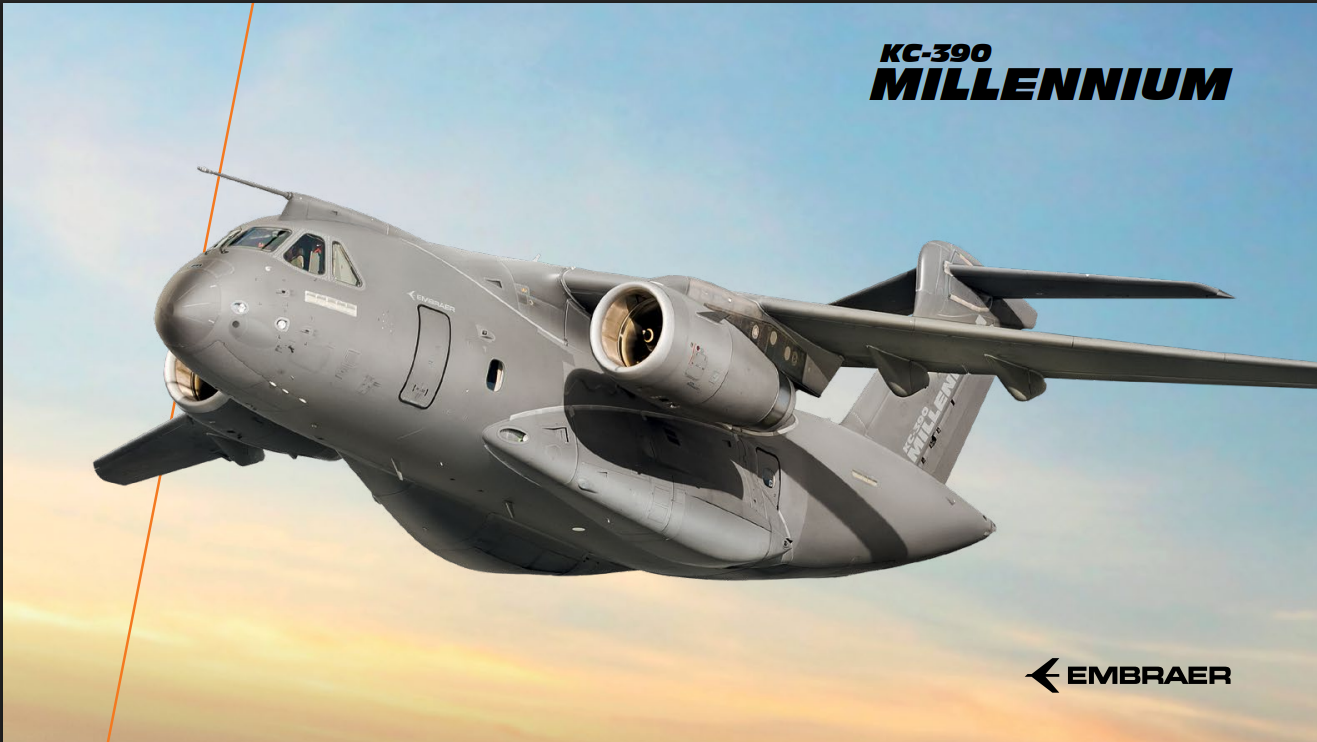
When most people think of the world’s major aircraft manufacturing hubs, Brazil rarely comes to mind. Yet in just a decade, the Brazilian C-390 Millennium has not only carved out a niche for itself but is also actively challenging Lockheed Martin’s C-130J Super Hercules, the gold standard for military transport aircraft.
In recent years, the C-390 has secured multiple major export orders, frequently beating the C-130J in direct competitions. These wins include contracts from NATO and EU countries as well as key American strategic partners such as South Korea and the UAE.
So why are nations that have relied on Lockheed Martin’s highly reliable C-130 for decades now choosing a relatively new transport aircraft from a country not traditionally known for aircraft manufacturing?
C-390 Millennium Export Orders
Embraer’s C-390 Millennium has emerged as a serious contender in the global military transport market, securing orders and customer selections from more than a dozen countries, including several NATO members and key U.S. allies.
Portugal, Hungary, the Netherlands, the Czech Republic, Sweden, and Greece have also ordered Brazil’s C-390 Millennium. NATO-member countries such as Lithuania and Slovakia have selected the Brazilian transport aircraft but have not yet placed orders.
EU member Austria has ordered the C-390, and traditional U.S. partners such as South Korea and the UAE have also shown confidence in Embraer’s transport aircraft.
Besides, countries like Uzbekistan and Colombia have also placed orders.
In August, India issued a request for proposal to acquire about 60 Medium Transport Aircraft (MTA) for its air force. The deal is expected to be valued at more than US$10 billion.
For the deal, the Indian firm Mahindra Defense has partnered with Embraer to offer the C-390 Millennium, while Lockheed Martin and Tata Advanced Systems Limited (TASL) have teamed up for the C-130J.
If India selects the C-390 Millennium, this could be Embraer’s biggest export order yet.
Most of these countries, including all NATO members, South Korea, the UAE, and India, have operated Lockheed Martin’s older C-130 Hercules and the newer C-130J Super Hercules, yet they are procuring or evaluating Brazil’s C-390 Millennium, which first flew in 2015.
In comparison, Lockheed’s C-130 is a proven design that has been in service for nearly seven decades.
Lockheed Martin’s C-130 Series
Lockheed Martin designed the C-130 Hercules in the 1950s.
It first flew in 1954 and entered service with the U.S. Air Force in 1956. The C-130J Super Hercules is the modern variant, entering service in the late 1990s and featuring new engines, avionics, and improved efficiency and payload capacity.
In total, Lockheed Martin has built more than 2,500 C-130s across variants. The company has also delivered over 570 newer C-130J Super Hercules aircraft, clocking more than three million flying hours, and has exported them to 27 countries.
The C-130 remains the world’s most widely used tactical airlifter, operated by 60+ countries with extensive combat experience.
The Lockheed C-130 Hercules is one of the most combat-proven military transport aircraft in history, having participated in the Vietnam War, Operation Desert Storm, Operation Enduring Freedom (Afghanistan), Operation Iraqi Freedom, and Operation Epic Fury.
The C-130 Hercules has participated in every major US military operation since the Vietnam War. The C-130J Super Hercules also has a vast existing support network and global logistics support network.
It can also operate from short, rough, high-altitude, and unpaved airstrips.
The Indian Air Force (IAF) regularly operates the C-130J Super Hercules across multiple high-altitude airbases and Advanced Landing Grounds (ALGs) in the Himalayas. In 2013, the IAF C-130J-30 set a world record for the highest-altitude landing by an aircraft of its class at Daulat Beg Oldie (DBO) in Ladakh, situated at 16,614 feet (5,065 meters), proving the aircraft’s advanced capabilities.
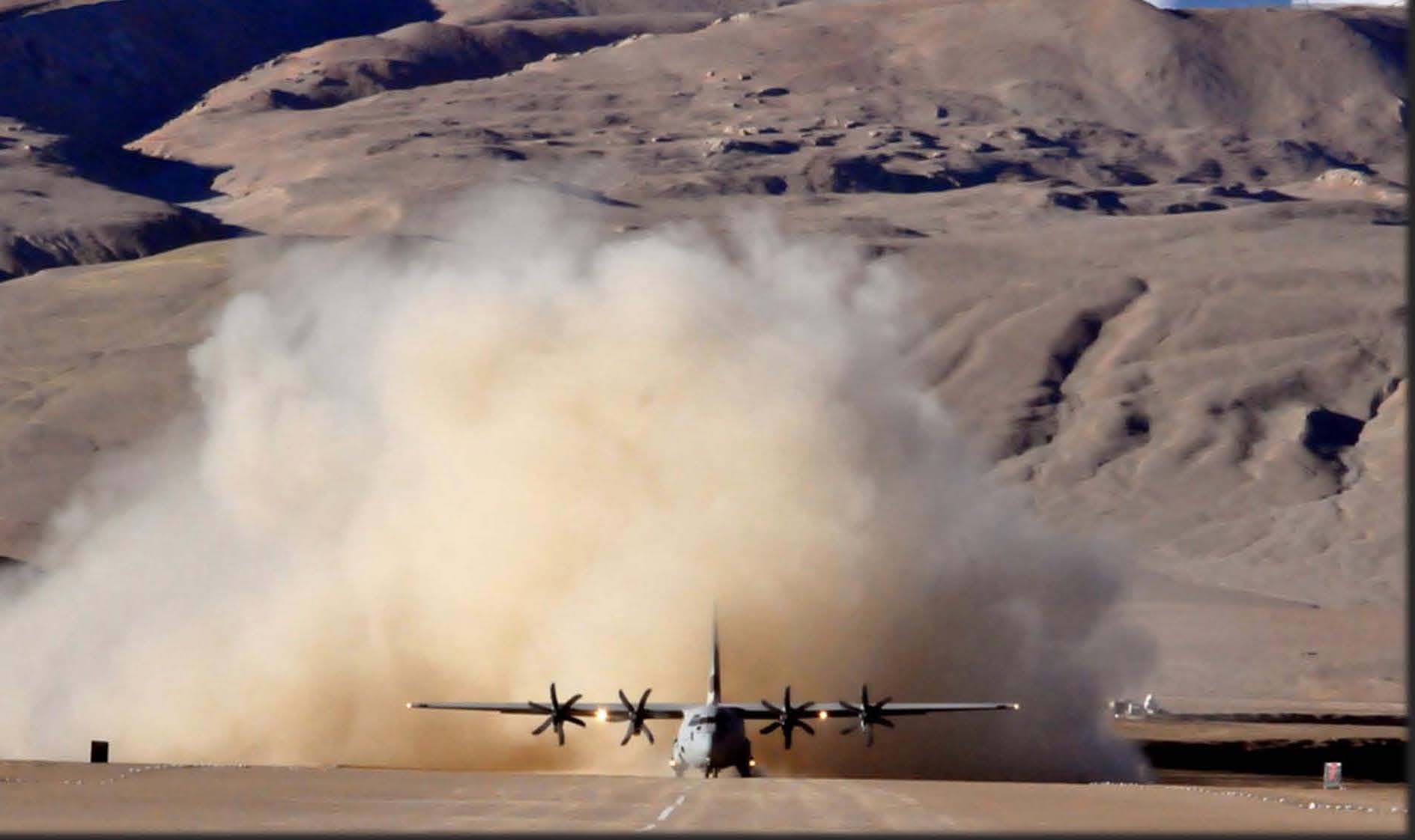
The aircraft also has a strong second-hand market. For instance, last year, Turkey purchased 12 retired Royal Air Force (RAF) C-130J-30 Super Hercules aircraft from the United Kingdom.
So why are countries, and even U.S. allies, choosing a new transport aircraft over the tried-and-tested Super Hercules?
The C-130J Super Hercules vs C-390 Millennium
Priced between $130 and $170 million, the C-390 Millennium is not cheap. In fact, the two transport aircraft cost about the same.
Earlier this month, Greece finalized a deal with Embraer for three EMBJ3.SA KC-390 military planes, with an option to buy three more, for $671 million.
In 2020, the New Zealand government signed a US$1.5 billion deal for five new C-130J-30 Super Hercules planes, including training, simulators, and support.
However, despite nearly similar pricing, the C-390’s lifecycle operating costs are lower than the C-130J’s.
The C-390 also offers many other practical advantages over the C-130J.
The C-390 is powered by two IAE V2500-E5 turbofan engines, widely used on commercial airliners like the Airbus A320 family, which helps streamline global maintenance and parts availability. By contrast, the C-130J is powered by four turboprop engines. The current C-130J Super Hercules uses four Rolls-Royce AE 2100D3 turboprop engines driving six-bladed propellers.
Maintaining two commercial-derivative turbofans requires fewer labor hours and spare parts than four turboprop engines and their complex propeller gearboxes.
The C-390’s jet engines offer other advantages in cruising speed, altitude, and lower maintenance.
For instance, the C-390 has a cruising speed of 870 km per hour and a maximum speed of nearly 980 km per hour, while the C-130J has a speed of 500-670 km per hour.
The C-390 has a payload capacity of 26 tonnes, compared to the C-130J’s roughly 20 tonnes. It has a service ceiling of 36,000 ft, compared with the C-130J’s 28,000 ft.
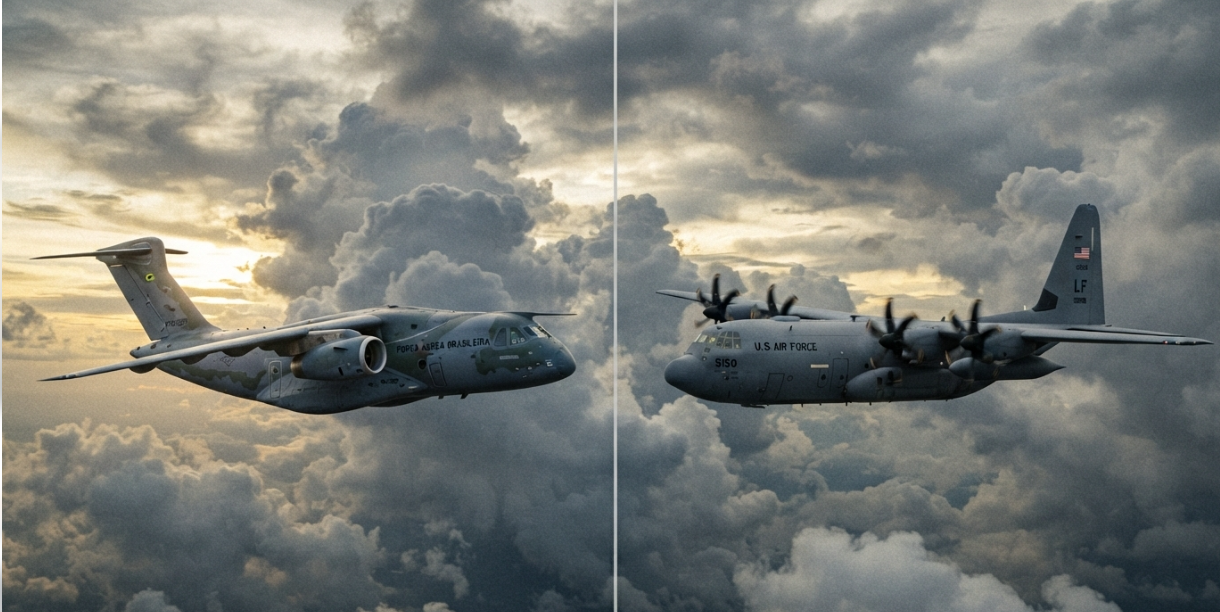
The C-390 flies roughly 35% faster and at a higher altitude than the C-130J. This lets it complete long-distance missions faster and at higher altitudes, evading both bad weather and anti-aircraft artillery.
Both aircraft can land on unpaved dirt and gravel runways. However, the C-130J’s four propellers generate extra lift at very low speeds, which is excellent for takeoffs from shorter airstrips.
The four propellers also give the C-130J higher maneuverability at low speeds, which gives the aircraft an edge in slow-speed paratrooper drops.
The C-390 Millennium has a full fly-by-wire (FBW) flight control system. The Lockheed Martin C-130J Super Hercules relies on a traditional mechanical and hydraulic flight control system.
The C-390’s FBW system reduces pilot workload, provides automatic flight envelope protection, and improves handling during precision tasks such as aerial refueling.
Although the C-390 was designed in the 2000s and includes an FBW system, the C-130J is a legacy design. Although the newer C-130J variants received a major digital avionics upgrade, their underlying airframe retained the original C-130’s conventional hydromechanical controls.
Due to these practical advantages, the Embraer C-390 Millennium is emerging as a popular C-130 replacement.
If Embraer wins the Indian deal, it will send a powerful message worldwide: despite years of operating the C-130J, including in some of the world’s most demanding high-altitude Himalayan terrains, India is still prepared to choose the Brazilian jet for one of its most critical airlift programs.
- Sumit Ahlawat has over a decade of experience in news media. He has worked with Press Trust of India, Times Now, Zee News, Economic Times, and Microsoft News. He holds a Master’s Degree in International Media and Modern History from the University of Sheffield, UK.
- He can be reached at ahlawat.sumit85 (at) gmail.com