After multiple KC-135 refueler aircraft were destroyed during the Iran war, the United States has withdrawn over a dozen of these KC-135 Stratotankers from a British air base amid alleged security threats from Iran.
More than 12 KC-135 refueling aircraft were withdrawn from RAF Mildenhall in Suffolk, United Kingdom, in recent days and relocated to other US bases in Europe and Scotland. Flight tracking data shows at least 10 tankers and three CV-22 Ospreys were relocated on November 9. Meanwhile, two aircraft left the base on November 10—one KC-135 headed toward Germany, while the other was spotted landing at Prestwick Airport near Glasgow, Scotland.
The KC-135 Stratotanker provides primary aerial refueling capability to the USAF. They are critical to sustaining US global airpower across Europe, the Middle East, and the Indo-Pacific.
RAF Mildenhall is a British base operated by the USAF. It is located around 30 kilometers north of London and hosts the 100th Refueling Wing, the only permanent refueling wing in Europe. The base was reportedly used as a staging area for aircraft and supplies headed for West Asia during the Iran war.
Soon after initial reports about the evacuation surfaced, Britain said its bases were safe.
“We do not routinely comment on the activity of other nations. Aircraft and other assets move regularly according to operational requirements,” a British Ministry of Defense official told the BBC, when asked about the evacuations.

Responding to the reports, a USAF spokesperson said its aircraft “rotate between installations and operating locations for a variety of reasons, including training and real-world requirements.” “US military aircraft are hosted in accordance with access, basing, and overflight agreements with our allies and partners. Due to operations security, we will not provide further information on movement of assets,” the spokesperson added.
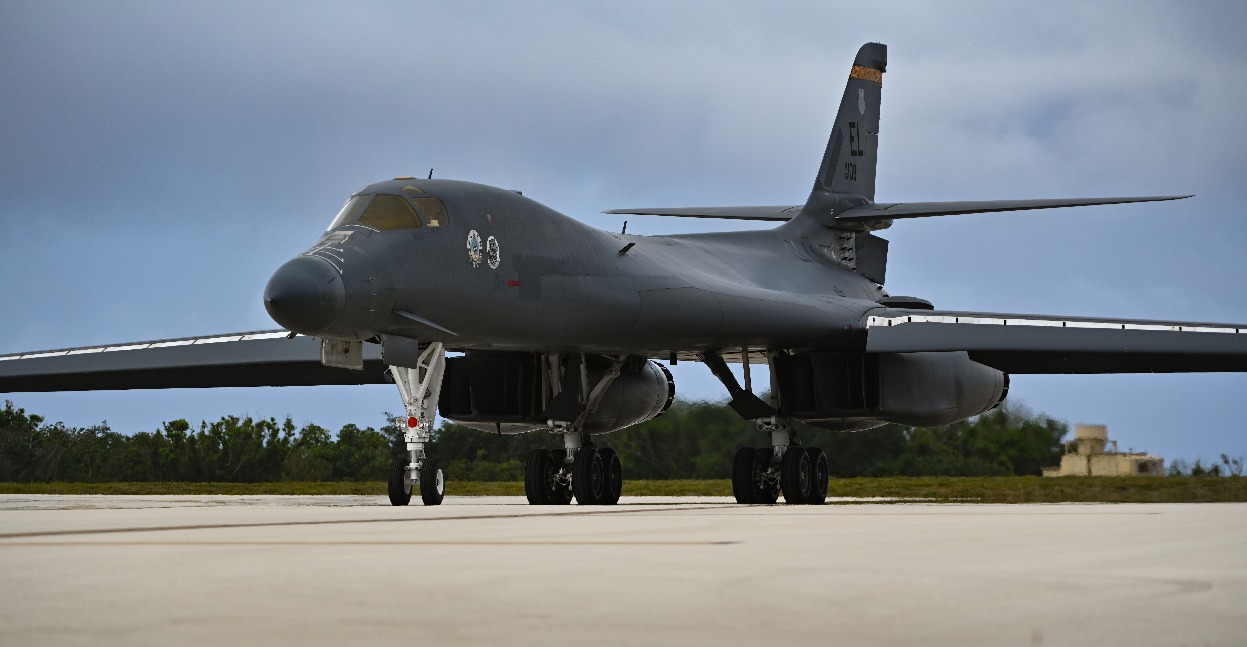
The latest move comes just weeks after Washington pulled out all its B-1B Lancer bombers from RAF Fairford after five British men in their early 20s were arrested near the base amid suspicion of a planned attack on the facility, as the EurAsian Times reported.
An investigation is currently underway into what was believed to be a sabotage operation commissioned by Iran, although the Iranian leadership has dismissed all such allegations.
KC-135: Difficult to Hide
The US Air Force suffered multiple KC-135 casualties during its war with Iran, with official estimates of destroyed/damaged aircraft putting the number at seven.
At the height of hostilities, two USAF KC-135 refuelers collided mid-air in friendly airspace on March 12, 2026. One of the aircraft sustained damage to its vertical stabilizer, or tail, but managed to steer away and land safely at Ben Gurion Airport in Israel. Meanwhile, the second KC-135 could not recover from the collision and crashed near Turaibil along the Iraqi-Jordanian border.
In addition to these two aircraft, multiple other KC-135 aircraft were damaged or destroyed in Iranian missile and drone strikes on bases across the Gulf region, which were launched as part of Iran’s response to the US Operation Epic Fury.
Five KC-135s were damaged while on the ground at Prince Sultan Air Base, Saudi Arabia, during an Iranian missile and drone attack, as reported on March 13, 2026.
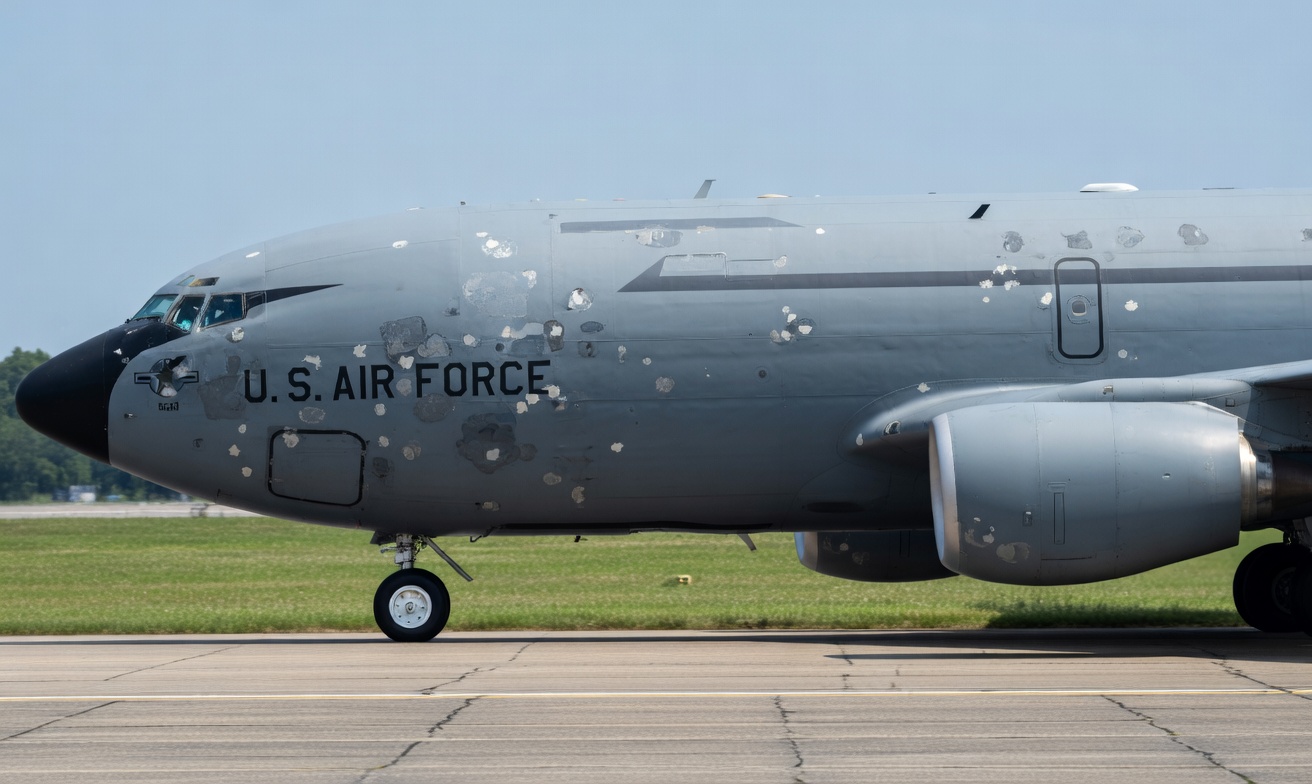
According to reports, shrapnel and fragmentation from the strikes caused holes in fuselages and other structural damage. This became evident when, on April 12, 2026, one of the damaged aircraft was seen with dozens of asymmetrical metal repairs over holes and across the fuselage, wings, and tail sections, as the EurAsian Times reported.
These ground losses occurred mainly because multiple tankers were concentrated at regional bases that Iranian forces could reach with ballistic missiles and drones. The US heavily deployed these aircraft to the frontline bases because aerial refueling is essential for extending the range of fighters, bombers, and other aircraft.
KC-135 Stratotankers are particularly vulnerable on the ground because they are large and harder to conceal than other combat aircraft.
Unlike fighter jets, which can sometimes be dispersed to smaller airfields, tankers require substantial runway infrastructure, specialized maintenance facilities, and considerable logistical support. This dependence limits the number of military airbases they can use.
Another major factor contributing to their vulnerability on the ground is their concentration, as multiple KC-135s are typically stationed at the same location. This means a single attack could affect several aircraft at once.
Moreover, the KC-135s are massive aircraft with a wingspan of 40 meters and a length of around 42 meters; they require large parking areas and cannot easily be hidden in shelters.
At the time of the attack on Prince Sultan base, these refuelers were parked outside on the apron because the facility lacked protected shelters for large aircraft like the KC-135, which essentially made them sitting ducks.
This damage/destruction to the KC-135 refueler fleet came as a setback for the USAF, particularly because the KC-135s are at least 60 years old.
The KC-135 fleet relies on parts cannibalized from boneyard-decommissioned aircraft. Furthermore, its replacement, the KC-46 Pegasus, is still smaller than the KC-135 fleet, years behind schedule, and plagued by persistent technical issues.
This may be the primary factor in the decision to relocate the KC-135 fleet from RAF Mildenhall amid persistent threats.
Global force projection is only achievable with a fleet of aerial refueling tankers, regardless of an Air Force’s size or capability. Without them, fighter jets and strategic bombers—regardless of generation, stealth capabilities, sensor fusion, or firepower—are confined to their own bases.
If tankers are destroyed or forced to withdraw, combat aircraft would have to reduce their operational radius, spend less time on station, or abandon certain missions.
Consequently, neutralizing a tanker can significantly weaken an entire air campaign without directly engaging its frontline fighters, which may explain Tehran’s targeting of the KC-135.
The US cannot afford to lose more of these crucial aircraft right now. Although specific details are obscured for security reasons, the strategic thinking behind the move may be to disperse aircraft to reduce the concentration of valuable tankers at one installation.
- Contact the author at sakshi.tiwari13 (at) outlook.com
- Follow EurAsian Times on Google News