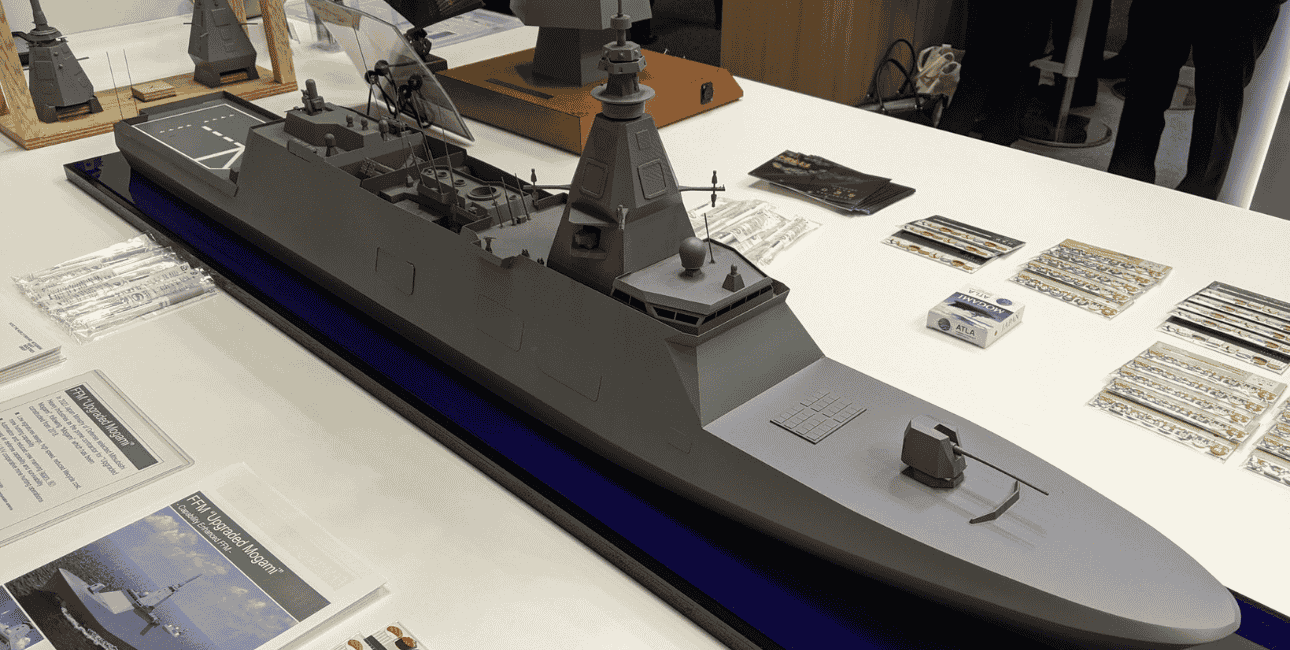
In a big boost to the Royal Australian Navy, Australia and Japan signed a A$10 billion (US$7 billion) deal for upgraded Mogami-class warships, heralding a new era for Japan’s arms exports. Interestingly, this purchase may have triggered a domino effect, with countries such as New Zealand also eyeing the Japanese warships to bolster their maritime capabilities.
A memorandum “reaffirming the Australian and Japanese governments’ shared commitment to the successful delivery” of the warships was signed by Australian Defense Minister Richard Marles and his Japanese counterpart Shinjiro Koizumi on April 18, 2026, in a ceremony aboard a Mogami frigate anchored in Melbourne, Australia.
The contract comes months after Australia chose the upgraded Mogami-class frigates over Germany’s ThyssenKrupp Marine Systems (TKMS) offering of the MEKO A-200 in August 2025. As per the plan, the first three ships will be built in Japan and delivered to Australia by 2029, whereas the remaining 8 will be built locally at the Henderson shipyard in Perth, Western Australia, by the Australian company Austal.
This has been described as the biggest and most significant arms export deal signed by Japan since it lifted the export ban in 2014, and is considered a breakthrough in Tokyo’s shift away from its post-war pacifism amid rising security threats from China. The frigates program was a “major step that was finally being taken to elevate our defense relationship to a greater height,” Japan’s Defense Minister Koizumi Shinjirō stated.
While the merits and characteristics of this deal have been widely reported by the international media, there is an indication that Australia’s selection of the upgraded Mogami-class ships has sparked New Zealand’s interest.
Japanese Defense Minister confirmed that New Zealand has shown a strong interest in the upgraded Mogami-class warship, The Japan Times reported.
The interest is well-timed, as Tokyo is poised to revoke a stipulation that restricts Japan’s military exports to five non-lethal categories in an effort to increase defense-industrial cooperation with allies and key partners as early as next week.
The revisions to Japan’s export regulations “will enable us to pursue transfers that meet the needs of like-minded countries and strengthen their deterrence and response capabilities,” Koizumi stated. “We are already hearing about the needs and expectations for Japan’s high-tech defense equipment from a range of countries,” he added.
With New Zealand looking to replace its aging Anzac-class frigates by the mid-2030s, the British Type 31 and the upgraded Mogami-class have emerged as top choices.
Although New Zealand has not explicitly stated that it would choose the Japanese frigate, it has repeatedly signaled its intent to acquire a system that would enhance interoperability with its closest military ally in the region—Australia.
In fact, New Zealand has been exploring the option of acquiring the upgraded Mogami-class ship since Australia selected it last year. During a meeting with Japan’s Defense Minister Gen. Nakatani in October 2025, Royal New Zealand Navy (RNZN) Chief of Navy Rear Admiral Garin Golding reportedly expressed Wellington’s interest in acquiring the upgraded Japan Maritime Self-Defense Force Mogami-class frigate, known as the New FFM.
At the time, Golding expressed concerns about China’s increasing maritime assertiveness and emphasized the need for closer collaboration with Japan.
The People’s Liberation Army Navy of China conducted live-fire exercises in the Tasman Sea between Australia and New Zealand in February 2025 without providing adequate notice. At the time, NZ’s Defense Minister stated rather emphatically that more investment was needed in the region in response to China’s power projection.
When India Nearly Attacked U.S. Aircraft Carrier: Recalling The 1971 USS Enterprise Kamikaze Plan
Japan and New Zealand have forged closer ties in recent years, including through an intelligence exchange and logistics support agreement. New Zealand could, thus, build on this cooperation to acquire the Japanese upgraded Mogami-class warships.
Upgraded Mogami Warship For New Zealand
New Zealand operates one of the world’s largest exclusive economic zones (EEZs), roughly 4 million km², about 15 times its land area, in addition to the responsibilities in the Southern Ocean and support for Pacific partners. However, the Royal New Zealand Navy’s (RNZN’s) current fleet is small and faces chronic personnel shortages and readiness pressures. The ANZAC-class frigates are nearing the end of their extended service lives.
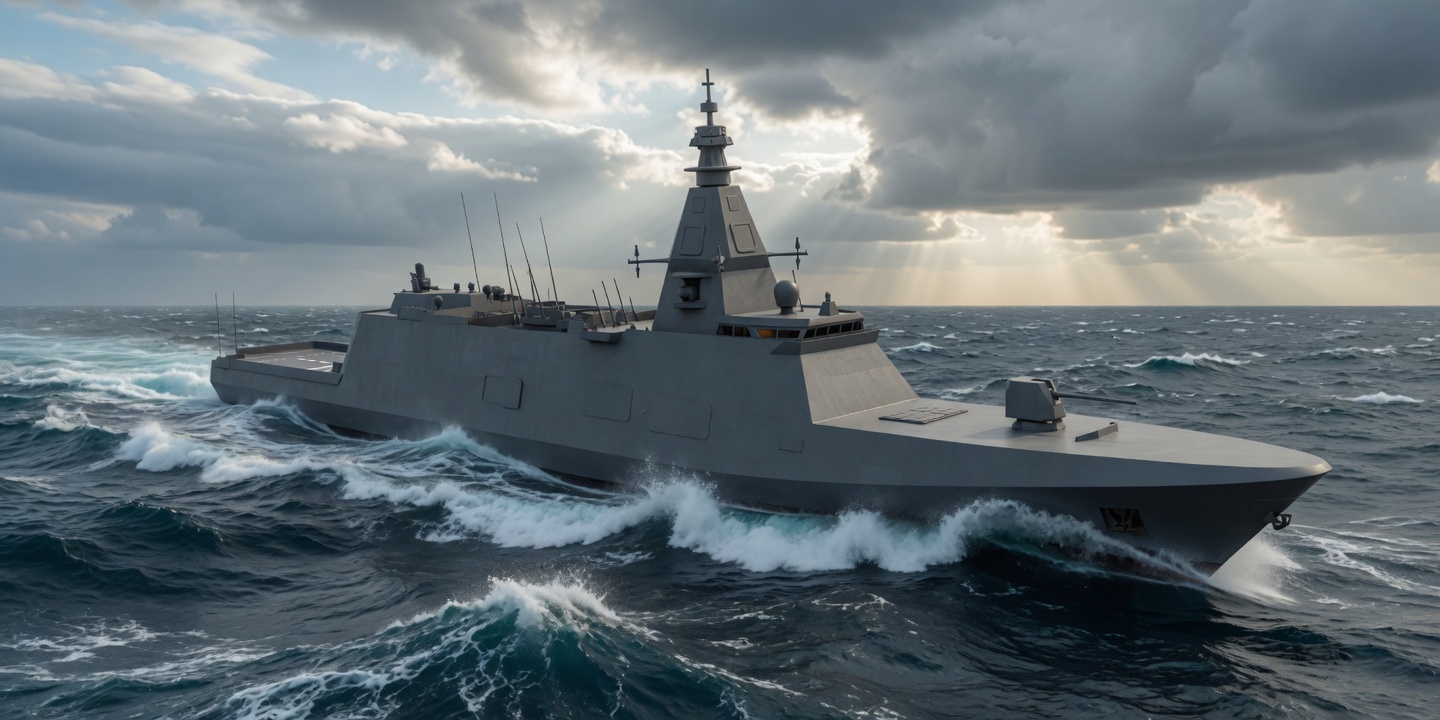
Japan’s New FFM offers a suitable solution for New Zealand.
With a high degree of overall automation, including in navigation, damage control, an weappns handling, the upgraded Mogami-class requires only 90 personnel, which is roughly half the ANZAC complement. For a navy struggling with recruitment and retention, this would free up sailors to crew more vessels, sustain longer deployments, or expand the fleet—addressing one of the RNZN’s most pressing constraints.
The upgraded Mogami-class warship can play versatile roles tailored to New Zealand’s needs. For example, the frigates can be deployed for anti-submarine warfare. Its variable-depth sonar, towed-array sonar, and lightweight torpedoes make it highly effective against submarines and relevant for protecting sea lanes and EEZ resources. Additionally, the ship could be used for mine countermeasures, deploying unmanned underwater vehicles (UUVs) and unmanned surface vessels (USVs) for mine hunting and disposal.
Each of the multimission warships has a 32-cell vertical launch system, which is four times as many cells as the eight aboard the present Anzac-class frigate. It could support surface-to-air missiles such as the Evolved Sea Sparrow Missile, as well as varied anti-ship missiles. This can potentially strengthen the RNZN’s denial tactics and improve its deterrent posture.
The Mogami’s strong and effective propulsion system allows it to reach a top speed of over 30 knots and a range of up to 10,000 nautical miles. This would help to secure maritime commerce routes by supporting Royal New Zealand Navy sea lane defense activities. Additionally, it can accommodate the MH-60R Seahawk maritime combat helicopter that New Zealand is acquiring, as well as unmanned aircraft.
These ships are considered more affordable than larger destroyers and are also designed for a service life of about 40 years and for interoperability with US systems, with which Wellington has a military alliance. Furthermore, the ship has a low radar cross-section and boasts an advanced AESA radar (OPY-2) and an electronic warfare suite to improve survivability and detection in contested waters.
However, there are several financial, human, and technical obstacles in the acquisition. The incompatibility of combat management systems (CMS) is the biggest technical obstacle, as highlighted by Tadashi Iwami, a Lecturer of International Relations at the Modern Japanese Studies Program, Hokkaido University, in an article for East Asia Forum.
The Japanese vessels use a proprietary CMS developed in Japan, while the RNZN currently uses the Canadian-made CMS 330.
There are significant technical risks of cost overruns and delivery delays when integrating a non-native CMS into the Japanese hull, as demonstrated by Australia’s decision to accept the Japanese configuration for its first three frigates rather than risk immediate integration problems.
Moreover, the transition to a fully automated platform necessitates substantial changes in operational skills and culture, as well as in hardware.
Australia has selected the upgraded Mogami for its general-purpose frigate program. A shared design between the Royal Australian Navy and the Royal New Zealand Navy would deliver Common training, spares, and maintenance, resulting in significant savings for the small RNZN. If New Zealand indeed decides to purchase the new FFM, the Japanese warship would become a shared security backbone in the region.
For Japan, a sale of the upgraded Mogami-class to New Zealand would further validate its policy pivot from being a manufacturer of sophisticated weapon systems to a worthy exporter. And it would expand cooperation among Japan and the two strategically located Pacific countries in the face of sustained Chinese aggression and military expansion.
- Contact the author at sakshi.tiwari13 (at) outlook.com
- Follow EurAsian Times on Google News