In a bid to highlight the Oreshnik hypersonic missile’s lethality, Russian President Vladimir Putin has described the weapon’s three combat uses in Ukraine as mere ‘experimental’.
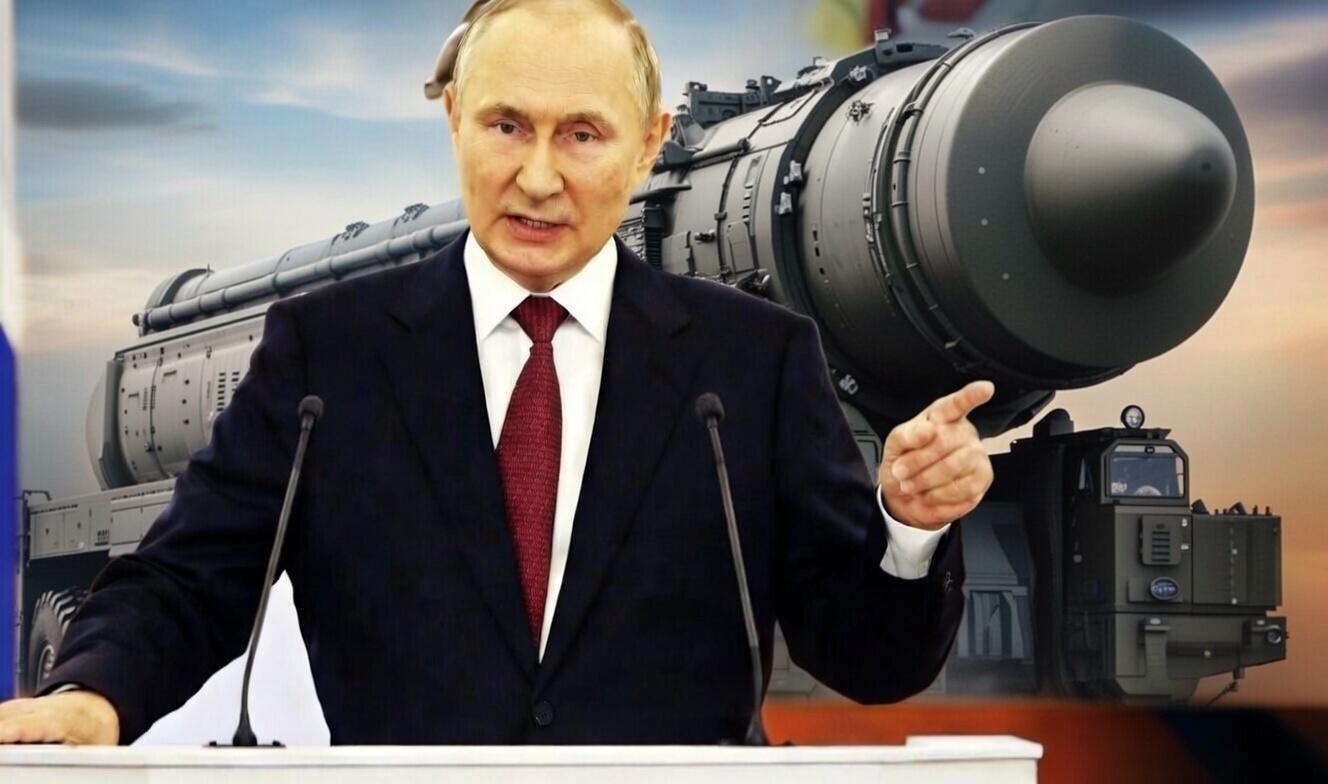
Speaking at a meeting with heads of international news agencies organized by the state news agency TASS on June 4, President Putin observed that the Oreshnik was fired against Ukraine only to assess its performance.
Russia first fired the Oreshnik IRBM (Intermediate Range Ballistic Missile) at an industrial plant in Dnipro in November 2024. The second strike came in January 2026, when the Oreshnik was struck in the Lviv region, while the third came just a week ago, hitting Bila Tserkva in Kyiv Oblast.
“So far, there has not been a single full-scale combat use of the Oreshnik missile system on Ukrainian territory,” Putin told international media on June 4, indicating that the previous Oreshnik strikes on Ukraine were essentially live-fire tests or experiments, not “full-scale” or “full-format” combat use.
“We tested similar systems at firing ranges, but we did not test Oreshnik. And this is not combat use. In general, we effectively had no combat use of Oreshnik on Ukrainian territory in the full sense of the word,” Putin said.
The President indicated that the goal of these strikes was to gather information on the missile’s performance, in addition to destroying the target.
“And the last strike, honestly, I will reveal a great military state secret to you – we simply struck where it was convenient to observe the impact. The aim was to see how the dispersing blocks lay down. After the strike, our drones flew in and looked at how the separating blocks had been placed. We counted everything to the millimeter. This is important for us so that in the future we can make decisions on the full-format employment of the Oreshnik against designated targets, including in urban built-up areas,” he added.
The President emphasized that Russia deliberately chose a convenient target, like a shed or industrial estate, so that follow-up drones could precisely measure how the warheads landed and dispersed. However, Ukrainians have dismissed this assertion as a lie.
Notably, Putin’s comments have been perceived as a warning that future Oreshnik strikes may target urban areas, with the missile employed at a level of destructive power not previously demonstrated in Ukraine.
This comes amid a surge in missile and drone attacks on Ukraine in recent days. According to reports, Moscow has been hammering Ukraine with more drones and high-speed missiles than ever before in an attempt to overwhelm Ukraine’s air defenses. It has used Oreshnik, Zircon, and Iskander ballistic missiles on Ukraine in the past few days, in addition to scores of slow-moving Geran drones.
The Ukrainian President has cited the threat posed by these missiles to lobby for additional air defenses, such as the Patriot.
Referring to the Oreshnik attack in a letter to the US last month, Volodymyr Zelenskyy said, “This is bigger beyond Ukraine. It is an important lesson for the security of the entire Euro-Atlantic community and for America’s allies around the world, who could one day face threats from Russia’s partners and proxies.” Ukraine “depends almost entirely on supplies from the United States” for protection against Russian ballistic missiles, the President added, emphasizing the shortage of potent air defense missiles.
Oreshnik Missile
Oreshnik is an intermediate-range ballistic missile capable of reaching targets between 3,000 and 5,500 kilometers away. One of the most unique features of these devastating weapons is that they can release multiple warheads from a single missile.
As the missile travels at hypersonic speeds, up to six multiple independently targetable reentry vehicles (MIRVs), each carrying four to six ordnances, separate from it. Each MIRV can be aimed at a distinct target, enabling a single ballistic missile to deliver a larger strike.
The Oreshnik is faster than most modern missiles, with an estimated hypersonic speed of 13,000 kilometers per hour, or over Mach 10.
With its warheads pointed at distinct targets, its trajectory takes it rapidly back down after a steep ascent out of the atmosphere, making it nearly impossible for Ukraine’s air defense systems to shoot down.
These types of missiles were typically designed to carry a nuclear payload and have been frequently linked to Putin’s nuclear brinkmanship against Ukraine, as well as NATO. In fact, Sergei Karakayev, the head of Russia’s Strategic Rocket Forces, which oversees the country’s nuclear weapons and intercontinental ballistic missile program, earlier stated that Oreshnik can strike targets “throughout Europe.”

Meanwhile, President Putin earlier claimed that the missile’s destructive elements can reach temperatures close to the Sun’s surface, as reported earlier by the EurAsian Times. “Therefore, everything in the epicenter of the explosion breaks up into fractions, into elementary particles, essentially into dust,” the President had said in 2024, adding that the missile can strike “even targets that are highly protected and located at a great depth.”
Not just that, Putin touted the invincibility of the Oreshnik missile and proposed a “high-tech duel” to showcase the missile’s capabilities.
“If they doubt the Oreshnik (Hazel), let them suggest a target for us to hit, maybe something in Kyiv. They can concentrate all their air defense and missile defense forces there, and we will strike. Let’s see what happens. We are ready for such an experiment,” the President said in December 2024, describing Oreshnik as “modern, very new” and part of Russia’s advanced military technology.
After the strike on Dnipro in November 2024, the Pentagon said that Oreshnik was an experimental type of intermediate-range ballistic missile (IRBM) based on Russia’s RS-26 Rubezh intercontinental ballistic missile (ICBM). This was further confirmed by the British Defense Intelligence, which concluded that Oreshnik is a variant of the RS-26 Rubezh, and that Moscow probably began work on the missile system several years ago.
The assertion has been corroborated by Ukrainian experts who have examined missile debris.
In fact, the Ukrainian experts have claimed that the Russian Oreshnik missile fired at Ukraine in January was likely made nine years ago and contained only Russian and Belarusian components. Speaking during a presentation of electronics retrieved from Russian missiles and drones late last month, a Ukrainian missile forensics expert said that the Oreshnik found in January was put together in 2017 using parts manufactured in Russia or its partner Belarus that date back to 2016 or earlier.
Another set of reports in Ukrainian media, citing analysts from the Luftlage project, claimed that the Oreshnik missile may have been developed using the second and third stages of the Yars intercontinental ballistic missile.
Notably, Putin has also indicated that he was ready to make a deal to end the war, in addition to warning Ukraine with more deadly Oreshnik strikes.
Putin Says He Could Make A Deal
In an unexpected development, Russian President Vladimir Putin stated that Moscow is prepared to accept the compromises previously discussed with US President Donald Trump during their Anchorage talks and is willing to negotiate a peace deal with Ukraine.
Putin reaffirmed his commitment to a diplomatic settlement of the issue and his willingness to proceed with an agreement in remarks posted on the Russian Foreign Ministry’s social media account.
💬 President #Putin:
We are certainly ready & willing to reach an agreement with Ukraine by peaceful means.
Russia is prepared to accept the compromises we discussed with @realDonaldTrump in Anchorage, 👉 the Ukrainian side must now also agree to them. pic.twitter.com/TkfOJrkleu
— MFA Russia 🇷🇺 (@mfa_russia) June 5, 2026
He went on to say that Russia might agree to those conditions, but emphasized that any agreement would not be possible without Ukraine’s consent. “Russia is prepared to accept the compromises we discussed with Donald Trump in Anchorage; the Ukrainian side must now also agree to them,” the Russian President has reportedly conveyed.
Separately, Ukrainian President Volodymyr Zelenskyy wrote an open letter to Russia, suggesting a meeting to end Moscow’s four-year conflict with Kyiv. The letter was reportedly delivered via diplomatic channels to Russia and other nations, including the United States, and was published in full on the Ukrainian President’s website.
Open Letter
To the President of the Russian Federation
From the President of UkraineWhen you came to power in Russia more than 26 years ago, many people in Ukraine viewed you positively. That is how it was. But that is now in the past.
Now, the overwhelming majority of…— Volodymyr Zelenskyy / Володимир Зеленський (@ZelenskyyUa) June 4, 2026
“Ukraine proposes ending this war through direct engagement between us – and you. I am proposing a meeting… If you do not personally come to the conclusion that it is time to end this war, Ukraine will continue fighting for its existence,” the President wrote in the letter.
Notably, Ukraine has insisted that its territorial integrity and sovereignty must be completely respected in any peace deal. The embattled remains strongly opposed to ceding territory and wants robust security arrangements. Meanwhile, Putin has so far insisted on some core demands, including keeping the occupied Ukrainian territories, an assurance that Ukraine will not join NATO, demilitarisation, and lifting of sanctions.
- Contact the author at sakshi.tiwari13 (at) outlook.com
- Follow EurAsian Times on Google News