Iran has insisted it has no plan to attend the second round of negotiations in Islamabad with US officials, after USS Spurance intercepted and attacked the Iranian-flagged cargo ship M/V Touska in the Arabian Sea that allegedly defied an American naval blockade by sailing toward Bandar Abbas port at high speed.
The Iranian ship was subsequently boarded by the US Marines that took off from USS Tripoli amphibious assault ship and confiscated, as later also announced by US President Donald Trump in a post on Truth Social.
Videos of the engagement have since been published by US Central Command (CENTCOM), showing US helicopters from aboard USS Tripoli flying over the Touska cargo ship and a US personnel using a rope to drop down towards the metal containers below. Meanwhile, another video shows repeated warnings given to the Iranian ship, followed by USS Spruance’s 5-inch Mk 45 gun firing into its engine room.
As the US Navy remains wary of an Iranian counterstrike, we are reminded of a particular incident from 1971 when the IAF (not Iran but the Indian Air Force) planned to attack the US nuclear-powered aircraft carrier USS Enterprise.
When The IAF ‘Nearly’ Attacked USS Enterprise
In 1971, India and Pakistan fought their third war, which ultimately led to an unconditional surrender of Pakistani troops and the creation of a new state called Bangladesh. However, while the war was in its final stages, the Cold War rivals—the US and the former USSR—came down to support their respective allies.
The US had a formal alliance with Pakistan through CENTO (Central Treaty Organization) and SEATO (Southeast Asia Treaty Organization). The then US President Richard Nixon and National Security Advisor Henry Kissinger strongly tilted toward Pakistan and viewed India, which had signed a 20-year Friendship and Cooperation Treaty with the USSR, as a Soviet proxy.
They feared India would attack West Pakistan once East Pakistan was overrun, and the US would lose a crucial ally in South Asia at the height of the Cold War.
So, in the final phase of the conflict, as Indian forces advanced decisively towards East Pakistan (now Bangladesh), the US Seventh Fleet received orders to dispatch Task Force 74 to the Bay of Bengal on December 8, 1971, perhaps, to assist Pakistan. However, the deployment was framed as a humanitarian mission to evacuate 182 Americans in Dacca (now Dhaka), if needed.
The battle group that set sail for the Bay of Bengal was led by the nuclear-powered aircraft carrier USS Enterprise, which was accompanied by nine other ships, including a nuclear attack submarine, three guided-missile destroyers, four gun destroyers, and an amphibious assault ship, among other auxiliary ships.
The USS Enterprise departed from the Gulf of Tonkin, where it had been deployed to participate in the ongoing Vietnam War, and arrived at the Bay of Bengal on December 15.

Notably, no precise orders were given to the captain of the USS Enterprise, but options with carte blanche would have included attacking Indian military bases, as noted by K.N. Pandita, the former director of the Center of Central Asian Studies at Kashmir University, in a previous EurAsian Times article.
On its part, India viewed the deployment as a direct threat to its naval operations near areas like Chittagong (in Bangladesh), and a bid to enable a Pakistani breakout or resupply. It was predicted that the deployment would enable 90 fighter jets and bombers from the 7th fleet to assist the Pakistan Army in East Pakistan.
To deal with the impending threat, the Indian Air Force (IAF) reportedly hatched a high-risk backup plan that included a kamikaze-style (one-way suicide) strike on the USS Enterprise.
Some reports suggest that the service asked for volunteer pilots willing to crash their fighters into the USS Enterprise, and about 40 IAF pilots reportedly volunteered for the “do-or-die” operation. The plan purportedly drew inspiration from Japanese kamikaze tactics in World War II, where pilots intentionally crashed explosive-laden aircraft into enemy ships.
The objective of this daring plan was to seriously threaten the carrier’s flight deck and cripple operations to buy vital time for Indian ground forces to finish liberating Dhaka and compel a Pakistani surrender before any potential US escalation.
For the mission, the IAF reportedly chose the English Electric Canberra medium bomber, a twin-engine jet bomber used for reconnaissance and strike roles. According to some accounts, the Canberra was to fly low and attempt to smash into the carrier deck, causing massive damage through impact and any onboard ordnance.
However, the mission was aborted as the Soviet Union came to India’s aid.
The Soviet Union sent a destroyer, a second mine patrol ship, and a submarine to the Indian Ocean to prevent the US warships from entering the Bay of Bengal.
On December 13, two days ahead of the USS Enterprise’s arrival, the Soviets declared that they would send a second anti-carrier task group to intercept the 7th fleet. The Soviet task force consisted of a destroyer, a nuclear-guided-missile submarine, and a battle cruiser equipped with nuclear-armed missiles.
As the US warships reached the Bay of Bengal on December 15, about 20 Soviet warships were in the Indian Ocean, prepared to deter any misadventures by the US carrier group.
According to some sources, the Indian bombers were ordered to abort their mission after they became airborne.
Subsequently, Pakistan’s military commander in the East, Lieutenant General A. A. K. Niazi, requested that the American embassy forward the ceasefire proposal to India on December 15, 1971.
And by December 16, 1971, Pakistan’s Eastern Command had surrendered.
With no more utility left in the Bay of Bengal, ‘Task Force 74’ was relocated to the Indian Ocean on December 18 and was later reassigned to the Vietnam War on January 7, 1972.
Nixon’s administration publicly never explained the presence of the fleet in the Indian Ocean. However, the Pentagon’s secret cablegrams, later made public by syndicated columnist Jack Anderson, indicated that the carrier force had at least three objectives: a possible evacuation of Americans, showing the flag (display of power) to Soviet naval forces in the region, and deterring India from any thought of extending the war to West Pakistan.
Interestingly, many years later, in 2007, a SEPECAT Jaguar from the No. 6 Squadron, IAF’s dedicated maritime strike squadron, almost attacked the USS Nimitz carrier. The Jaguars were nicknamed “Ship Sinkers” as they could fly very low, sometimes as low as 100 feet over the sea, to avoid detection.
By 2007, the squadron had moved to Jamnagar Air Base in Gujarat and was using upgraded DARIN II (Display Attack Ranging Inertial Navigation) versions with the Israeli Elta radar. This made it easier to find and hit targets during anti-ship missions, as the EurAsian Times had previously explained in a detailed article.
During a routine maritime training sortie in the Arabian Sea, a Jaguar pilot, flying low and sea-skimming, detected a large surface contact using the Elta radar. The pilot reportedly treated the ship as a simulated target, which is standard practice in anti-ship training, and initiated an attack approach on a heading.
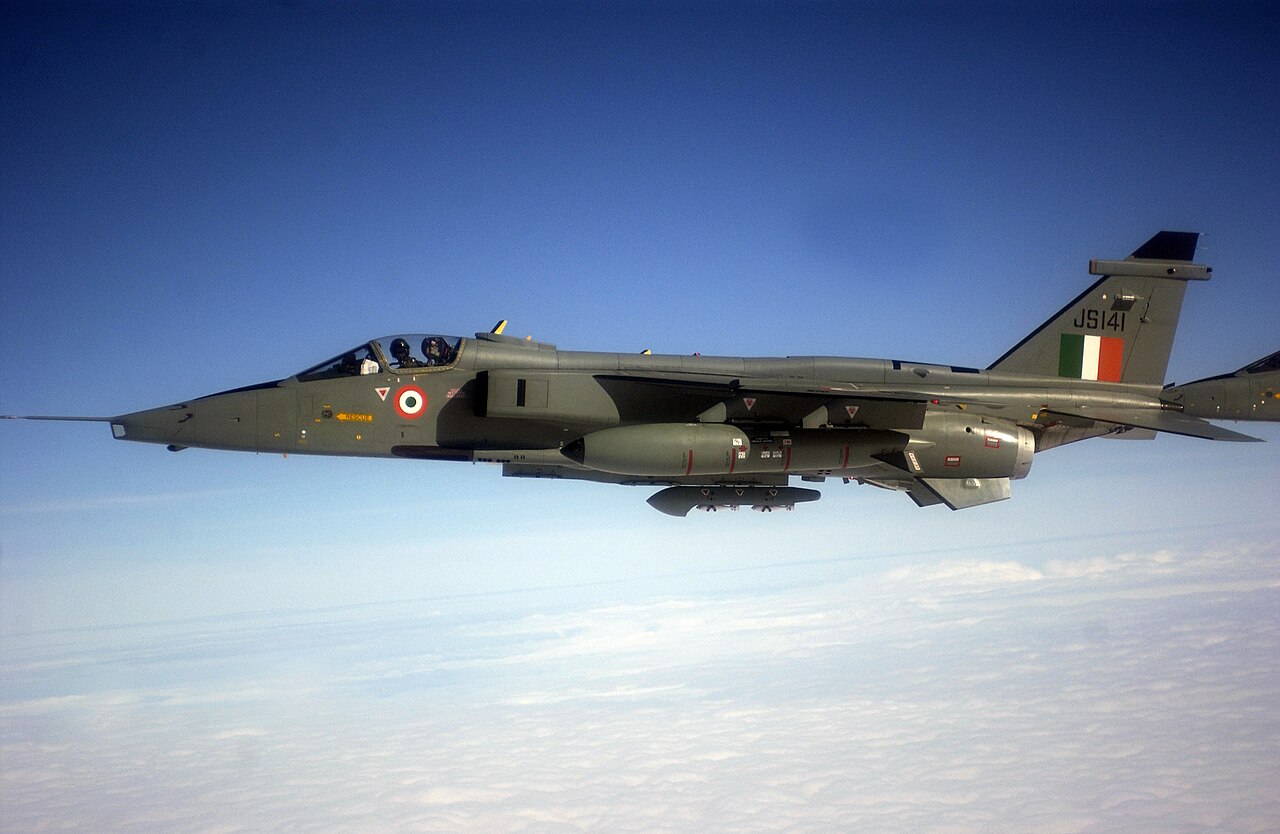
The “target”, however, turned out to be the USS Nimitz, the US aircraft carrier, which detected the Jaguar.
“Fighter on course 250, this is USS Nimitz, identify yourself,” the USS Nimitz crew told the approaching Jaguar
Interestingly, the Indian Air Force pilot did not respond to the radio call and instead engaged reheat and broke off, returning directly to Jamnagar base
The incident remained largely internal or anecdotal for years, surfacing only in recent years through veteran recollections, squadron histories, and media reports.
It must be noted that even though the Indian jet endangered the American carrier, it was an unintentional peacetime incident and could not be compared to the planned 1971 USS Enterprise attack. However, both incidents underscored that, despite being among the most powerful fleets in the world, American warships are not invincible and remain vulnerable to attack, even by a smaller or inferior force.
- Contact the author at sakshi.tiwari13 (at) outlook.com
- Follow EurAsian Times on Google News