

The Philippines is upgrading the strategic Basco Airport to accommodate larger military aircraft—including US aircraft—as part of efforts to strengthen defenses amid tensions with China. Interestingly, the facility’s strategic significance dates back to World War II, when Japanese forces seized the same airfield during the opening days of their invasion of the Philippines.
The Philippines will upgrade Basco Airport on Batan Island in Batanes province, where American and Filipino military forces have already conducted multiple joint training exercises. The upgrades will enhance US access to Basco Airport on the island of Batan, about 120 miles south of Taiwan, a White House fact sheet released on November 18, 2026, stated.
The project, announced after US President Donald Trump’s visit to Manila last week for the ASEAN Summit, is intended to improve US-Philippine operational access, disaster response, and commercial supply chains in the country’s northernmost islands, the fact sheet said. The project was among the many initiatives the White House announced after Trump’s meeting with the Filipino President Ferdinand Marcos Jr.
More recently, Philippine Defense Secretary Gilberto Teodoro Jr. said, “We really need to build resilience in Batanes.” He noted that the airport has a short runway and cannot operate in all weather conditions.
The airport’s proximity to Taiwan—a region China claims as its own and has vowed to seize—has attracted considerable attention. In fact, its modernization is being viewed not just as a regular infrastructure project but as part of joint Philippines-US efforts to fortify territories near Taiwan, especially since the US is expected to defend the self-ruled island in the event of a Chinese invasion.
When asked whether the initiative is meant to prepare for a possible conflict, Teodoro said the Philippines must defend its territory by addressing threats across multiple domains.
Why is This Airport Upgrade Significant?
It lies near the Bashi Channel, which separates Taiwan from the Philippines and forms part of the Luzon Strait, connecting the South China Sea with the western Pacific.
This maritime corridor is critical because it gives Chinese naval vessels a route from the South China Sea into the western Pacific, as the EurAsian Times noted in a previous report. However, the US and allied forces could use the same passage to move between the western Pacific and the waters surrounding Taiwan in the event of a conflict with Beijing.
Tensions between the Philippines and China have also increased in waters north of the Philippines near Taiwan. Last month, for instance, the Philippines announced that it had deployed a vessel and aircraft to “disrupt and drive” away a Chinese research vessel conducting “unauthorized” marine scientific research off Batanes.
Manila has expressed concern about Chinese maritime activity around the northern island group, including Chinese research and coast guard vessels. Philippine authorities are wary of Beijing gradually increasing its presence in strategically important waters through activities that just fall short of an outright military campaign.

Additionally, the Philippines is strengthening its military presence in Batanes because it fears a conflict between China and Taiwan could spill over into Philippine territory, and it does not want its northernmost islands to be strategically exposed or undefended. To bolster its military presence, the Southeast Asian country established a forward operating base in Mahatao on Batan last year.
The modernization of the Basco airport also serves a major military purpose for the US, which treats the Philippines as a frontline ally in its Indo-Pacific strategy to counter China.
Because of its proximity to Taiwan, Batanes has become increasingly important in Washington’s strategic calculus. It sits near a potential route through which US forces could move between Guam and the Taiwan Strait during a potential conflict with China. The location could make Basco Airport crucial for military logistics, surveillance, and maritime operations.
This would allow the US to move larger aircraft and bring troops, equipment, supplies, and potentially surveillance assets much closer to the potential theatre of operations.
A longer, more capable runway could allow larger transport aircraft to bring in military personnel and reinforcements, vehicles, communications equipment, engineering supplies, fuel-handling equipment, and other logistical support, along with medical supplies. This is particularly important because sustaining military operations is considerably more complicated than simply deploying troops and weapons.
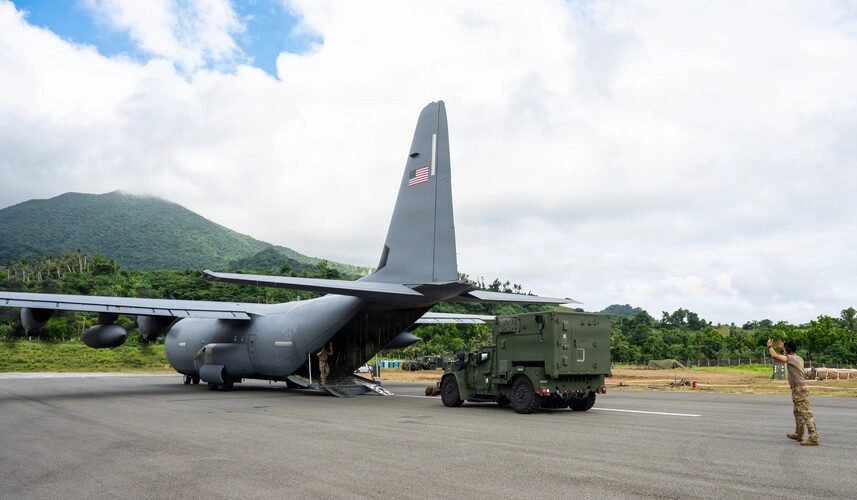
The strategic Basco Airport has already been used by US military aircraft. For example, a US Air Force C-130J Super Hercules aircraft assigned to the 40th Airlift Squadron landed at Basco Airport to deliver fuel systems to US Marines for Exercise Balikatan 2026.
Notably, the Bashi Channel is a crucial route for Chinese naval vessels moving between the South China Sea and the Pacific. An improved Basco airport would be vital for the US and the Philippines to monitor this corridor during a contingency. Moreover, it would facilitate the movement of aircraft, personnel, and equipment for maritime surveillance, intelligence gathering, communications and radar support, and monitoring naval movements.
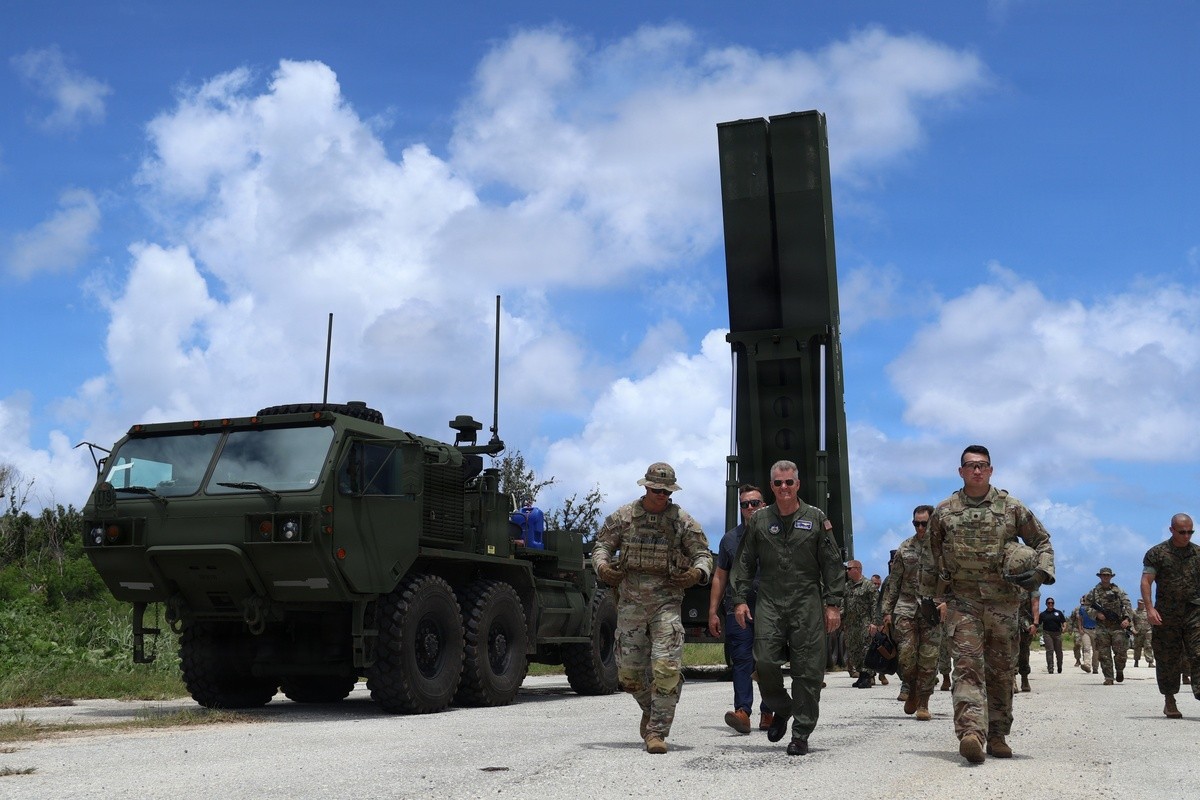
Moreover, modernizing the airport and expanding the runway would also make it easier to deploy cutting-edge missile systems. During the 2026 Balikatan exercises, US Marines flew the NMESIS coastal anti-ship missile system into Batanes aboard a C-130J aircraft. In a potential conflict, such systems could help deny hostile naval forces freedom of movement around strategically important maritime passages.
Most importantly, though, it would complicate China’s military planning and deter an invasion. China would have to consider the possibility that the Philippines could provide additional logistical access to American forces operating around Taiwan, arm them with force mobility, and enable force dispersal across the Western Pacific.
That said, while the Basco airport and Batanes have emerged as strategic assets, history reminds us that their strategic importance is not new.
Japan’s Invasion Of Batanes & Basco Airfield
On December 8, 1941, Japanese forces landed on Batan Island in Batanes, marking the first Japanese landing on Philippine soil during the Second World War. A small flotilla—two transports, a destroyer, torpedo boats, and supporting vessels — landed on Batan Island, the main island of the Batanes group, without opposition.
The American and Filipino forces were unaware of the landing at the time amid the chaos of the opening air raids on Luzon, which essentially allowed the invading Japanese troops to quickly secure the area around the provincial capital of Basco.
The invasion’s primary objective was the small airstrip near Basco, then known as Basco Airfield. Japanese combat units seized it almost immediately.
The next day, construction crews began expanding the rudimentary field to accommodate fighters and reconnaissance aircraft.
It was part of a larger Japanese military plan to establish forward air bases in the northern Philippines so aircraft could operate closer to Luzon and support the planned mainland invasion. Aircraft from the Imperial Japanese Army’s Air Groups started operations from the base on 9 December.
Although Japanese aircraft began operating from Basco on December 9, the highly successful Japanese bombing of Clark Field and other major American air bases on Luzon on 8 December effectively neutralized US air power in the region.
As a result, Japanese commanders discontinued further expansion work at Basco within a few days, as the base was no longer necessary. Subsequently, construction and expansion activities stopped, and Japanese forces shifted their attention to establishing another forward airfield on Camiguin Island on December 10.
The Japanese occupation of Basco Airfield demonstrated its strategic significance, especially in the early phases of WWII in the Pacific.
Although Basco’s use as a Japanese military airfield was relatively brief, its capture provided Japan with an advanced position in the Luzon Strait and formed part of the initial military operations there.
Although it lost its initial significance, the Basco Airfield continued to serve as an important military and communications location for Japanese forces throughout WW2.
However, during the last few months of the war, US aircraft conducted a series of air raids against Japanese military positions on Batan Island, particularly around Basco.
Therefore, the airfield’s wartime history offers an interesting parallel to its present-day strategic relevance.
In 1941, Japanese forces sought to seize Basco to establish a forward position from which they could support operations against the Philippines. More than 80 years later, the same geographical advantage is drawing renewed attention as the United States and the Philippines strengthen their military cooperation amid rising tensions with China across the Taiwan Strait.
- Contact the author at sakshi.tiwari13 (at) outlook.com
- Follow EurAsian Times on Google News