“History repeats itself, first as tragedy, then as farce,” Karl Marx warned more than a century and a half ago.
Yet another German philosopher, Georg Wilhelm Friedrich Hegel, had already observed that “the only thing we learn from history is that we learn nothing from history.”
Both of these warnings from 19th-century German thinkers have now proven strikingly prophetic for Donald Trump, a president whose own family roots, ironically, trace back to Germany.
However, despite his German roots, it seems Trump was either unaware of these profound German insights into history’s recurring folly or chose to ignore them entirely.
For what else can explain his decision to sign the Memorandum of Understanding (MOU) or the preliminary agreement with Iran to end the recent conflict with Tehran in Versailles, France, the exact spot where 107 years ago, Germany signed a humiliating surrender agreement with allied powers, including France, the UK, and the US.
As soon as photos of President Trump signing the agreement at the Palace of Versailles were released, social media erupted with comparisons: the 1919 scene of German officials accepting their humiliating defeat in the same Hall of Mirrors versus the United States signing what many called a surrender deal, in the very same historic spot.
If signing a deal widely viewed as highly favorable to Iran and a clear American climb-down was not damaging enough, Trump compounded the optics by choosing Versailles, a place still indelibly linked in public memory to ‘national humiliation,’ thereby handing his critics a devastatingly easy historical parallel on a silver platter.
What makes it doubly ignominious is the timing: just two weeks later, on July 4, 2026, the United States will celebrate the 250th anniversary of its Declaration of Independence.
What makes Trump’s decision even more enigmatic is that the agreement was initially scheduled to be signed in Switzerland on June 19.
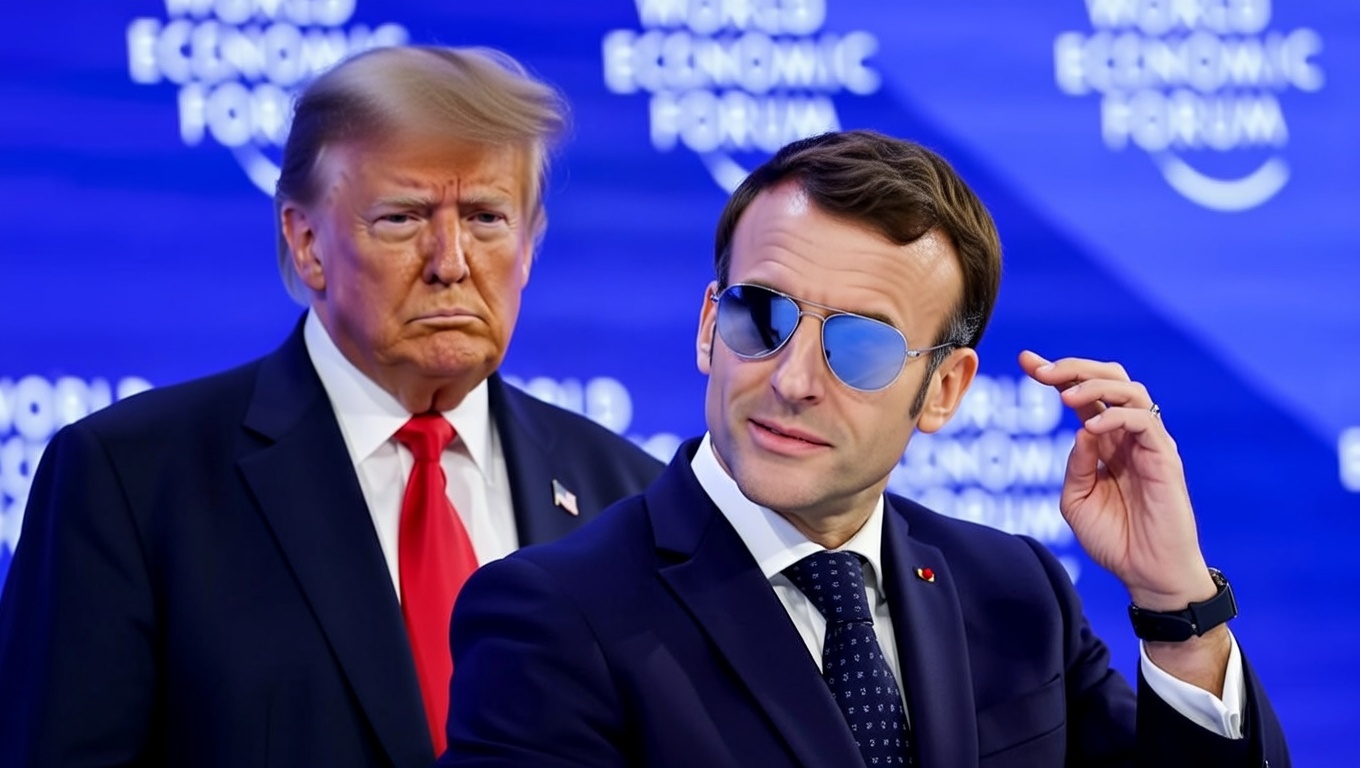
However, Trump, who was in France for the 2026 G7 Summit, appears to have been skillfully maneuvered by French President Emmanuel Macron into signing the agreement at Versailles.
In doing so, he not only spotlighted a perceived American retreat but also handed France a powerful symbolic victory: the United States was humbled in the very palace that has long stood as the ultimate emblem of French grandeur and triumph over its enemies.
By hosting the signing dinner there, Macron is widely interpreted as having delivered a subtle but pointed diplomatic troll on Trump.
Trump, however, seems to have been clueless about the irony and historical weight of the location.
French President Emmanuel Macron pulls off what could be the greatest diplomatic troll of all time by getting Trump to sign the "$300 Billion US Surrender to Iran" deal in… Versailles. The ignoramus Trump will have been clueless as to the historical significance of the location pic.twitter.com/u0Wo1IONj9
— Euan MacDonald (@Euan_MacDonald) June 18, 2026
Moreover, Macron has a history of this kind of symbolic trolling of Trump.
In 2017, when Trump withdrew America from the Paris Climate Agreement, Macron trolled him by responding with “Make Our Planet Great Again,” a cheeky comeback on Trump’s election campaign slogan, ‘Make America Great Again.’
Notably, the symbolism is particularly stinging because Trump’s signing of a deal widely viewed as a U.S. defeat took place in Versailles, at the very moment when France is aggressively positioning itself as a viable alternative to American leadership in European security.
As the US reduces its role in the European security architecture, France, as the preeminent defense power in Europe, is trying to step up its role in the continent’s geopolitics.
France is exhorting European countries to reduce their reliance on U.S. weapons by buying European arms and is pitching itself as a more reliable defense partner.
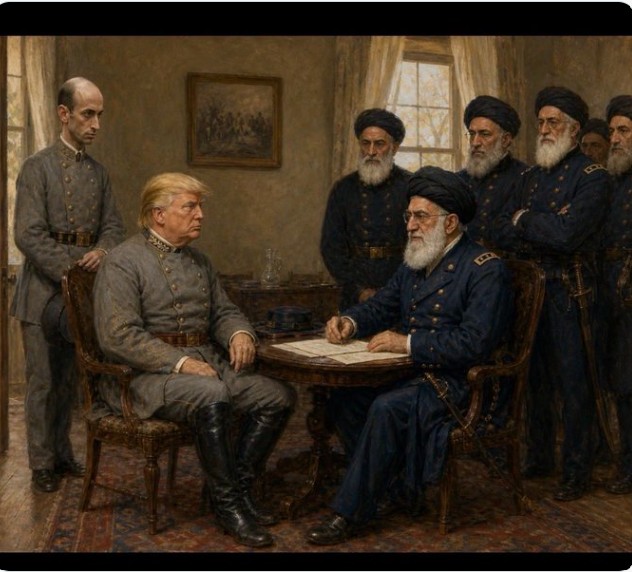
France has aggressively pushed for an EU-wide “Buy European Act” to curb the bloc’s reliance on non-European—predominantly American—military and aerospace hardware.
Driven by concerns over the unreliability of foreign suppliers, Paris wants to mandate that European defense budgets are spent within the continent to bolster domestic capabilities.
France has aggressively pushed for an EU-wide “Buy European Act” to curb the bloc’s reliance on non-European, predominantly American, military and aerospace hardware.
Driven by concerns over the unreliability of foreign suppliers, Paris wants to mandate that European defense budgets are spent within the continent to bolster domestic capabilities.
According to SIPRI, France is already the world’s second-largest defense supplier after the US, and Paris hopes that a continent-wide push to buy European weapons will benefit France more than anyone.
France, as the European Union’s only nuclear-armed country, is also trying to extend the French nuclear umbrella over Europe.
Since the Second World War, European countries, including Germany, have depended on US nuclear warheads for deterrence against the Soviet Union/Russia, the world’s biggest nuclear power.
The US has forward-deployed nearly 100 B61 gravity bombs at six bases in five European countries (Belgium, Germany, Italy, the Netherlands, and Turkey), with possible additions in the UK. These nuclear warheads remain under full US custody and control.
However, as the US commitment to NATO, or to defending Europe, wavers, France has proposed providing a ‘nuclear umbrella’ to European states for their security.
In a major speech at France’s nuclear submarine base in Île Longue on 2 March 2026, President Emmanuel Macron formally offered to extend French nuclear protection to European allies through a new doctrine called “forward deterrence”.
During the speech, Macron mentioned Belgium, Britain, Denmark, Germany, Greece, the Netherlands, Poland, and Sweden as European allies with which France was already in discussion.
Given this context, Macron would have surely cherished the sight of Trump signing the MoU with Iran in Versailles, the symbol of French victory over its enemies.
Through this carefully orchestrated symbolism, Macron is projecting a clear message: France stands strong and assertive, while the United States is a power in visible decline.
People are comparing the MoU with the “US$300 Billion US Surrender to Iran” deal, portraying it as a major concession or weak outcome for the United States.
Similarly, Germany was required to pay 132 billion gold marks in reparations under the Treaty of Versailles (1919) after World War I.
It amounted to nearly US$33 billion in 1921 dollars. In today’s money, it will be around US$500-US$600 billion, depending on the inflation measure.
However, there is another analogy that people should be careful with.
As historians have told us, the seeds of the Second World War lay within the Treaty of Versailles, as it imposed such humiliating and harsh conditions on Germany that it directly contributed to the rise of the Nazi Party in the country, and gradually pushed the world into another World War within the next two decades.
Some analysts warn that the seeds of the next conflict are already embedded in the US-Iran Memorandum of Understanding. The main flashpoints are Israel’s complete sidelining from the final agreement and Tehran’s firm insistence on including Hezbollah in the deal’s framework.
Given these terms, it is highly unlikely that Israel will respect the ceasefire with Hezbollah for any meaningful length of time.
For now, the ceasefire may hold. But from Israel’s perspective, the most fundamental causes of the conflict remain unaddressed: Iran’s ballistic missile program, its continued support for proxy militias like the Houthis, Hezbollah, and Hamas, and a regime that still openly calls for Israel’s destruction.
The next round of war between Iran and Israel, therefore, may be only a matter of time.
- This is an Opinion Article. Views Personal of the Author
- Sumit Ahlawat has over a decade of experience in news media. He has worked with Press Trust of India, Times Now, Zee News, Economic Times, and Microsoft News. He holds a Master’s Degree in International Media and Modern History from the University of Sheffield, UK.
- He can be reached at ahlawat.sumit85 (at) gmail.com