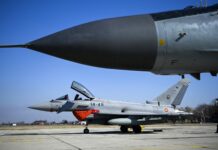
The US Air Force (USAF) F-16 demonstration team has pulled out of the Canadian International Air Show (CIAS) in Toronto, slated for this weekend. Officials say, it’s not a snub.
Earlier this week, the Canadian International Air Show (CIAS)—celebrating its 77th edition this year—announced that the USAF’s Viper Demonstration team would not be part of “North America’s longest-running air show” held each year on Toronto’s waterfront.
“Our full remaining lineup, including celebrating the 55th Anniversary of the CF Snowbirds, RCAF CF-18 Hornet and our WWII Heritage Flight, remains set for an incredible weekend,” the CIAS said in a post on Instagram. “Transparency with our fans is a top priority, and we will always keep you informed of any updates.”
The 2026 Canadian International Air Show takes place from September 5 to 7.
The last-minute withdrawal initially gave the impression that the US had pulled its fighters from the Canadian air show amid tensions following the collapse of trade talks with Canada, tit-for-tat tariffs, and the open barbs being traded by the leadership of two erstwhile close allies.
The exclusion of the Fighting Falcons riled up military and aviation enthusiasts on both sides of the border, with several netizens voicing discontent and calling the decision “silly” on social media. Some Canada-based enthusiasts accused US President Donald Trump of going too far, while others criticized Secretary of Defense Pete Hegseth.
However, the event organizers broke their silence on September 3, 2026, and said the USAF demo team withdrew because of “scheduling issues,” not ongoing political tensions.
“Last-minute schedule changes are a reality of real-time Air Show operations, and these decisions remain outside of our control,” the CIAS was reported to have said by the Toronto Sun. Meanwhile, CIAS Executive Director Lori Duthie refuted claims that US-Canada tensions and the American meme war against the Canadian military were behind the withdrawal. “Absolutely nothing (to do with it),” Duthie told the press at the CIAS media day. “It was a scheduling issue. We work very closely with our Canadian Forces and the United States Air Force across North America.”
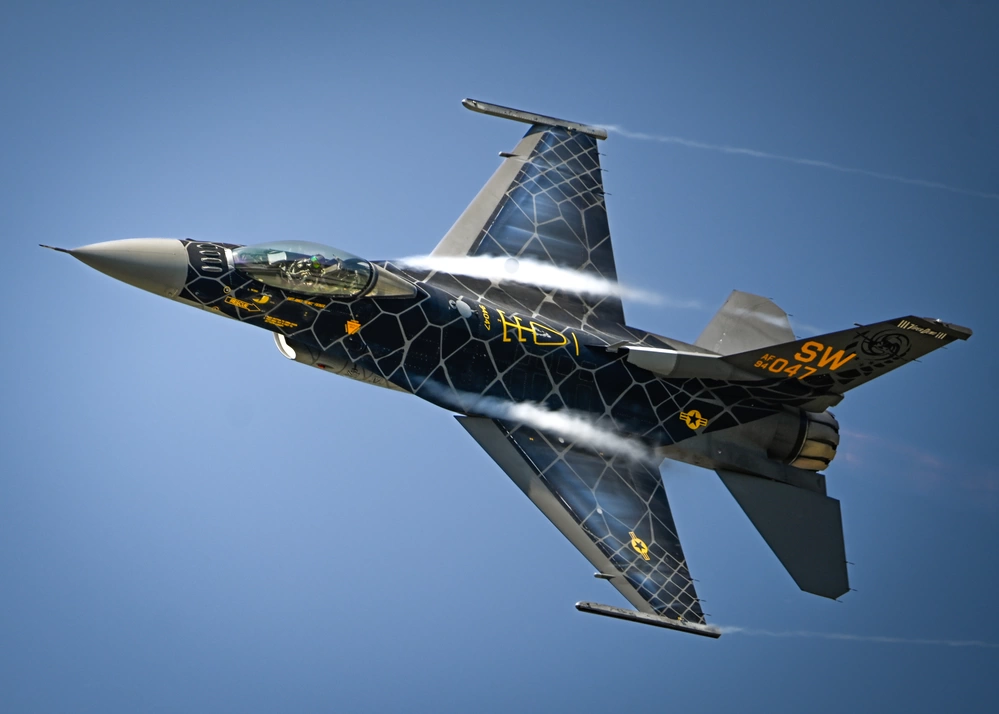
The Viper Demo Team confirmed the scheduling issue.
According to the Viper Demo squad website, the crew is slated to perform on September 5 and 6 at the Wings Over Batavia air show in Batavia, New York, roughly 120 kilometers southeast of Toronto.
After announcing the cancellation of F-16 participation, the CIAS organizers said an RCAF CH-146 Griffon helicopter, a Canadian military variant of Bell Helicopter’s iconic 412 Huey series of military and utility helicopters, would demonstrate its search-and-rescue capabilities at the much-anticipated air show.
Notably, the tensions between the US and Canada escalated when Donald Trump slapped tariffs on Canada after taking office in 2025, attacked its sovereignty by calling it the 51st state of the United States of America, and hurled insults at the Canadian leadership. However, these tensions peaked last month when Washington announced 50% tariffs on roughly $20 billion in Canadian exports on August 22, following the collapse of trade negotiations.
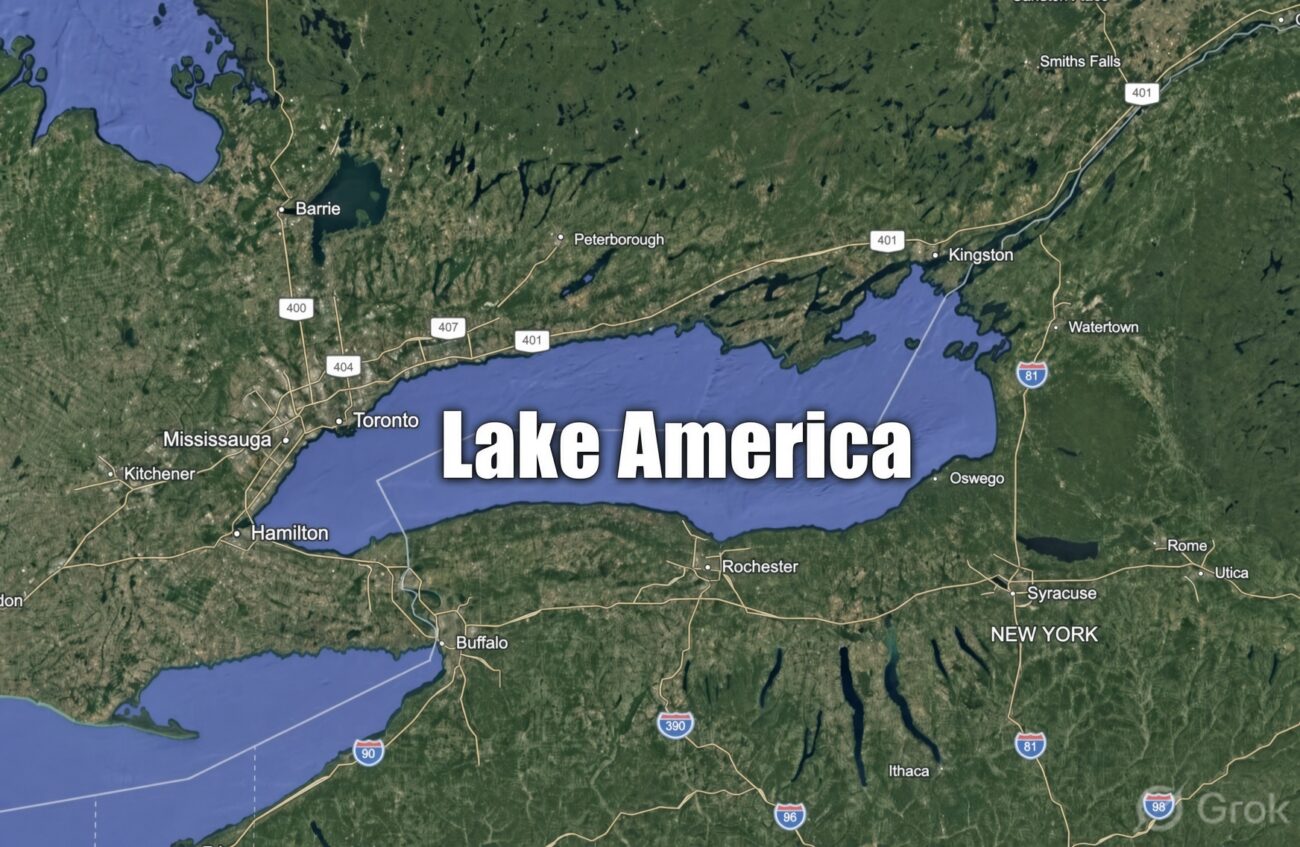
Following this, Trump ordered the renaming of “Lake Ontario” to “Lake America” for federal use, further causing friction with Ottawa.
Not just that, senior US officials in the Trump administration have publicly mocked or belittled the Canadian military in recent days.
Defense Secretary Pete Hegseth posted a photo on social media of a young Canadian cadet and her instructor with the caption “this is real” and a Canadian flag emoji. It was widely interpreted as mocking their appearance and fat-shaming them. Canadian Defense Minister David McGuinty hit back by calling the move “below the dignity” of Hegseth’s office.
Separately, Transportation Secretary Sean Duffy said Canada is “a country that doesn’t have a military. Meanwhile, Treasury Secretary Scott Bessent dismissed the idea of conflict with Canada by saying: “How are we going to be at war with Canada? What, they’re going to take their two submarines from the Edmonton Mall and sic them on us?”
Similarly, Vice President JD Vance took a jab at Canada, saying that the North American country “has underinvested in its military” and “quite literally would get invaded by a foreign country were it not for the umbrella of protection provided by” the United States.
The Canadian Prime Minister responded to the memes and trolling by saying, “When the Americans stop doing memes, stop throwing shade, stop trying to be tough and start being serious about having those discussions, we can have those discussions.” “It’s not constructive. But that’s their democracy,” he added.
While the US did not order the Viper Demonstration team to withdraw from the CIAS, this may be the first time the demo team has withdrawn from the CIAS after confirming its participation. Before this, the team canceled its final performance at the Dubai Air Show 2025, after the tragic Indian Air Force (IAF) Tejas crash that killed the pilot. At the time, the team announced that it had pulled out of respect for the deceased pilot, his colleagues, and his family, and described the organizers’ decision to continue flying as “shocking.”
The CIAS is the most keenly awaited air show for Canadians, who look forward to it every Labor Day weekend. As the country gears up for the show, some aviation enthusiasts recalled the tragic incident involving a US fighter jet at the CIAS in 1966, which resulted in the death of a pilot flying an exciting demonstration.
The Blue Angels Tragedy At CIAS
On September 2, 1966, during the Canadian International Air Show (CIAS), a tragic accident claimed the life of a US Navy Blue Angels pilot.
The Blue Angels, formerly the US Navy Flight Demonstration Squadron, are the US Navy’s elite aerobatic team that showcases the precision, teamwork, and professionalism of naval aviation through high-performance flight demonstrations.
In the 1960s, the Blue Angels flew the F-11A, a single-seat, carrier-based supersonic fighter that became the Navy’s first production fighter capable of level supersonic flight. It was popular for its clean lines, agility, and crisp handling.
On the fateful day of September 2, 1966, Lieutenant Commander Richard “Dick” Oliver, flying as Blue Angel #5 in a Grumman F-11A Tiger, was performing a solo demonstration over Lake Ontario near Toronto Island Airport.
2 September 1966: The crowd at the Canadian International Air Show was watching a routine that had been practiced countless times, flown with precision and confidence by the Blue Angels.
At the center of it was the Grumman F-11 Tiger; a sleek, supersonic jet that defined the… pic.twitter.com/POtBp9yZcF
— Turbex Aero (@turbexaero_) September 3, 2026
He was one of the two solo pilots performing the opposing “knife-edge” pass.
For the knife-edge pass, two solo aircraft approach each other from opposite directions along the show line. As they near the center point — directly in front of the crowd —each pilot rolls the aircraft into a 90-degree bank (knife-edge attitude), so one wing points straight down toward the ground and the other points straight up. In this attitude, the aircraft is flying primarily on the lift generated by the fuselage rather than the wings.
The two jets pass very close to each other, often appearing to nearly touch from the ground, at high combined closing speeds. It is a dramatic visual: the jets streak past each other with their wings vertical, creating a striking “knife-edge” profile against the sky.
After the pass, both aircraft roll back upright and clear the area.
On the day of the accident, Oliver performed the roll extremely low, causing the aircraft to hit a breakwater right off the airfield. With barely any altitude left to recover, the aircraft then “water-skied” across the surface of Lake Ontario at roughly 500 mph, heading toward Toronto Island Airport.
Then, it struck a steel sheet-piling retaining wall extending into the lake.
The aircraft broke apart on impact and erupted in flames. A large column of black smoke rose from the wreckage, and Oliver died on the spot.
“In display flying, especially at low level, everything is measured in feet and fractions of seconds. Speeds are high, sightlines are tight, and there’s no “go-around” when altitude disappears, Turbex Aero, a page focusing on aviation, wrote on X. “What happened that day in Toronto is a stark reminder of that reality, even for the most experienced pilots, in the most disciplined teams,” he added in a detailed post about the tragic incident.
Subsequently, reports noted that just a day before the deadly crash, Oliver had nearly struck the water while practicing the same routine. At the time, Canadian flying instructors at Toronto Island Airport noted he had been lucky to survive that close call.
However, on September 2, 1966, he wasn’t as lucky.
- Contact the author at sakshi.tiwari13 (at) outlook.com
- Follow EurAsian Times on Google News