As the fragile ceasefire between Iran and the US wobbles, the UAE once again finds itself caught in the crossfire.
Abu Dhabi has so far shown great restraint, absorbing thousands of Iranian drone and missile attacks on its skyscrapers, airports, and oil and gas terminals, without responding to these provocations. As the UAE came under alleged Iranian attacks once again on May 4, the diplomatic maneuvering space for the Emirati kingdom is shrinking.
Meanwhile, Iran’s military categorically rejected attacking the United Arab Emirates. “The armed forces of the Islamic Republic of Iran did not launch any missile or drone operation against the United Arab Emirates these past days,” the Khatam al-Anbiya central command said in a statement. “If such an action had been taken, we would have announced it firmly and clearly,” it added. “Therefore, the report of that country’s Ministry of Defense is categorically denied and completely unfounded,” it said, however, warning that any attacks launched from Emirati territory would be met with a “firm response”.
The UAE cannot afford to ignore the Iranian attacks indefinitely, as that would signal weakness in protecting its citizens, critical infrastructure, and the billions of dollars invested by the world’s super-rich. At the same time, it cannot easily risk direct military confrontation with Tehran, further exposing its cities to a barrage of Iranian drone and missile attacks.
The UAE finds itself caught between a rock and a hard place: its relations with longtime ally Saudi Arabia are at their lowest point in decades, while its deepening ties with Israel risk leaving it isolated across the region.
Meanwhile, the UAE’s position has become even more precarious after it withdrew from the 12-member oil-exporting group, OPEC, further isolating itself among the oil-rich Gulf countries.
The question that now looms large is: will the UAE continue absorbing Iranian attacks on its oil facilities and critical infrastructure, or will it enter active hostilities against Tehran and in support of the US and Israel?
UAE Under Fire
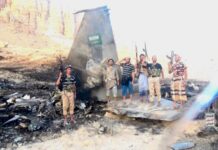
The UAE’s air defense systems reportedly intercepted 12 ballistic missiles, three cruise missiles, and four drones. However, one Iranian drone penetrated Emirati air defenses and struck the Fujairah oil terminal, where a fire broke out, and three people were injured.
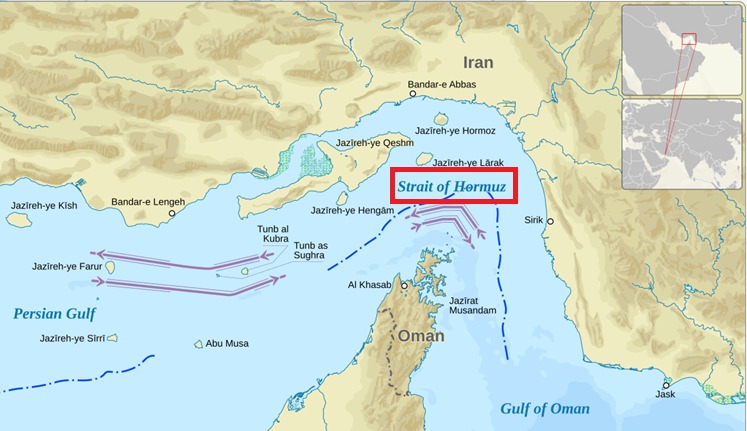
The targeting of the Fujairah oil terminal was deliberate and carried a strategic message for Abu Dhabi. The Fujairah oil terminal is the endpoint of the ADCOP pipeline, the UAE’s only Hormuz bypass.
This oil pipeline connects the UAE’s Abu Dhabi oil fields to the Habshan terminal, and from there to the Fujairah terminal in the Gulf of Oman.
Crucially, the Habshan-Fujairah oil pipeline, also known as the ADCOP pipeline, bypasses the vulnerable Strait of Hormuz and opens directly into the Gulf of Oman, allowing the UAE to export its crude without passing through the strait.
The 406-km-long oil pipeline has a capacity to transfer 1.5-1.8 million barrels of oil per day.
The UAE’s current crude oil production capacity is approximately 4.85 million barrels per day (bpd); however, it currently produces 3.2–3.7 million bpd, meaning Abu Dhabi can transfer nearly half of its crude through this pipeline, bypassing the Strait of Hormuz.
The only other major Hormuz bypass is Saudi Arabia’s East-West pipeline to Yanbu, which opens in the Red Sea. Notably, this pipeline was also attacked in April and lost approximately 700,000 barrels per day of throughput.
The message was clear: Iran is not just hitting a coalition partner. They are targeting the infrastructure that lets oil flow without Hormuz.
Iran will not only blockade the Strait of Hormuz, but it will also not let Gulf countries export crude through any other means.
Notably, even during the earlier hostilities in March and April, Iran disproportionately targeted the UAE.
Iran launched over 6,000 drones and missiles on the seven Arab countries, the UAE, Kuwait, Saudi Arabia, Qatar, Oman, Bahrain, and Jordan, during the 41 days of the conflict.
Of these, nearly half (approximately 2,820) were targeted against the UAE. The next on the list was Saudi Arabia, which was targeted fewer than 1,000 times.
While Iran did not explain why the UAE was disproportionately targeted, according to defense and security experts, the main reason was Abu Dhabi’s close links with Israel.
Almost all Gulf countries have deep, strategic ties with the US. However, the situation changes when it comes to Israel.
The UAE signed the Abraham Accords on September 15, 2020. This historic agreement normalized diplomatic, economic, and security relations with Israel.
In the Gulf, apart from the UAE, only Bahrain has signed the Abraham Accords.
Since then, Abu Dhabi and Tel Aviv have gradually deepened their economic and defense ties.
In fact, according to reports, Israel even sent the United Arab Emirates an Iron Dome air defense system with troops to operate it early in the war with Iran. Further, according to The Financial Times, Jerusalem also sent an advanced surveillance system, known as Spectro, to help the UAE detect Iranian drones from up to 20 kilometers (12.4 miles) away.
Meanwhile, according to the Times of Israel, Jerusalem dispatched a version of the Iron Beam laser-based air defense system to the United Arab Emirates to help protect the Gulf nation from missile and drone attacks.
Furthermore, according to Patricia Marins, a noted defense expert, Emirati officials attended a meeting in Israel during the ceasefire alongside the Commander of CENTCOM, highlighting joint planning of strategy and operations between the UAE, the US, and Israel during the conflict.
Notably, the UAE has also signed a security agreement with India, and New Delhi and Tel Aviv also share a robust strategic and defense partnership. India is also the UAE’s second-largest trade partner.
In fact, India, the UAE, Israel, and the US are also part of the I2U2 (India-Israel-UAE-US) Economic Corridor.
The India-Middle East-Europe Economic Corridor (IMEC), unveiled at the 2023 G20 in New Delhi, is the axis’s crown jewel. This rail-sea-energy-digital network links Indian ports through the UAE and Saudi Arabia, across Jordan and Israel, to European hubs.
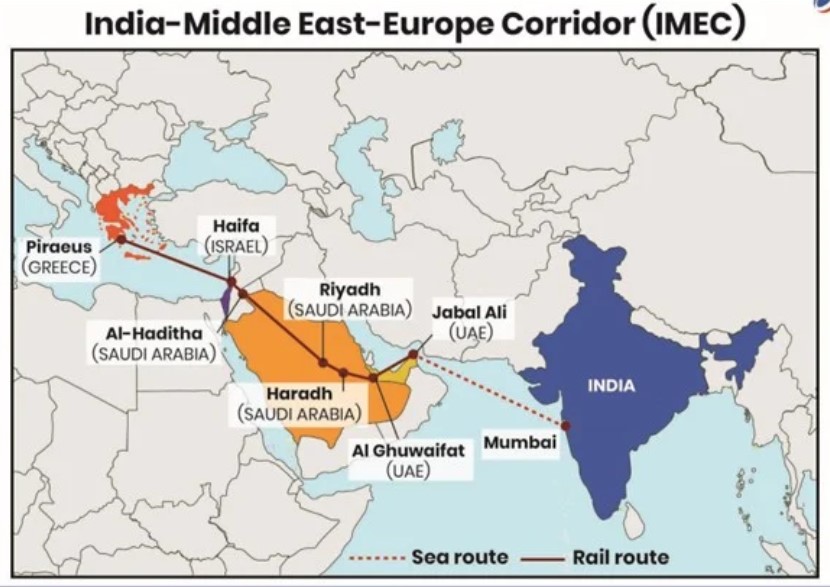
This level of security and economic cooperation among India, Israel, the US, and the UAE underscores a new emerging axis in the Middle East.
It is possible that due to this emerging axis between the UAE and Israel, Tehran has disproportionately targeted Abu Dhabi.
However, the question is whether the UAE can withstand Iranian attacks and provocations indefinitely.
Following the latest attacks, Emirati leaders have made it clear that the UAE will not be intimidated by these actions and retains the full right to defend its sovereignty and the safety of its citizens and residents.
Meanwhile, Dr. Ali Alnuaimi, Chairman of the Defense, Interior, and Foreign Affairs Committee at the Federal National Council, issued an unusually strong-worded statement against Iran.
“The Iranian regime’s terrorist attacks against the UAE are not isolated incidents,” Dr Alnuaimi noted. “They reflect a pattern of aggression that undermines regional stability and exposes a deeper truth — a regime that doesn’t believe in negotiations to solve conflicts cannot be trusted as a responsible international actor.”
Prominent Emirati political science professor Abdulkhaleq Abdulla went further, framing the aggression as an existential issue for the broader international community.
“The brutal Iranian attack on the UAE today confirms that it is impossible to coexist with… an Iranian terrorist regime that poses an existential threat to the countries of the region and the countries of the entire world,” Prof Abdulla stated. “Iran has become a global problem that requires a decisive global response. The UAE knows how to defend itself, and the world must defend its interests.”
Interestingly, there is already speculation that the UAE might have used its air force against Iran during the active phase of war in March.
In the first week of April, the UAE emerged as a prime suspect behind the missile strikes on Iran’s Lavan island oil refinery, hours after a US-brokered ceasefire was supposed to have halted hostilities.
Multiple Iranian sources and open-source military analysts suggested that the UAE Air Force Mirage 2000-9 fighter jets were behind the strikes.
Abu Dhabi has not confirmed or denied the allegation.
The UAE Ministry of Defense confirmed that its Mirage jets had been scrambled, but it framed their role as intercepting incoming Iranian drones and missiles.
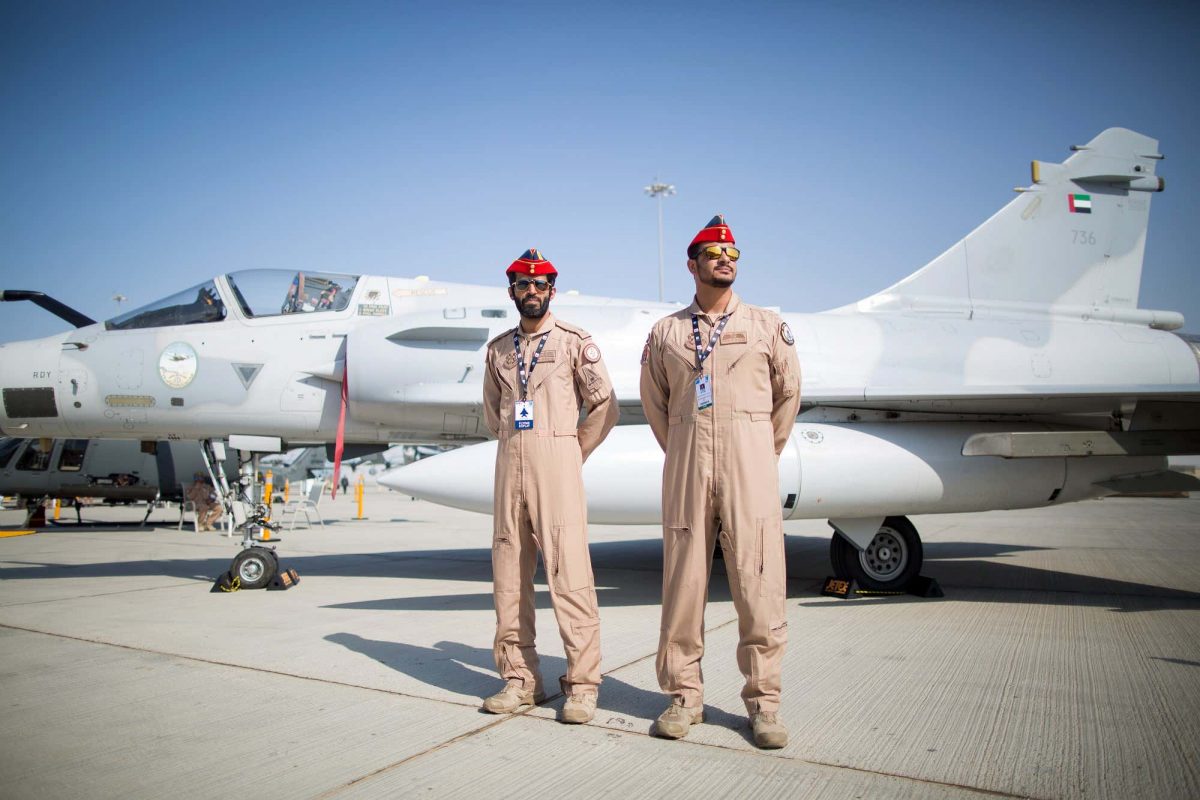
According to Marins, in the coming days, Iran will publish evidence showing that Emirati jets were indeed behind the bombing of the Lavan Island oil refinery.
If that is true, it means that the UAE has already entered an active war against Iran.
“In a possible second phase of the war, the scale of the Iranian retaliatory strike will be devastating now that they have confirmed Emirati jets are bombing Iranian facilities,” Marins warned.
However, entering an active war against Iran will be a high-risk strategy for the UAE.
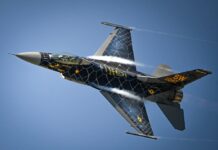
The UAE has a modern air force, equipped with capable fighter jets such as the Rafale, Mirage 2000-9, and F-16; however, unlike Iran, it does not have a battle-hardened military.
All Emirati cities and oil and gas facilities are within range of Iranian drone and missile strikes. A further escalation in attacks against the UAE will further impact the investment sentiment in the Emirati kingdom.
Furthermore, deeper ties with Israel carry the risk of isolation in the Muslim world. At a time when the UAE has already withdrawn from OPEC and its relations with Saudi Arabia have hit rock bottom, a charge of betraying the Muslim cause and unity can be a risky proposition for the Emiratis.
Iranian missile and drone attacks on Emirati cities are a grave provocation, but Abu Dhabi must weigh all its options carefully before taking any rash decision.
- Sumit Ahlawat has over a decade of experience in news media. He has worked with Press Trust of India, Times Now, Zee News, Economic Times, and Microsoft News. He holds a Master’s Degree in International Media and Modern History from the University of Sheffield, UK.
- VIEWS PERSONAL OF THE AUTHOR.
- He can be reached at ahlawat.sumit85 (at) gmail.com