China’s Aviation Industry Corporation (AVIC) unveiled what appears to be an export prototype of the J-35A fifth-generation stealth fighter, fuelling speculation that the aircraft was intended for the Pakistan Air Force (PAF).
A short clip showing the rollout of an export J-35 fighter was posted on X by user @louischeung_hk on May 3, 2026, along with an assertion that the aircraft was meant for Pakistan.
Notably, the 10-second video showed a grey aircraft from behind inside a hangar, with large open doors revealing the airfield outside. The post went viral on X shortly after, with some netizens and open-source tracking accounts quickly jumping the gun and concluding that the aircraft was indeed a J-35A intended for Pakistan.
The unverified assertion triggered jubilation among X accounts linked to Pakistani defense enthusiasts and hysteria among Indian observers and defense enthusiasts.
However, in an unexpected turn of events, the author deleted the original post showing the rollout, prompting suspicions about the narrative’s authenticity.

Subsequently, a noted researcher of China’s military aviation, Andreas Rupprecht, took to X to debunk the claims, stating that the aircraft seen in the video was not Pakistan‘s first J-35, but AVIC’s first J-35AE export prototype.
The expert highlighted the lack of confirmation of a J-35A sale to Pakistan by either side.
Notably, the J-35A is China’s land-based variant of the J-35 fifth-generation stealth fighter. It is a medium-weight, twin-engine, single-seat multirole stealth fighter that features a blended wing-body, diverterless supersonic inlets (DSI), edge-aligned surfaces, serrated panels, radar-absorbent materials, and internal weapons bays, among other things.
The aircraft resembles the American F-35 in appearance and is positioned by Beijing as the “most stealthy” fighter jet in the world.
Pakistan’s Unconfirmed J-35A Purchase
Pakistan has been speculated to become the first export customer for China’s J-35A, which was unveiled to the public at the Zhuhai Air Show in November 2024.
The rationale is simple: Pakistan is the world’s fifth-largest importer of weaponry, with over 80% of its purchases coming from China, its “brother-in-arms.” Moreover, the PAF was the first customer for the Chinese J-10C (and the only one), which Beijing has aggressively marketed for export. The close ties between the two partners make Islamabad an obvious buyer of the cutting-edge aircraft, several Pakistani observers have noted.
Several reports over the last two years have claimed that the PAF is looking to acquire as many as 40 of these jets to give itself a stealthy makeover.
However, it is far more complicated, as Pakistan has been sending conflicting signals about a purported J-35A deal that has reportedly been in the works for nearly 3 years.
PAF’s chief, Air Chief Marshal Zaheer Ahmed Baber Sidhu, first raised the possibility of a J-35A agreement with China in December 2023 and then again the following month. The “foundation for acquiring the J-31 stealth fighter aircraft has already been laid”, and that it would join the PAF’s fleet “in the near future,” he said in January 2024. The J-35 is a more advanced and “production-ready” iteration of the earlier FC-31 model.
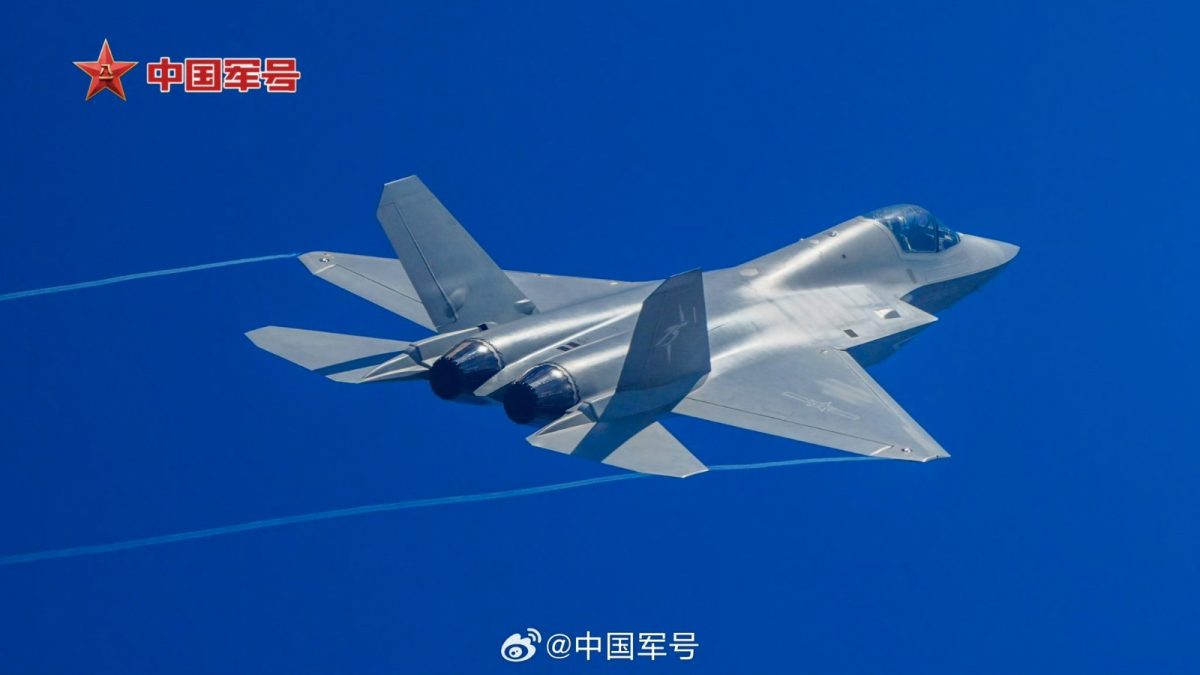
However, the possibility of a J-35A was raised again when Pakistan’s President, Asif Ali Zardari, visited the advanced aircraft complex of the fighter jet manufacturer, the Aviation Industry Corporation of China (AVIC), in September 2025.
When inquired over the sustained ambiguity over Pakistan’s purchase of the J-35A, an expert on China’s military aviation, Andreas Rupprecht, told the EurAsian Times, “Rumors have been around for some time, but almost always from fan-boy sites and unreliable media outlets. In my opinion, even official Pakistani confirmations are at best vague statements, as they continue to say “we will get them” without ever specifying a date. And, we all know what “soon” means in India and Pakistan.”
Rupprecht noted that the export prototype of the J-35A—the J-35AE—has already flown, albeit out of public view. “We “know” – based on some credible spotters in China and posters on Weibo, that the first J-35AE flew already in November 2024, just prior to the Zhuhai Airshow, and was even planned to be shown. However, due to unknown reasons, it was withdrawn at the last minute and replaced by the regular J-35A. This year, however, it is widely expected to appear,” he added.
Further, analyzing the export potential of the J-35A, Rupprecht said, “I’m almost convinced, there is a still secret first customer who was partially financing the project from the beginning, and in fact the PLAAF (PLA Air Force) stepped in only later, since I think originally it was purely a naval project. Now, however, the J-35 and, likely, the J-10 could, for the first time, enter the international market and be successful. But I’m pretty sure – since so far China has not that much experience with exporting high-end types in large numbers and most international customers are quite demanding in terms of after-sales support, maintenance, and complete customer service, so that they want to be sure all is done and ready before they unveil this sale.”
The expert then said that the United Arab Emirates could likely be the first export customer for the J-35A. “As such, we may witness a similar moment like back in the 1980s (?), when several European countries decided to purchase F-16 instead of Mirages.”
At this stage, the EurAsian Times cannot independently verify if the UAE will take the plunge and purchase the J-35A. However, we know that the US Pentagon explicitly listed the UAE, along with Egypt and Saudi Arabia, as an “interested client” for China’s J-35 export variant in its 2025 report to Congress, as earlier reported by the EurAsian Times.
Furthermore, the Emirati kingdom had previously attempted to purchase the American F-35, but its efforts were thwarted by strict US export regulations designed to maintain Israel’s Qualitative Military Edge (QME) and shield key technologies from Chinese access.
It is pertinent to note that China has been targeting countries looking to buy a stealth fighter. It is pushing its J-35/FC-31 as the “next best option” after the F-35, particularly to countries that cannot afford the F-35 or cannot obtain clearance to purchase it due to US export controls.
For now, it remains to be seen whether the UAE, Pakistan, or some mysterious third buyer will eventually become the first export customer of the J-35A stealth fighter. However, if it is indeed Pakistan as widely speculated, it is likely to cause some anxiety across the border.
Pakistan’s Gain Would Be India’s Loss
Despite sustained mixed signals about Pakistan’s purchase, a large section of analysts believe Pakistan will eventually buy the aircraft, beating India in the stealth race.
With the acquisition of a fifth-generation stealth aircraft, Pakistan will effectively have a more technologically advanced air force. In fact, it is believed that Pakistan’s reported interest in purchasing the Chinese J-35 fifth-generation stealth aircraft is another attempt to stay ahead of New Delhi in the combat jet race, especially after the two countries recently fought an intense four-day conflict.
Typically, advanced stealth aircraft are harder to intercept by air defense systems, and hence, they can launch first strikes. Writing for EurAsian Times earlier, Indian Air Force veteran and a renowned military expert, Squadron Leader Vijainder K. Thakur (retd), explained that as compared to the FC-31 or J-31, the J-35 features more powerful WS-19 engines, a more sophisticated radar system, improved sensor fusion, improved aerodynamics and stealth characteristics, and a wider range of weapons.
While observers believe that Pakistan will get its hands on the J-35A stealth fighter before the end of this decade, India’s own fifth-generation stealth fighter program, the AMCA (Advanced Medium Combat Aircraft), is unlikely to become operational before the mid-2030s, despite the Indian Ministry of Defense’s efforts to accelerate it.
This means India will have a glaring stealth gap vis-à-vis Pakistan and China for nearly a decade, if not more. “It is likely that by the year 2030, the PAF could be operating 2 squadrons of J-35A, comprising approximately 40 fighters. By the same year, the PLAAF, which is currently believed to have deployed around 200 J-20 fighters, could have deployed double the number. In stark contrast, the IAF would have no stealth fighters in its inventory by 2030,” Thakur had said earlier.
Several military experts the EurAsian Times spoke with over the last year have explicitly vouched for India’s purchase of a foreign stealth aircraft — possibly the Su-57 — as a stopgap measure to bridge the capability gap. They implore the decision-makers in New Delhi to expedite the AMCA program, buy 114 Rafales, and buy two or three squadrons of the Russian stealth fighters that have been on offer for quite some time.
Although the IAF has yet to make a decision, the Indian Ministry of Defense (MoD) maintains studied silence on the matter. Nonetheless, the growing frenzy over PAF’s purchase of the J-35A might finally force it to change course.
- Contact the author at sakshi.tiwari13 (at) outlook.com
- Follow EurAsian Times on Google News