The US State Department has approved the sale of approximately $1.96 billion in weapons to strengthen Saudi Arabia’s air defense capabilities.
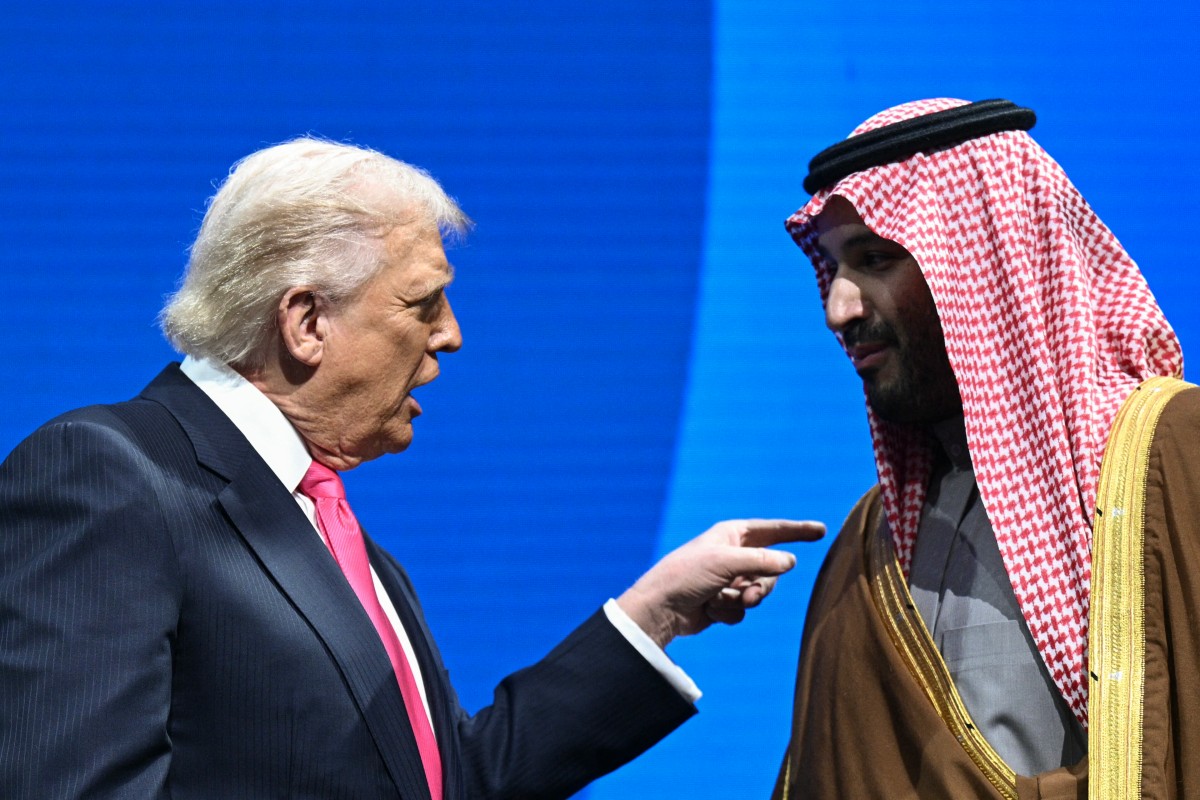
“This proposed sale will support the foreign policy and national security objectives of the United States by improving the security of a Major non-NATO Ally that is a force for political stability and economic progress in the Gulf Region,” the State Department said in a release.
Among the weapons the Gulf kingdom seeks are up to 20,000 Advanced Precision Kill Weapon Systems and their warheads, which the US Navy’s website describes as “an inexpensive way to destroy targets while limiting collateral damage in close combat.”
The principal contractor will be BAE Systems in Nashua, New Jersey, the department said.
“The proposed sale will improve Saudi Arabia’s capability to deter current and future threats by strengthening its homeland defense, and improving interoperability with US forces, and other regional and NATO forces,” the release said.
“There will be no adverse impact on US Defense readiness as a result of this proposed sale,” the release said.
Iran War
Ever since the fragile ceasefire broke between Iran and the US on July 9, Tehran has attacked US military bases in at least six Gulf countries, including Bahrain, Jordan, the UAE, Qatar, Kuwait, and Oman.
Tehran’s choice of targets has drawn attention, as it struck US military bases even in Oman, one of Iran’s closest friends in the Gulf and a country that previously hosted peace talks between the two sides, while conspicuously sparing Saudi Arabia.
Interestingly, Saudi Arabia and Iran have been the historical and ideological adversaries, at least since the 1979 Islamic Revolution in Iran. While Iran is widely recognized as the leader of Shia Islam, Saudi Arabia is considered the natural leader of Sunni Muslims on account of its custody of two of the holiest shrines in Islam, Mecca and Medina.
Iran and Saudi Arabia also fought a nearly decade-long proxy war in Yemen from 2015 to 2022.
Even during the first phase of the war in March and April, Iran has targeted US military bases in Saudi Arabia, such as the Prince Sultan air base, as well as the Ras Tanura Refinery and the East-West pipeline.
However, in the last week of hostilities, Saudi Arabia has been conspicuously absent from the list of Iranian strikes, making many wonder if Riyadh has cut a secret deal with Tehran.
Saudi Arabia may be quietly shifting away from its traditional close alignment with the US in the ongoing US-Iran war, toward a more neutral position. Analysts have also noted the Saudi presence at the funeral of Iran’s late Supreme Leader Ayatollah Ali Khamenei.
Some analysts have suggested that Pakistan could be a factor in Iran’s decision not to attack Saudi Arabia. Pakistan has hosted Iran-US peace talks, and Islamabad has signed a Strategic Mutual Defense Agreement (SMDA) with Riyadh on the lines of NATO’s Article 5, where an attack on one party is considered an attack on all the member countries.
Pakistan has also reminded Tehran of its mutual defense pact with Saudi Arabia to prevent further Iranian attacks on Saudi territory. For instance, Pakistan’s Deputy Prime Minister and Foreign Minister Ishaq Dar said in a press conference in Islamabad, “I informed the Iranian side about our defense agreement. The Iranian side said Saudi Arabia must ensure that its territory is not used against Iran.”
However, these analysts overlook a key element of Iran’s strategy. Tehran does not need to strike Saudi Arabia directly to target it. Instead, it has long relied on its well-established use of proxy forces to pressure its adversaries.
Since the 1979 Islamic Revolution, Iran has systematically supported allied militias to confront regional rivals, most notably Hezbollah against Israel and the Houthis in Yemen, allowing it to extend its influence and inflict costs on its enemies while maintaining plausible deniability.
In the current conflict, Iran appears to be applying this same approach.
Houthis Attack Saudi Arabia
On July 13, Houthis fired missiles at Saudi Arabia after accusing the kingdom of bombing an airport under their control, breaking a four-year truce in the conflict between Saudi Arabia and the Iran-aligned group.
With this, Iran might have opened a new front in the war.
Notably, Saudi Arabia battled the Houthi militias in Yemen for seven long years from 2015 to 2022.
Saudi Arabia considers the rising influence of the Houthis in Yemen an existential threat to its security. It shares a 1,307-km-long border with Yemen.
Houthis are not only Shia militias, but they are also armed and financed by Iran. Rising Houthi power in Yemen would have meant Iran’s influence in Saudi Arabia’s backyard.
Considering it a direct threat to its security and influence in the region, Saudi Arabia made a coalition of nine Arab countries and launched Operation Decisive Storm against the Houthis.
During this phase of direct hostilities, the Houthis often launched drone and missile strikes inside Saudi Arabia, including on the oil facilities of Aramco.
However, after fighting for seven years, Riyadh realized that it could not defeat the Houthis in Yemen and made a ceasefire with them in 2022.
Next year, in March 2023, China mediated a truce between Saudi Arabia and Iran, which further cemented the ceasefire between Riyadh and the Houthis.
However, that ceasefire now lies in tatters after Houthis launched missiles into Saudi Arabia on June 13.
Furthermore, Houthis could also impose financial costs on Saudi Arabia.
Iran has used the Strait of Hormuz as its bargaining chip in the war, conveying the message that no Gulf country could sell its oil if there were a war against Iran.
However, Saudi Arabia has an alternative route: it could use its East-West pipeline to export its oil via the Red Sea.
Though the Houthis could also block commercial shipping through the Red Sea by blocking the Bab-el-Mandeb strait, as they had done in 2024, and choke Saudi oil exports.
Meanwhile, in 2015, Pakistan explicitly refused to join the Saudi-led coalition of nine countries, as it was apprehensive that doing so would bring the Shia-Sunni conflict home. Will it join now after the mutual defense pact remains to be seen?
How Iran is Degrading Saudi Defense Without Hitting It
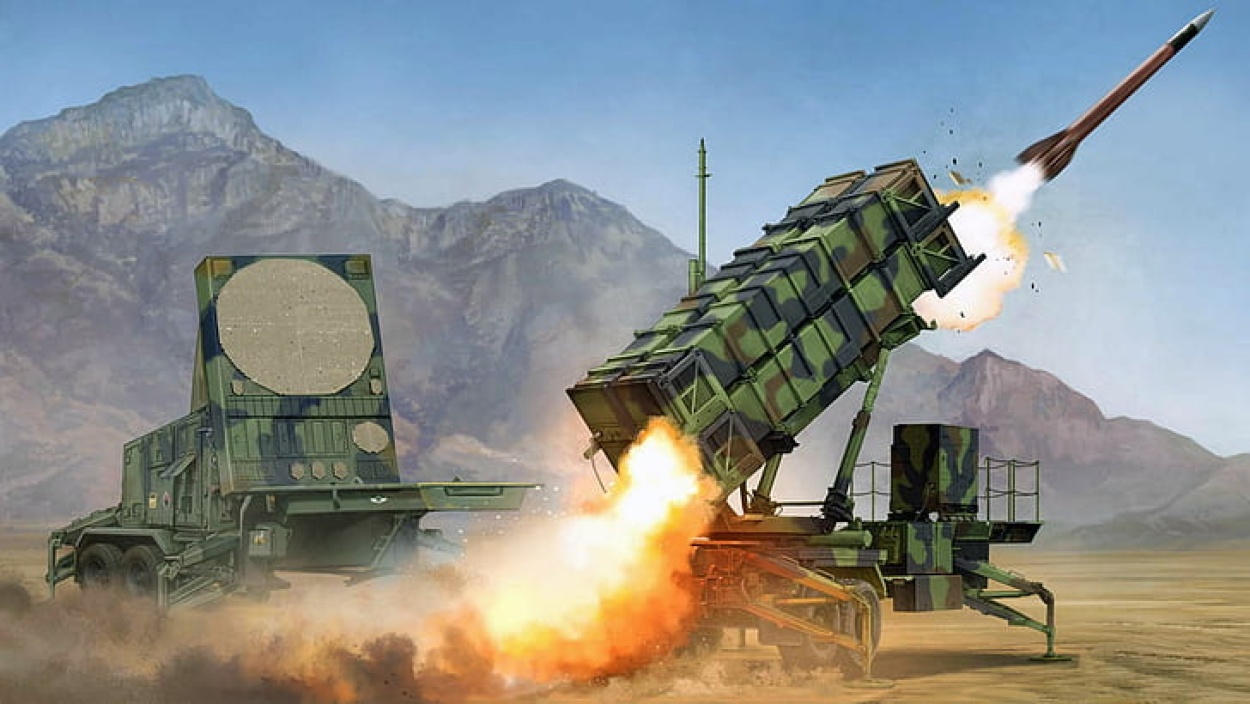
On July 13, the IRGC claimed the “complete destruction” of a Patriot air defense battery at Ali Al-Salem Air Base and an AN/FPS-117 strategic radar at Ahmad Al-Jaber Air Base in Kuwait.
According to the House of Saud, a London-based news portal covering Saudi defense and geopolitical news, the Patriot at Ali Al-Salem had intercepted ninety-seven projectiles since the war began, more than any other battery in the Gulf Cooperation Council.
The AN/FPS-117 at Ahmad Al-Jaber provided long-range detection, 470 kilometers, extending deep into Saudi Arabia’s Eastern Province, covering the northern approach corridors toward Dhahran and the Aramco facilities at Ras Tanura.
“The FPS-117 is a long-range, three-dimensional air surveillance radar covering a 470-kilometer radius. Positioned at latitude 29.3°N in southern Kuwait, its detection envelope extended across the border into Saudi Arabia’s Northern Corridor, providing early warning for Dhahran, Jubail, and the industrial complexes along the Eastern Province coast. Its loss, if confirmed, does not merely reduce Kuwait’s awareness; it removes a detection node that Saudi Arabia depended on without operating.”
Therefore, although these radars were based in Kuwait, their range also protected Saudi Arabia, and during the war, the air defense batteries connected to these radars shot down multiple aerial targets approaching Saudi territory.
Every radar, air defense battery, or missile launcher destroyed in Kuwait, Bahrain, the UAE, and Qatar is eliminating an early warning architecture for Saudi Arabia.
Furthermore, as these Gulf countries expend their missile interceptors at a frantic pace, it is exposing Saudi Arabia, as these interceptors were also eliminating aerial threats passing through their territory into Saudi airspace.
The entire air defense architecture of Saudi Arabia’s Eastern provinces depended on a layered system in which other countries’ sensors and interceptors formed the outer rings.
Even if Iran is not directly attacking Saudi Arabia, it is systematically degrading Saudi defense capabilities by targeting the air defense batteries of its neighboring countries.
Iran has perfected the art of targeting, weakening, and degrading its regional adversary even when it is not hitting it directly.
- Sumit Ahlawat has over a decade of experience in news media. He has worked with Press Trust of India, Times Now, Zee News, Economic Times, and Microsoft News. He holds a Master’s Degree in International Media and Modern History from the University of Sheffield, UK.
- He can be reached at ahlawat.sumit85 (at) gmail.com