OPED by Air Vice Marshal (R) Prashant Mohan
The much-feted U.S.-Iran ceasefire talks (without Israel) were planned with much fanfare in Islamabad. The event, however, fizzled out without a bang.
Now, President Trump has said that the US-Iran peace talks could resume this week, while Israel and Lebanon also agreed to hold direct negotiations. Trump told The New York Post a new round of talks with Tehran could take place in Pakistan “over the next two days.”
The first round of talks gave the impression of being more of a façade. It appeared to be designed by the US to get a breather from unrelentless Iranian counter attacks.
Cooling off the propaganda post the so-called combat rescue of a downed U.S. aircrew from mainland Iran, Israel striking Hezbollah in Lebanon, the world market getting some respite after approximately 40 days of crashing, and President Trump indulging in another round of blowing hot and cold were a few of the add-ons.
These talks were sacrificed to political theatrics and signaling, when judged against the enormity of comprehensive reconciliation – 21 hrs to solve a 45-year-old problem.
The talks were bound to fail.
Historical Patterns
Historical patterns in Middle Eastern peace processes, such as the Camp David Accords, suggest that multi‑decade enmity rooted in ideology, security dilemmas, and domestic identity politics are almost never resolved in a single negotiating round.
U.S.-Iran was no different.
Since the 1979 Islamic Revolution, relations between the two nations have been scarred by nuclear brinkmanship, institutionalized sanctions, and networks of proxies. Since 28 Feb 26, the day Op Epic Fury was launched, Iran was subjected to decapitation strikes, deadly attacks on its infrastructure, and above all, its sovereignty.
Iran retaliated with whatever it had and was successful in raising the cost of almost everything, especially energy. GCC nations were not spared. They were hit by Iran, where it hurt them the most, i.e., energy infrastructure.
Build up to Talks
The U.S., the superior power in the equation, did nothing to placate the environment. Before the talks, it issued ultimatums and continued to build up its military, creating a coercive environment rather than one of mutual trust.
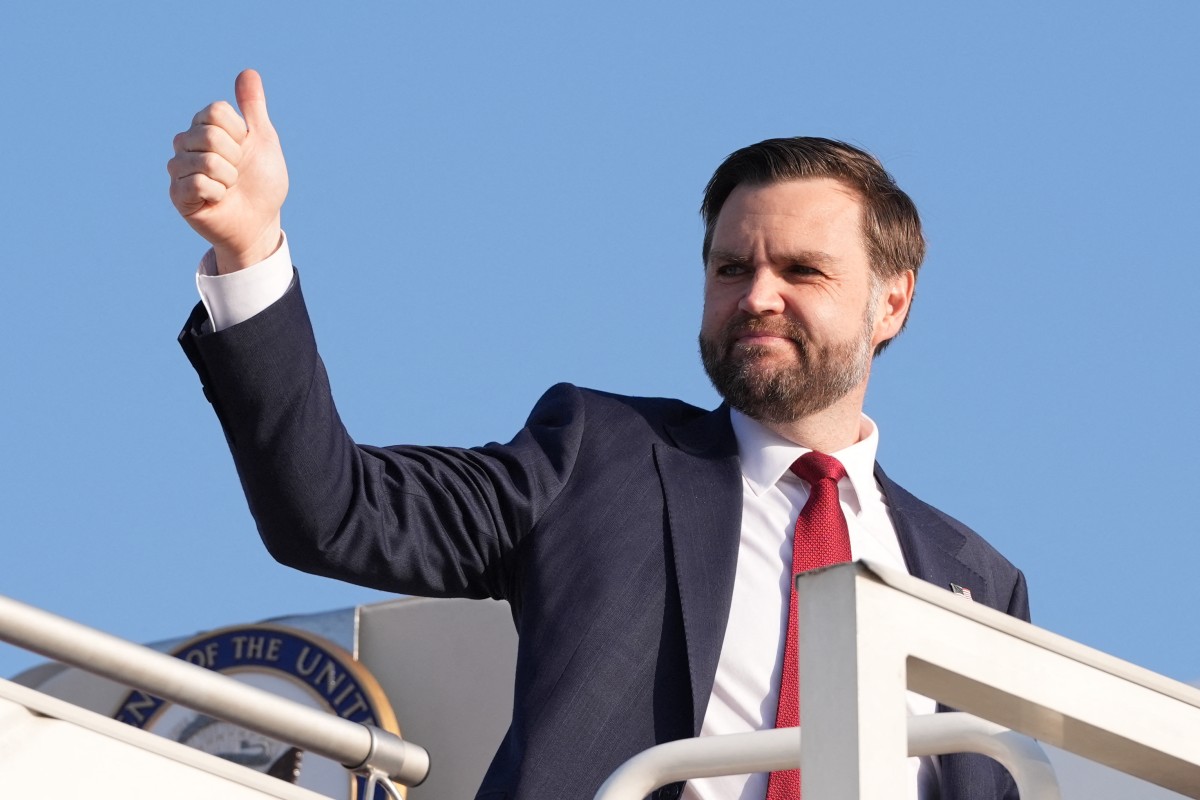
U.S. negotiators led by Vice President JD Vance pushed maximalist demands like: zero enrichment, dismantle Natanz/Fordow/Isfahan, ship enriched uranium abroad, no sunset clauses, etc.
President Trump’s statements on Truth Social on April 5, were- “Open [Strait of Hormuz], you bastards or you [will be] living in hell – JUST! PRAY TO ALLAH” and on April 11 the rant was – “Iran promised to open the Strait of Hormuz and they knowingly failed to do so… I have also instructed our Navy to seek and interdict every vessel in International Waters that has paid a toll to Iran. No one who pays an illegal toll will have safe passage on the high seas. We will also begin destroying the mines the Iranians laid in the Straits. Any Iranian who fires at us, or at peaceful vessels, will be BLOWN TO HELL!”
To an outsider, there doesn’t seem to be a plan/strategy for approaching and guiding the talks. It seems finding a solution for the deadlock was not the aim of the talks. It is more like we gave Iran a chance for talks, but they did not take it.
Environment for Reconciliation
There was no mutually pre‑agreed summit agenda. Both sides had their lists of maximalist demands, which, in their current form, were impossible to discuss within a 21-hour time frame, let alone agree to.
Vice President Vance, surely on instructions from White House, ended the April 2026 Islamabad talks with a “final offer,” blaming Iran despite “good faith.” Furthermore, the Islamabad talks took place under 15 days of time pressure, after which the bombing was to have begun if the talks failed.
In other words, it cannot really be called a bilateral talk. For Iran to save itself, it had to accept American demands or else! Sides were posturing for audiences, which is a far less conducive environment for reconciliation.
It was the U.S. that called for a ceasefire. It should have gone fully prepared. It should have gone catering for the worst-case scenario, i.e., Iranian refusal to accept American demands. It did not do enough. The preparation lacked expertise. If the U.S. truly wanted a solution, it should have given Iran more time and discussed various ways and means to reach an agreement on the demands.
There is always a give-and-take policy in negotiations. This happens when talks as important as this are thought through in their entirety, with specialists leading.
The Negotiations
It can be said that Iran used the Islamabad talks to dramatize that narrative. Iran demanded a parallel ceasefire in Lebanon and a reliable US‑brokered halt to Israeli attacks on Hezbollah.
This framing allowed Iran to present its joining the talks as a concession, not a sign of weakness. Iran portrayed the talks as an emblematic test of American trustworthiness.
“Mistrust and suspicion” were the phrases constantly used by Iran to highlight that the US demands were “excessive” and “unreasonable”. Iran, through its media outlets, cast the failure of talks as proof that the US had no intention of treating Iran as an equal partner.
The U.S. negotiators should have anticipated and prepared for the fact that Iran would portray themselves as the aggrieved party. From an American perspective, 40 days of coercive diplomacy have not borne the required fruits. If the U.S. really wanted discussion-led results, the American negotiators should have “played ball,” turned the tables by being more accommodating, and extended the talks.
Seeing the drift of the talks, any seasoned diplomat and/or negotiator would have anticipated the Iranian approach and conduct. After the talks, Iran adopted a unified narrative. It stressed that the US had failed to build trust. American demands were “unlawful” and “excessive.”
Iranian media headlined the outcome as “US nakedness exposed” or “Iran’s resistance vindicated.” The failure of the talks was portrayed as the regime not blinking in the face of American arrogance. Iranian leaders, preserving their core narrative of no concessions on sovereignty, signaled their willingness to keep talking despite the U.S. stance on a naval blockade of the Strait of Hormuz.
Since the U.S. held “all the cards”, it should have done better at managing the Iranian narrative. It gives the impression that the U.S. ceasefire offer could have been just a ruse to break the kinetic momentum running counter to the U.S. plan.
Political Spectacle
The US–Iran talks in Islamabad also failed because both sides treated the summit as a high‑stakes political spectacle. It appears the U.S. was also focused on the administration’s domestic credibility. The talks were never a genuine effort to negotiate a compromise for the good of the world.
Bombastic posturing, blame‑shifting, and rigid “final offers” turned the meeting into a stage‑managed exercise. Negotiators were not experts, as evidenced by the U.S. lead negotiator, Vice President JD Vance, being stuck on the “final and best U.S. offer.”
It implied that Iran could only say “yes” or else watch the US sound the war bugle again. This is White House’s definition of being flexible and accommodating. What is funny is that against this proclaimed status of being flexible, the core demands—such as Iran giving up any pursuit of nuclear weapons capability and accepting strict limits on enrichment—were non‑negotiable. Not stopping at this, Vice President JD Vance’s comment that “Do the Iranians really want peace?” is as if the war were initiated by Iran.
To summarize, given the enormous chasm in US–Iran relations and the abrasive and destructive Operation Epic Fury, all well-meaning experts would agree that the 21-hour-long Islamabad talks were absolutely insufficient to solve five decades of hostility in a single round.
Islamabad talks were no way a peace summit. They were in crisis management. A stable resolution can neither be brought about by brinkmanship nor by coercive diplomacy. It requires a positive, constructive desire from all sides to understand the limits and find solutions that overcome them.
For the talks to yield meaningful results in the second round, Washington must move beyond rigid “final offers” and deadlines, showing flexibility, rationality, and seriousness to end the conflict. Iran, for its part, must address core American concerns: permanent curbs on uranium enrichment, dismantling nuclear infrastructure, and restraints on its regional proxy networks.
- Air Vice Marshal (R) Prashant Mohan, a fighter pilot, superannuated from IAF on 31 Mar 25. A Qualified Flying Instructor commanded a frontline fighter squadron and two frontline fighter bases. The Air Officer was India’s Defense and Air Attaché to the UK from May 19 to Oct 22.
- This is an Opinion Article. Views Personal of the Author