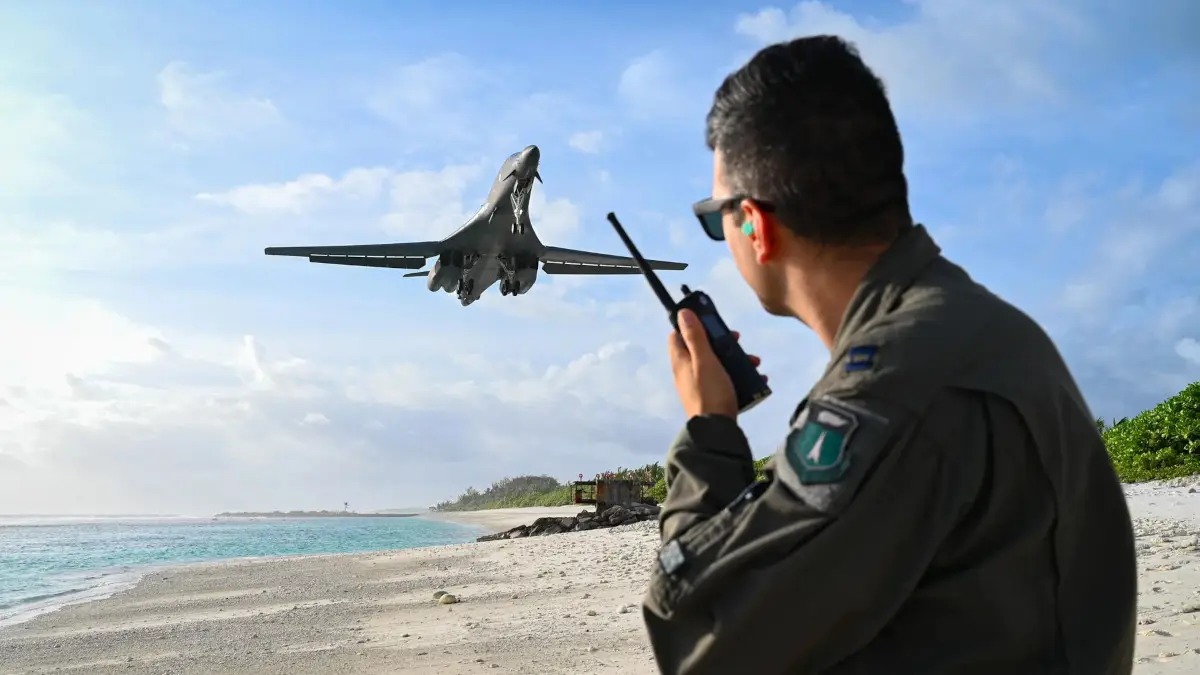
Days after US President Donald Trump ordered the Pentagon to “scale back” the annual Ulchi Freedom Shield bilateral exercise with South Korea, Washington awarded a contract to a South Korean firm to supply the US Army with K9 howitzer prototypes.
In a post on his Truth Social platform, the US President said that the drills are not only costly but “send a signal that is totally inappropriate and hostile” to North Korea, which he said, “has been unthreatening and respectful.”
Furthermore, the American President added that one of the reasons for scaling back the exercise was that South Korea refused to help Washington in its war against Iran. Trump stated that when he asked South Korea’s president if they would join the US in the “denuclearization” of Iran, “and they said, ‘No thanks!’”
Notably, the South Korean and US militaries confirmed on August 19 that the drills, which began on August 16, would end on August 21 instead of August 27, as initially planned.
The US president unilaterally decided to scale back the drills despite warnings from US and South Korean military officials that the North Korean military has learned new battlefield tactics by deploying troops to fight in Ukraine. This may have come as a major setback for Seoul, although the country has remained calm.
Nonetheless, South Korean President Lee Jae Myung has now renewed calls to gain full operational control of its military from the United States.
Speaking at a cabinet meeting on August 18, Lee said Seoul should achieve its long-standing goal of regaining wartime operational control (Opcon) of the South Korean military from the US during his term. Lee stressed that “a strong ROK-US alliance and stronger self-reliant defense capabilities are mutually necessary and sufficient conditions.”
Lee added, “In other words, the alliance must remain strong to reinforce the foundations of our security, while we must strengthen our own capabilities to increase our value and importance as an ally.” He also called for improved operational capabilities across all domains and a structured system to develop defense personnel.
The Korean War ended in 1953 with an armistice rather than a formal peace treaty, meaning the two Koreas are still formally at war.
The US has since maintained the Wartime OPCON, which has the power to command South Korean forces in the event that hostilities resume. This power is exercised through the commander of the Combined Forces Command, a post consistently held by an American four-star general.

Although Seoul obtained command of its own armed forces during peacetime in 1994, wartime authority has become a powerful symbol of national sovereignty, and regaining it has been one of South Korea’s top security priorities for over 20 years.
However, successive South Korean governments have postponed the transfer, pending conditions such as South Korea’s ability to lead combined defense efforts to counter North Korean nuclear and missile threats and ensure a stable regional environment.
South Korea and the US have a steadfast military alliance, driven at least in part by the need to deter an increasingly aggressive North Korea. The two sides are bound by multiple treaties and agreements, and South Korea is currently home to Camp Humphreys, the biggest American military installation outside the US.
The renewed push comes days after Japan published a defense white paper stating that, while the US-Japan military alliance is the cornerstone of the relationship, Japan will take primary responsibility for its own defense, as EurAsian Times recently reported.
For Seoul, the abrupt scaling back of exercises, public criticism of South Korea, and possible engagement with Kim Jong Un at a time when he is expanding missile and nuclear programs create political space to press the OPCON case.
US Needs South Korea For Howitzers, Ship Building
The US is increasingly leaning on South Korea’s defense industrial base in areas where American capacity has lagged, most notably shipbuilding. The US Navy faces severe constraints in its industrial base, including delays, high costs, and limited capacity. South Korea, on the other hand, is one of the world’s most efficient shipbuilders.
Last week, Trump issued a National Security Presidential Memorandum permitting foreign shipbuilders with US capital to construct up to two vessels at their parent facilities to swiftly fill capacity gaps in the US Navy while reviving the nation’s own shipbuilding industry.
According to reports, South Korean shipbuilders could be among the first US partners to benefit from this decision.
The memorandum stipulates that foreign businesses must either build a new US shipyard or hold a controlling interest in an existing one. Interestingly, South Korea’s Hanwha currently meets this condition after acquiring Philadelphia’s Philly Shipyard, one of the few large commercial yards on the US East Coast, in 2024. “We’re now studying this announcement,” a Hanwha Ocean spokesman stated.
South Korean shipbuilder Hyundai Heavy Industries (HHI) reportedly offered to manufacture advanced Aegis destroyers for the United States Navy in April 2025.
Additionally, South Korea has pledged to invest US$150 billion in the US shipbuilding industry as part of a US$350 billion investment commitment made under last year’s bilateral trade and investment agreement. Moreover, Korean yards are already performing maintenance/repair/overhaul (MRO) on US Navy ships, and discussions of co-production, or even foreign-built auxiliaries or combatants, are advancing.
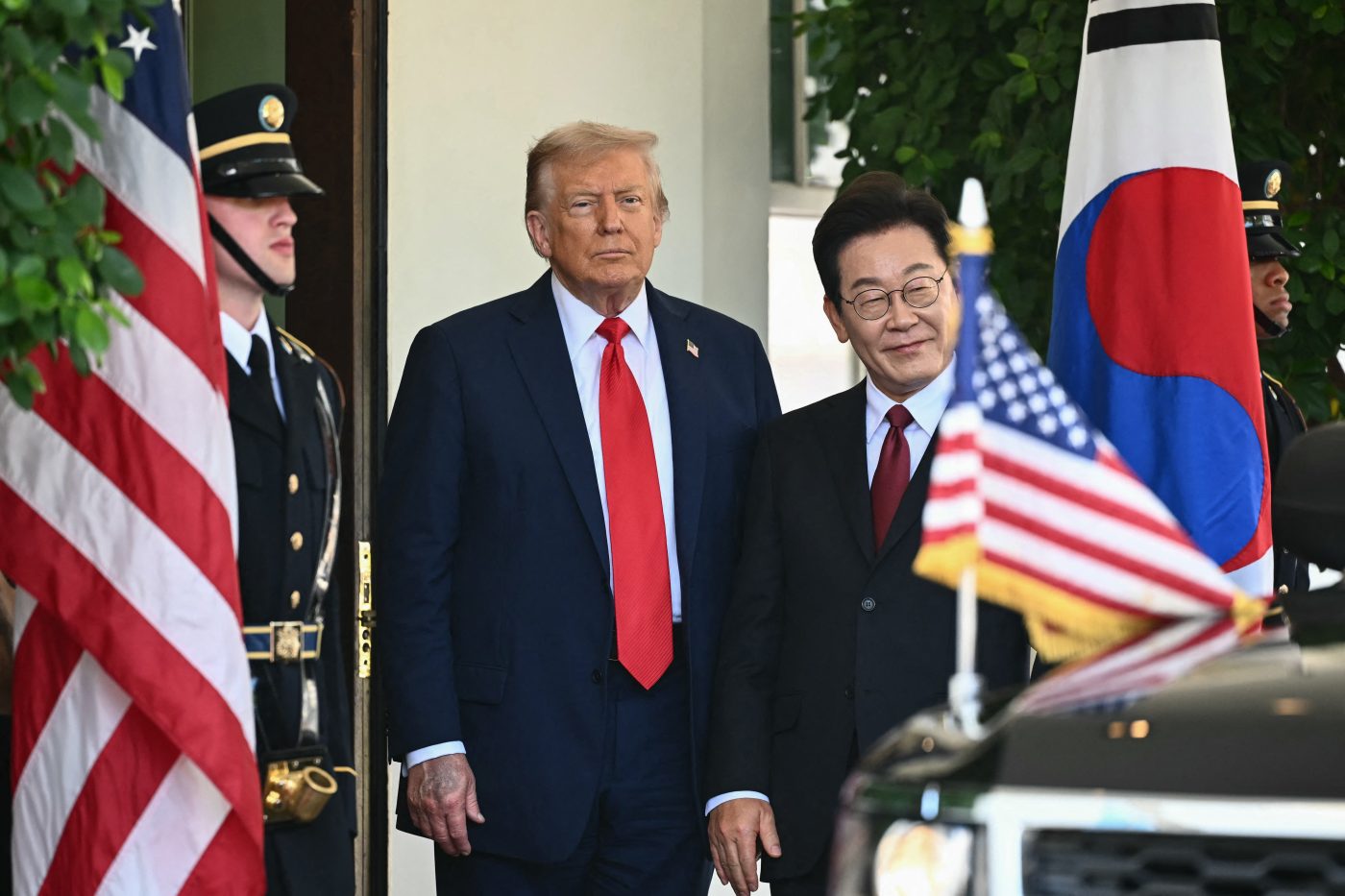
Therefore, it is safe to say that Seoul could play a major role in Trump’s “Make Shipbuilding Great Again” initiative, launched to counter China’s growing shipbuilding and maritime capabilities.
In addition, the US is now looking to South Korea for a capable M777 Howitzer.
Hanwha Defense USA has been awarded a deal by the US Army to supply K9 mobile howitzer prototypes for the new self-propelled howitzer modernization program. “The agreement provides for the accelerated delivery of six prototype MTC [Mobile Tactical Cannon] systems, with an option for an additional 12,” the US Army said in a statement. “Soldiers will use these platforms in a series of operational experiments to assess performance, reliability, and supportability in realistic combat conditions.”
Soldiers will employ the prototypes in a series of operational trials intended to help Army leaders evaluate performance, dependability, and supportability. “Data and insights gained from these experiments will directly inform senior leaders’ decisions on future fielding,” the Army added.
A division of South Korea’s Hanwha Aerospace, Hanwha Defense USA had offered its wheeled K9 platform for the keenly watched contest. Other players in the running included Elbit Systems USA, American Rheinmetall, General Dynamics Land Systems, and BAE Systems. The South Korean Howitzer will replace the self-propelled M109A7 howitzers, first deployed in the 1960s, and the towed M777 howitzers.
“We’re focused on creating a U.S.-anchored K9 Mobile Howitzer manufacturing network – with Opelika, Alabama, as the current phase I launch point – that can deliver advanced Mobile Tactical Cannons at the speed and scale the U.S. Army needs,” Jason Pak, Hanwha Defense USA Head of Land Systems-Artillery, said in a statement.
These are not minor transactions. They reflect US recognition that South Korean industry can deliver quality, speed, and scale that domestic yards and programs have struggled to match.
- Contact the author at sakshi.tiwari13 (at) outlook.com
- Follow EurAsian Times on Google News