Does U.S. President Donald Trump’s latest directive to the Pentagon to begin “nuclear testing” on an equal basis with Russia and China signal a reversal of the decades-old policy of moratorium of nuclear tests, which, in turn, could have far-reaching global repercussions as far as nuclear proliferation is concerned?
Or is it an over-interpretation of what Trump said? Was not Trump only implying some concerns over the state of American nuclear weapons, something that was also talked about during the previous Biden Administration?
At first glance, and given the global reactions over the last four days (Trump made his statement on Thursday, October 30, on his way to Seoul to attend the APEC summit), the first question seems more serious.
And consequently, headlines and Op-eds all over the world have been dominated by the impact of Trump’s decision on the global Nuclear Nonproliferation Treaty (NPT) and Comprehensive Test Ban Treaty (CTBT) on the one hand and the bilateral START agreement between Russia and America that needs renewal in 2026, on the other.
The invariable conclusion has been that Trump’s statement was unnecessary and escalatory. “Breaking the explosive testing moratorium that the United States, Russia, and China have maintained since the 1990s would be strategically reckless, inevitably prompting Moscow and Beijing to resume their own testing programs”, so run the most arguments.
On closer scrutiny, however, the alternative two questions seem more relevant.
Let us see what exactly Trump said. In fact, he did not exactly say anything but wrote in a post on his Truth Social platform: “Because of other countries’ testing programs, I have instructed the Department of War to start testing our Nuclear Weapons on an equal basis.”
In the post, Trump also said that while the US has “more Nuclear Weapons than any other country”, China “will be even within 5 years”.
Here, “testing nuclear weapons” does not mean going for nuclear explosions. In any case, nuclear explosions by the U.S. are carried out by the Energy Department’s National Nuclear Security Administration—not the “Department of War” (the new name of the Pentagon or the Department of Defense).
But the Department of War, along with other Departments, can always test and upgrade the capacity of the existing nuclear weapons the United States already has, numbering 5277, as against Russia’s 5449 and China’s 600, according to the Federation of American Scientists. It can also increase the number of nuclear weapons with the nuclear material it already has, without any testing.
Incidentally, both Russia and the United States are said to be accounting for about 90% of the world’s nuclear weapons. And both are engaged in modernization programs, though they have significantly reduced their Cold War-era stockpiles.
That Trump did not mean the resumption of nuclear tests, which the U.S. has stopped since 1992, has gained further credence with Vice President J D Vance, reacting to his President, saying reportedly, “ We have a big arsenal … Sometimes you’ve got to test it to make sure that it’s functioning and working properly”.
And it is here that “America’s Strategic Posture: The Final Report of the Congressional Commission on the Strategic Posture of the United States,” a lengthy report full of policy recommendations on America’s nuclear weapons, was released in October 2023 under the Biden Administration, is instructive.
According to this report, nuclear diplomacy was failing, and the US needed to deter a nuclear war with both Russia and China at the same time. “US strategy should no longer treat China’s nuclear forces as a ‘lesser included’ threat ”, it said.
Therefore, “the nuclear force structure constructs can no longer assume that the nuclear forces necessary to deter or counter the Russian nuclear threat will be sufficient to deter or counter the Chinese nuclear threat simultaneously. Nuclear force sizing and composition must account for the possibility of combined aggression from Russia and China. Therefore, the United States needs a nuclear posture capable of simultaneously deterring both”, the report added.
According to this report, to achieve the most effective strategy for stability in light of the 2027-2035 threat environment, three necessary changes were identified.
It said: “The United States must develop and effectively implement a truly integrated, whole-of-government strategy to address the 2027-2035 threat environment. The objectives of U.S. strategy must include effective deterrence and defeat of simultaneous Russian and Chinese aggression in Europe and Asia using conventional forces. If the United States and its Allies and partners do not field sufficient conventional forces to achieve this objective, U.S. strategy would need to be altered to increase reliance on nuclear weapons to deter or counter opportunistic or collaborative aggression in the other theater.
“The size and composition of the nuclear force must account for the possibility of combined aggression from Russia and China. U.S. strategy should no longer treat China’s nuclear forces as a ‘lesser included’ threat. The United States needs a nuclear posture capable of simultaneously deterring both countries.
“The Commission recommends the United States maintain a nuclear strategy consistent with the Law of Armed Conflict (LOAC), based on six fundamental tenets—assured second strike, flexible response, tailored deterrence, extended deterrence and assurance, calculated ambiguity in declaratory policy, hedge against risk—and apply these tenets to address the 2027-2035 threat”.
The report then talked about STRATEGIC POSTURE: “In the context of a strategic posture deploying both conventional and nuclear capability, the Commission believes the traditional role of nuclear weapons in U.S. defense strategy remains valid and of continuing importance: deterrence of adversaries; assurance of Allies; achieving U.S. objectives should deterrence fail; and hedging against adverse events.
“The Commission recommends fully and urgently executing the U.S. nuclear modernization Program of Record (POR), which includes replacement of all U.S. nuclear delivery systems, modernization of their warheads, comprehensive modernization of U.S. nuclear command, control, and communications (NC3), and recapitalizing the nuclear enterprise infrastructure at the DOD and DOE/NNSA. The current modernization program should be supplemented to ensure the U.S. nuclear strategy remains effective in a two-nuclear-peer environment.
“Comprehensive risk-mitigating actions across U.S. nuclear forces must be executed to ensure that delays in modernization programs or early age-out of currently deployed systems do not result in militarily significant shortfalls in deployed nuclear capability. The U.S. strategic nuclear force posture should be modified to:
-
Address the larger number of targets due to the growing Chinese nuclear threat.
-
Address the possibility that China will field large-scale, counterforce-capable missile forces that pose a threat to U.S. strategic nuclear forces on par with the threat Russia poses to those forces today.
-
Assure the United States continues to avoid reliance on executing Intercontinental Ballistic Missile (ICBM) launch under attack to retain an effective deterrent.
-
Account for advances in Russian and Chinese integrated air and missile defenses (IAMD).
-
The U.S. theater nuclear force posture should be urgently modified to: ‘ Provide the President a range of militarily effective nuclear response options to deter or counter Russian or Chinese limited nuclear use in theater; Address the need for U.S. theater nuclear forces deployed or based in the Asia-Pacific theater; Compensate for any shortfall in U.S. and allied non-nuclear capabilities in a sequential or simultaneous two-theater conflict against Russia and China; and Address advances in Russian and Chinese IAMD”.
Incidentally, a year earlier, that was in November 2022 and again under the Biden Administration, a Pentagon forecast had mentioned that China’s rapid nuclear arsenal expansion likely would give it 1,500 nuclear warheads by 2035, confronting the United States with a second major nuclear-armed rival for the first time. The 145-page report said that as the Chinese and Russian threats would become acute in the 2027-2035 timeframe, “decisions need to be made now in order for the nation to be prepared.”
It added that the Pentagon was modernizing America’s nuclear forces so slowly that it was a security risk. “US strategic force requirements were set more than a decade ago and anticipated a significantly more benign threat environment than the one the United States now faces,” the report said.
“Therefore, the United States requires an updated strategic posture to address the projected security environment. This is an urgent task that has yet to be acknowledged,” it added.
Given these two reports of 2022 and 2023, it could be argued that President Trump was not exactly saying anything new, apart from emphasizing on testing American nuclear weapons on an “equal basis “ with that of Russia and China.
But then, while these two countries are widely believed to be upgrading their nuclear arsenals, they have not resumed nuclear tests to do that.
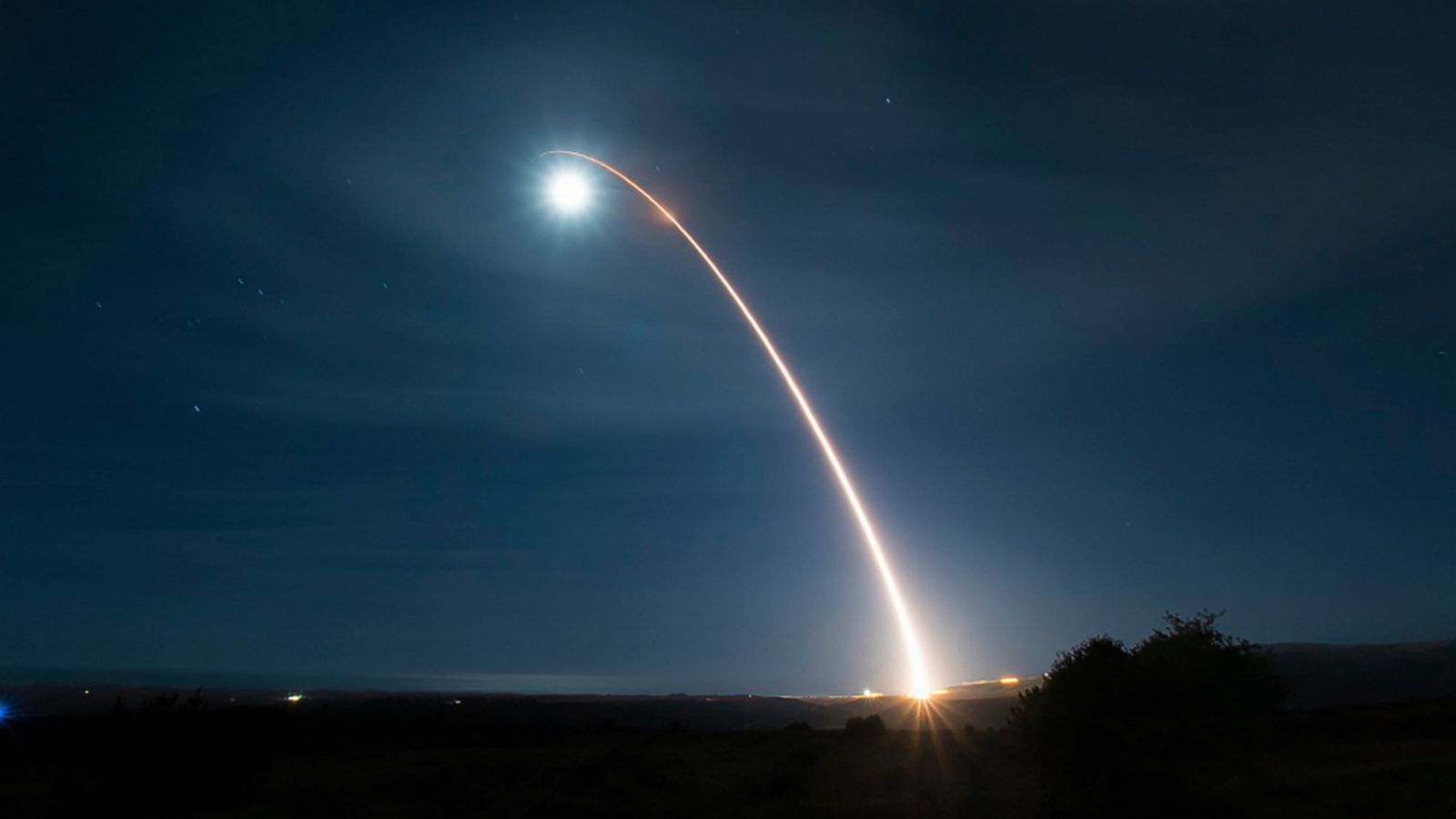
In fact, the Wall Street Journal reported on October 31 how some American experts also believed that Trump was not referring to testing nuclear devices at all and that he meant instead that he wanted to step up flight tests of missiles that carry nuclear warheads.
“It could be that what he is talking about is delivery systems,” Senator Angus King, the Maine independent, said at a Senate nomination hearing of Vice Admiral Richard Correl for the position of heading U.S. Strategic Command. “I agree that could be an interpretation,” Correll had responded.
It may be noted that the upgrading of U.S. land- and submarine-based missiles and long-range bombers, which will cost well over $1 trillion, was initiated during the Obama Administration.
Viewed thus, it could be said, in the ultimate analysis, that what President Trump meant by “testing” fits well within current NPT norms or, for that matter, the CTBT (though the U.S. has not ratified it).
- Author and veteran journalist Prakash Nanda is Chairman of the Editorial Board of the EurAsian Times and has been commenting on politics, foreign policy, and strategic affairs for nearly three decades. He is a former National Fellow of the Indian Council for Historical Research and a recipient of the Seoul Peace Prize Scholarship.
- CONTACT: prakash.nanda (at) hotmail.com