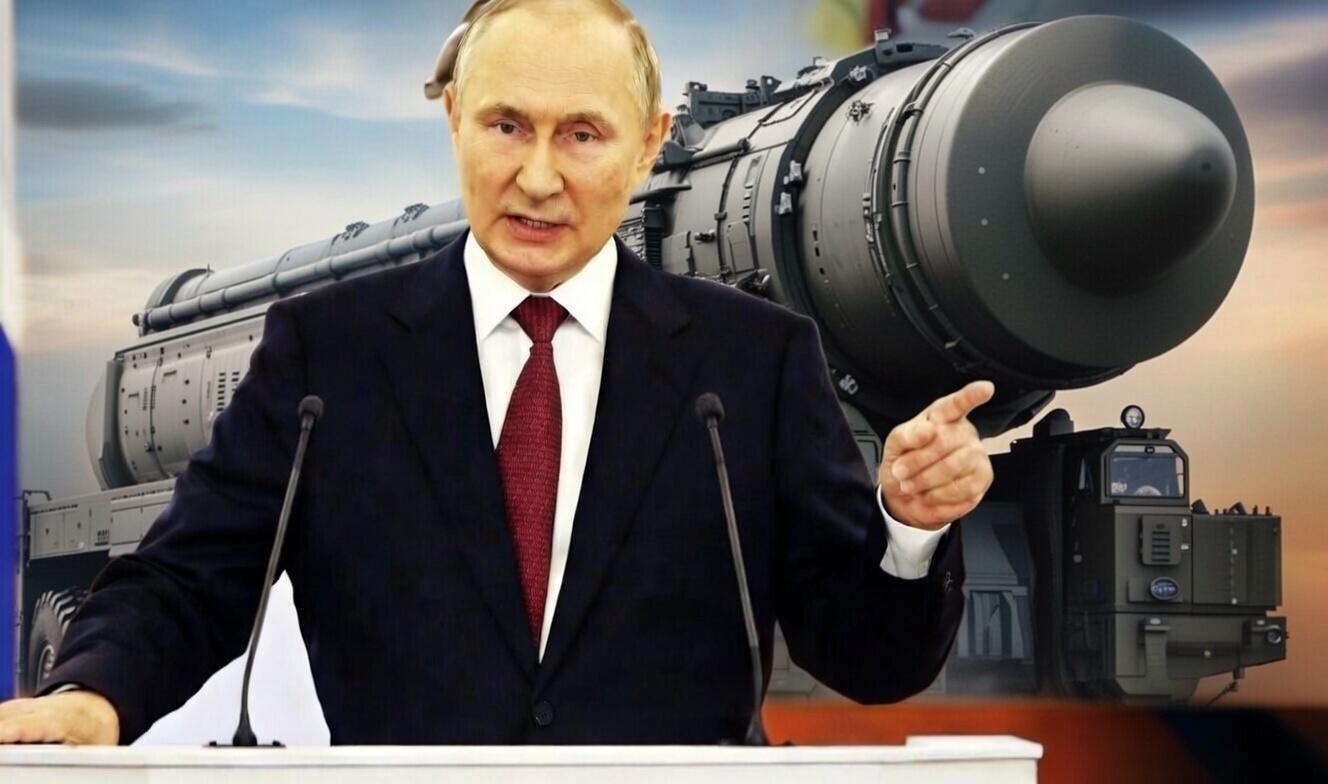
One of the underreported but extremely significant features of the ongoing crisis in the Persian Gulf is the risk to undersea cables in the Strait of Hormuz and the nearby Red Sea.
And these risks are linked with Iran’s weaponization of its geographic location in waging what is called asymmetric warfare, both above and under the Sea.
Iran has already closed the traffic of shipments in the Strait in resisting the American attacks. It can similarly disrupt global communications and financial interactions via undersea cables.
As it is, over the last few years, undersea communication cables have increasingly been considered potential military targets in modern hybrid and gray-zone warfare due to their critical role as the backbone of global communication and finance. After all, they carry over 99% of all international digital traffic and facilitate trillions of dollars in daily financial transactions, making them strategically vital assets.
Studies suggest that $10 trillion in daily financial transactions travel globally across 1.5 million kilometers of submarine cables. The economic importance and utility of subsea cables for both governments and private citizens make them an attractive yet vulnerable target for state and nonstate actors, positioning them as the “soft underbelly of the world economy.”
As EurAsian Times once explained, these cables are said to be the arteries that connect nation-states and their people in virtually every human activity, including trade, commerce, entertainment, and social interactions. In fact, global communications via satellites is minuscule compared to the transoceanic ones.
Private companies and consortia own and operate a network of over 500 commercial undersea telecommunications cables that form the backbone of the global internet.
Any interference in their flow can disrupt lives and livelihoods and compromise the capacity of nation-states to trade, communicate, and fight wars, it is feared.
Typically between two and seven inches thick, with a lifespan of approximately 25 years, these cables are laid by slow-moving ships. Wrapped in steel armor, insulation, and a plastic coat, they contain fiber threads capable of transmitting data at 180,000 miles per second.
Reportedly, the entire global network of cables consisting of more than 600 active or planned submarine cables criss-crossing the world’s oceans is more than half a million miles long, enough to go from Earth to the Moon more than three times.
And the recent explosive growth of cloud computing has vastly increased the volume and sensitivity of data – from military documents to scientific research – crossing these cables.
Apparently, it all began in 1988, when AT&T Corp. completed the world’s first transoceanic fiber-optic cable. Called TAT-8, the cable snaked more than 3,000 miles along the Atlantic floor from New Jersey in the US to the UK. Its two fibers, running through a cable as narrow as a man’s wrist, could carry nearly 40,000 phone conversations at once, five times the capacity of the best undersea copper cables and comparable to all the trans-Atlantic voice traffic then handled by satellites.
Similarly, the first trans-Pacific fiber-optic cable is said to have entered service in 1991. A 17,000-mile-long Flag Telecom cable connecting Europe with North Africa, the Middle East, Southeast Asia, and Japan came online in 1997. And Russia and China also began laying thousands of miles of fiber in the closing years of the 1990s.
Interestingly, when China and Russia laid their own fiber cables under the Sea, the American intelligence community realized that they would now have a big handicap in spying or intelligence collection, as it was now much more difficult to find a way to get inside fiber-optic cables lying in deep seas and secretly siphon off the data moving through them. Till then, things were a little easier with tacking through satellites and microwave towers the international voice and data traffic, including diplomatic cables.
At the same time, however, it has always been a fact that since these cables are often laid in known locations on the ocean floor and are difficult to constantly monitor, they are seen as vulnerable targets for state and non-state actors looking to disrupt or damage adversary nations’ economies and military communications without engaging in overt acts of war.
It may be noted that on September 6, 2025, a major disruption was reported after multiple undersea fiber-optic cables in the Red Sea near Jeddah, Saudi Arabia, were damaged, causing significant internet disruptions and elevated latency across India, Pakistan, the UAE, and parts of the Middle East. Major providers reported outages, and Microsoft confirmed connectivity issues, highlighting the vulnerability of critical digital infrastructure in the region. Though the exact cause for this disruption could not be confirmed, suspicion lingered on planned sabotage.
After all, in February 2024, there were also cable cuts in the Red Sea. This time, the US alleged that it was the work of Houthi rebels of Yemen, who, incidentally, happen to be a proxy of Iran in the Middle East, being armed, trained, and financed by Tehran.
The Houthis’ denial of any responsibility is a different matter, but the incident underscored that sea cables are highly vulnerable to rival powers seeking to advance their strategic goals, particularly when passing through conflict zones.
Similar sabotage activities have been alleged in several recent global incidents, such as Russian naval activities in the North Atlantic or Chinese involvement near Taiwan’s coast.
Coming to the Middle East, over 20 (twenty) key undersea fiber-optic cables pass through the Strait of Hormuz and the Red Sea, serving as critical bottlenecks for global data, finance, and internet traffic between Asia and Europe. Major systems such as AAE-1, FALCON, and GBI connect the Gulf states, India, and East Africa.
Apparently, high risks emerging from the Iranian conflict affect not only existing cables but also proposed ones. It is said that to sustain the development of data center capabilities, national telecom companies in Saudi Arabia, the UAE, and Qatar have joined international consortia to build cables at sea and on land. Saudi Arabia’s stc Group, majority-owned by the Saudi Public Investment Fund (PIF), is investing $800 million in SilkLink, a 4,500 km (2,796 mi) fiber optic cable network, submarine cable landing stations, and several data centers in Syria.
Qatar’s Ooredoo aims to build Fiber in the Gulf (FIG), a $500 million cable corridor originating in the Gulf of Oman, passing through the Strait of Hormuz, overland through Iraq, Turkey, and France.
An Emirati-Iraqi consortium called WorldLink is funding a $700 million hybrid fiber-optic cable project to run a cable from the UAE to Iraq’s Al Faw Peninsula, then across Iraq to Turkey.
Meta is reportedly leading a consortium comprising India’s Bharti Telecom, Saudi Center3, China Mobile International (CMI), South Africa’s MTN Global Connect, France’s Orange, Telecom Egypt, and the UK’s Vodafone. WIOCC, which is co-owned by 14 African telecommunication operators, is building Gulf2Africa (2Africa), which is projected to bring high-speed internet to three billion people.
“Gulf Africa” often refers to the strengthening economic and strategic corridor between Gulf Cooperation Council (GCC) nations (Saudi Arabia, UAE, Qatar, etc.) and the African continent, particularly in regions like the Horn of Africa and East Africa. Key investment areas include infrastructure, agriculture, and shipping, aimed at bolstering trade.
Obviously, the war between the US and Israel on one hand and Iran on the other has stopped all these activities, apart from endangering the already laid undersea fiber optic cables.
Iran sits on the northern shore of the Strait of Hormuz and controls long stretches of the Persian Gulf and the Gulf of Oman. These waters host all the major cable routes that link Europe, Africa, the Middle East, and Asia. This geography gives Tehran physical access to infrastructure on which the world economy depends.
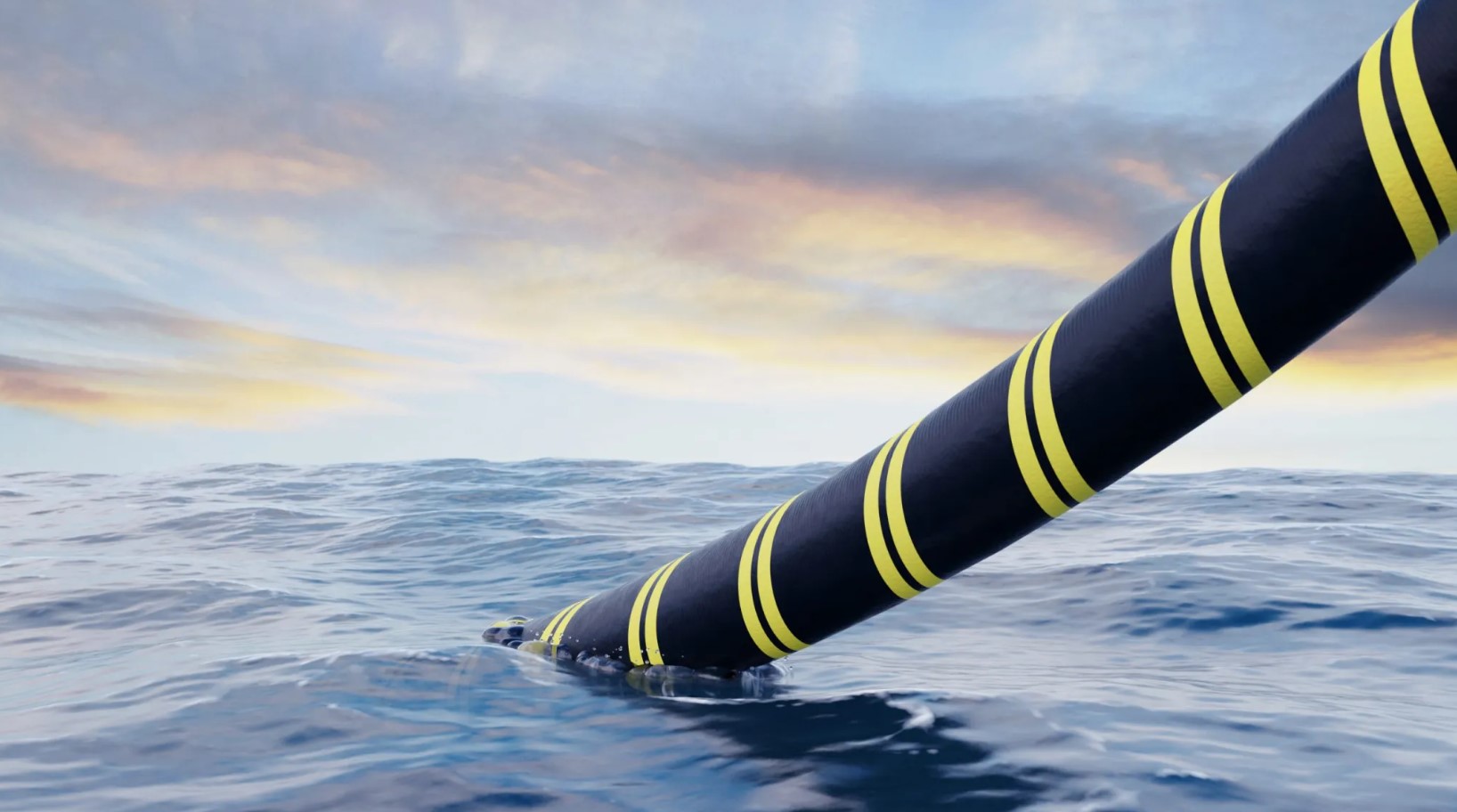
In fact, disrupting undersea cables is a low-cost, high-impact option that can cause global disruption without a direct missile strike. A damaged cable in the Gulf can slow internet traffic from Mumbai to Frankfurt within minutes, delay international banking settlements, and degrade cloud services used by hospitals, airlines, and power grids.
Significantly, it could also cripple military communications for US CENTCOM, and regional partners would be forced to rely on backup satellites with limited bandwidth.
Of course, there have been attempts in the past to develop a global consensus against disturbing or damaging these cables, which are “global commons”. At present, there is no international regulatory authority or framework to oversee their safety and security. Therefore, some experts have favored the idea of establishing “cable protection zones,” which would ban certain types of anchoring and fishing and require greater disclosure by vessels inside them.
It is noteworthy that, in most cases, cables are broken by natural calamities such as tsunamis and earthquakes or by routine human activities such as fishing, ship anchoring, and equipment failures.
Some experts also talk of solutions that include updating international law around cables and establishing treaties that would criminalize foreign interference.
However, all these options need a global consensus. But that is a Herculean task as the US, its allies, Russia and China, and important emerging powers like India have to be on the same page, something that has not happened.
Be that as it may, the real danger arises when these cables are intentionally damaged by enemy countries, whether covertly or overtly. That is why there have been demands for “seabed controls” by a country or group of countries together so that there can be “rapid attribution capability, and proportional response options that don’t force a binary choice between military escalation and inaction….The goal is not punishment. It is making the seabed inhospitable for covert operations — shaping behavior before the cable goes dark, not after”.
But the situation in the Middle East is such that people are not even talking about overt operations to damage the undersea cable networks on the seabed. They are apprehensive that Iran will resort to doing so openly, which it has the capacity to do, aided by its geography. This additional maritime disruption will only add to its strategic leverage against not only the Gulf countries but also America.
- Author and veteran journalist Prakash Nanda is Chairman of the Editorial Board of the EurAsian Times and has been commenting on politics, foreign policy, and strategic affairs for nearly three decades. He is a former National Fellow of the Indian Council for Historical Research and a recipient of the Seoul Peace Prize Scholarship.
- CONTACT: prakash.nanda (at) hotmail.com