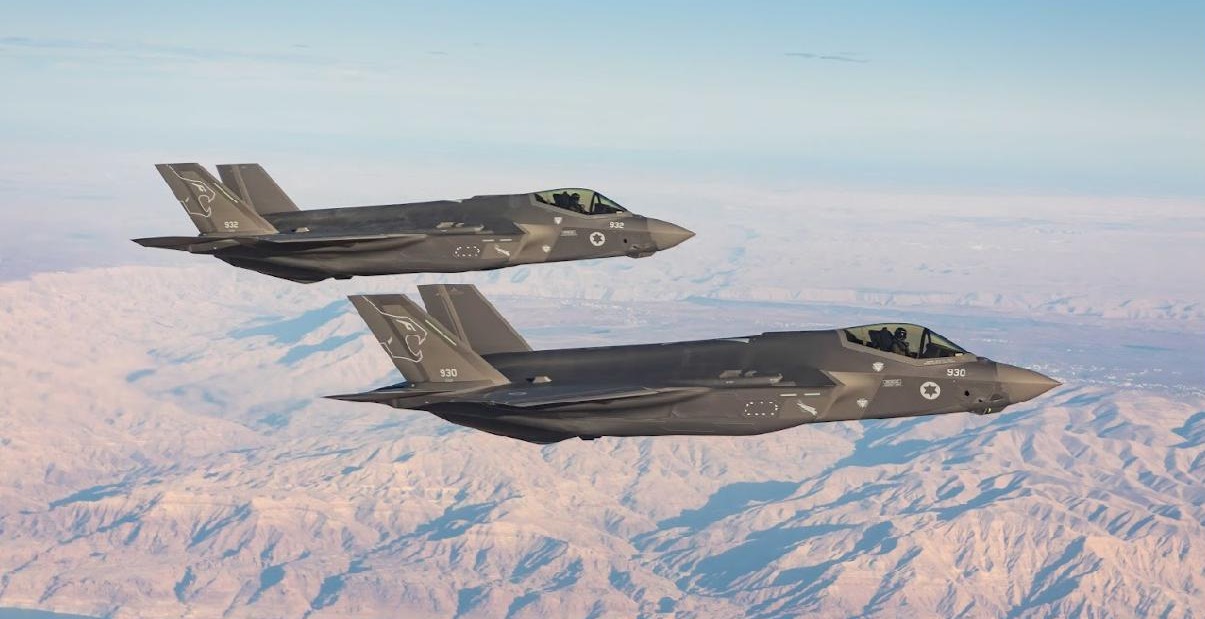
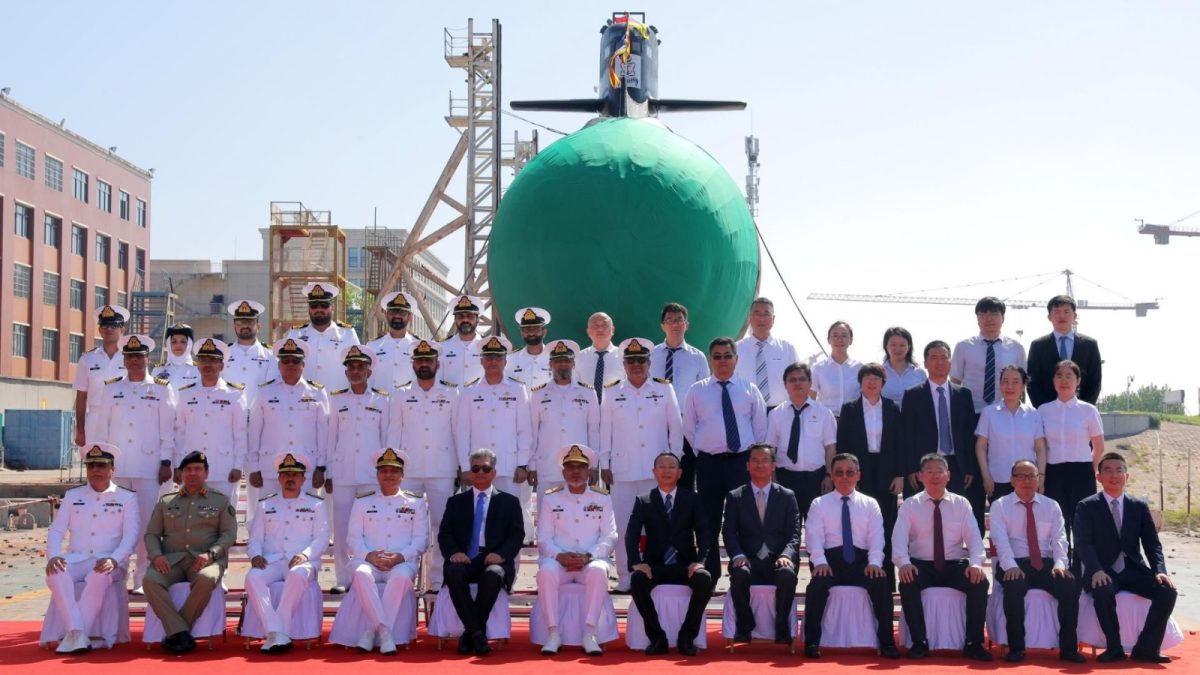
Pakistan officially commissioned the Hangor-class submarine into its Navy in a ceremony on April 30, further expanding the share of Chinese weapons in its military amid sustained tensions with its next-door neighbor, India.
The induction ceremony reportedly took place during an event in the Chinese port city of Sanya. The event’s main guest, Pakistan President Asif Ali Zardari, called it a “historic milestone” for the Pakistan Navy.
Meanwhile, the Pakistani military said, “The commissioning of the first Hangor-class submarine marks another chapter in the time-tested and enriching friendship between Pakistan and China.”
“The Hangor-class submarines, equipped with advanced sensors, weapons, and air-independent propulsion systems, would help preserve stability in the region and secure vital sea lanes across the Arabian Sea and the wider Indian Ocean,” the Chief of Naval Staff, Admiral Naveed Ashraf, was quoted as saying in media reports.
Named after the submarine (PNS Hangor) that sank the Indian Navy’s INS Khukri during the 1971 Indo-Pakistan war, the Hangor class submarine is an export variant of China’s Type 039 Yuan class, which currently forms the backbone of Beijing’s own submarine fleet.
Pakistan inked a deal with China to acquire eight Hangor-class conventional submarines in 2015, with plans to construct four in Wuhan, China, and the remaining four at Karachi Shipyard and Engineering Works Ltd (KS&EW) with Transfer of Technology (ToT).
The submarine is expected to be equipped with exceptional weaponry, including anti-ship cruise missiles (ASCMs) and heavyweight anti-submarine warfare (ASW) torpedoes. It could also potentially carry a version of the Babur land-attack cruise missiles (LACM) for long-range strikes and possibly for a nuclear deterrent, as noted in previous unconfirmed claims made by Pakistani sources and media.
The deployment of eight Hangor-class subs will strengthen Pakistan’s maritime power in the Arabian Sea and the Western Indian Ocean Region (IOR) amid ongoing tensions with India. India’s Navy Chief, Admiral Dinesh K. Tripathi, recently stated that the Indian Navy was minutes away from striking Pakistan when the latter asked to stop kinetic actions.
Currently, all three of Pakistan’s French Agosta-90B —PNS Khalid, Saad, and Hamza—are powered by Air Independent Propulsion (AIP), which allows a submarine to stay hidden in the ocean’s depths for longer periods and, if necessary, reach its target quickly without disclosing its position. Therefore, with the addition of the Hangor-class subs, this number will rise to an astounding eleven, bolstering Islamabad’s undersea warfare capability.
In contrast, the Indian Navy is currently in the final stages of signing an $8 billion deal with Germany for six advanced stealth submarines with AIP technology under Project-75I, which will see the subs constructed in India by state-owned Mazagon Dock Shipbuilders Ltd. in collaboration with German shipyard TKMS. Additionally, New Delhi has plans to retrofit the six Scorpene submarines with indigenous AIP technology developed by the Defence Research and Development Organisation (DRDO).
Notably, the transfer of AIP-equipped submarines to Pakistan aligns with China’s broader policy of arming Islamabad as a hedge against India. Moreover, Pakistan’s use of these weapons allows Beijing to assess their performance in real combat situations, as seen in the India-Pak conflict last year.
As Pakistan modernizes its military, China has become a reliable source of arms supplies in recent years. Pakistan is the world’s fifth-largest importer of weaponry, with over 80% of its purchases coming from China, according to a factsheet released by the Stockholm International Peace Research Institute (SIPRI) in March 2026.
China’s defense industrial complex exhibits a remarkable degree of customer concentration, states the SIPRI analysis. Pakistan receives 61% of all Chinese weapons exports, making the Islamabad-Beijing axis one of the world’s most exclusive and well-organized military supply networks.
Chinese Weapons in the Pakistani Arsenal
While the Hangor-class submarines may be the most advanced and significant system Pakistan has obtained, it also operates other cutting-edge ships acquired from China in recent years, such as the Type 054 warship or the Tughril-class.
The Type 054A/P is a multi-role frigate of Chinese origin, equipped with state-of-the-art weapons and sensors, including CM-302 surface-to-surface missiles and LY-80 surface-to-air missiles, as well as an Advanced Anti-Submarine Warfare suite and a Combat Management System, enabling ships of this class to operate in multi-threat scenarios.

Admiral Khalid earlier said, “The induction of Type 054 A/P frigates in the Pakistan Navy Fleet has bolstered our warfighting capabilities and enhanced operational flexibility, and these ships will remain the mainstay of the Pakistan Navy Fleet in the coming years.”
The Pakistani Navy also operates the Zulfiquar-class Frigates, a variant of China’s Type 053H3 light multi-role frigates. The first three were built in China, while PNS Aslat was assembled in Pakistan with Chinese technology transfer. These vessels are reportedly armed with C-802 anti-ship missiles and short-range surface-to-air missiles (SAMs).
The Pakistan Air Force (PAF) operates two cutting-edge Chinese fighter jets: the JF-17 Thunder and the J-10C Vigorous Dragon.
Produced jointly by China’s AVIC Chengdu corporation and Pakistan’s Pakistan Aeronautical Complex, the JF-17 Thunder is a single-engine, lightweight, multi-role combat aircraft powered by a single Russian-designed RD-93 turbofan engine. The aircraft has been upgraded to the Block 2 and Block 3 variants, both promoted for export.
Pakistani states that the JF-17 emphasizes cost-effectiveness, agility, and versatility for air-to-air and air-to-ground strike missions. Additionally, it asserts that the aircraft could serve in secondary roles such as training, close air support, or low-threat operations. Notably, the PAF extensively used the jet in operations against India during the 2025 conflict, with India claiming it downed some of these jets.
The J-10C, on the other hand, is arguably the most advanced fighter jet in the PAF. It is a 4.5th-generation, single-engine, multi-role fighter jet powered by a Chinese WS-10B turbofan engine. It uses a fly-by-wire flight control system, features an Active Electronically Scanned Array (AESA) radar, and is compatible with a range of weapons, including PL-10 and PL-15. The aircraft is projected to be a more cost-effective alternative to the Rafale, Eurofighter Typhoon, and the F-16 Viper.
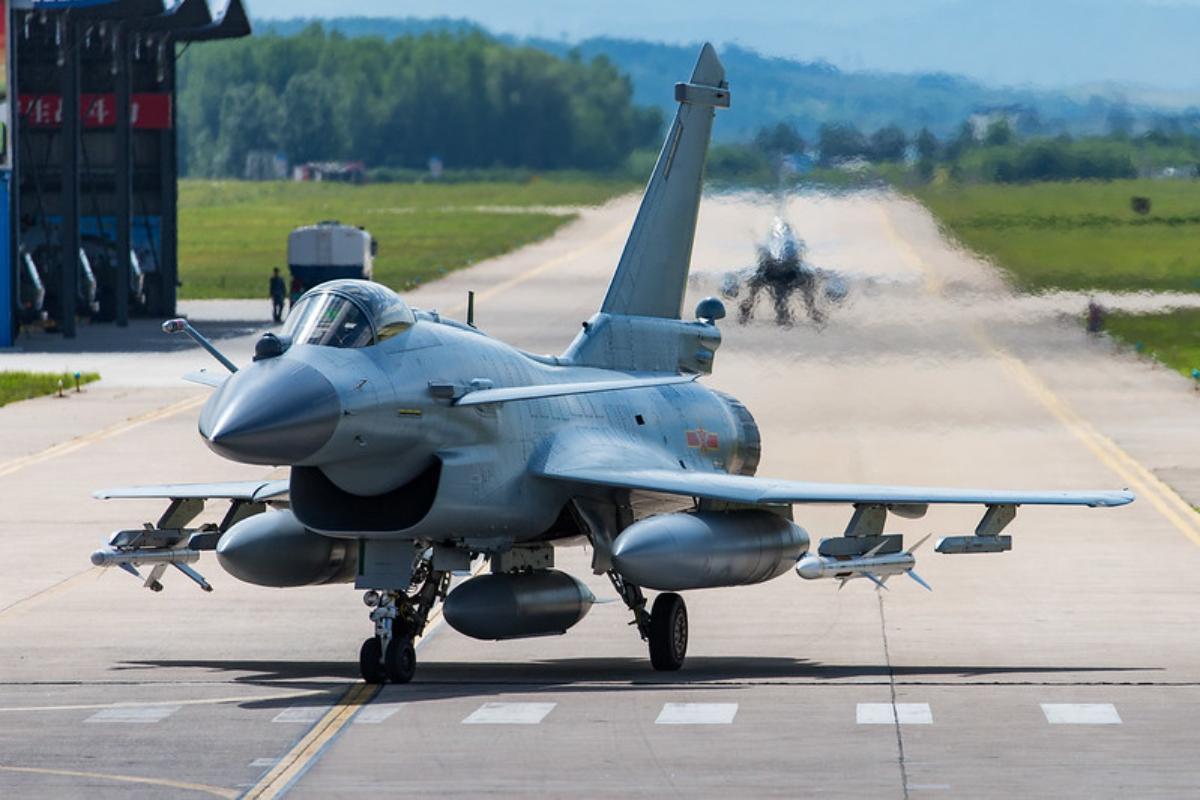
The aircraft has remained in headlines since its debut in the Indo-Pakistan conflict, and Islamabad’s claims that it downed several Rafale jets using PL-15 long-range missiles fired from the J-10C. The aircraft holds the distinction of being a “Rafale killer,” despite India and Dassault Aviation rejecting the claims.
Additionally, Pakistan operates the Chinese-origin Z-10ME helicopters, which have reportedly been tailored to Pakistani requirements. The chopper is designed to deliver precision strikes in both day and night conditions, and has been positioned as China’s answer to the US AH-64 Apache and the Russian Mi-28 Havoc.
Pakistan’s Z-10ME variant is designed to deliver reliable performance in high-altitude, hot-and-dusty operational theatres, which may be a crucial requirement in Pakistan’s mountainous terrain, particularly in Khyber Pakhtunkhwa and Balochistan. The six external hardpoints on the chopper allow it to carry a versatile range of munitions, including AKD-10 anti-tank guided missiles (ATGMs), CM-502AG air-to-ground missiles, TY-90 air-to-air missiles, and precision-guided rockets.
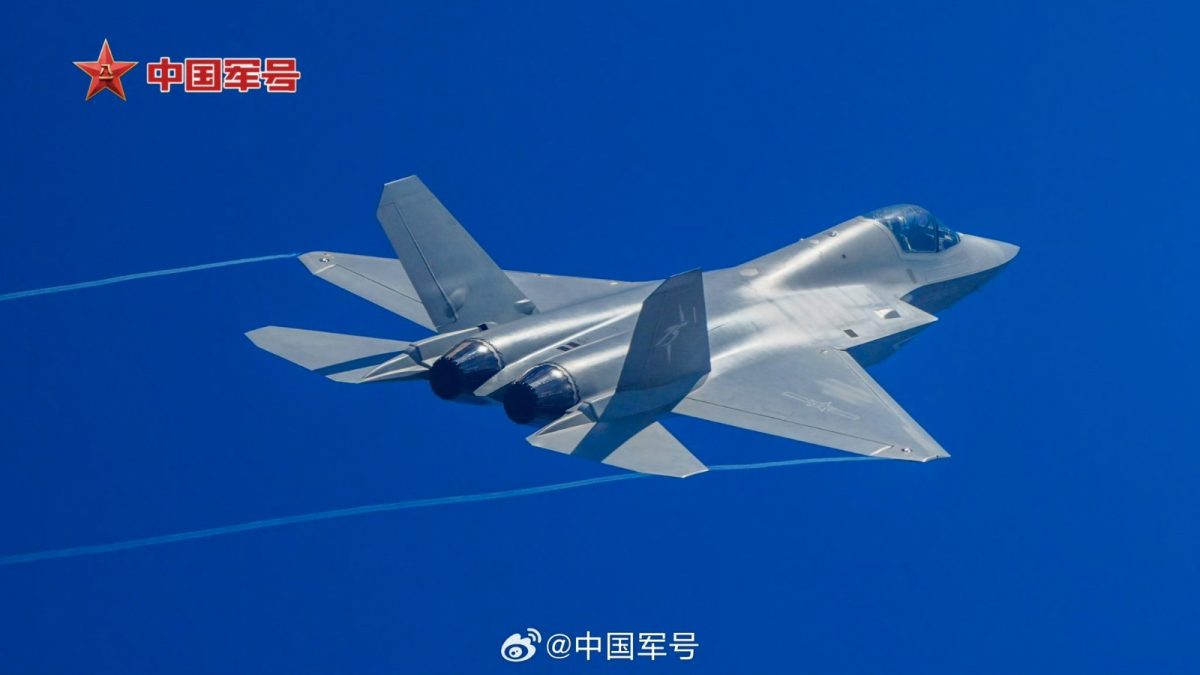
In addition to these, the PAF is expected to receive J-35A fifth-generation stealth fighters, as previously reported by the EurAsian Times.
Pakistan Air Force has also notably been armed with a host of lethal missiles: the PL-15 air-to-air missile with a range of about 200 kilometers, the PL-10 air-to-air missile with a range of 20-30 kilometers. It also has the CM-400AKG anti-ship missile with a range of 100-250 kilometers, which was allegedly used against India to strike an S-400 during the conflict. Additionally, Pakistan has claimed that it also possesses a separate hypersonic weapon, which is also likely to have been procured from Beijing, if true.
The Pakistan military operates multiple Chinese air defense systems, including the HQ-9P, a long-range surface-to-air missile (SAM) designed to intercept aerial threats such as fighter jets, drones, and missiles. It uses an HT-233 3D phased-array radar, capable of tracking up to 100 targets. The HQ-9P has a claimed engagement range of 125 kilometers.

Pakistan also operates the LY-80, a variant of the Chinese HQ-16 medium-range air defense system. It has a vertical launch system, is mobile, and can engage multiple targets simultaneously. It is often described as inspired by the Russian Buk system and has a range of about 40 kilometers. Meanwhile, the Pakistani FM-90 is a variant of the Chinese HQ-7 short-range air defense system, with a range of 15 kilometers, used for point air defense, primarily against low-altitude threats such as helicopters, drones, rockets, etc.
The Pakistani Army, much like the PAF, operates a host of Chinese-origin systems. For artillery, it has the A-100 Multiple Launch Rocket System (MLRS), 300 mm long-range rocket artillery from China, as well as the PHL-81, a 122 mm MLRS, available in self-propelled or towed configurations. However, one of the most potent and significant Chinese artillery pieces operated by the Pakistani Army is the SH-15 Truck-Mounted Howitzer—155mm gun, compliant with NATO standards, with a range of about 50 kilometers.
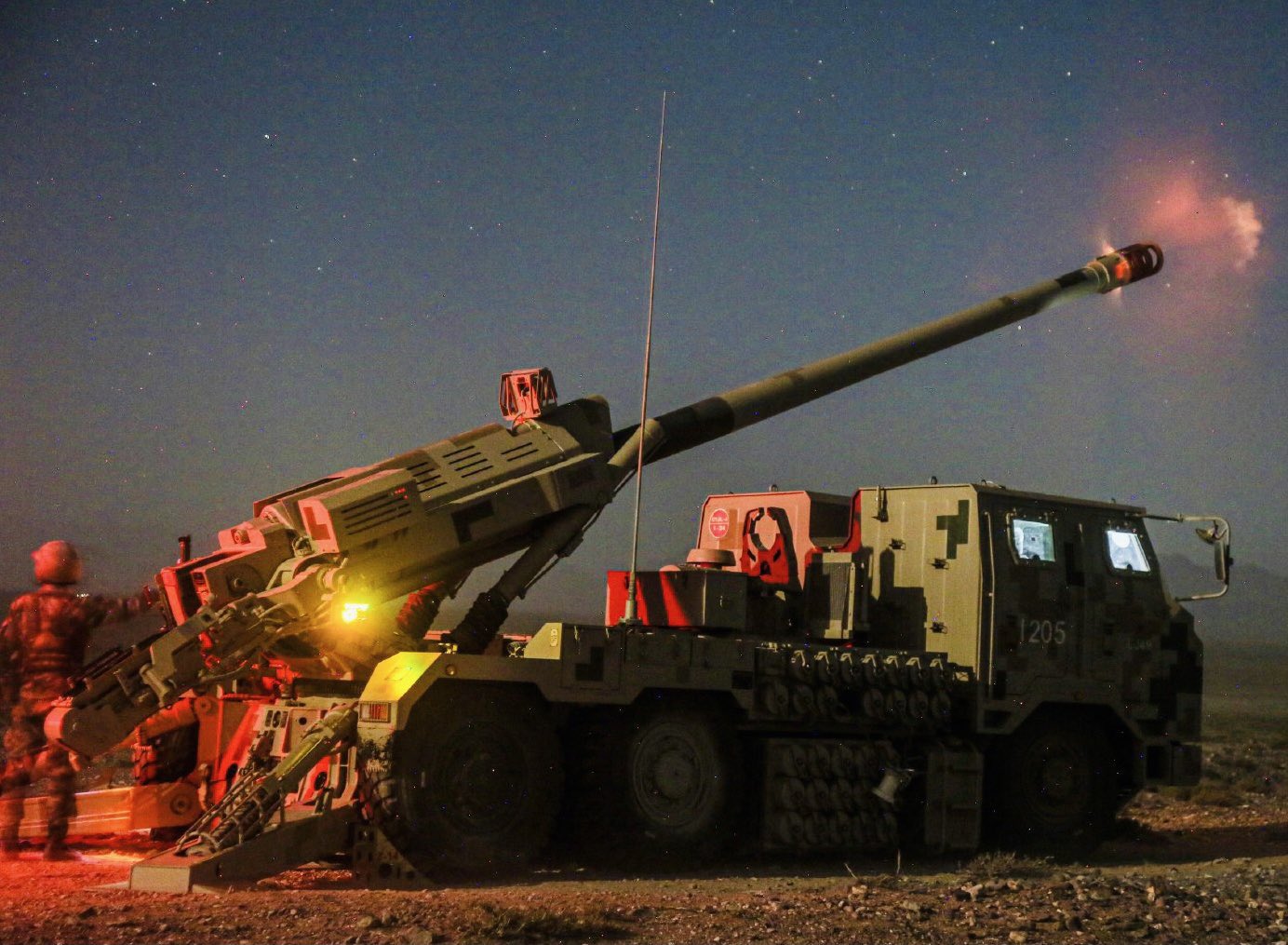
The Army also operates the VT-4, a modern 3rd-generation Main Battle Tank (MBT) from China, which features state-of-the-art technology and formidable firepower. Pakistan has been locally producing a variant called the “Haider,” which features a 125 mm smoothbore gun, a speed of about 70 kilometers/hour, and is protected by composite armor and explosive reactive armor (ERA), and possibly a GL5 Active Protection System.
It also operates older tank variants, such as the Al Zarrar, an upgraded version of the Type 59 MBT, the Type 69, and the Type-89IIAP.
A host of anti-tank guided munitions (ATGMs)—including Baktar Shikan (up to 4 kilometers range) and HJ-10 (up to 10 kilometers range)—are also operated by the Pakistani Army and ground forces.
With a rise in prominence of drone warfare, Pakistan has also acquired several Chinese-origin drones, including the Wing Loong II and CH-4B.
The Wing Loong-II primarily serves as a reconnaissance and precision-strike platform. It has a length of 11 meters, a wingspan of 20.5 meters, and a height of 4.1 meters, with a maximum takeoff weight of 4,200 kilograms. Further, the drone can reach a maximum speed of 370 kilometers/hour and a cruise speed of around 200–280 kilometers/hour. It has a combat range of about 1,500 kilometers.

The CH-4B is a long-range unmanned aerial vehicle with a 1,500-kilometer range and a 14-hour endurance. It can hover over disputed territory, engage targets, or provide real-time intelligence. Additionally, it can carry a variety of weapons, including anti-radiation missiles to degrade enemy air defenses, FT-9 bombs, and AR-1 laser-guided missiles.
This is an incomplete list of Chinese weapons acquired by Pakistan. However, it gives us a fair idea that the Pakistani military has China written all over it, and the induction of Hangor-class submarine further bolsters China’s arms portfolio vis-à-vis Pakistan.
- Contact the author at sakshi.tiwari13 (at) outlook.com
- Follow EurAsian Times on Google News