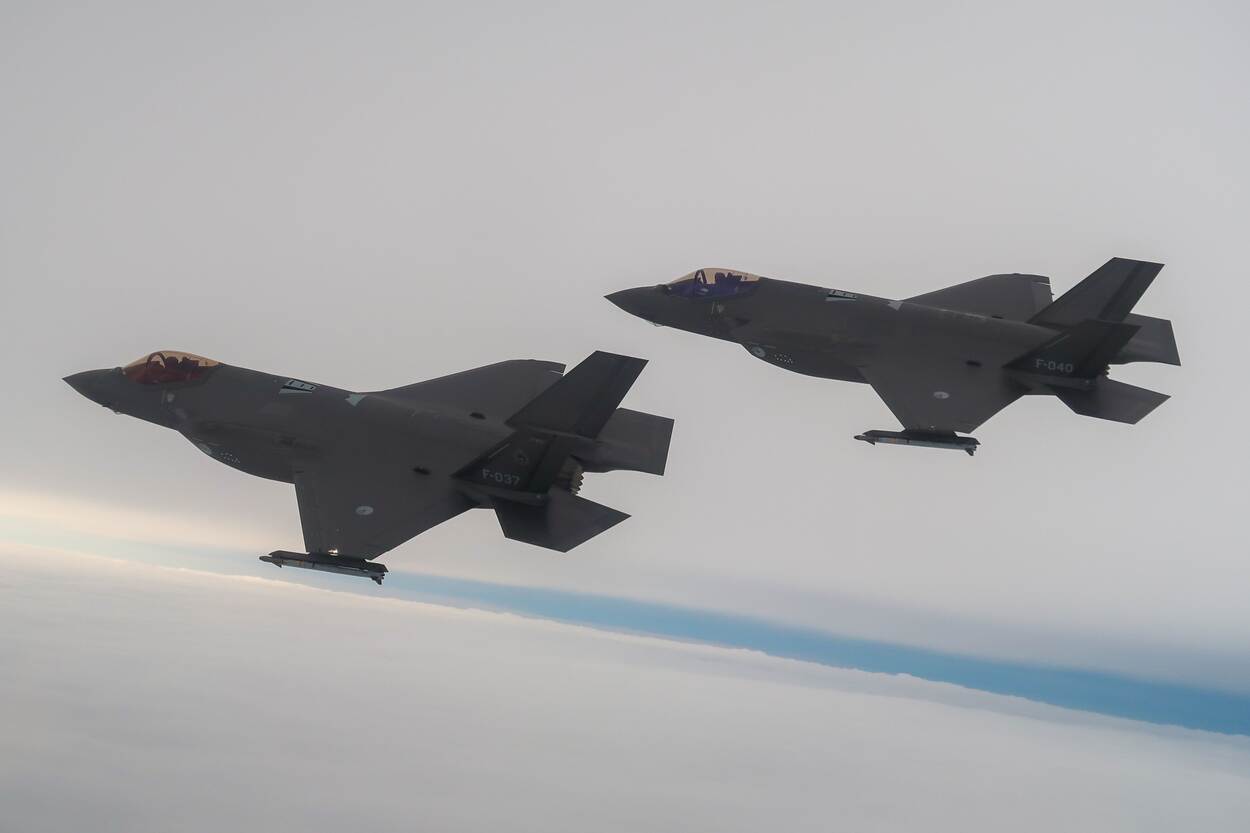
AN Iranian military official believes that renewed fighting between the US and Iran was “likely”. The development comes after President Donald Trump said he was “not satisfied” with a new Iranian proposal.
“At this moment I’m not satisfied with what they’re offering,” Trump told reporters, blaming stalled talks on “tremendous discord” within Iran’s leadership. “Do we want to go and just blast the hell out of them and finish them forever — or do we want to try and make a deal?” he added, saying he would “prefer not” to take the first option “on a human basis”.
Mohammad Jafar Asadi, a senior figure in the Iranian military’s central command, said: “A renewed conflict between Iran and the United States is likely.” “Evidence has shown that the United States is not committed to any promises or agreements,” he added.
Earlier, as EurAsian Times reported, the US Central Command (CENTCOM) requested the deployment of the US Army’s “Dark Eagle” hypersonic missile to the region amid fears of fresh hostilities in West Asia.
The request comes as the US-Iran peace talks remain in abeyance over a host of disagreements. Earlier, Iran had offered to reopen the Strait of Hormuz, lift restrictions, and end the war in exchange for the US ending its naval blockade, unfreezing assets, and postponing the nuclear talks. However, President Trump expressed strong dissatisfaction, insisting any deal must address Iran’s nuclear program upfront.
In response to the present impasse, Trump posted a mocked-up picture of himself with a gun on his Truth Social platform and warned Iran to “better get smart soon.”
The US Central Command reportedly requested the deployment of the Army’s Dark Eagle, also known as the Long-Range Hypersonic Weapon (LRHW), to the Middle East. The command justified the report, stating that Iran is moving its ballistic missile launchers out of range of the Precision Strike Missile (PrSM), which has a range of about 482 kilometers.
The request is seen as unusual, as the Dark Eagle hypersonic program is behind schedule and has yet to be operationally fielded. US Army officials stated in March 2026 that the unit would receive its first operational missiles “soon,” suggesting that the service was in the final stages of fielding and beginning procurement of its first eight missiles. However, there has been no update since, indicating that the operational fielding is yet to be completed.
The CENTCOM request has reportedly not been made public, and a decision is pending. As per procedure, such requests typically go through the Joint Staff and the Secretary of Defense for validation, risk assessment, and prioritization. Moreover, since the LRHW falls under the US Strategic Command (USSTRATCOM) and is subject to National Command Authority (NCA) oversight, high-level political and strategic approval would be required for any movement or potential use of the Dark Eagle system.
Analysts and defense enthusiasts ridiculed the request, arguing that the request appears to be mere signaling to Iran, as well as US adversaries like China and Russia, both of whom operate multiple hypersonic weapons.
Some critics dismissed the request as senseless, adding that the decision to use a cutting-edge offensive weapon like LRHW against Iranian TELs would be ridiculous. “Is there any advanced weapon system safe from CENTCOM’s covetous gaze?” Christopher Clary, an Associate Professor of Political Science at the University at Albany and Nonresident Fellow at the Stimson Center, wrote on X in jest.
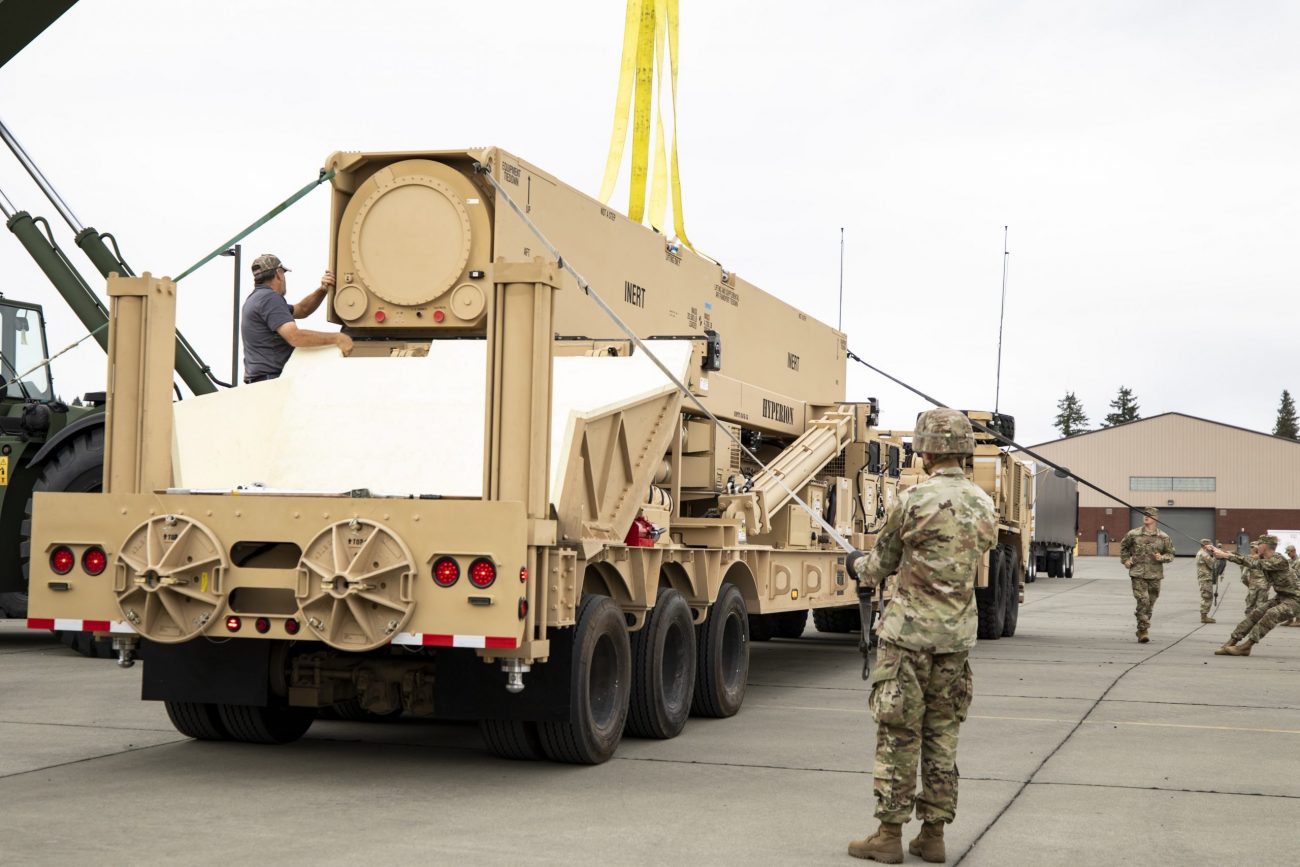
Notably, the rationale for the requested deployment of Dark Eagle is that it will give the US military a capability to strike Iran’s ballistic missile targets that are not within PrSM’s reach. The Dark Eagle has a range of over 3,000 kilometers, and can potentially hit targets deep inside the Iranian heartland. However, this justification has been questioned by observers who now ask what happened to the claimed US air superiority and whether these targets could not be struck by air-launched weapons if hostilities break out again.
The move comes after analyses of munition expenditures revealed that the US may have halved its PrSM stockpiles and severely depleted Tomahawk, JASSM, SM-3, SM-6, THAAD, and Patriot missiles. This has piqued the interest of observers who warn that Washington needs to retain offensive strike capability for potential wars in other theatres, including Indo-Pacific, where the threat of war with China is a possibility.
The first Dark Eagle battery and the designated follow-on Bravo Battery are based at Joint Base Lewis-McChord (JBLM), Washington, as part of the 1st and 3rd Multi-Domain Task Forces (MDTFs). There have been plans to deploy the LRHW to the Indo-Pacific, causing alarm that the US could be taking away a crucial capability from INDOPACOM.
Nonetheless, it comes as Iran itself has issued a fresh warning about deploying a new weapon that it claims its adversaries are “deeply afraid of.” Iran’s Navy Commander, Shahram Irani, issued the warning, stating that the Islamic Republic would “very soon” meet its adversaries with a capability that is “right next to them.” “I hope they won’t have a heart attack,” he said sharply without providing any specifics.
The Dark Eagle Hypersonic Weapon
The US Army’s Long-Range Hypersonic Weapon (LRHW), commonly referred to as Dark Eagle, is a ground-launched missile system with a previously reported range of 1,725 miles, or about 2,776 kilometers. However, in December 2025, Lt. Gen. Francisco Lozano, Director of Hypersonic, Directed Energy, Space, and Rapid Acquisition, informed Defense Secretary Pete Hegseth that the range is 3,500 kilometers.
The trailer-launched hypersonic boost-glide vehicle system has a stated hypersonic speed of Mach 17, as already widely known. The US Navy and the Army have been working closely together to develop the LRHW, which comprises a 34.5-inch Navy-designed booster and the Common Hypersonic Glide Body (C-HGB). The Navy’s version, called Conventional Prompt Strike (CPS), is intended for deployment from Zumwalt ships, whilst the Army’s version is fired from mobile ground assets.
The Dark Eagle is poised to become the first American hypersonic weapon to achieve operational capability.
A single battery of the system comprises four trailer-based launchers, each accommodating two canister missiles. These launchers are transported on M870 trailers, towed by eight-wheeled M983A4 HEMTT tractor-trailer trucks. Additionally, a six-wheeled command vehicle serves as the Battery Operations Centre and oversees the Dark Eagle system’s operations.
One of the Dark Eagle’s distinctive design features is its unpowered hypersonic boost-glide vehicle mounted on a rocket booster.
As previously explained by the EurAsian Times, “once the booster rocket reaches a predetermined altitude and velocity, the C-HGB separates from the booster and begins its glide phase, descending toward the target while trading altitude for speed and manoeuvring at hypersonic velocities.”
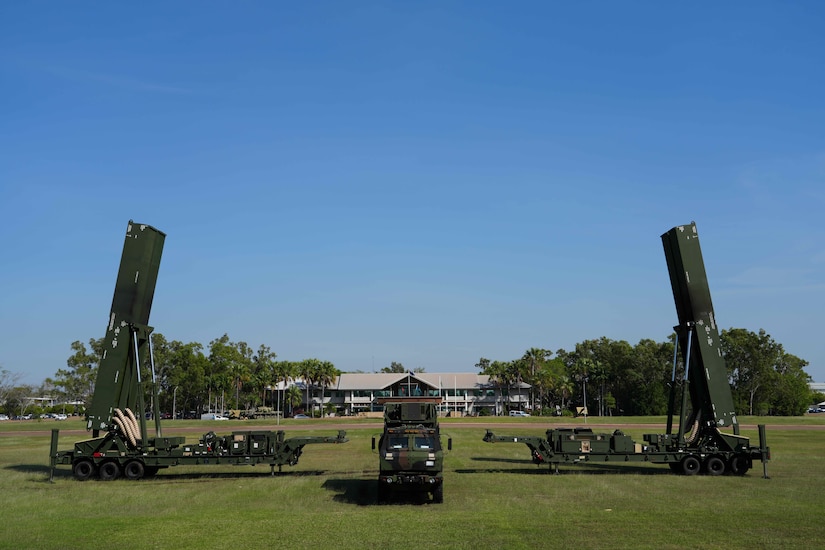
The missile is optimised for precision strikes and is built to carry a conventional warhead.
With sophisticated thermal protection mechanisms, it can endure intense heat during hypersonic flight. Additionally, the missile has been designed to be road-mobile for quick deployment and resistance to hostile targeting. It can be quickly flown on the C-17 Globemaster III.
It could operate under the Army’s Integrated Air and Missile Defense Battle Command System (IBCS), which would allow it to coordinate strikes across domains with the Army, Navy, and Air Force, as well as with allies.
The US Army deployed the Dark Eagle hypersonic missile system to Australia’s Northern Territory for the Talisman Sabre 2025 multi-national military exercise. “The deployment of the LRHW system to Australia marks a significant achievement for U.S. Indo-Pacific Command, as it validates the Army’s ability to deploy, position, and exercise command and control (C2) of the system in a forward environment,” Adm. Samuel J. Paparo, Commander of US Indo-Pacific Command, said at the time.
The deployment of the system will finally allow the US to bridge the capability gap with adversaries like Russia, China, and even Iran—all of which possess and operate hypersonic weapons. However, the Dark Eagle—much like other US hypersonic programs—has struggled with recurring delays and shortcomings, as you can read more about here.
For now, it is safe to say that Dark Eagle is on the cusp of becoming America’s first operational hypersonic weapon system, but it has yet to cross that threshold.
- Contact the author at sakshi.tiwari13 (at) outlook.com
- Follow EurAsian Times on Google News