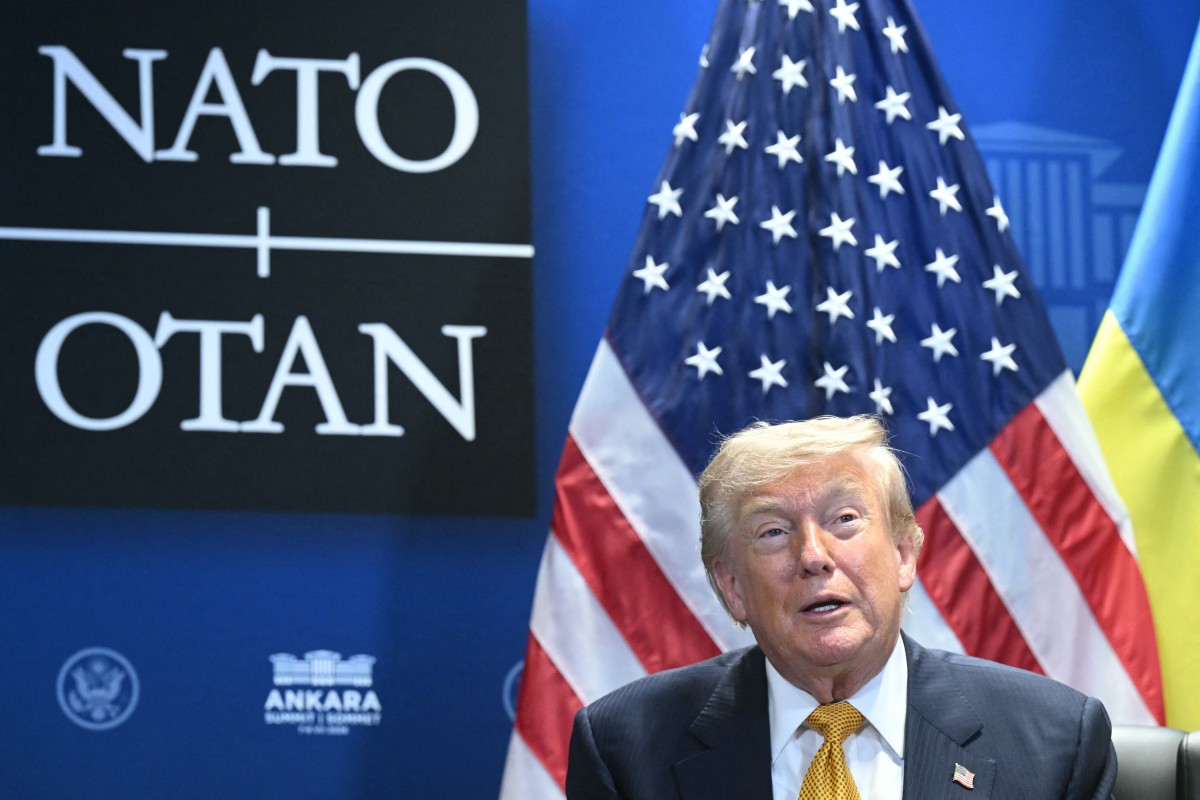
Amid growing anxieties in Europe over “the Russian threat”, the US Air Force General Alexus Grynkewich, NATO’s Supreme Allied Commander Europe (SACEUR), has unveiled what he called the alliance’s “Theory of Victory”.
Though his Polish hosts did not seem fully satisfied, General Grynkewich assured, on October 12, at the “Warsaw Security Forum,” an annual international conference in the Polish capital, that the alliance is ready to defend itself.
Reassuring America’s reliability as an ally and Washington’s firm commitment to NATO’s Article 5, which envisages collective defense, he said that if an adversary is “foolish enough” to strike, the alliance is fully prepared to “fight tonight”.
During a panel discussion titled “Theory of Victory: How Do We Achieve Military Success Against Russia in Deterrence and Defense?” Grynkewich stated that NATO would destroy “anything and everything” that supports an attack on allied territory.
He asserted, “Should the adversary choose to press the attack or commit his reserves, we will break the warfighting system engaged against us.”
In what the experts describe as an unprecedented move to project an absolute ironclad assurance of security to the one billion citizens living under the NATO umbrella, and to send an unmistakable warning of devastating consequences to adversaries, particularly Moscow ( though he did not mention it explicitly), General Grynkewich then went on to clearly articulate key elements of what was hitherto classified as NATO’s “Theory of Victory”.
NATO had developed a well-known “Theory of Victory,” but its elements were not well understood. General Grynkewich revealed them as part of a rigorous three-phase strategic framework: “Block, Blunt, and Break”.
This triad dictates the sequential escalation and synchronization of Allied multi-domain power from the very first moments of aggression.
While Grynkewich did not explicitly mention Russia during his address, his comments clearly targeted Moscow, especially in light of NATO’s 2022 Strategic Concept, which identifies Russia as the most significant and direct threat to allied security.
“My theory of victory is simple: we will block the initial attack. If the attack persists, we will blunt it and prevent enemy advance,” he expla ned. “And if required, we will break the enemy’s forces and the operational warfighting system that is arrayed against us.”
Based on his elaboration, Phase One of Block is the first line of defense. It focuses on an immediate, unyielding denial of territory. If an adversary breaches an allied border, NATO’s forward land forces are trained to deploy instantaneously to halt the invading army directly at the point of contact.
Rather than letting an adversary establish a foothold or capture territory for political leverage, the “Block” phase aims to isolate the initial push. This relies on integrated multi-domain operations, using localized ground units heavily supported by air superiority, naval assets, space surveillance, and active cyber capabilities to immediately close the operational window on the attacker.
If an offensive survives the initial blocking force and persists, NATO transitions to the “Blunt” phase.
The goal shifts from containment to actively stripping the enemy of operational momentum and initiative. To achieve this, the alliance leverages highly advanced technological systems. Grynkewich highlighted the deployment of massive sensor networks, autonomous combat systems, and AI-driven multi-domain targeting to completely suppress the enemy’s ability to coordinate large-scale maneuvers or advance deeper into allied territory.
The final, most severe component of the strategy is the mandate to “Break” the adversary. If an aggressor refuses to cease hostilities or attempts to mobilize its strategic reserves, NATO will launch massive, far-reaching retaliatory actions. Grynkewich explicitly stated that this phase extends far beyond the physical front lines of the immediate conflict. NATO will target and destroy the entire overarching warfighting framework arrayed against it.
This means systematically dismantling command-and-control centers; physical supply and logistics networks; replenishment warehouses; communications arrays; and anything else sustaining the offensive force.
However, Grynkewich carefully balanced aggressive deterrence with diplomatic clarity, noting that NATO did not view a direct military conflict with Russia as imminent or inevitable. Instead, he stressed that the most effective tool for preserving peace is maintaining absolute readiness for war while keeping communication channels open to prevent miscalculations.
This updated strategy appears to draw directly on critical lessons from contemporary battlefields in Ukraine and the Middle East. It explicitly moves away from relying solely on hyper-expensive, exquisite military hardware. Instead, NATO is prioritizing a hybrid mix of technological enablers that pairs high-end precision weapons with large numbers of cheaper, scalable systems like attritable drones and counter-UAS platforms to overwhelm an adversary’s defenses effectively.
General Grynkewich reportedly emphasized three things in this regard:
First is the “Eastern Flank Deterrence Initiative (EFD),” which serves as the deployment vehicle for a vast network of low-cost, expendable drones and minimally crewed or fully autonomous reconnaissance and strike systems.
Second is “AI-Powered Targeting,” which uses artificial intelligence to sift through vast data streams generated by advanced sensors, satellite arrays, and cyber intelligence. By shortening the sensor-to-shooter loop, AI-enabled networks identify, categorize, and assign targets to artillery, missile systems, or loitering munitions in real time, long before human staff could process the raw coordinates.
Third is the “System Layering” strategy, which does not replace heavy conventional hardware such as main battle tanks or fifth-generation fighter jets but rather insulates them. Cheap, modular drone walls absorb the weight of initial saturation attacks, counter enemy mass, and clear pathways, preserving high-end kinetic platforms for decisive operations against hardened infrastructure.
Overall, the emphasis on sensors, autonomous systems, precision weapons, and integrated land, air, sea, space, and cyber capabilities recognizes that contemporary combat depends as much on information, networks, and logistics as on troop numbers.
The idea is that NATO must exploit technological advantages while producing affordable systems in sufficient quantities.
NATO has periodically revised its strategies, keeping technological developments and threat environments in mind.
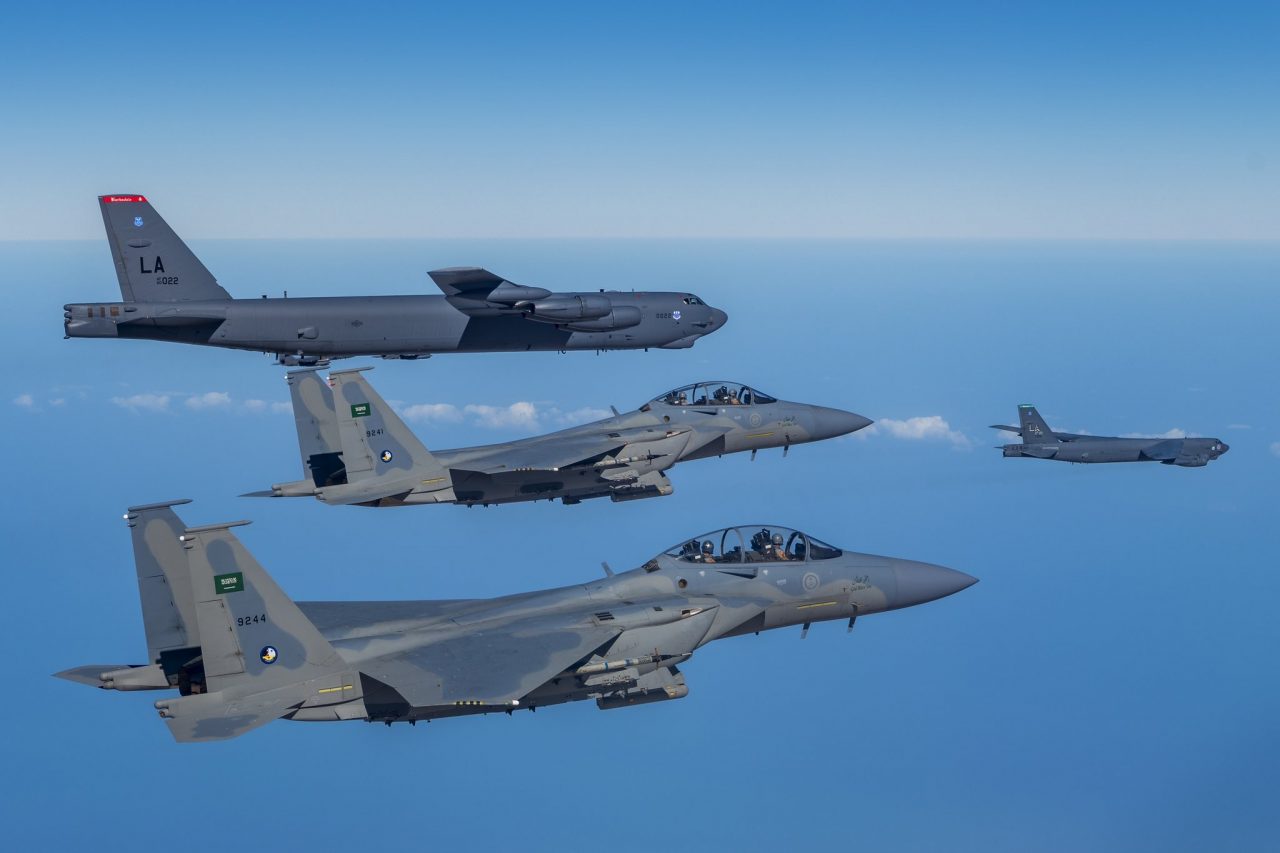
During the Cold War, the alliance relied primarily on what it called “forward defense” and “flexible response.” The forward defense strategy supposedly committed NATO to hold the inner-German border and assumed a possible retreat across deep defensive lines before counter-attacking.
The Flexible Response strategy relied heavily on the explicit threat of nuclear escalation in the theater to offset Warsaw Pact forces’ conventional numerical superiority.
After the end of the Cold War and disintegration of the Soviet Union, NATO was said to have adopted an expeditionary, crisis-management model. In this model, deterrence was linked to political goodwill, and force structures were optimized for out-of-area counter-insurgency campaigns.
This resulted in a lean force model with thin ammunition reserves and a lack of the rapid forward mobilization needed for high-intensity, continent-scale conventional combat.
Against this background, the “Theory of Victory” is said to address post-Cold War vulnerabilities by institutionalizing a modern denial posture. It replaces reliance on early tactical nuclear escalation with conventional, technology-driven mass.
Apparently, it abandons the concept of “liberation after occupation,” acknowledging that the civilian cost and physical destruction associated with liberating occupied territory are strategically unacceptable in the modern geopolitical environment.
Instead, it shows the capacity to neutralize an incursion early and convince potential adversaries that the cost of an attack will always outweigh any conceivable strategic gain.
Finally, by linking it to Article 5, NATO’s latest concept displays elements of calculated “strategic ambiguity”; it is id. NATO will not publicly define the exact point at which an attack would trigger its collective-defense clause, as doing so would help adversaries calculate how far they can escalate without provoking an allied response.
The ambiguity is designed to complicate enemy calculations, ensuring that hybrid operations, gray-zone provocations, or minor border incursions carry the unpredictable risk of drawing a full, multi-domain response from the alliance.
While the reactions of America’s major European NATO allies to General Grynkewich were not available at the time of writing, it is fair to guess they were reassured that Washington is prepared to fight if attacked.
However, erstwhile Warsaw Pact member and now Russia’s biggest critic, Poland, which has joined NATO, does not seem fully satisfied. Reports quoting the Polish weekly “Polityka” question the fundamental premise of NATO’s military strategy: preventing an adversary from achieving its goals, rather than launching an offensive campaign to destroy a foreign military power fully.
This perspective, detailed by defense analyst Marek Świerczyński, unpacks the structural reality behind General Alexus Grynkewich’s “Theory of Victory” speech.
He argues that beyond NATO’s institutional focus on calculated deterrence, escalation control, and defending its current borders, the alliance should fight deep inside Russia, without crossing the border, to crush the Russian military as a whole (through missile and drone firepower).
But then, this is a limited view. Overall, General Grynkewich seems to reflect that current NATO thinking is to de-escalate with Russia, not to defeat it strategically or to change its regime. The core objective of the Theory of Victory strategy is strictly containment, deterrence, and risk management.
In that sense, the name of the theory may be a little misleading.
- Author and veteran journalist Prakash Nanda is Chairman of the Editorial Board of the EurAsian Times and has been commenting on politics, foreign policy, and strategic affairs for nearly three decades. He is a former National Fellow of the Indian Council for Historical Research and a recipient of the Seoul Peace Prize Scholarship.
- The author can be reached at prakash.nanda (at) hotmail.com