Malaysia expects to receive its Korean-made FA-50M light combat aircraft on schedule, Defense Minister Khaled Nordin said, with the first jets due this month or next.
“According to the schedule, the aircraft will arrive this month or next month – I will announce the arrival date later. So far, I have not received any information regarding a delay in the delivery of the aircraft,” Khaled told reporters after the launch of the Warriors’ Fund Campaign 2026/2027.
In May 2023, Malaysia signed a nearly $920 million contract with Korea Aerospace Industries (KAI) for 18 FA-50 Block 20 light combat aircraft, designated FA-50M, for the Royal Malaysian Air Force.
Earlier, as EurAsian Times reported, India’s LCA Tejas was also competing for a Malaysian fighter-jet contract.
Malaysia, which has long needed to modernize its fast jet fleet, commenced the FLIT-LCA requirement in June 2021.
The country launched the tender to acquire a Lead-In Trainer-Light Combat Aircraft as part of the air force’s Capability 55 plan, released in 2018 and outlining the air force’s objective to achieve an ideal force structure by 2055.
The tender quickly gained traction from several countries, including India. Other contenders included the Turkish Hurjet, China-Pakistan’s JF-17, Russia’s MiG-35, and the Korean FA-50.
The FA-50 and Tejas were the two final shortlisted candidates, with the South Korean aircraft ultimately prevailing.
Malaysia selected the FA-50 aircraft over India’s Tejas, with officials citing the Korean jet’s proven service record and combat record as key factors.
Korea Aerospace Industries confirmed in February 2023 that it had secured the Malaysian deal.
Then-Defence Minister Mohamad Hasan said the jet’s service record was the primary consideration. “We cannot take the risk and acquire assets that are still at the prototype stage. Our personnel will use this jet, so safety is in our criteria,” he told a press conference in May 2023, echoing comments made in parliament the previous month.
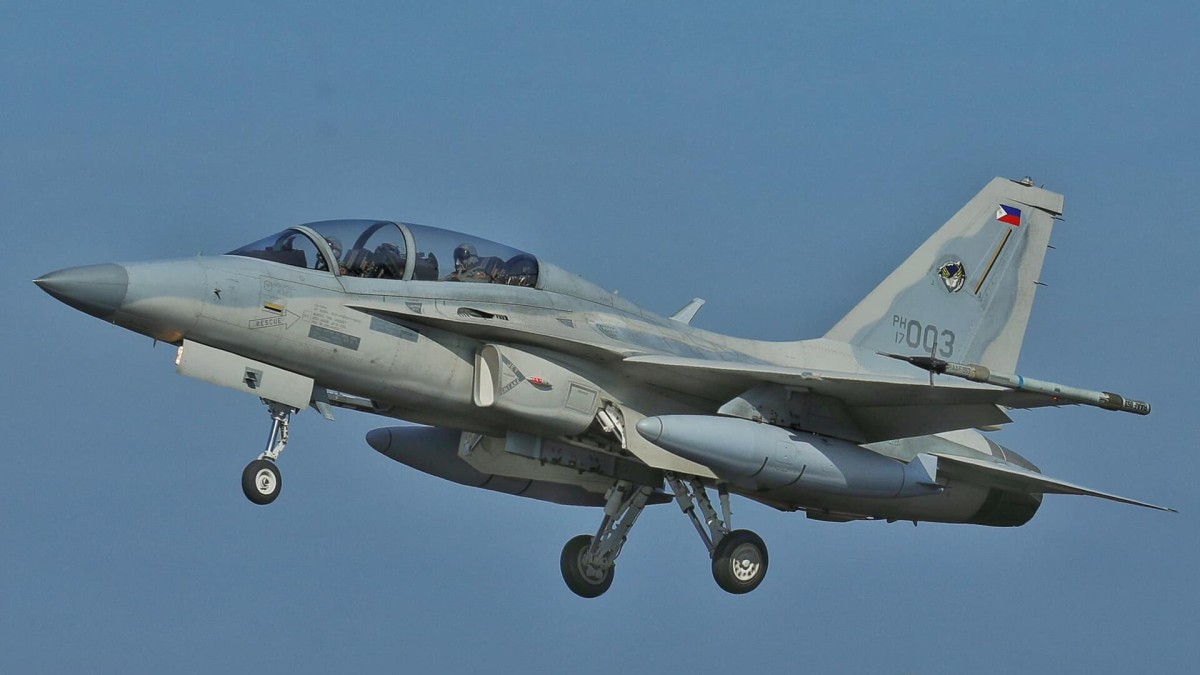
A Korea Aerospace Industries representative later told Channel News Asia that the Royal Malaysian Air Force viewed the Tejas as lacking an export record, while the FA-50 was already proven in combat.
The Philippine Air Force has used the FA-50, including during the 2017 Marawi campaign, and several regional air forces, including Indonesia, Thailand, and the Philippines, operate it.
Sources at India’s HAL acknowledged the outcome. “We were short-listed for the Malaysian LCA contract. We were hopeful as we were very competitive on several criteria, but unfortunately this has not gone our way,” one source said.
HAL Chairman C.B. Ananthakrishnan reportedly said the company was optimistic after being shortlisted from multiple bidders but had received indications that the order was going to the Korean contender, though it had not yet received formal notification.
FA-50 Light Combat Aircraft
KAI and Lockheed Martin jointly developed the supersonic T-50 advanced jet trainer, with the TA-50 as the Lead-in fighter trainer and the FA-50 as a light combat aircraft variant.
The T-50 partly resembles the F-16 Fighting Falcon and is 80% of its size. Development began in the 1990s, funded 70% by the South Korean government, 17% by KAI, and 13% by Lockheed Martin.
The aircraft made its first flight in August 2002 and entered service by February 2005.
KAI and Lockheed Martin pursued a joint international marketing program for the T-50.
The T-50/FA-50 family is operated (or on order) by the Republic of Korea, Indonesia, the Philippines, Thailand, Iraq, Poland, and Malaysia. Total firm orders across the family exceed ~290 airframes, with roughly 220–230 already built or delivered as of late 2026 (around 70 still in production or pending delivery).
The T-50 is equipped with a GE F404 engine built under license by Samsung Techwin. GE provides engine kits to Samsung Techwin, which also produces some parts and performs final engine assembly and testing.
The fighter/attack variants are equipped with the Elta EL/M-2032 fire-control radar, the same as the initial LCA MK1. The TA-50 can operate as a full-fledged combat platform with PGMs, air-to-ground weapons, and air-to-air missiles.
The TA-50 can carry pods for reconnaissance, targeting assistance, and electronic warfare. Reconnaissance and electronic warfare variants are also being developed, designated RA-50 and EA-50, respectively.
The TA-50 has an internally mounted three-barrel M61 Vulcan cannon. Wingtip rails can accommodate the AIM-9 Sidewinder missile, and underwing hardpoints can carry a variety of additional weapons.
South Korea is considering arming the FA-50 with a smaller version of the Taurus KEPD 350 missile to give it a 400 km stand-off engagement capability. The aircraft has an internal fuel capacity of 2,655 liters. It can carry 1,710 liters in the three external fuel tanks.
The aircraft has a max take-off weight of 12,300 kg. Its ferry range is 1,851 km, and its thrust-to-weight ratio is 0.96. The seven hardpoints can carry up to 5,400 kg of payload.
The FA-50 can carry more internal fuel, and the engine could be either the Eurojet EJ200 or the General Electric F414, providing up to 25% more thrust. Other AESA radars, such as Raytheon’s AN/APG-79 and Northrop Grumman’s AN/APG-83, are options for future production.
In January 2019, KAI began developing an improved FA-50 known as the Block 10 and Block 20 upgrades. The Block 20 adds munitions such as the AIM-120 AMRAAM. Raytheon PhantomStrike and Northrop Grumman AN/APG-83 were being considered as the future AESA radars.
MBDA has offered to integrate the Meteor and ASRAAM medium- and short-range air-to-air missiles on FA-50 and future KF-X fighter jets.
The T-50/FA-50 lost several competitions or was blocked from sales. The UK arms embargo on British components, such as the ejection seat, thwarted Argentina’s interest. Israel and Singapore instead chose the Italian M-346. Taiwan developed its own T-5 Brave Eagle based on its F-CK-1 fighter. The US chose Boeing’s T-7 and also blocked a proposed sale to Uzbekistan, citing concerns that the technology could reach Russia.
- Mail us at: editor (at) eurasiantimes.com