There seems to be an emerging consensus among strategic circles all over the world that while the rising global popularity of China, evident from the latest survey from the Pew Research Center on July 15, may not equate to the real global strategic leverage that America still possesses, it is a critical warning signal for the U.S.
In its survey, based on interviews with more than 42,000 people across 36 countries, Pew found that China is now viewed more favorably than the United States.
Among the 20 economies with comparable data, the median share of respondents expressing favorable views of China reached 46 percent, compared with 36 percent for the United States.
Similarly, during the first two years of his second term, President Donald Trump’s own ratings have also worsened significantly. Chinese President Xi Jinping now exceeds confidence posed in Trump by 10 (ten) points (31:21).
More favorable views of Xi were noticed in 22 of 36 countries. More overall now say that they have confidence in Xi than in Trump.
Pew says that more people have favorable views of China than the U.S. in 25 out of 36 countries, including Canada, Mexico, France, Germany, and Australia. Only 6 (six) countries still rate the U.S. more positively: India, Japan, South Korea, Philippines, Poland, and Israel.
And, according to Pew, there has been a “historic shift” in the sense that in 20 countries with data back to 2023, nearly “50% held a positive view of China”, while only “36% regarded the US favorably”. In 2023 it was the reverse: U.S. 58% vs China 32%.
Importantly, Pew cites worsening views of the U.S. since Trump’s second term began, and the US-led war in Iran where “people have less confidence” that the U.S. is contributing to peace. On the contrary, Beijing portrayed itself as a “stabilizing force”.
Incidentally, Pew’s findings are far from an isolated case. Earlier this year (April), Gallup reported that global approval of China’s leadership had surpassed that of the United States by the widest margin in nearly two decades.
“China surpassed the United States in global approval ratings in 2025, with a median of 36% approving of China’s leadership, compared with 31% for the U.S. China’s five-percentage-point advantage over the U.S. is the widest Gallup has recorded in China’s favor in nearly 20 years…..At the same time, disapproval of U.S. leadership rose to a record-high 48%, while China’s disapproval rating remained flat at 37%, Gallup said.
Coming back to the Pew findings, many analysts have agreed with the think-tank that the Trump administration’s tariffs, aid cuts, disdain for allies, and his sheer transactional diplomacy are actively ceding the soft-power contest to Beijing.
In other words, the volatility of American policy under Trump, which includes the use of force and the economic damage from tariffs, has hardened international sentiment against the United States. This has helped China build the perception that it is a more reliable entity.
But then, the fact remains that China has also worked hard to earn its present position.
Extensive Diplomatic Work is bringing the World to Beijing. Since December 2025, Xi and his foreign minister Wang Yi have hosted the political leaders of all the permanent members of the United Nations (UN) Security Council and met with all of the candidates for the UN’s next secretary-general, among an “endless stream” of foreign leaders in Beijing.
The city hosted President Donald Trump in May, followed soon after by Russian President Vladimir Putin.
Across roughly 500 diplomatic engagements in the first half of 26 conducted by more than 20 senior officials, Beijing has seized the opportunity to make its pitch to the world. Our survey results suggest that this work is paying off.
Besides, as Arran Hope, editor of “China Brief” at the Washington-based Jamestown Foundation, observes, “at the regional level, Europe’s importance is reflected in its high volume of diplomatic engagements: no other region received as much attention between January and June, with the United Kingdom and Belarus receiving the most. ASEAN countries saw the next highest degree of engagement, which is in line with trends laid out above”.
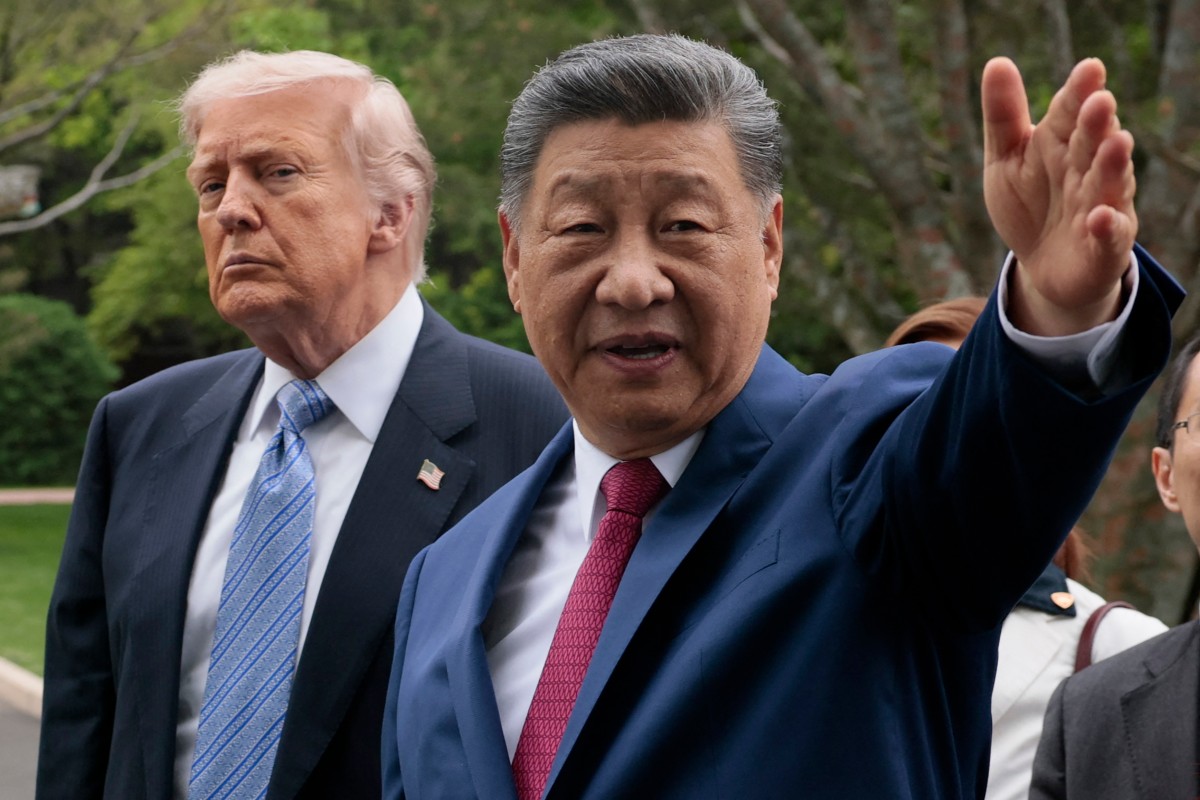
Xi, according to Hope, has been a keen promoter of “Asian values” in the region (of China) in recent times, which for the ruling Chinese Communist Party is a byword for anti-Western and pro-authoritarian, and is linked to gaining advantage in strategic competition with the United States.
Following the Pew survey, China’s People’s Daily wrote a commentary, which says, among other reasons, that China’s growing international goodwill is fostered by the appeal of its culture.
“Chinese cultural products are reaching wider global audiences than ever before. The phenomenal international success of the animated film Ne Zha 2 and the video game Black Myth: Wukong has sparked renewed global interest in Chinese mythology and traditional culture”, the commentary says.
Scholars like Yanzhong Huang agree.
“Culturally, the “Chinamaxxing” phenomenon—a viral social-media trend in which young Westerners embrace Chinese lifestyles, from drinking hot water to riding China’s high-speed rail vicariously through influencer livestreams—has given China the kind of organic, bottom-up cachet long enjoyed by Japan and South Korea, amplified by breakout products like the video game Black Myth: Wukong, the film Ne Zha 2, and Labubu dolls”.
He adds that China’s development model has also gained prestige: its dominance in electric vehicles, batteries, and infrastructure has made “the China model” an object of emulation rather than derision—so much so that Washington itself now practices industrial policy that borrows unmistakably from Beijing’s playbook.
However, notwithstanding all this, there are some limitations of China if one takes the Pew findings under closer scrutiny.
First, Chinese popularity is not uniform, covering all parts of the world.
Pew finds favorability toward China markedly higher in the emerging economies of Africa, Latin America, and South and Southeast Asia, with record highs this year in Colombia, Indonesia, Malaysia, Mexico, Nigeria, and Turkey.
China has also gained among the United States’ Western allies—Australia, Canada, France, Germany, Italy, the United Kingdom, Sweden, the Netherlands —as well as in parts of Latin America, where several publics once viewed the United States more favorably before Trump’s second innings.
But the fact remains that the U.S. also has significant support in six countries – India, Japan, the Philippines, South Korea, Israel and Poland. Consequently, four of these happen to be China’s neighbors, and five of them (except Poland) are in Asia.
In the Philippines, 81 percent see the United States as a reliable partner compared with 42 percent for China. It seems that proximity to Chinese power, particularly when accompanied by maritime disputes, blunts Beijing’s appeal.
Secondly, and this is a corollary of the above, in terms of numbers, people in the world supporting the U.S. and China are more or less even. The U.S. should thank India for this. Negative-leaning views of India’s 1.4 billion people completely offset the strongly positive views of China in 30 other countries.
And here, what is noteworthy is that in Trump’s favorite Pakistan, China leads the U.S. in popularity by over 75 percent, the highest in the countries surveyed. Even in Bangladesh, where the coup dislodging Sheikh Hasina had the American blessings, China’s lead is over 30 percent.
Thirdly, Huang makes one interesting point that “soft power”, which reflects popularity, is, by its very nature, far more mercurial than hard power. Public opinion can swing within a single year.
He quotes the ISEAS-Yusof Ishak Institute’s annual survey of Southeast Asia to illustrate that in 2024, when asked to choose, respondents sided with China for the first time (50.5 to 49.5 percent); in 2025, they flipped back to the United States (52.3 to 47.7 percent); and in 2026, they flipped again to China (52 to 48 percent). “Sentiment that oscillates this easily is a weathervane, not a monument”, he argues.
To buttress his argument, he adds that Soft power ultimately derives from credibility rather than propaganda—and solid, credible foundations for China’s appeal have yet to be laid. In Inside China, there are no signs of meaningful improvement in the rule of law or political freedom—if anything, the trajectory points the other way—and global publics have noticed. In only eleven of the thirty-six countries Pew surveyed do around half or more say the Chinese government respects the personal freedoms of its people.
Considering all this, the Chinese score over the U.S. in the Pew Survey does not necessarily flow from intrinsic strength, and it is most likely due to deteriorating opinions of the United States under Trump.
In other words, Washington’s loss does not necessarily translate into a commensurate lasting gain for Beijing.
Thus, one could say that it is too soon to declare a Chinese victory.
In 2026, the world may “like” China more than America for the first time, going by the Pew survey. But does the world “love” China more than America? Pew does not deal with this question, though in geopolitics, the difference between “like” and “love” does matter. And things can change sooner rather than later if the U.S. takes corrective measures.
- Author and veteran journalist Prakash Nanda is Chairman of the Editorial Board of the EurAsian Times and has been commenting on politics, foreign policy, and strategic affairs for nearly three decades. He is a former National Fellow of the Indian Council for Historical Research and a recipient of the Seoul Peace Prize Scholarship.
- CONTACT: prakash.nanda (at) hotmail.com