Taiwan conducted its first live firing drills involving the US-origin High Mobility Artillery Rocket System, or HIMARS, along its west coast, the most likely landing ground for the Chinese People’s Liberation Army (PLA) in the event of an invasion.
China considers Taiwan a renegade Chinese province and has repeatedly called for its unification with the mainland, with force if necessary. Military analysts and policymakers believe an invasion could be launched by the end of this decade, a fear strengthened by the PLA’s regular simulation of such an offensive and encirclement of the self-ruled island state.
Taiwan, on its part, has been building military capabilities to thwart a Chinese invasion, if and when it occurs—an effort that includes military modernization, arms purchases (such as HIMARS) from the United States, and the adoption of an asymmetric warfare strategy to counter the superior PLA forces.
In line with that, Taiwan’s military kicked off a coastal exercise on June 9, using artillery and rockets to simulate an amphibious invasion. The exercise was carried out concurrently at eight locations along a 20-kilometer stretch of Taiwan’s West Coast and described as a “realistic combat scenario ” with less preparation time by the Republic of China (Taiwan) Army.
On June 10, the Taiwanese military deployed the HIMARS for a live-fire exercise simulating cross-regional precision attacks from the Dajia River estuary in Taichung, in an attempt to demonstrate rapid deployment and combat reinforcement capabilities, according to reports in Taiwanese media.
Three HIMARS, each carrying six M28 reduced-range rockets, were placed by the 58th Artillery Command on either side of the Dajia River. According to reports, each HIMARS fired two rockets in each of the exercise’s three firing waves. This means that each of the six launchers fired 12 rockets per wave, for a total of 36 missiles across the three waves, with impact locations in waters 9 kilometers offshore.
The Army stated that it used reduced-range rockets that flew a short distance from the coast before plunging into the water. Nonetheless, analysts called the exercise a serious message from Taipei amid sustained Chinese aggression and a preparation for a real-world combat scenario.
The 10th Corps stated that the exercise simulated delivering cross-regional fire support against high-value enemy targets in northern areas to impede enemy advances. Moreover, it improved the Taiwanese ground forces’ ability to provide fire support and deter invasions.
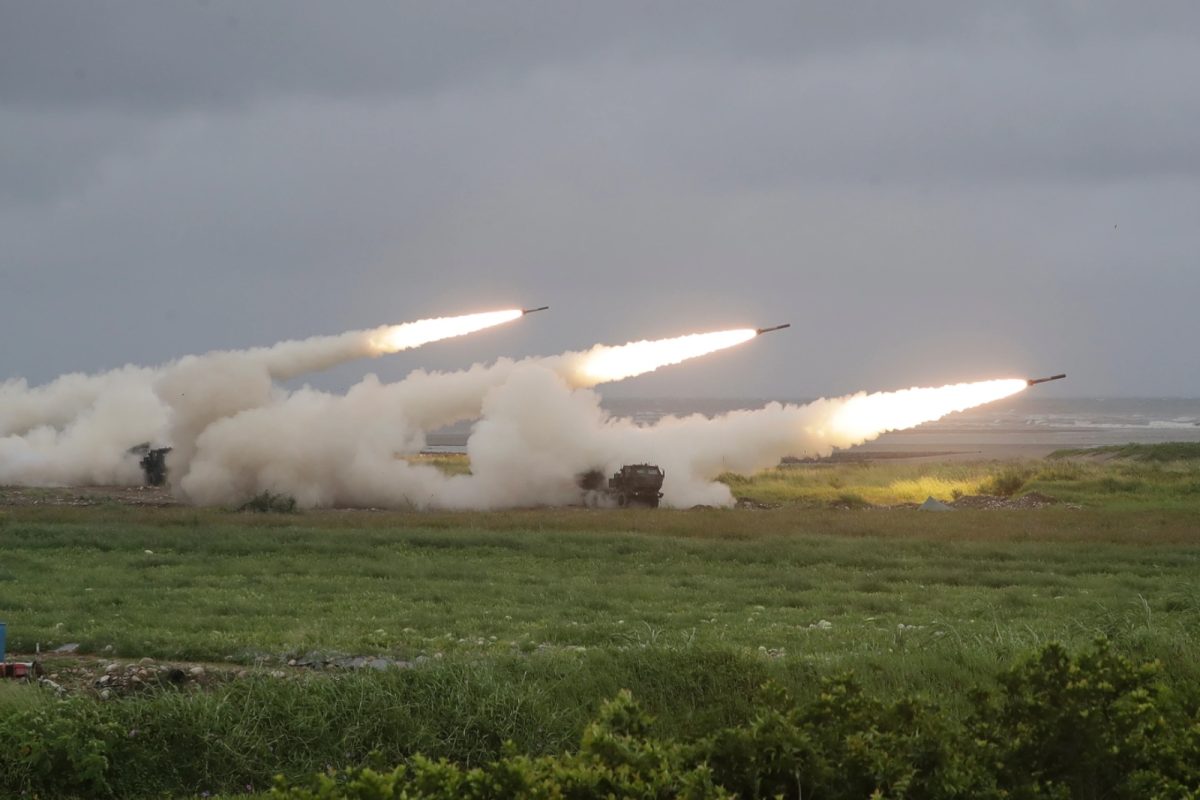
Most notably, the Army highlighted that the exercises demonstrated the HIMARS’s mobility and the capability to “shoot-and-scoot,” which is crucial in fast-paced combat.
“Due to the current enemy threat, we will continue HIMARS training with unwavering determination to protect Taiwan as the nation’s strongest force,” the Republic of China (Taiwan) Army’s Sgt. Wang Ming-hui said.
Notably, this was the first time HIMARS rockets were fired from the West Coast, which is considered the most likely area for an amphibious assault because it faces the Taiwan Strait and includes terrain better suited to large-scale landings than much of the East Coast. In fact, analysts have noted that the port in Taichung is especially important because the invading troops would need a way to quickly unload heavy equipment.
Therefore, attacking the troops during these landings could help Taiwan thwart an invasion or delay it until reinforcements arrive.
The Taiwanese Army earlier conducted live-firing drills with the HIMARS on its eastern coast in May 2025, as EurAsian Times reported at the time.
The latest drills come amid enhanced tensions between China and Taiwan in recent days, as Taiwan has complained of increased Chinese coast guard operations along its coast, particularly near the Pratas Islands in the South China Sea.
Taiwan’s coast guard said on June 7 that its vessels were in a “standoff” with Chinese ships involved in an operation in waters southeast of the island. Meanwhile, China defended its actions, saying that the “law enforcement” operation was in response to talks between Japan and the Philippines to draw a boundary in the waters east of Taiwan.
HIMARS vs PLA Troops
Taiwan has been acquiring M142 HIMARS (High Mobility Artillery Rocket Systems) from the United States as part of its efforts to bolster asymmetric defense capabilities against threats from China. The Republic of China Army (Taiwan) purchased 29 HIMARS launchers and secured the delivery of the first batch in November 2024, as we reported at the time.
The last US arms package for Taiwan, worth a whopping $11 billion, also reportedly included 82 HIMARS and 420 ATACMS missiles.
HIMARS is highly mobile, can be deployed quickly, fire precision-guided rockets, and relocate to avoid counter-battery fire. Thus, making this US-origin mobile artillery ideal for Taiwan’s asymmetric defense strategy, which predominantly focuses on using cheaper, dispersed systems to counter a superior Chinese force.
The HIMARS can fire GMLRS (Guided Missile Launch Rocket System), which can hit targets over 70 kilometers away, and long-range ATACMS (Army Tactical Missile System) can strike targets 300 kilometers away. It could be employed to target the PLA Navy’s amphibious and support vessels during the transit and landing phases of the invasion, which are generally considered the most vulnerable phases of such an attack.
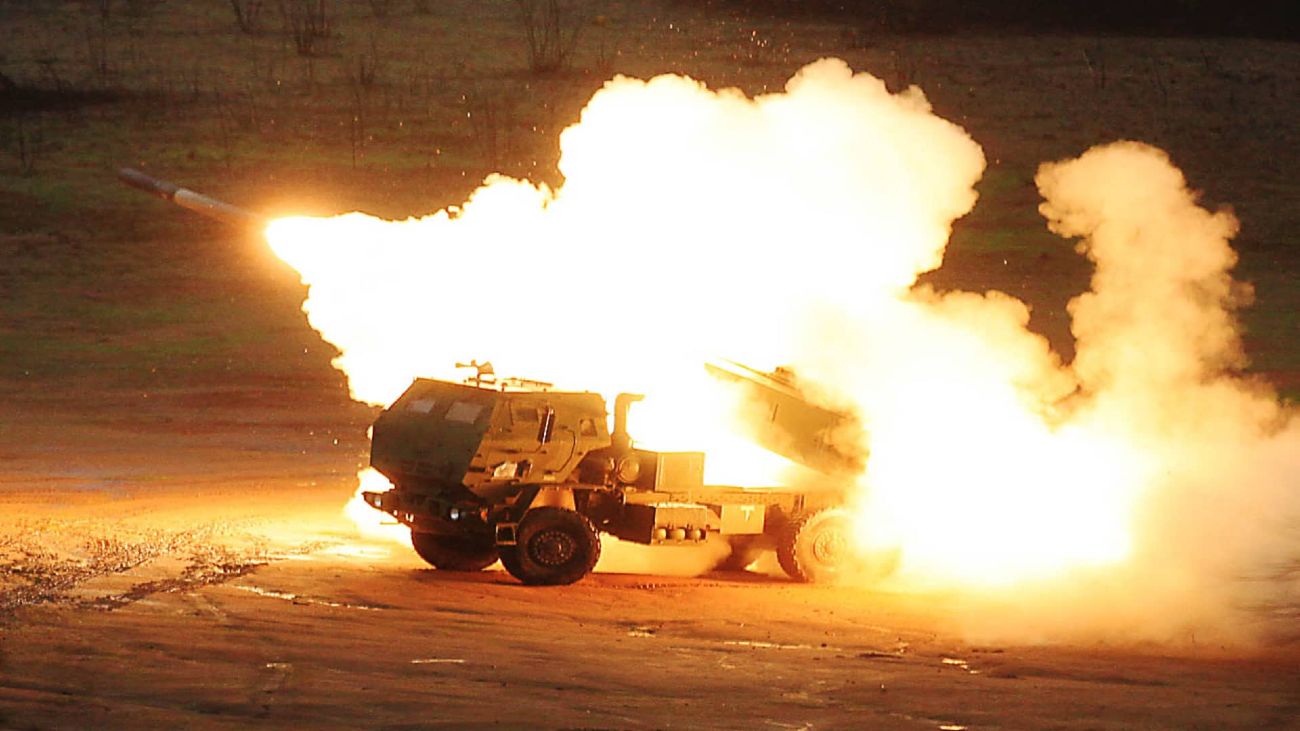
In fact, Taiwan-based security experts have repeatedly noted that the dispersed HIMARS could “shoot-and-scoot” to hit landing beaches, troop transports in the strait, or follow-on forces during an amphibious landing attempt.
By striking enemy landing units, ships, command centers, or assembly areas across the Taiwan Strait with high accuracy, the Taiwanese military would be able to create “kill zones” and disrupt PLA activities early in the invasion.
Not just that; if deployed on Taiwan’s offshore islands in the Taiwan Strait, the HIMARS-ATACMS combination could threaten a large portion of China’s frontline Fujian Province.
HIMARS can be used to target PLA staging areas, ports of embarkation, assembly locations, and logistics hubs in frontline Chinese islands overlooking the strait, even before the PLA troops cross the Taiwan Strait. This could delay or degrade an invasion, as amphibious assaults require concentrated forces that may be vulnerable to precision strikes.
Additionally, the HIMARS can also be deployed for “deep counterstrikes” against air defenses, command posts, and PLA long-range rocket batteries in China.
It is, perhaps, for this reason that the PLA has identified the US-origin HIMARS as a priority target in its own exercises. For example, the PLA explicitly simulated strikes against HIMARS launchers during “Justice Mission 2025” war games conducted in December 2025, as shown in a CCTV broadcast.
BREAKING; CHINA Singles Out HIMARS as 'Major Threat' Amid Live-Fire Drills Encircling TAIWAN
CHINA views HIMARS as a major threat due to their precision and ability to conduct "deep counterstrikes" against PLA rocket units, logistics bases, and coastal targets in Fujian… pic.twitter.com/HxacMWtxOs
— Global Surveillance (@Globalsurv) January 5, 2026
At the time, the Chinese state media depicted instances in which PLA long-range rockets were fired after “confirming” HIMARS placements.
Furthermore, the PLA Navy and Coast Guard were shown by Chinese official media intercepting and boarding ships that were allegedly transporting HIMARS to Taiwan. This aligned with the strategy of blockading key ports and shipping lanes in Taiwan to restrict external military assistance.
Chinese signaling prioritizes neutralizing the HIMARS early in a possible Taiwan conflict, as they are well aware that these systems could pose a serious danger to PLA amphibious operations, supply routes, and rocket forces.
China’s concern regarding the HIMARS is well-founded, particularly as these systems unleashed havoc on Russian troops when they were first deployed in the conflict in 2022, and again when they first started firing the long-range ATACMS in 2024.
- Contact the author at sakshi.tiwari13 (at) outlook.com
- Follow EurAsian Times on Google News