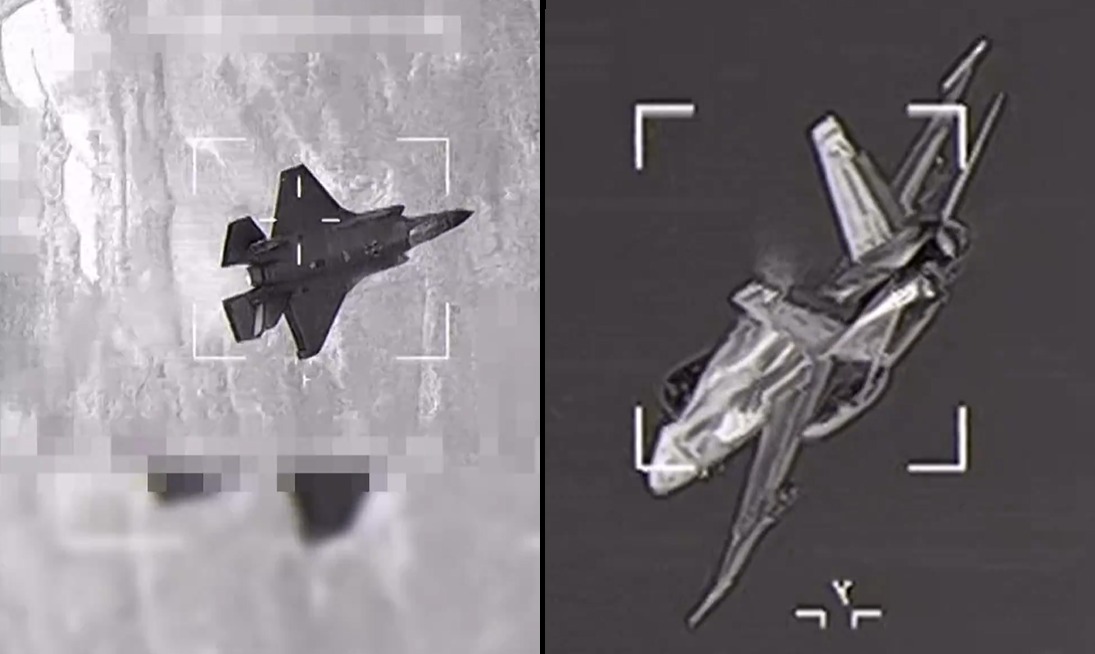
Syria’s Su-22 fighter bombers have returned to the skies nearly 20 months after the Bashar al-Assad regime fell in December 2024. The flights have drawn widespread attention on social media, with many recalling the shootdown of a Su-22 by a US Navy Super Hornet in 2017.
At least two Syrian Su-22M3/M4 fighter-bombers reportedly conducted training flights over northern Syria, including Idlib province.
A video of the flight surfaced on social media and has been widely reshared, with observers noting that it marks a visible step in the post-Assad Syrian Air Force’s efforts to restore surviving aircraft.
The development is notable because during the 2024 offensive that toppled Assad, many jets were lost, although some were seized by rebels.
Immediately after the regime collapsed, Israel launched Operation Bashan Arrow, conducting hundreds of strikes against air bases, aircraft, air defenses, missiles, radar sites, weapons depots, and related infrastructure across Syria.
Israeli officials stated the campaign aimed to prevent strategic weapons from falling into the hands of rebel groups, some with roots in movements linked to al-Qaeda and the Islamic State.
“I authorized the air force to bomb strategic military capabilities left by the Syrian army, so that they would not fall into the hands of the jihadists,” Israeli Prime Minister Benjamin Netanyahu said at the time.
As a result, the vast majority of the Syrian Arab Air Force’s fixed-wing combat aircraft—including MiG-21s, MiG-23s, MiG-29s, Su-22s, and Su-24s—were destroyed on the ground, damaged beyond use, or rendered non-operational.
Moreover, after Assad’s fall and the consolidation of power under President Ahmed al-Sharaa, the old army and air force disintegrated as many pilots, technicians, and officers fled, were purged, or declined to serve under the new leadership.
For the new regime, integrating former rebels into a coherent force, recruiting or training new personnel, and establishing reliable command structures were challenging.
The routine operation of Syrian jets is seen as a significant development because crucial infrastructure like air bases, runways, hangars, maintenance facilities, fuel, and support systems was heavily damaged by years of civil war, plus the post-Assad Israeli strikes. Moreover, spare parts for aging Soviet-era aircraft, such as the Su-22, are hard to obtain.

Interestingly, as the recent Su-22 video spread online, many recalled an earlier episode involving the same aircraft type.
Su-22 Downed By Super Hornet In Syria
A US Navy F/A-18E Super Hornet shot down a Syrian Arab Air Force Su-22 Fitter near Ja’Din in Raqqa Governorate, Syria, on June 18, 2017. This was the first time a US aircraft had downed a crewed aircraft since the 1999 bombing campaign in Kosovo.
On its part, the United States maintained a military presence in Syria throughout the civil war. It opposed Assad politically from early in the conflict, imposed sanctions, supported opposition groups, and later partnered with the Kurdish-led Syrian Democratic Forces (SDF) and other local forces.
However, the main US military intervention began in Syria in 2014 as part of the coalition against ISIS under Operation Inherent Resolve. The Su-22 shootdown occurred while that campaign was underway.
When the incident occurred, the US-backed Syrian Democratic Forces (SDF) were advancing against ISIS around Raqqa and Tabqah.
At the same time, Syrian government and pro-Assad regime forces (backed by Iran and Russia) were also active in the area, creating a complex, multi-sided battlespace with overlapping claims and frequent close encounters.
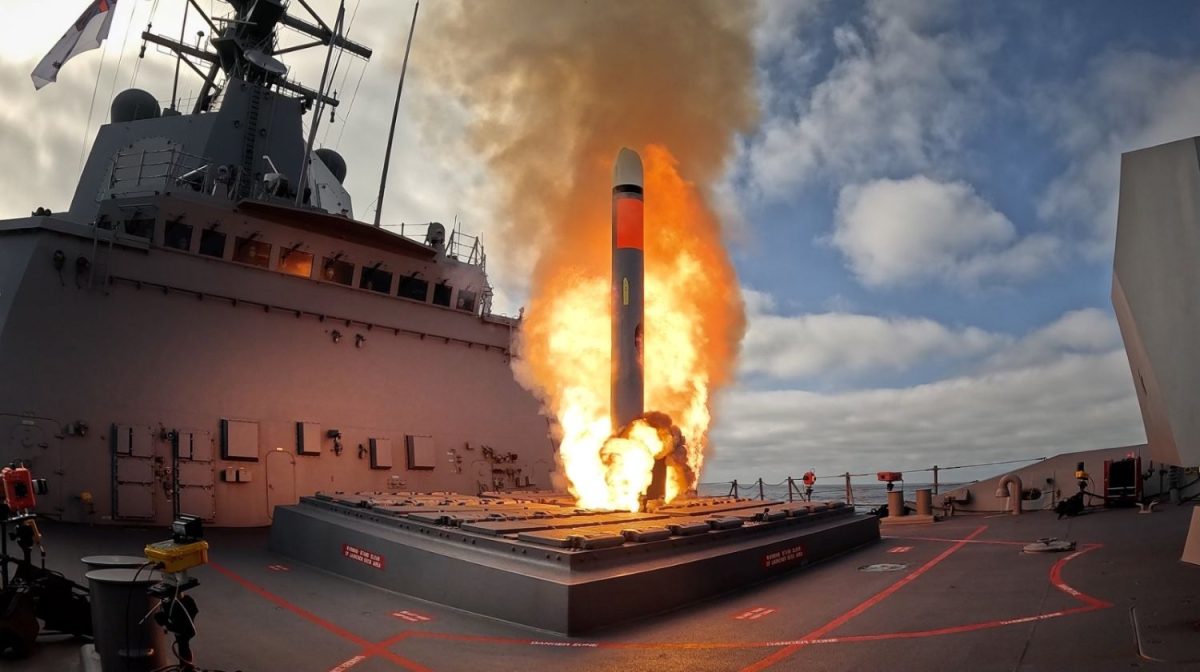
Tensions between the two camps were already running high as the US had launched Tomahawk missiles at Shayrat Airbase in April 2017 in response to what it alleged was a chemical attack launched by the pro-regime forces. At the time, about 59 Tomahawk cruise missiles were fired from two US Navy ships in the Mediterranean at Idlib. Meanwhile, US forces had shot down an Iranian drone as it approached a US outpost near al-Tanf.
The Su-22’s downing took place after a series of clashes between pro-regime troops and the Syrian Democratic Forces, near the SDF-held town of Ja’Din.
According to the Pentagon, the coalition used the deconfliction hotline with Russia in an effort to halt a regime ground advance involving tanks, artillery, and technical vehicles.
When that failed, coalition planes stopped the regime’s advance by conducting “strafing runs” close to their positions.
Then, just over two hours after the ground assault started, a Syrian Air Force Su-22 strike plane appeared over the region and started bombing SDF fighters south of Al Tabqa, according to the Pentagon’s version of events.
As soon as the Su-22 dropped its bombs, two American F/A-18E Super Hornets from the aircraft carrier USS George H.W. Bush engaged the Syrian Su-22 fighter. One of the two jets fired an AIM-9 Sidewinder, a short-range air-to-air missile, according to two US officials who spoke to CNN. But the missile missed the target.
According to the officials, a US pilot then fired a second missile, an AIM 120 Advanced Medium-Range Air-to-Air Missile, which struck its target and brought down the Syrian warplane, forcing the pilot to evacuate.

The US pilot purportedly witnessed the Syrian pilot eject, and a parachute deploy, but the US thinks the pilot would have landed in a Syrian area under ISIS control.
The pilot was reported missing; the Syrian Armed Forces later said in a statement. This marked the first air-to-air kill for the Super Hornet variant and the first downing of a manned jet in more than a decade.
The pilot, Lt. Cmdr. Michael Tremel, later explained to savetheroyalnavy.org, ”The whole incident lasted about eight minutes. I did not directly communicate with the Syrian jet, but he was given several warnings by our supporting AWACS aircraft.”
The US Coalition claimed that the action was ordered in collective self-defense when a Su-22 attacked allied forces. Furthermore, they emphasized that while they would defend Coalition and partner forces, they had no intention of going to war with Syrian, Russian, or pro-regime forces.
Syria, meanwhile, denounced it as a “flagrant attack” and a breach of its sovereignty that impeded the war against ISIS.
Interestingly, the same aircraft—F/A-18E/F 168912—was seen in official footage launching from the USS Gerald R. Ford during the Iran War earlier this year, with its kill markings clearly visible. At the time, experts noted that the aircraft may have also been active during Operations Southern Spear and Absolute Resolve in the Caribbean in late 2025-early 2026.
While the Su-22 downing remains a rare modern air-to-air engagement between manned aircraft involving US forces, the rebuilt Syrian Air Force can probably stay assured that it wouldn’t have to face another such shootdown by US forces, as relations have shifted sharply toward friendly and progressive normalization under the Trump administration.
- Contact the author at sakshi.tiwari13 (at) outlook.com
- Follow EurAsian Times on Google News