A bizarre story is unfolding in Jammu and Kashmir.
In a Hindu-majority India, the Kashmiri Pandits, the minority in the Kashmir Valley, continue to face existential threats from Pakistan-sponsored terrorists, three decades after their exodus.
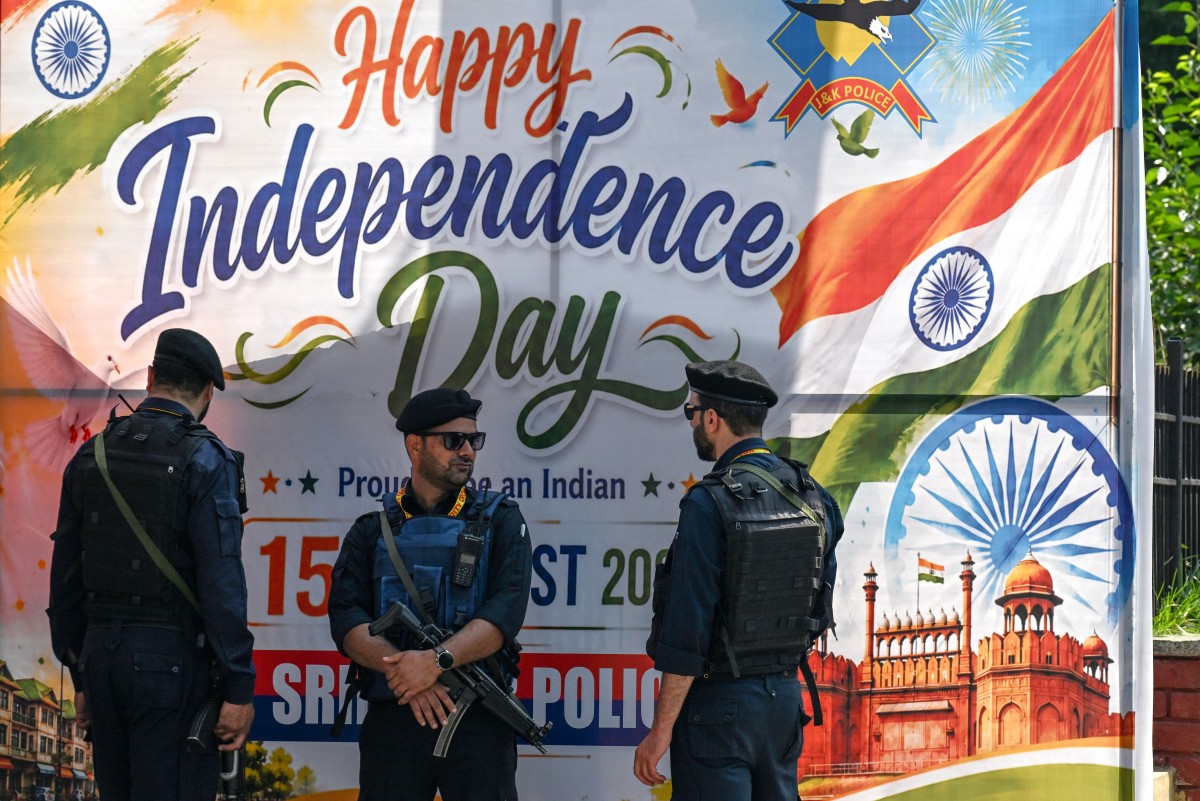
As India prepares to celebrate its 80th Independence Day, the occasion offers an opportunity to reflect on India’s long journey since it broke free from British colonial rule in 1947.
Yet, amid these celebrations, the painful reality haunts the Kashmiri Pandits, the indigenous Hindu community of Kashmir: Over 3 decades of separation from their homeland.
The irony is that India, one of the world’s biggest economies and military powers, has failed to provide one thing that every citizen of the country enjoys: security to the aborigines of the Kashmir Valley.
In 1989-90, amid escalating threats and targeted killings, thousands of Pandits fled the Kashmir Valley overnight to save their lives and dignity. It was one of the most painful episodes in Kashmir’s history.
Now, adding to the wounds of their painful past, at a time when New Delhi is attempting to resettle a few of them, fresh death threats from Pakistan-linked terrorists are jeopardizing the plan.
This time, a terrorist organization—the United Liberation Council (ULC), a shadow front of Lashkar-e-Taiba (LeT)—has issued threats against Pandit employees working under the Prime Minister’s Special Employment Package, circulating an online letter containing their names and phone numbers.
Reminiscent of 1990, when a similar strategy of public hit lists and targeted profiling was followed to instill terror, these fresh disclosures have once again shaken the community. Fearing for their safety, the J&K government administration has now directed them to work from home and granted administrative leave until August 25.
The Unfinished Return
Historically, Pakistan has sought to intimidate Kashmiri Pandits and alter the demographic character of Kashmir through multiple means, ranging from propaganda warfare and narrative-building to targeted killings and direct intimidation through its terror networks, separatist ideological elements, and political discourse in J&K, as part of a well-orchestrated strategy directed from Rawalpindi.
It has sought to influence the mindset of Kashmiris through state-sponsored propaganda and psychological warfare—engineered by agencies such as the Inter-Services Public Relations (ISPR)—portraying Kashmiri Pandits as conspirators and suggesting that they were part of an Indian conspiracy.
A narrative has been systematically propagated and inculcated that, in 1990, the Pandits were part of a New Delhi plan and that the government orchestrated their mass exodus from Kashmir.
Through such alternative narratives, Kashmiri Pandits have been stigmatized in public discourse as untrustworthy collaborators, permanent outsiders, and people who left Kashmir for reasons other than fear and persecution.
Pakistan promoted and implanted this narrative, which was then repeated by some so-called Kashmiri professors, thinkers, activists, leaders, and others. Over time, such narratives penetrated sections of Kashmiri society and helped create a distorted understanding of the circumstances surrounding the exodus.
By promoting such narratives, Pakistan effectively absolved itself of the crimes and responsibility for the violence, intimidation, and terror that drove the Pandit community from its ancestral homeland.
The focus shifted away from the perpetrators and was placed instead on the victims, effectively forcing the Pandits to justify their own displacement and creating the impression that they left for reasons other than fear, persecution, and targeted violence.
During this period, there were numerous massacres and targeted killings of Kashmiri Pandits, while harsh and threatening messages were broadcast over loudspeakers, calling upon them to leave the Kashmir Valley.
One should keep in mind that nobody would willingly leave their homes, especially when those homes are deeply connected with memories, family history, ancestral property, and everything else that gives a place a sense of belonging, even if they were offered significant material benefits elsewhere.
Nobody would do so unless they were so fearful and intimidated that they believed they could be killed. Such was the situation at that time that these Pandits had no option but to leave and save their lives.
After their expulsion, many had to live in packed camps and tin sheds, without proper bathrooms, sanitation, or other rudimentary facilities. Who would willingly leave their homes only to live in such conditions? This itself shows that leaving was not a choice but a compulsion driven by fear.
Even today, when Kashmiri Pandits return to the Valley and stand before the homes where they were born, where their parents and grandparents lived, and where countless memories of their families remain, they return not as people who willingly abandoned their homes, but as people separated from their homeland by circumstances beyond their control.
To see the place that once belonged to them and yet know that they could not live there freely again is a pain that cannot easily be expressed in words.
This pain is not only the loss of a home; it is the loss of a connection to a land that has been central to the community’s history, culture, and civilizational identity for centuries.
If Kashmir’s culture has survived, a noteworthy contribution goes to them; from the enduring legacy of Kashmiriyat to the sacred traditions of Herath and the historic shrines like Mata Kheer Bhawani.
Kashmir’s identity remains incomplete unless they are fully, safely, and permanently reintegrated into Kashmir. When you define Kashmir, it is not possible to define it without the Kashmiri Pandits. They are the original inhabitants of the Valley and remain an integral, irreplaceable part of its history and culture.
The name Kashmir itself is also believed to have ancient origins associated with the Vedic sage Rishi Kashyapa, from whose name terms like Kashyapa-mar (the abode of Kashyapa) or Kashmiram originated, signifying the draining of the primordial lake Satisar to create the Valley.
Some of the most famous scholars of Kashmir’s history were Kashmiri Pandits, such as Kalhana, who wrote Rajatarangini (The River of Kings) in the 12th century, establishing the foundational chronological historical record of the region’s ancient dynasties.
They also birthed the profound philosophical school of Kashmir Shaivism, pioneered by master thinkers like Abhinavagupta and Utpaladeva, alongside the iconic mystical poetry of Lal Ded, which shaped the region’s spiritual consciousness.
International Media’s Double Standard
Many international media and some human rights organizations, which often appear to cover stories immediately when it suits their agenda, particularly when it comes to India and Kashmir, have also remained largely silent on the plight of the Pandits and on how an entire community was uprooted from its homes.
Their reporting on Indian Kashmir often appears agenda-driven, repeatedly focusing on barbed wires, troop deployments, security forces, protests, and other images that shape a particular narrative about the region. Global networks like BBC, Al Jazeera, and CNN give extensive coverage to such issues and often arrive quickly whenever an incident occurs, but the decades-long plight of the Kashmiri Pandits rarely receives comparable attention.
Wire agencies like Reuters ensure political standoffs become breaking global feeds, yet there are no major stories or headlines commensurate with the magnitude of this tragedy. In tandem, prominent global watchdogs like Amnesty International and Human Rights Watch, which routinely issue exhaustive, urgent statements on civil liberties and state actions, show a glaring lack of institutional urgency when it comes to the systematic displacement and targeted terror campaigns against this indigenous minority.
There have been some stories and sporadic reports on the issue, but by and large, the international media and human rights groups have not given the plight of the community the space, advocacy, and sustained attention it deserves.
It is as if the Pandits have become invisible in the very Kashmir whose story they are an inseparable part of. When international outlets and international monitors do touch upon the subject, they often dilute the horror of events like the 1990 exodus or the 2022 targeted killings of employees by framing them through the sanitized lens of “communal migration,” local administrative shifts, or generic local violence rather than recognizing it as a targeted campaign of ethnic cleansing.
Radicalization of Kashmir and the Roots of the Pandit Exodus
It was from the 1980s onward, when jihadi groups, with Pakistan’s active support and assistance from the CIA and funding from several Arab countries, saw the success of their jihad against the Soviet Union in Afghanistan, that they gained confidence and a moral boost.
Pakistan’s generals, especially under General Zia-ul-Haq, saw an opportunity to replicate the Afghan model in Kashmir, believing that the availability of local manpower, combined with Pakistan’s military, logistical, ideological, and training support, could be used to build a similar insurgency against India.
Under this covert strategy, often referred to as Operation Topac, Pakistan sought to support, train, and facilitate terror groups, even though some of these groups later developed their own agendas and, in certain cases, became increasingly independent of Pakistani control, as demonstrated by the Tehrik-i-Taliban Pakistan (TTP).
At that time, jihadi thinking, radicalization, and communal attitudes were indoctrinated and inculcated through brainwashing, selective quotation of Quranic verses and Hadith, and, strategically and systematically, by infiltrating their agenda and radicalized thinking into Kashmiri civil society, media, educational institutions, textbooks, journalism, schools, teachers, professors, and other institutions.
They infiltrated the broader ideological base, and this radicalized mentality and terror ecosystem subsequently began to take root. Under this radicalization, Kashmiri Pandits were increasingly portrayed as kafirs and as enemies who could be targeted, threatened, or driven out, and who had to be “taught a lesson.”
Those who say that India’s alleged rigging of the 1987 elections, in which the Muslim United Front faced defeat against the National Conference-Congress alliance, was the primary cause of the beginning of terrorism are, in effect, downplaying or absolving Pakistan of its responsibility.
Elections have been rigged, manipulated, or bitterly contested in many parts of India, but people did not take up an armed insurgency against the Indian state on that basis. Importantly, Pakistan and Pakistan-occupied Jammu and Kashmir (PoJK) have also experienced severely compromised electoral systems, including stringent constitutional preconditions under the 1974 Interim Constitution, such as the mandatory oath of allegiance to, and accession to, Pakistan.
The developments that followed the 1987 elections must therefore also be viewed against the backdrop of the ideological and psychological environment. In colleges, through the media, through Jamaat-e-Islami (JeI) propaganda, sermons, and literature, stories and narratives were repeatedly presented to the people of Kashmir, and many came to believe these propaganda narratives without having a broader understanding of the regional geopolitics.
The environment subsequently became poisonous and communal in parts of the Valley, and narratives against the Pandit community—labeling them as conspirators and portraying them as part of an Indian conspiracy—began to spread. Eventually, this contributed to the atmosphere of fear, insecurity, and persecution that preceded and accompanied their exodus.
This represented a direct assault not only on the Kashmiri Pandit community but also on Jammu and Kashmir’s centuries-old tradition of communal harmony, coexistence, and shared cultural heritage.
The tragedy of the Kashmiri Pandits is therefore not merely a story of displacement. It is a story of a community that was uprooted from its ancestral homeland through fear, violence, intimidation, and targeted persecution and has still not been able to return fully after more than three decades.
Their return and dignified reintegration into Kashmir should not be viewed merely as a political demand but as an essential part of restoring the Valley’s pluralistic cultural and civilizational identity.
- The OPED is written by a prominent Jammu and Kashmir-based journalist and has requested anonymity due to security reasons.
- Mail EurAsian Times at: editor (at) eurasiantimes.com