In a bizarre incident, a Ukrainian MiG-29 Fulcrum caught fire mid-air and crashed after its air-to-air munition malfunctioned during an air defense mission against Russia, if reports are to be believed.
The MiG-29 caught fire due to a “non-standard situation” during the launch of an air-to-air missile during a counter-unmanned aerial systems (C-UAS) sortie over Odesa Oblast, the military announced. A video of the jet descending while on fire was published on social media.
Although the military did not identify the weapon involved in the mishap, Ukrainian MiG-29s are typically equipped with Soviet-designed R-73 infrared-guided and R-27R radar-guided air-to-air missiles.
However, the MiG-29s have been modified to carry Western weapons, such as the US-made AGM-88 HARM anti-radiation missiles.
According to reports, after struggling to regain control of the aircraft for a while, the pilot ultimately decided to eject. He was later recovered and sent to a medical facility. The aircraft was fully destroyed.
Meanwhile, Ukraine’s State Investigation Bureau (DBR) announced that it was looking for the aircraft’s flight recorder to establish the cause of the crash.
Additionally, a criminal case was opened under Article 416, Part 2 of Ukraine’s Criminal Code, covering violations of flight, flight preparation, or aircraft operation rules that may have resulted in the unprecedented crash.
For now, the exact circumstances that sparked the fire have not been officially disclosed. However, open-source analysts analyzing the event video have stated that the missile’s motor fired while it remained under the wing. These live air-to-air munitions use solid-rocket motors that burn at very high temperatures.
Notably, multiple experts surmised that the fire was likely caused by a “hung missile” scenario, in which the pilot presses the button to launch an air-to-air missile, and the rocket motor ignites as intended, but the missile’s rail fails to release the weapon, causing the ignition to occur next to the airframe.

“The crash was not caused by a Western missile but almost certainly by a Soviet-era R-73 or R-27. The propellant can catch fire if there is an electrical short circuit or a problem with the firing sequence. The malfunction highlights the risks of relying on older missile stockpiles under high operational tempo. Ukraine continues to adapt its MiG-29s for Western weapons like HARM, but air-to-air engagements still rely on Soviet design,” Indian Air Force (IAF) veteran and military commentator, Group Captain Johnson Chacko (retd) told the EurAsian Times, when probed about the crash.
When asked whether the pilot could have jettisoned the ordnance, Group Captain Chacko said, “Jettison is usually a mechanical release — the missile drops away inert, not fired. If the missile motor has already ignited (as in the Ukrainian MiG-29 case), jettisoning is nearly impossible because the missile is already burning and attached to the rail. The flame and exhaust can damage the wing or fuselage before separation occurs.”
Notably, air-to-air missile failures occur more often than publicly reported crash data suggest. For example, on June 20, 1973, an AIM-7 Sparrow failed to separate properly from a F-14 prototype over the Pacific, striking and destroying the aircraft. At the time, the two test pilots, Pete Purvis and Bill “Tank” Sherman, safely ejected after engine fire and loss of control, and the incident came to be known as one where the Grumman shot itself.
While the Grumman incident differs from the latest MiG-29 crash, the root cause is the failure to separate the ordnance as intended.
In another incident, a USAF F-15E landed with a hung missile after conducting a dangerous mission to counter an Iranian attack against Israel in April 2024. “This missile — we don’t know if it’s armed, and we don’t know if it’s going to explode on our wing,” fighter pilot Maj. Benjamin “Irish” Coffey told CNN, explaining the perils of the night.
“We don’t know if it’s going to explode while maintenance is saving the aircraft. It’s a big deal. And now, as we start into the landing process, we enter alarm red,” he added.
“A hung ordnance situation isn’t entirely uncommon, and this is always a scary possibility when it happens. Firing a missile means doing a few things: relaying data and the command to fire to the weapon, the rocket igniting, and the rail or ejector rack releasing the weapon. If the weapon doesn’t release, you’ve got 50 pounds of solid rocket fuel burning under your aircraft, and a few thousand extra pounds of asymmetrical thrust to contend with while you figure things out,” Alex Hollings, a former US Marine, wrote on X.
Typically, even if a pilot manages to somehow gain control of the aircraft despite a massive amount of fuel burning under it, his troubles may be far from over. “Hung stores are probably most dangerous during landing, because there’s a real possibility that the weapon finally will jostle loose when the landing gear touches down, potentially detonating or sending a live weapon skidding across the runway to ruin somebody else’s weekend,” Hollings said.
That said, the “hung missile scenario” has not been confirmed by the Ukrainian Armed Forces and is merely a speculation/preliminary assessment at this point.
Interestingly, some observers suggested fragments consistent with older R-60 missiles whose production ended decades ago and whose storage life may have been exceeded. This prompted some observers to note that degraded propellant, seals, or initiators increase the risk of anomalous ignition or incomplete release.
The incident has also exposed the heightened risk of fighter jets conducting air defense and other combat missions against Russia in recent times.
Combat Missions Risky For Ukrainian Jets
On July 29, 2026, the Ukrainian Air Force lost contact with an F-16 Fighting Falcon while it was performing a combat mission to intercept Russian aerial targets.
“According to preliminary data, an emergency situation occurred on board the aircraft, and the pilot was forced to eject,” the service stated. The pilot safely ejected and was recovered.
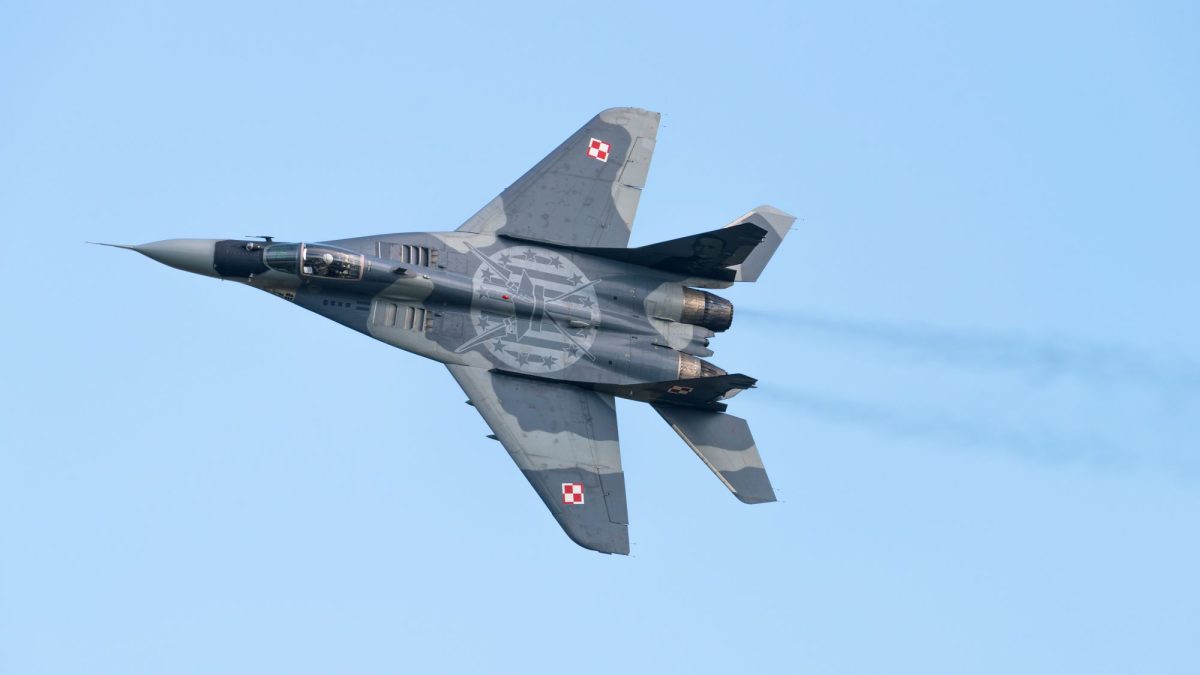
Before that, on June 26, 2026, a MiG-29 lost communication over Poltava Oblast during a combat mission. However, open-source reports suggested that a long-range Russian air-to-air missile may have struck. The pilot ejected safely, according to Ukrainian media reports.
This incident came two weeks after the Ukrainian Su-24 front-line bomber crashed in Khmelnytskyi Oblast on the evening of June 16, while conducting a combat mission. Ukraine has also lost about three other F-16s during combat missions or air defense missions against Russia—April 2025, May 2025, and June 2025.
Kyiv also lost its first Mirage 2000-5 fighter jet during an air defense mission in July 2025, as EurAsian Times reported at the time.
The F-16s, along with the Mirage 2000-5, are heavily used for intercepting Russian cruise missiles and drones and, more recently, for complex offensive missions. These aircraft are Ukraine’s most capable Western fighters and form the core of its modern air operations.
As for the MiG-29, the crash comes as Ukraine has been struggling to obtain additional jets of the type from Poland. After a months-long tussle, Ukrainian Ambassador to Poland, Vasyl Bodnar, revealed last week that Warsaw intends to transfer four retired MiG-29 jets to the Ukrainian Air Force.
- Contact the author at sakshi.tiwari13 (at) outlook.com
- Follow EurAsian Times on Google News