During the Cold War, the Mikoyan-Gurevich (MiG) design bureau held a monopoly on frontline fighters (like the MiG-21 and MiG-29), while the Sukhoi Design Bureau specialized in strike aircraft.
The Sukhoi seems to have surpassed the legendary MiG pack due to the massive success of the Su-27 “Flanker” family. Mikoyan’s financial struggles following the Soviet collapse led the Russian government to consolidate the two entities under the United Aircraft Corporation (UAC).
The air-superiority Su-27, initially designed in the 1970s, was extremely versatile, boasting a massive payload capacity, excellent maneuverability, and a long combat radius. It proved a highly adaptable platform, allowing Sukhoi to develop successful variants such as the Su-30, Su-35, and Su-34.
Meanwhile, Mikoyan-Gurevich’s MiG-29 lacked the space and payload for similar evolutionary upgrades.
When the Soviet Union dissolved, domestic funding for military research and development dried up, forcing design bureaus to rely on the international market.
The Su-27 series, particularly the variants exported to major buyers like India and China, generated substantial revenue. Sukhoi used these profits to fund next-generation developments internally.
MiG heavily promoted the lightweight MiG-29 upgrades and the MiG-35, but it was limited by its shorter range and maintenance issues. When the 1.44 MFI (Multifunctional Frontline Fighter) stealth program failed, MiG lost its edge as Russia’s premier developer of advanced jets.
By 2006, the Russian government moved to save its flailing aerospace industry by merging the major design bureaus, including Sukhoi, MiG, Tupolev, and Yakovlev, into a single state-owned conglomerate called the UAC.
Under this centralized management, Sukhoi effectively absorbed MiG’s design philosophies and took the lead on all major new war-bird contracts, including Russia’s fifth-generation stealth fighter, the Su-57.
MiG had built its legendary reputation on small, fast, and light interceptors. While this was a winning strategy during the height of the Cold War, modern air combat demands long-range endurance, heavy payload capacity, including long-range ones, and extensive space for advanced avionics and radar systems.
Sukhoi’s heavy-fighter philosophy proved far better suited to the demands of modern and future aerial warfare.
Mikoyan Design Bureau
The Mikoyan Design Bureau (MiG) was a premier Russian aerospace company and major designer of military jet aircraft. Founded in 1939 by Artem Mikoyan and Mikhail Gurevich, after whom the design bureau was named. It has produced over 15,000 aircraft and is globally renowned for its highly agile fighters and interceptors.
It began as an independent experimental design bureau (OKB-155) in Moscow. MiG fighters became a staple of the Soviet Air Force and of allied air forces worldwide.
They frequently engaged American forces, most notably during the Korean and Vietnam Wars. The iconic MiG-15 was one of the world’s first successful swept-wing jet fighters, surprising Western forces with its performance in the Korean War.
The United States had to rush the North American F-86 Sabre, into combat to counter the MiG-15, which outperformed the Allied straight-wing jets. The swept-wing Sabre provided technical parity, leading to intense aerial battles in a region known as “MiG Alley”.
The MiG-17 is a direct, advanced development of the MiG-15. A total of 10,900 MiG-17 aircraft were built. Soviet Union (6,000) stopped production in 1958. China (Shenyang J-5) and Poland (Lim-5/Lim-6) produced significant numbers for the Warsaw Pact and for export. A total of 6,672 MiG-19 twin-engine jets and licensed variants were built globally. Soviet Union (2,172) and China (Shenyang J-6) built over 4,500 under license.
MiG-21 was the most-produced supersonic jet aircraft in aviation history, serving in over 60 countries. The aircraft reached a peak average production rate of approximately 300 units per year across its multiple manufacturing facilities during the height of the Cold War.
Both India and China built or reverse-engineered the MiG-21, producing over 3,000 aircraft combined. India assembled various MiG-21 variants locally, becoming the largest foreign operator until its retirement in 2025. China reverse-engineered it to create the Chengdu J-7, which saw extensive domestic use and global export.
Concerned about heavy losses against MiG-21s in Vietnam, Americans set up the United States Navy Strike Fighter Tactics Instructor program, universally known as TOPGUN and also called the “MiG-killing” school.
The most significant aerial clashes between the Indian Air Force’s (IAF) MiG-21 and the Pakistani Air Force’s (PAF) F-104 Starfighter occurred during the 1971 Indo-Pakistani War. During these engagements, the agile MiG-21FL decisively outperformed the F-104, shooting down several Starfighters and earning a reputation that eventually led Pakistan to retire the F-104.
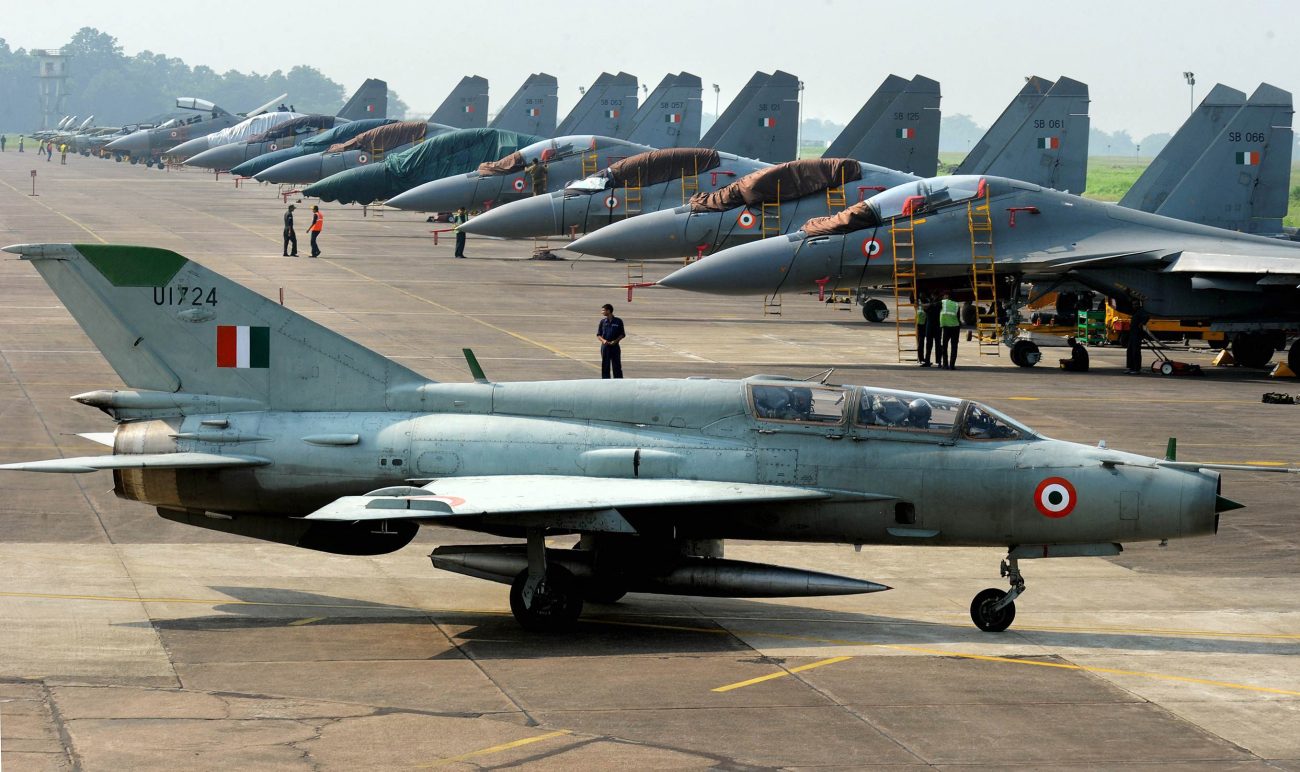
MiG-23 and MiG-27 family
The MiG-23 and MiG-27 family was a legendary line of Soviet-era, variable-sweep “swing-wing” aircraft. While the MiG-23 was built as an air-superiority interceptor, the MiG-27 was heavily redesigned as a dedicated ground-attack aircraft, distinguished by its sloped “duck nose” and heavier armor.
A combined total of over 6,000 aircraft were built. Active flying fleets were primarily maintained by former Soviet allies, Middle Eastern states, and India. The MiG-27 saw limited use outside the Soviet Union, with India acting as the largest export operator. Other MiG-27 operators were Kazakhstan and Ukraine.
The MiG-25 (Foxbat) was a supersonic interceptor and reconnaissance aircraft. Known for its blistering speed of Mach 2.83, it was designed primarily to outrun and intercept high-altitude American bombers and spy planes.
The Foxbat remains one of the fastest military aircraft ever to enter service. Capable of reaching Mach 3.2, though this caused severe engine damage. Built primarily of heavy stainless steel and nickel alloys rather than titanium, enabling field repairs with standard welding equipment.
It was powered by two massive Tumansky R-15B-300 turbojet engines equipped with enormous afterburners. Typically, it carried four massive radar-guided or heat-seeking air-to-air missiles. When the MiG-25 was first unveiled in 1967, its large wings and massive air intakes led Western intelligence to believe it was a highly agile dogfighter.
This perception prompted Washington to accelerate its next-generation fighter programs, ultimately giving rise to the F-15 Eagle.
Its true capabilities were revealed to the West in September 1976, when Soviet pilot Viktor Belenko defected, flying his MiG-25 to Hakodate, Japan. Intelligence officials discovered that the aircraft was specialized exclusively for high-speed intercept and reconnaissance.
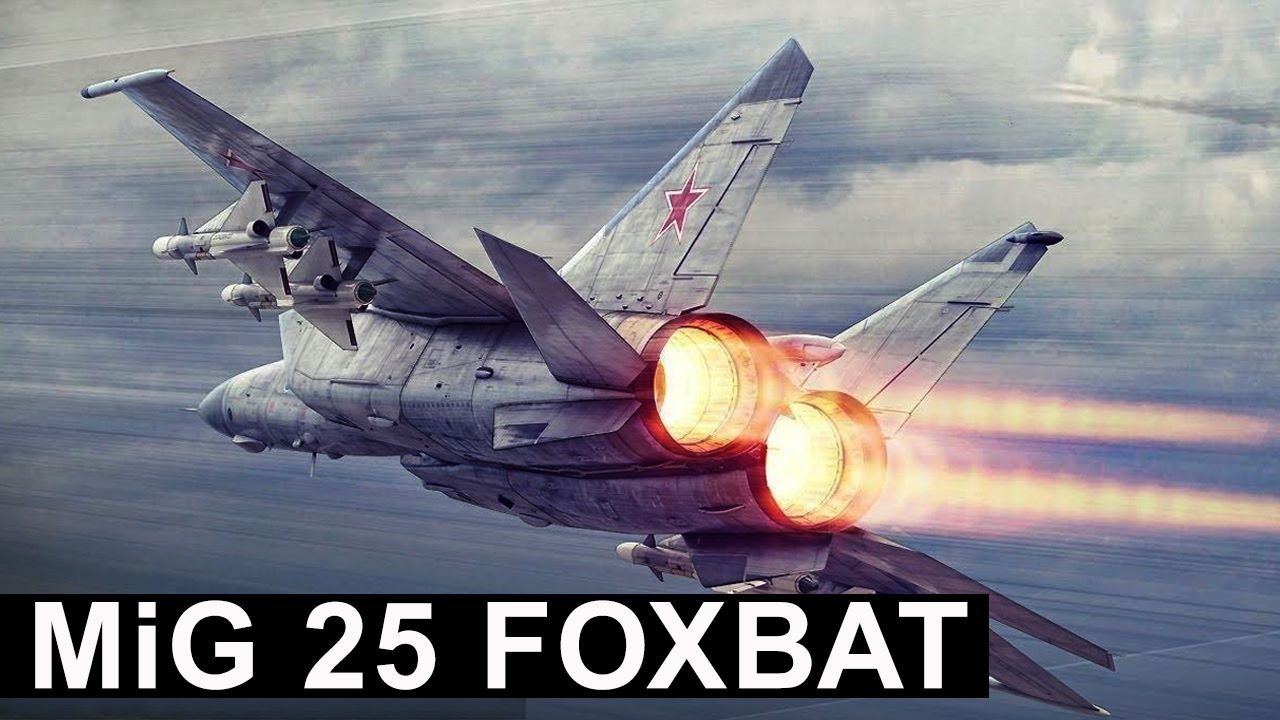
Its heavy steel airframe limited maneuverability, and it was primarily built to destroy targets at high altitudes rather than engage in close-quarters dogfights. It was developed to counter the threat of Mach 3-capable American bombers (like the XB-70) and reconnaissance planes, and was engineered to get high and fast quickly. The main operators were the Soviet Union, Algeria (36 aircraft), Syria, Libya, Iraq, India (MiG-25R/RB reconnaissance variants for strategic aerial photography and intelligence missions), Bulgaria, and Turkmenistan.
The MiG-29 “Fulcrum” is a legendary Soviet-era twin-engine air-superiority fighter. First introduced in 1983, it was designed alongside the larger Sukhoi Su-27 to counter advanced U.S. fighters like the F-15 Eagle and F-16 Fighting Falcon. Renowned for its extreme agility and close-range dogfighting capabilities, it has been widely exported and remains in service globally.
The MiG-29S/SMT and early upgrades introduced beyond-visual-range (BVR) missile compatibility and improved avionics. The MiG-29K is a carrier-capable variant used by the Russian and Indian Navies.
MiG-29UPG, an advanced, heavily upgraded multirole variant customized for the IAF. Over 1,600 MiG-29s were built between 1981 and 2019, and remain in active service with more than 20 air forces globally.
The MiG-31 “Foxhound” is a heavy, all-weather supersonic interceptor developed as a replacement for the MiG-25 “Foxbat”, on which it is based and shares design elements. With a top speed around 3,000 km/h, it continues to be operated by the Russian Aerospace Forces.
The Russian Defense Ministry expects the MiG-31 to remain in service until at least 2030. The MiG-31K variant carries the Kh-47M2 Kinzhal, a conventional- or nuclear-warhead-capable air-launched ballistic missile.
The MiG-31BM multirole version has upgraded avionics, a new multimode radar, hands-on-throttle-and-stick (HOTAS) controls, liquid crystal (LCD) color multifunction displays (MFDs), and the ability to carry modern Russian weapons. The author had an opportunity to fly this variant in Russia in 1999.
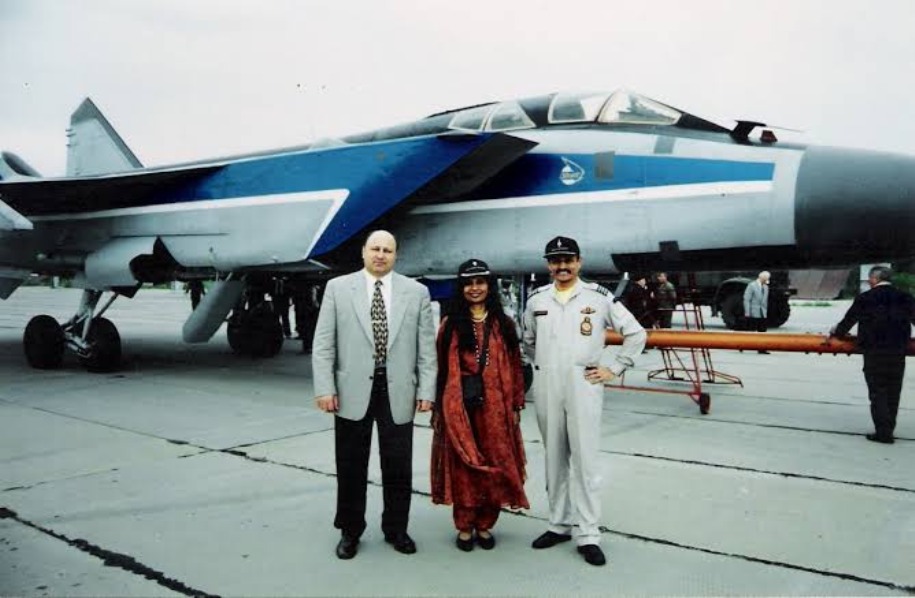
A total of 519 MiG-31s were built. Kazakhstan inherited its MiG-31s from the Soviet Union and operated them until 2023. Attempts to sell the same in India were unsuccessful.
The MiG-35 is a modern multirole 4.5-generation upgrade of the base MiG-29 and is integrated into the state-owned United Aircraft Corporation (UAC), which operates under the umbrella of Rostec.
While production continues, the design bureau has seen its market presence shift, with rivals like Sukhoi taking the lead in modern Russian aerospace. Potential buyers like India and Egypt have not followed up. Only around 10 have reportedly been built.
The Sukhoi Stable
The Sukhoi Design Bureau specializes in designing, building, and testing advanced military and civilian aircraft. Headquartered in Moscow, it was founded by Pavel Sukhoi in 1939 (at the beginning of World War II) and today operates as a core subsidiary of the state-owned UAC. The foundational aircraft was the Su-2 light ground-attack bomber, which retired in 1944, and the company transitioned to the jet age in the 1950s and 60s with iconic supersonic fighters like the Su-7 and Su-17.
Su-7 “Fitter” was a highly swept-wing ground-attack aircraft (1,847 built). The IAF used the Su-7 extensively in the 1971 war with Pakistan. It had six squadrons (140 aircraft) and flew almost 1,500 offensive sorties during the war, and undertook the bulk of the daytime attack missions.
The IAF maintained a very high operational tempo with its Su-7s, peaking at a sortie rate of six per pilot per day. Fourteen Su-7s were lost during the war, mostly due to anti-aircraft fire, but it was found that the aircraft had high survivability, being able to fly home safely despite receiving heavy damage.
The delta-wing, somewhat larger look-alike of the MiG-21, Su-9 “Fishpot” was flown only by the Soviet Union, with 1,150 built, and retired in 1979. The Su-11 was a lesser-known variant of the Su-9, and only 108 were built.
The Su-15 “Flagon” was a twinjet supersonic interceptor. It entered service in 1965 and remained a front-line design into the 1990s. The Su-15 was designed to replace the Su-11 and Su-9 as NATO introduced newer, more capable strategic bombers.
The supersonic Su-15 had the performance needed to chase down high-subsonic aircraft like the B-52 and Vulcan, and the range to do so while those aircraft were still far from their targets. 1,290 were built, and the type was finally retired in 1996.
The Su-17 “Fitter” was a variable-sweep wing fighter-bomber developed from the Su-7. It was the first variable-sweep wing aircraft to enter Soviet service and featured updated avionics. Although the Su-17 was capable of carrying nuclear weapons, it was used in roles ranging from close-air support to ground attack.
The aircraft also had export variants, such as the Sukhoi Su-22 and the less popular Su-20. 2,867 were produced from 1967 to 1990, and were operated by the Soviet Union and other members of the Warsaw Pact, countries in the Arab world, Angola, and Peru.
The Su-24 “Fencer” is a supersonic, all-weather tactical bomber. The aircraft has variable-sweep wings, twin engines, and a side-by-side seating arrangement for its two-person crew. It was the first Soviet aircraft to carry an integrated digital navigation/attack system. The Su-24 first flew in 1967.
It entered service in 1974, and production ceased in 1993. Over 1,400 were built. It remains in service with Russia, Iran, Ukraine, Algeria, and a few others. It has seen combat action in most of the wars since the Soviet–Afghan War (1988) and in more recent wars in Ukraine and Iran.
The Su-25 “Frogfoot” is a subsonic, single-seat, twin-engine jet designed for dedicated close air support, with missions similar to those of the American Fairchild Republic A-10 Thunderbolt II “Warthog”. The aircraft went into series production in 1978. Some aircraft were upgraded to the Su-25SM standard in 2012.
The Su-25 and the Su-34 were the only armored, fixed-wing aircraft in production in 2007. Russia, other CIS members, and export customers operate Su-25s. Production ended in 2010. The Su-25 has seen combat in several conflicts, including the Soviet–Afghan War and the Russo-Ukrainian War on both sides. Over 1,000 were built.
The Su-27 “Flanker” is a twin-engine supersonic, super-maneuverable fighter intended as a direct competitor to large US fourth-generation jet fighters such as the Grumman F-14 Tomcat and McDonnell Douglas F-15 Eagle. 809 were built. With a 3,530-kilometer range, heavy aircraft ordnance, sophisticated avionics, and high maneuverability, it was designed for air-superiority missions, and subsequent variants can perform almost all aerial warfare operations.
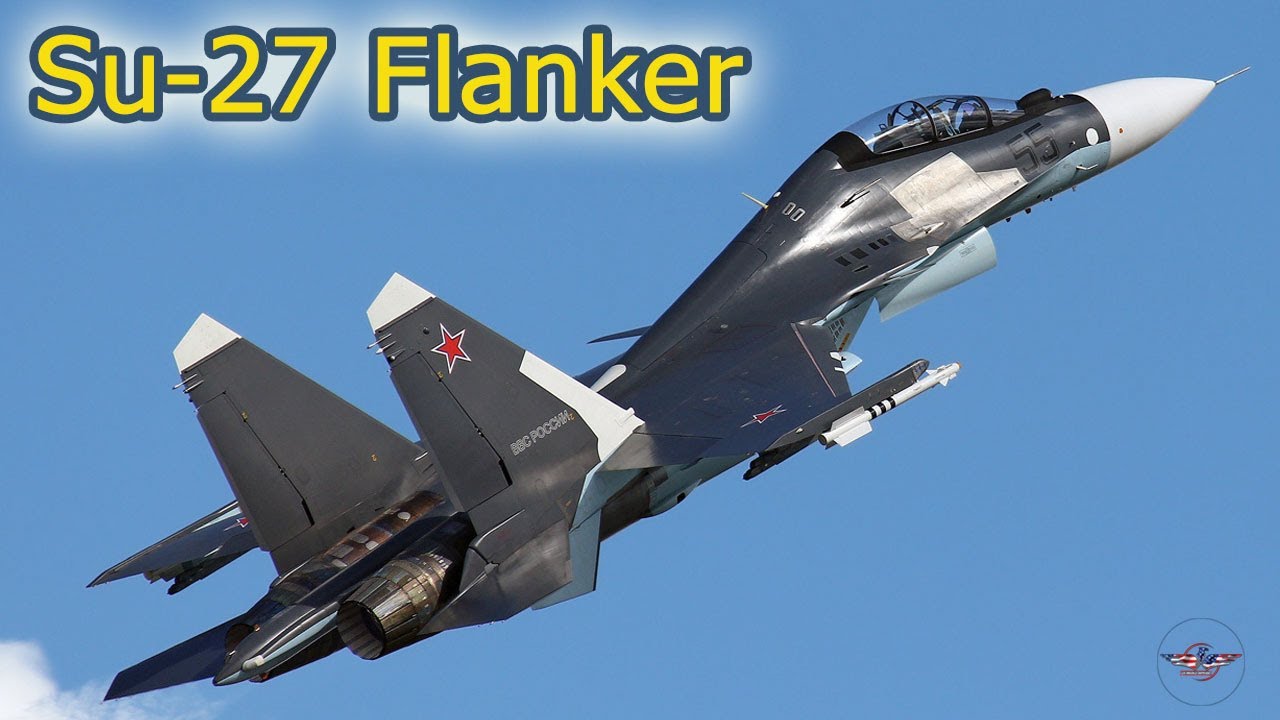
It was designed to complement the Mikoyan MiG-29. It entered service in 1985. The primary role was long-range air defense against American Bombers such as the Rockwell B-1B Lancer, and flying long-range fighter escort for Soviet heavy Tupolev bombers.
The Su-27 was developed into a family of aircraft that includes the Su-30, the Su-33 (naval), Su-34, and Su-35. The Shenyang J-11 (440 built) is a Chinese license-built version of the Su-27.
The Su-33 “Flanker-D” carrier-based multirole fighter is derived from the Su-27 (initially known as the Su-27K). Only 35 aircraft were produced. Attempted sales to China and India were unsuccessful. The Russian Navy ordered the MiG-29K as a replacement in 2009.
The Su-30 “Flanker-C/G/H” is a multirole fighter evolved from the Su-27UB (two-seater). Initially, the Su-27PU heavy interceptor was developed, and later renamed as Su-30 in 1996, around the time India signed the contract.
The Su-30MKK and the Su-30MK2 were designed for and sold to China, and later Indonesia, Uganda, Venezuela, and Vietnam. The Chinese chose an older but lighter radar so the canards could be omitted in return for increased payload.
India chose to design and further develop the multirole Su-30MKI. Along with its ground-attack capabilities, the series added features for the air-superiority role, such as canards, thrust-vectoring, and a long-range phased-array radar. Su-30MKM, MKA, and SM for Malaysia, Algeria, and Russia, respectively.
Nearly 1,050 Su-30 variants were built.
The Su-57 “Felon” (T50) is a twin-engine stealth multirole fighter and a product of the PAK FA program, which was initiated in 1999. It is the first stealth aircraft in Russian military service. The Su-57 incorporates stealth, super-maneuverability, super-cruise, integrated avionics, and a large payload capacity. It will be nuclear-capable using a forthcoming missile similar to the Kinzhal. The aircraft is expected to succeed the MiG-29 and Su-27, and has an export market.
The first prototype aircraft flew in 2010, but the program experienced protracted development due to structural and technical issues that emerged during trials, including the destruction of the first production aircraft in a crash before delivery. The aircraft was first operationally deployed in Syria.
It formally entered the Russian Aerospace Forces (VKS) in December 2020. It has reportedly been sporadically used in the Ukraine War since 2022. Nearly 45 aircraft have been built to date. Russia has offered to make the aircraft “Made-in-India” with full technology transfer.
The Su-75 “Checkmate”, also designated as the Light Tactical Aircraft (LTA), is a single-engine stealth fighter aircraft under development. The first flight of this smaller, low-cost aircraft is scheduled for late 2026.
The Sukhoi Design Bureau is recognized globally as a leader in aerospace engineering. The bureau has manufactured over 10,000 aircraft, with thousands exported to countries such as India, China, and Vietnam.
In September 2007, Sukhoi’s civil division launched its first modern commercial regional airliner, the Superjet 100 (SSJ 100), a 78- to 98-seater. Superjet 130 would have a seating capacity of 130-145 seats.
Sukhoi vs Mikoyan
MiG did build some great aircraft – MiG-15, MiG-17, MiG-19, MiG-21, MiG-25, MiG-29, and MiG-31. The MiG-23, too, was a good aircraft with superb supersonic performance (better than that of the F-15A/16A). Its only disadvantage was its complexity, but its performance reflects Mikoyan’s exceptional engineering capability.
For a long time, the MiG Designs were in the lead. The conventional controls MiG-29 outperformed the fly-by-wire F-16 and Mirage-2000 on many counts.

Although different design bureaux competed with one another, MiG usually developed front-line fighter aircraft, while Sukhoi usually did the same for strike aircraft.
Being forced to drastically cut its defense budget, Russia decided to retire all single-engined planes and, more generally, to abandon the concept of the frontal fighter, i.e., small, simple, with limited autonomy and available in large numbers.
The attempt to transition, around 1998, from the MiG-29 (and its variants) to the Mikoyan-1.44 failed. Project 1.44 was an experimental Russian fifth-generation air-superiority fighter. Conceived as the Soviet answer to the American F-22 Raptor, the program suffered from severe post-Cold War funding shortages and was ultimately canceled shortly after its 18-minute maiden test flight on February 29, 2000.
The technological data, however, contributed to Russia’s ongoing fifth-generation programs. It featured a distinct delta-wing configuration with canards and twin outward-leaning vertical stabilizers, and was powered by two Lyulka AL-41F afterburning turbofan engines.
From the Su-27 onwards, Sukhoi had a clear advantage. The MiG-31, maybe the MiG-31M, was the last truly great plane from Mikoyan. The end of the Cold War had its own dynamics. Russian economy was in the doldrums.
Russia’s integral demand had dropped. Su-27 variants were greatly bolstered by the demands of Chinese and Indian air power. The MiG-35 was essentially a repackaged MiG-29. Mikoyan ran out of funding. No major design came out after the year 2000.
Sukhoi got lucky with international markets. Americans weren’t very willing to sell F-15 Eagles, and the Flanker was the only other option. Those international contracts allowed Sukhoi to remain afloat and retain know-how and the core of qualified personnel.
The merger into UAC gave Sukhoi dominance and clear orders. On the other hand, when the Russian military budget shrank after 1990, rather than laying off workers, MiG decided to keep building MiG-29 airframes to keep everyone employed, hoping someone would come along and buy them. They still have some MiG-29 airframes.
The Mikoyan and Sukhoi platforms represent two distinct Soviet-era aerospace philosophies. Mikoyan (MiG) designs prioritize lightweight, low-cost “frontline” fighters built for rapid interception, high speed, and ease of maintenance. Conversely, Sukhoi platforms are larger, robust air-superiority aircraft designed for heavy weapon payloads, extreme maneuverability, and extended combat ranges.
Highly decorated designer Artem Ivanovich Mikoyan (1905 –1970) and, later, Rostislav Belyakov (1919–2014) were men of very high stature and could not be replaced by equivalents. Pavel Sukhoi (1895–1975) was the legendary aerospace engineer and founder of the Sukhoi Design Bureau. Following his tenure, notable successors who directed the bureau include Mikhail Simonov (architect of the Su-27) and Mikhail Strelets (who led the Su-57 program).
Their stature was lower than that of their MiG counterparts. If one were to say that it was a 5,000-kilometer race, the MiG led for the first 3,500 kilometers until the Sukhoi overtook and went ahead.
- Air Marshal Anil Chopra (Retired) is an Indian Air Force veteran, fighter test pilot, and ex-director-general of the Center for Air Power Studies. He has been decorated with gallantry and distinguished service medals during his 40-year tenure in the IAF.
- He can be reached on X: @Chopsyturvey
- Follow EurAsian Times on Google News