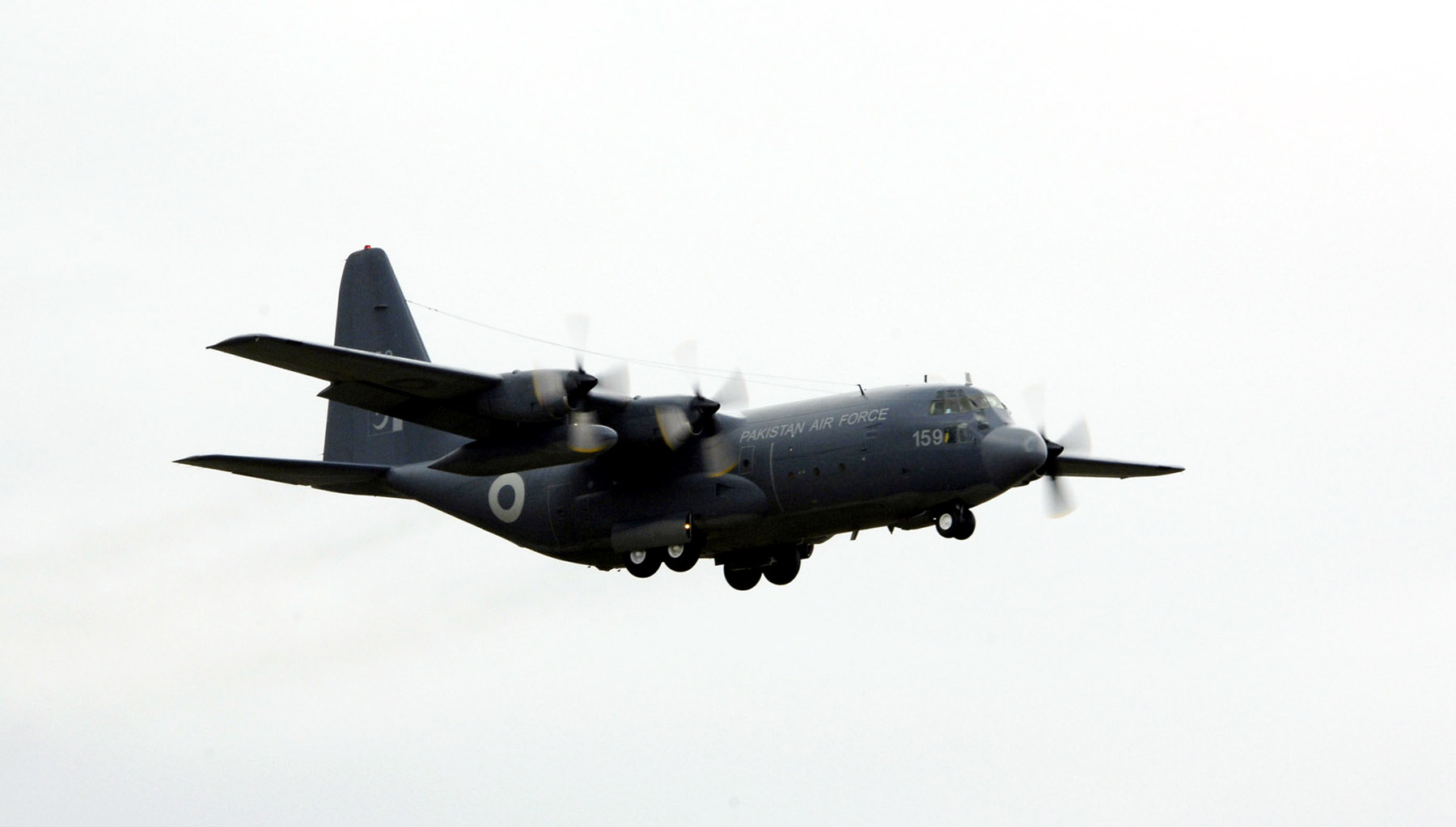
“Pakistan One – the C-130 – has crashed. No one is visible.”
With those stark words, General Mirza Aslam Beg, then Pakistan’s Vice Chief of Army Staff, confirmed the death of the country’s longest-serving military ruler, General Muhammad Zia-ul-Haq, on 17 August 1988.
Thirty-eight years later, the crash of that Lockheed C-130 Hercules – one of the world’s most reliable military transport aircraft – remains one of South Asia’s enduring mysteries.
Was it a genuine accident, mechanical failure, internal sabotage, or an elaborate international conspiracy? Why were the findings of the inquiry commission never released? Was there a cover-up? No definitive answer has ever emerged.
Over the decades, suspicion has fallen on an extraordinary range of intelligence agencies: the Soviet KGB, the American CIA, India’s R&AW, Israel’s Mossad, and even Pakistan’s own ISI.
Rarely in modern history has the death of a single leader held such potential benefit for so many mutually antagonistic players.
So, what made General Zia-ul-Haq so polarising that he could find himself on the target list of forces that were otherwise bitter rivals, such as the CIA and the KGB, and the R&AW and the ISI?
The Last Flight of the Military Dictator
On August 17, 1988, Pakistan’s longest-serving military ruler, General Zia-ul-Haq, who ruled Pakistan with an iron fist for over 11 years, died in a plane crash near Bhawalpur.
Besides the pilots, Wing Commander Mashhood Hassan and Flight Lieutenant Sajid, 29 people were on the Lockheed C-130 Hercules.
They included, among others, the Chairman, Joint Chiefs of Staff Committee, Gen Akhtar Abdur Rahman; the Chief of General Staff, Mohammed Afzaal; the American ambassador to Pakistan, Arnold Raphel; and the senior US military attaché, Brig Gen Herbert M. Wassom.
Everyone on board the flight died in the accident.
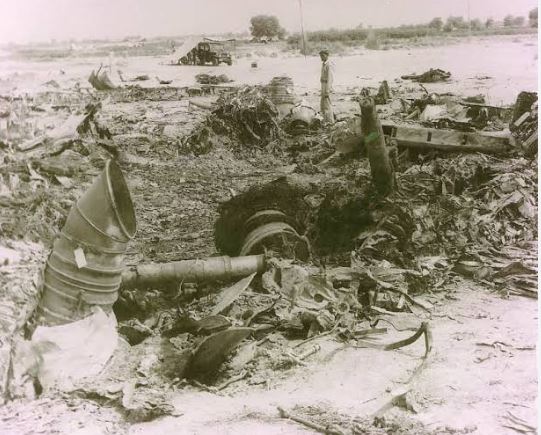
In less than five minutes, almost all the principal actors involved in training and arming the Afghan mujahideen to fight the Soviet occupation in Afghanistan over the last decade were dead.
American journalist Jay Epstein’s account of Gen Zia’s death in a 1989 issue of Vanity Fair read: “Villagers…saw Pak-1 lurching up and down in the sky, as if it were on an invisible roller coaster. After its third loop, it plunged directly towards the desert, burying itself in the soil. Then, it exploded and, as the fuel burnt, became a ball of fire.”
The death of senior American officials meant that the investigation was carried out in both Pakistan and the US, apart from an internal investigation carried out by Lockheed Martin.
There were many theories: A missile hit, mid-air explosion, deadly gas leak, fire on board, international conspiracy, or internal sabotage.
A crate of fresh mangoes, loaded onto the aircraft at the last minute, also triggered conspiracy theories, including journalist Mohammed Hanif’s debut novel, ‘A Case of Exploding Mangoes.’ It suggested that the mangoes were sprayed with a poisonous substance that made the pilots unconscious.
Nearly a month after the accident, a 365-page technical report on the crash was presented to Pakistan President Ghulam Ishaq Khan.
The report concluded that the plane had not disintegrated in midair; it had not been struck by a missile; nor had there been a fire on board. The condition of the propeller blades indicated that the engines were running at full speed, and the electrical systems and fuel pumps were operating normally.
However, a chemical analysis of the wreckage, carried out at the Pakistan Institute of Nuclear Science and Technology in Islamabad, found foreign elements in unusual quantities. For instance, there were traces of pentaerythritol tetranitrate (PETN), an explosive that has since been used in several terrorist attacks, including at least two whose objective was to down an airplane. Residues of antimony and phosphorus, not normally found in aircraft structures, fuel, etc were also present, the Dawn reported.
The report concluded that, “in the absence of a technical reason, the only other possible cause of the accident is the occurrence of a criminal act or sabotage”. It recommended ordering an investigation to identify the perpetrators.
However, it is precisely the identity of the perpetrators that has fueled some of the wildest conspiracy theories over the years, as intelligence agencies from the CIA, the KGB, Mossad, India’s R&AW, and even Pakistan’s ISI have all been blamed for Zia’s murder.
CIA to KGB, & Mossad to R&AW and ISI – How Zia’s Death Could Have Benefited Such a Wide Range of Actors
According to a report on the technical causes of the crash prepared by the Pakistan Government’s Board of Inquiry, explosives found in the wreckage indicated “involvement of a specialist organization well versed with carrying out such tasks and possessing the means and abilities for its execution.”
Citing this report, journalist and author Robert D Kaplan wrote in The New York Times that only three organizations active in Pakistan at the time against the government fit that description: the KGB, the KGB-created Afghan intelligence group WAD, and the research and analysis wing of India.
However, Kaplan said R&AW’s involvement was less likely.
“Zia was certainly not India’s friend, but his actions as an adversary were relatively predictable,” he wrote.
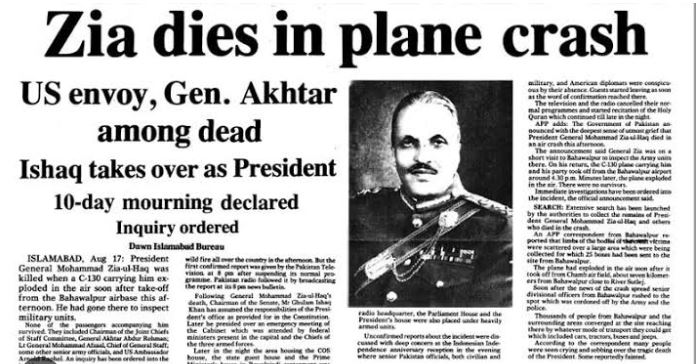
He said that the KGB certainly had the technological know-how, the network and the motive to carry out the bombing.
By 1988, the Soviets had already spent nearly a decade in Afghanistan, and the situation was progressively deteriorating for the Soviets.
One of the main reasons was Pakistan. The Zia-ul-Haq administration was openly supporting the Mujahiddins, providing weapons, financial and intelligence support, training, and safe havens to Mujahiddin fighters.
Therefore, by eliminating Zia-ul-Haq, the Soviets would have got at least some temporary relief in their Afghanistan War.
However, Kaplan notes that the presence of the US Ambassador on the plane makes Soviet involvement less likely.
“The Soviets would not have jeopardized Glasnost by assassinating an American of this rank,” he said.
Still, it must be remembered that the US Ambassador was not scheduled to be on the flight and was invited by Zia himself at the last moment.
So, the Soviets would not have known that the US Ambassador would also be on the flight.
Another suspect was the CIA, which had become concerned with Zia’s attempts to make the first Islamic nuclear bomb and his clandestine efforts to smuggle the components for it out of the U.S.
Early in the Afghan War, Zia struck a hard bargain with the Reagan administration that they would look the other way in return for Pakistan’s support to the Mujahiddins in Afghanistan, while Islamabad slowly developed the nuclear bomb.
During the Cold War, the US’s first priority was to defeat the Soviets. So, they ignored Pakistani attempts to develop the nuclear bomb as long as Islamabad helped defeat the Soviets in Afghanistan.
However, by 1988, it was well known that the Soviet strategy in Afghanistan was falling apart and that they were seeking an exit.
Consequently, the criticality of Pakistani support for the US was no longer the same, and Washington was less inclined to accept a Pakistani nuclear bomb.
Notably, in July 1987, U.S. authorities arrested Arshad Z. Pervez, a Pakistani-born Canadian businessman, in Philadelphia after a sting operation. He was charged with attempting to illegally buy and export about 25 tons of high-strength maraging 350 steel alloy, along with quantities of beryllium, both materials restricted for export due to their nuclear uses.
Pakistan officially denied government involvement and any nuclear-weapons intent, calling the materials for other uses, but U.S. investigators and declassified records indicated the network had official connections, protection, and funding.
Pervez’s arrest in the US, analysts say, was a clear message to Zia that the CIA will no longer tolerate Pakistan’s efforts to build a nuclear bomb.
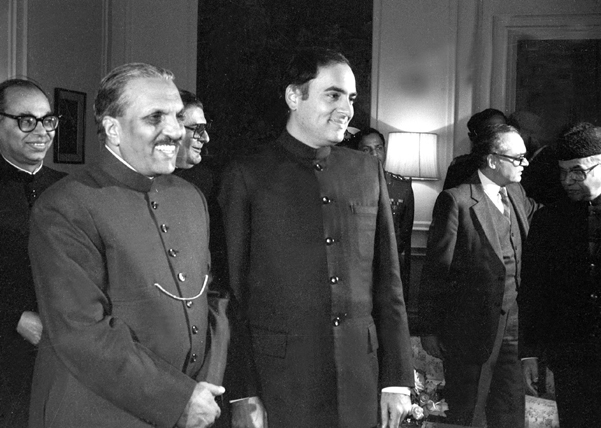
At the same time, the US was also concerned that the Zia administration was diverting the financial support and weapons provided by the US for the Mujahiddin fighters to Kashmiri militants and opening a new front of Islamic Jihad against India.
Similarly, India had its own grievances against Zia. Under him, Pakistan supported the Khalistani insurgency in Indian Punjab and was now providing weapons, money, and training to militants to support the Kashmir insurgency.
Islamabad’s efforts to build a nuclear bomb were another motive for the R&AW.
The same nuclear bomb also provided a strong motive for Israel’s Mossad.
Pakistan was frequently marketing its efforts to build a nuclear bomb as an Islamic bomb. There were apprehensions that Islamabad could provide the technological know-how to build the bomb to other Islamic countries, such as Iraq and Libya, that could create trouble for Israel.
Notably, Israel had proposed to India a secret plan to bomb Pakistan’s Kahuta uranium enrichment facility in 1984. This was inspired by Israel’s successful 1981 Osirak strike on Iraq’s nuclear reactor.
Reportedly, India initially agreed but later refused. Many wonder: did this make Israel look for a Plan B to stop Pakistan’s nuclear bomb?
Notably, John Gunther Dean, then US ambassador to India, said in 2005 that he suspected Israel’s secret service Mossad of downing Gen Zia’s aircraft in an effort to stop Pakistan developing the nuclear bomb.
He also said that when he reported these suspicions to Washington, he was accused of being mentally unbalanced and subsequently forced into retirement.
It’s been nearly four decades since Zia was killed in the C-130 plane crash.
Perhaps we will never know what happened and who was behind it. But the mere fact that the names of diverse intelligence agencies from the CIA to the KGB, and from Mossad and R&AW to Pakistan’s own ISI come up makes it one of South Asia’s most enduring murder mysteries.
- Sumit Ahlawat has over a decade of experience in news media. He has worked with Press Trust of India, Times Now, Zee News, Economic Times, and Microsoft News. He holds a Master’s Degree in International Media and Modern History from the University of Sheffield, UK.
- He can be reached at ahlawat.sumit85 (at) gmail.com