Rheinmetall CEO Armin Papperger described the company’s failure to secure a major contract from the German government to build next-generation warships as a massive setback.
In an interview published on Saturday, Papperger acknowledged the disappointment but stressed that the group remained committed to expanding its naval capabilities despite missing out on the deal.
The German government unexpectedly announced last month that it was abandoning the multi-billion-euro project, sending Rheinmetall’s shares tumbling around 20 percent as the company had been expected to take on the work.
“The cancellation of the F126 project was a setback for us, and it caught us completely off guard,” Rheinmetall boss Armin Papperger told the news outlet Der Spiegel.
The project to build the frigates was originally awarded to a Dutch shipyard.
But after years of delays and problems, Berlin was expected to hand the work to Rheinmetall, already a major supplier of armaments to the German military.
Instead of moving ahead with the F126 project, however, the German defense ministry decided to purchase eight smaller warships from the German group TKMS.
Papperger also defended Rheinmetall’s recent acquisition of shipyard NVL, which was supposed to take on the F126 project. “Rheinmetall moving into the maritime sector was the right decision, because demand is high, not just from the German military,” he said.
Germany, like other European countries, is spending huge sums to rebuild its long-neglected armed forces to contend with a hostile Russia and amid worries about US security commitments to the continent.
Earlier, Defense Minister Boris Pistorius said: “Continuing the project would have involved a significant loss of time, disproportionately high costs, and also considerable risks,” Pistorius said.
Germany had already spent $2.6 billion on the troubled project to construct the F126 frigates, which was awarded in 2020 to Dutch shipyard Damen Naval, he conceded. But he added: “Better a hard stop than a permanent limbo. We cannot afford that, neither financially nor in terms of time.”
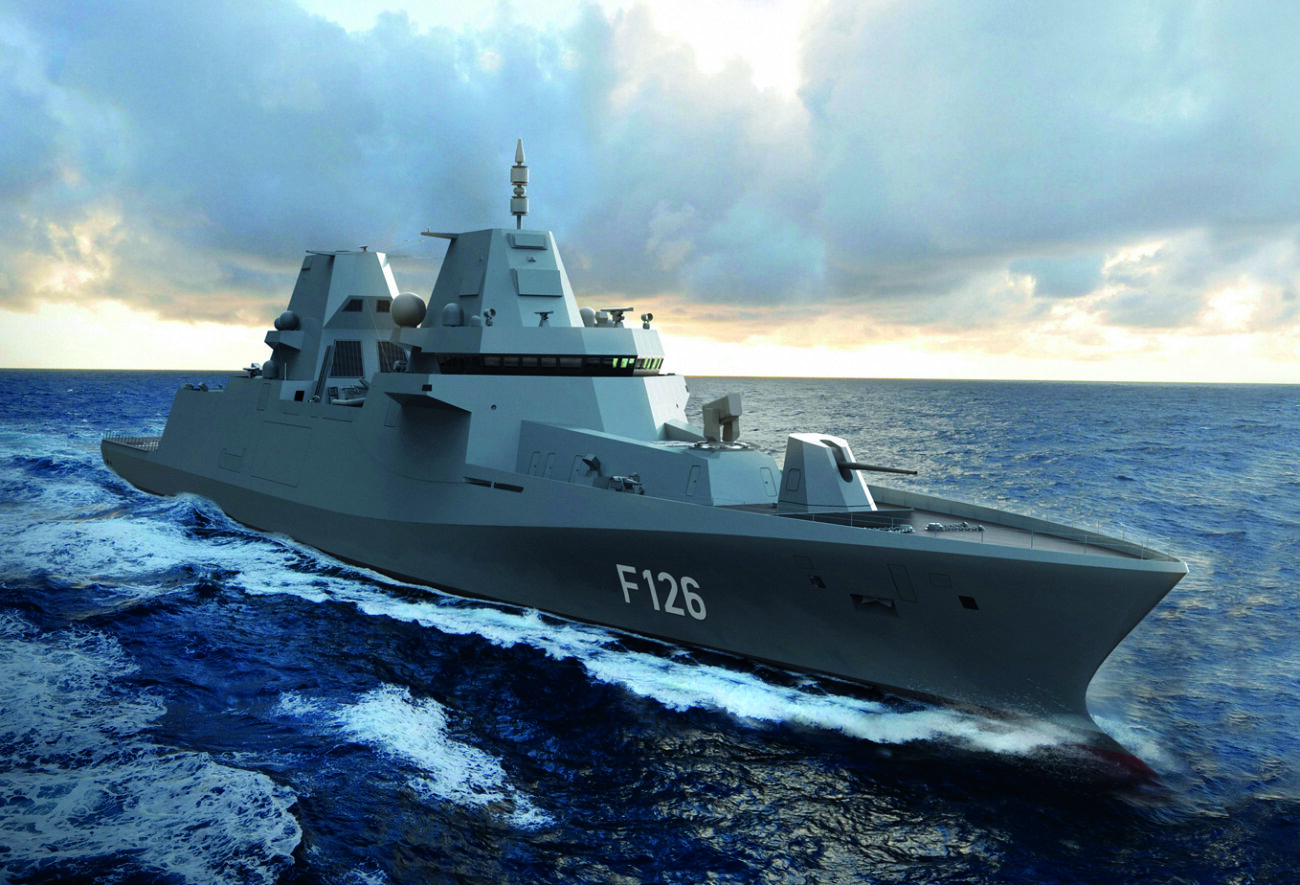
F-126 Class of Warships
The F126 is a class of multi-role frigates originally intended to modernize the German Navy’s surface fleet.
The program, formerly known as MKS 180, was designed to deliver versatile warships capable of conducting anti-submarine, anti-surface, and anti-air warfare missions.
Under the initial plan, six F126-class frigates were to be built, with the first four scheduled for delivery between 2028 and 2031. The vessels were conceived with a high degree of automation, allowing a core crew of 114 personnel to operate the ships through rotating shifts.
The design includes modular mission systems that can be reconfigured to meet functional requirements. In their baseline configuration, the frigates are equipped with a 127mm main gun, vertical launch systems for surface-to-air missiles, anti-ship missiles, close-in weapon systems, and a helicopter hangar.
In 2022, the German Navy expressed interest in reducing the fleet from six to four ships. However, the program later encountered repeated delays. Last month, the German Defense Ministry announced it would no longer proceed with the construction of the F126 frigates under the existing framework.
The F126 program was initially awarded to a Dutch-led consortium. It had faced criticism over rising costs and extended timelines before the government opted to change course.
With Agence France-Presse Inputs