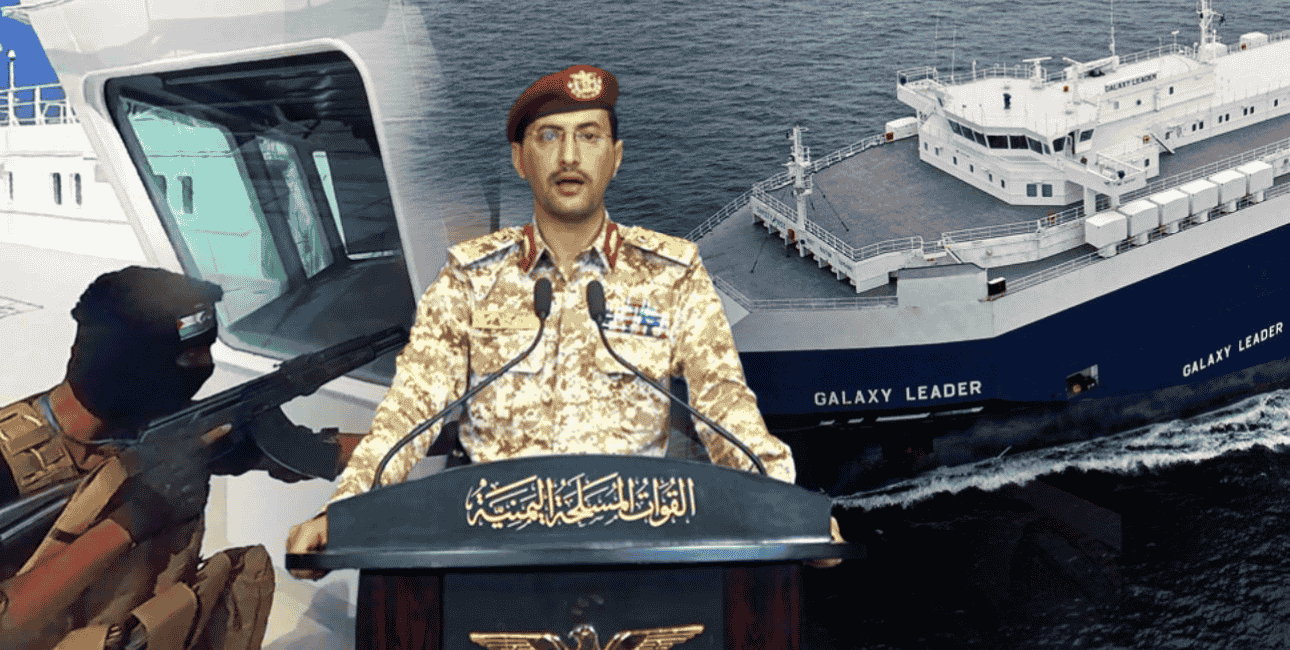
Yemen’s Houthi rebels have announced a maritime embargo against Saudi Arabia effective immediately, opening a new front in the Iran War.
In a televised statement, Houthi military spokesman Yahya Saree said the group was imposing a blockade in retaliation for Saudi restrictions on Yemen’s transport infrastructure.
The rebels declared “a maritime embargo against the criminal Saudi enemy, based on the equation of ‘an eye for an eye,’ effective immediately upon the issuance of this statement,” Saree said.
He said the decision was a response to Saudi Arabia’s blockade of Houthi “ports and airports” and the targeting of Sanaa airport last week, adding that they would respond to “the blockade with a blockade”.
Saudi Arabia has strongly condemned an announcement by Yemen’s Houthis of a maritime blockade of the kingdom.
In a statement, the Foreign Ministry said it “expresses the Kingdom of Saudi Arabia’s strongest condemnation of the statements made by the so-called military spokesman of the terrorist Houthi militia… imposing a maritime blockade on the Kingdom,” adding that Riyadh “continues to support the brotherly Yemeni people and their legitimate government”.
While the Houthi naval blockade of Saudi Arabia will further exacerbate the already stressed global energy supply lines and global shipping, it also underscores that the over four-month-old Iran War is now gradually morphing into a wider regional conflict that could engulf the entire region.
The Saudis have diverted millions of barrels of oil per day through an East-West oil pipeline to an export terminal on the Red Sea. Those exports have acted as a crucial relief valve for global oil markets during the U.S.-Iran war.
The Houthi naval blockade could also choke this alternative oil supply route.
However, the real danger is not oil supply routes but that the blockade will effectively open a new front in the war.
Notably, the Houthis have previously demonstrated their ability to disrupt commercial maritime traffic in the Red Sea.
During the Gaza war, Houthis repeatedly attacked vessels in the Red Sea and the Gulf of Aden, forcing many shipping companies to reroute around the Cape of Good Hope instead of using the Suez Canal.
According to data from ACLED (Armed Conflict Location & Event Data Project), the Houthis targeted over 150 commercial ships in the Red Sea in 2024.
If Houthis start targeting Saudi commercial ships in the Red Sea, Riyadh will be forced to respond. Notably, Saudi Arabia has already fought a seven-year-long war against the Houthis from 2015 to 2022, and this naval blockade could be the beginning of another long conflict.
Why The Houthi-Saudi War Could Morph Into a Wider Regional Conflict
In 2015, when Houthi militants were about to overrun Sanaa, Yemen’s capital. Saudi Arabia decided it was time to make a military intervention in its Southern neighbor.
Riyadh launched Operation Decisive Storm after forging a coalition of nine countries, including the UAE, Bahrain, Kuwait, Egypt, Jordan, Sudan, Morocco, and Senegal.
However, the operation failed to dislodge Houthis, and after seven years in Yemen, Saudi Arabia signed a peace agreement with Houthis in 2022.
Therefore, the Houthi-Saudi war could once again escalate into a wider regional conflict.
In fact, during the last decade, over a dozen countries, including the US, Israel, Iran, and the nine-country Saudi-led coalition, have all participated in the Yemen Civil War.
Dangers Of Wider Shia-Sunni Conflict
Furthermore, the conflict could easily morph into a wider Shia-Sunni sectarian conflict.
The Houthis are a Shia militia, supported by Iran, the world’s preeminent Shia power, whereas Saudi Arabia is widely considered the leader of the global Sunni population.
Notably, the Saudi-led coalition of nine countries that intervened in the Yemen Civil War in 2015 was, in effect, a Sunni bloc. All those countries except Bahrain are Sunni-majority countries, and even Bahrain, while Shia-majority, is ruled by a Sunni ruling family.
Operation Decisive Storm was widely seen as a Sunni coalition intervening militarily in a country’s civil war to dislodge Shia militia from power.
A region-wide sectarian Shia-Sunni conflict could engulf the entire region in chaos and war.
However, there is another dimension to this naval blockade that experts haven’t paid sufficient attention to. The possible involvement of Pakistan in the Saudi-Houthi conflict.
Will Pakistan Enter the Saudi-Houthi Conflict?
In 2015, when Saudi Arabia launched Operation Decisive Storm, one country that was missing in action was Pakistan.
In fact, Riyadh actively tried to get Pakistan to join the coalition against the Houthis.
Riyadh’s efforts included direct requests from the Saudi leadership, including King Salman, to Prime Minister Nawaz Sharif. Saudi officials also highlighted that Pakistan had previously sent troops to help Saudi Arabia, such as during the 1990–91 Gulf War.
Saudi Arabia also reminded Pakistan how Riyadh had helped Islamabad financially during economic crises.
At the time, many analysts believed Pakistan would join because of its deep economic dependence and military ties to Saudi Arabia.
Pakistan witnessed a strong internal debate in both political and military circles; however, in the end it decided not to join the Saudi-led coalition.
There were various reasons. The Pakistani military in 2015 was already stretched due to the Afghanistan War and rising terror incidents in the country. Public opinion in Pakistan did not favor sending troops to a foreign country.
Pakistan also feared offending Iran, with whom it shares a long border, and Islamabad feared that joining the war against Houthis could inflame the Shia-Sunni conflict in the country.
While Pakistan is overwhelmingly Sunni-majority, it still has the world’s third-largest Shia population after Iran and Iraq. In fact, many believe Pakistan’s Shia population to be even bigger than Iraq’s.
Pakistan’s Shia population (10 to 20%) is generally estimated between 20–25 million.
On 10 April 2015, Pakistan’s National Assembly unanimously passed a resolution stating that Pakistan would maintain neutrality in the Yemen conflict and would not send troops to join the Saudi-led military operation.
To express their frustration, Saudis delayed and reduced financial packages and oil support to Pakistan, postponed joint military exercises, and reduced high-level engagement for many months.
However, in 2026, the situation is different, and Islamabad’s diplomatic maneuvering space has shrunk substantially.
In September 2025, Pakistan and Saudi Arabia signed the Strategic Mutual Defense Agreement (SDMA), which features a NATO Article 5-style mutual defense pact.
The most important clause of the agreement states, “Aggression against one country shall be considered aggression against both.”
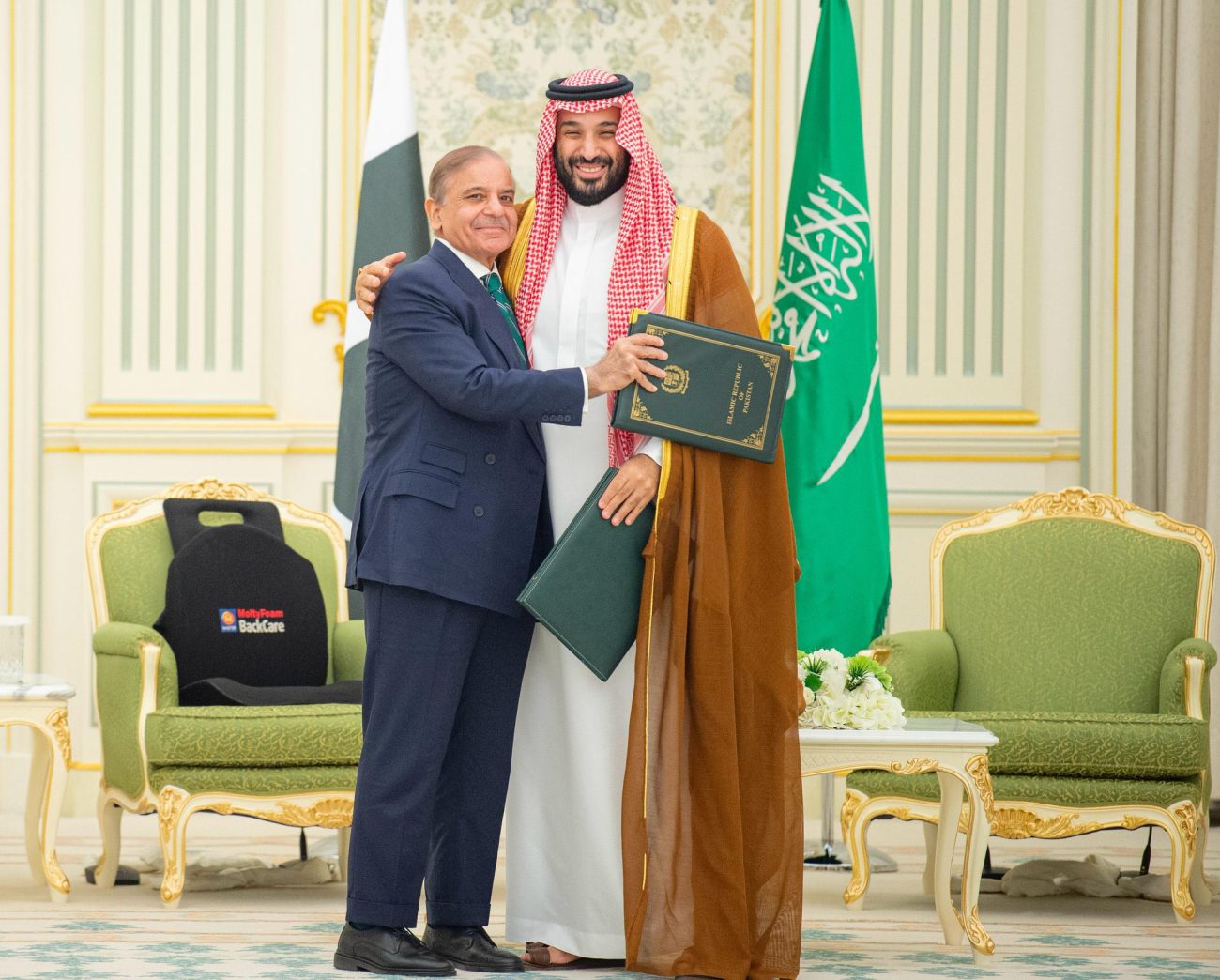
So, theoretically, if Saudi Arabia is attacked, Pakistan is obligated to treat it as an attack on itself and send military help.
In fact, during the ongoing Iran War, Pakistan deployed 8,000 troops, a squadron of fighter jets, and an air defense system to Saudi Arabia under the mutual defense pact when Tehran launched drones and missiles against the Saudis.
In all likelihood, these Pakistani troops, fighter jets, and air defense assets are still inside Saudi Arabia and can be called into action if Saudi Arabia comes under Houthi attack.
Intervening in the Saudi-Houthi conflict will accord other benefits to Pakistan.
It would further strengthen Pakistan’s relationship with the United States, an objective that Prime Minister Shehbaz Sharif and Army Chief General Asim Munir have actively pursued in recent years.
Moreover, deeper alignment with Saudi Arabia on the Yemen issue could open a pathway toward improving Pakistan’s long-strained ties with Israel.
In fact, Pakistan’s inclusion in President Trump’s Gaza Peace Council already signals a potential shift in its regional positioning.
President Trump has already suggested that signing the Abraham Accords and normalizing relations with Israel should be part of any broader Middle East peace deal, specifically tying it to ending the war with Iran.
“I am mandatorily requesting that all Countries immediately sign the Abraham Accords, and that, if Iran signs its Agreement with me, as President of the United States of America, it would be an Honor to have them also be part of this unparalleled World Coalition,” Trump wrote on Truth Social on May 25.
There are suggestions that both Saudi Arabia and Pakistan have in principle agreed to sign the Abraham Accords.
Additionally, while in 2015 Saudi Arabia intervened inside Yemen, in 2026, the situation is different as the Houthis have announced a naval blockade of Saudi Arabia.
Pakistan, therefore, could frame it as sending troops for the defense of Saudi Arabia, not for intervening in Yemen’s Civil War.
Therefore, nearly a decade after Pakistan refused to join the Saudi-led coalition against the Houthis, Islamabad might finally join the war against the Houthis.
- Sumit Ahlawat has over a decade of experience in news media. He has worked with Press Trust of India, Times Now, Zee News, Economic Times, and Microsoft News. He holds a Master’s Degree in International Media and Modern History from the University of Sheffield, UK.
- He can be reached at ahlawat.sumit85 (at) gmail.com