The United States on Wednesday signed a landmark civilian nuclear cooperation agreement with Saudi Arabia that will establish a civil nuclear program in the kingdom — making it only the second Arab country after the UAE to do so — while Washington insists the deal includes robust nonproliferation safeguards.
The UAE was the first Arab nation to sign a civil nuclear cooperation deal with the United States in 2009. Under that deal, known as a 123 agreement, the UAE committed not to enrich uranium or reprocess spent fuel — a restriction often called the “gold standard” for nonproliferation. The country later built the Barakah nuclear power plant, which remains the Arab world’s only operating commercial nuclear facility.
Two pacts — one on “peaceful nuclear cooperation” and another on “bilateral safeguards” — were signed by US Energy Secretary Chris Wright and his Saudi counterpart Prince Abdulaziz bin Salman, the US Energy Department said.
“Rest assured, these agreements uphold the highest standards of nuclear safety and nonproliferation, while relying on the world’s best nuclear technology and scientists, designed right here in the United States. Thanks to President Trump, the American nuclear renaissance is underway and will deliver long-term benefits to the American and Saudi people.”
“Together, these two agreements lay the legal foundation for a decades-long, multi-billion-dollar partnership that advances several priority economic and strategic objectives, including nuclear nonproliferation,” the department said.
The pact could eventually allow uranium enrichment in Saudi Arabia. According to people familiar with the matter, a two-year joint U.S.-Saudi study will examine whether domestic enrichment is commercially viable. If the study supports the step, American companies would build the enrichment facility under a restrictive “black box” arrangement designed to prevent the transfer of sensitive technology to the Saudis.
Saudi Arabia has long insisted on the right to a full civilian fuel cycle, citing energy diversification and the ability to free up oil for export. Crown Prince Mohammed bin Salman previously stated in 2018 that Riyadh would seek nuclear weapons if Iran obtained them. The timing coincides with ongoing US-Iran conflict.
The deal will be submitted to Congress for review, but the Republican-controlled legislature is unlikely to block its implementation. US lawmakers and Israeli officials have previously resisted such a deal over fears Saudi Arabia could eventually turn it into nuclear weapons.
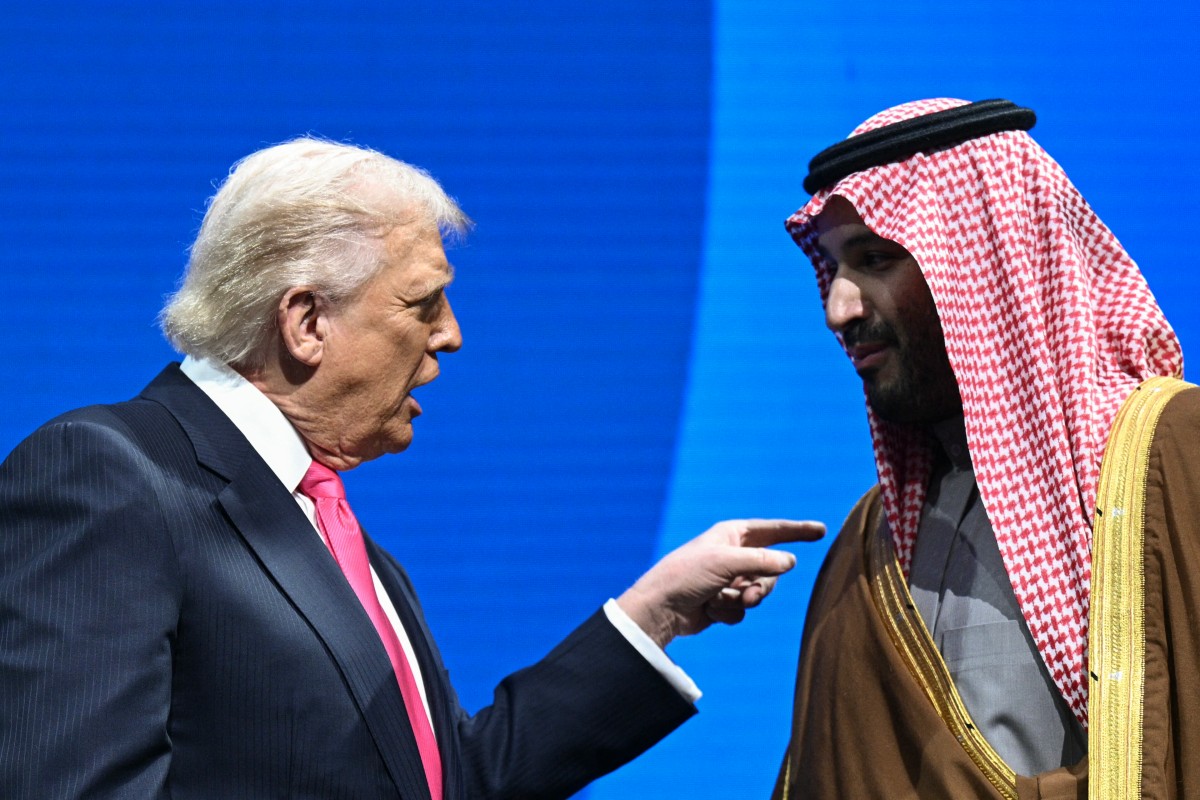
US Senator Bernie Sanders criticized the deal and wrote on X: “Trump claims his war on Iran is about stopping an authoritarian country from enriching nuclear fuel. Now he’s letting his best friends in Saudi Arabia — one of the most brutal dictatorships in the world — do exactly that. This is absurd. No nuclear for the Saudi dictatorship.”
Robert Einhorn, former State Department nonproliferation official, said: “The agreement could help revitalize the U.S. nuclear industry, strengthen U.S.-Saudi ties, and deny Russia and China a strategically important role in the Saudi nuclear program. But unless it contains adequate constraints, including on enrichment, it could increase nuclear proliferation risks in the Middle East and beyond.”
Experts said such a deal had been in the works for a considerable period, but some raised concerns about the potential for enrichment on Saudi soil. “It would be a mistake to allow Saudi Arabia the capability for enrichment,” said Matthew Kroenig of the Atlantic Council in comments made before the deal was formally announced. “Washington is right to strengthen its relationship with Riyadh, but it should not do so at the expense of its effective nuclear weapons nonproliferation standards.”
Jennifer T. Gordon, director of the Atlantic Council’s Nuclear Energy Policy Initiative, lauded the agreement as a “win for the United States over Russia and China.” “Saudi Arabia has made it clear that it will purchase nuclear energy technologies and begin a civil nuclear program; the only question has been whether the kingdom would choose to work with the US and its allies, or whether it would turn to Russia or China,” she said.
- By ET Online Desk with AFP Inputs
- Mail us at: editor (at) eurasiantimes.com