As the Su-57 continues to grab international headlines for its troubled export campaign, another Russian fighter — the MiG-35 — has struggled in near-total silence. Once positioned as an affordable and reliable challenger to Western jets, the aircraft has made virtually no mark, with production remaining at fewer than 10 units.
Developed to succeed the MiG-29 Fulcrum, the MiG-35 has supposedly had troubles from the get-go. While the aircraft was designed specifically to tap the export market and bring in much-needed cash to revive the fortunes of the Mikoyan industry, it has remained largely a paper tiger over the last two decades since its unveiling.
The Soviet Union’s MiG was once the top defense firm, churning out iconic aircraft like the MiG-21 that changed the face of supersonic combat aviation. However, the disintegration of the USSR stalled aerospace funding, dealing a blow to the revered MiG makers.
While Sukhoi persevered and received the majority of Russian aerospace investment going forward, Mikoyan struggled in the decades after the Soviet collapse.
The MiG-35, designed and marketed as a lightweight, reasonably priced, multirole fighter for both domestic and international clients, was intended to be the manufacturer’s return and brand-saver. It was originally intended to give buyers an alternative to Western 4th- and 4+ generation fighters and to target customers who needed a reliable, reasonably priced, sophisticated fighter but could not afford the Su-35, Rafale, or F-35.
However, Mikoyan failed miserably in achieving those objectives. The MiG-35 was criticized by Western media as one of the worst failures of the Russian aviation industry.
Some critics claim the MiG-35 was hyped by Russian publicists as an answer to the American F-35. “The Russians hyped the MiG-35 to be the Russian answer to the American-built F-35. However, this has been far more of a marketing plan than a reflection of any actual truth,” states an article in the National Security Journal.
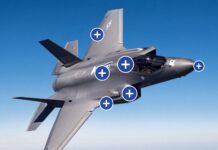
However, any such hype may be preposterous and mere exaggeration, given the generational gap between the two fighters. The F-35, developed as part of the Joint Strike Fighter program, is a fifth-generation fighter, whereas the MiG-35 has been classified as a 4++-generation combat jet after receiving several upgrades over the past ten years or so.
The Rise And Fall Of MiG-35
The MiG-35 is an upgraded multirole variant of the MiG-29M or M2/MiG-29K, and is claimed to be a 4++ gen aircraft after a development journey spanning over a decade.
The development of the MiG-35 traces back to the MiG-29M program, launched in the late 1980s but delayed by the Soviet collapse. The MiG-29M reportedly introduced multirole capabilities, improved avionics, upgraded engines, and digital fly-by-wire in the early 2000s. Later, in 2006, the aircraft received further upgrades, including an AESA radar.
By 2007, Russia had essentially rebranded the advanced MiG-29M derivative as the MiG-35 for marketing purposes, particularly to target India’s MMRCA (Medium Multi-Role Combat Aircraft) contest for 126 aircraft, which was unfolding at the time. The aircraft was officially unveiled at the Aero India Show in Bengaluru in February 2007, signaling how serious Mikoyan was in exporting the jet to India, which already operated the MiG-29s.
Like the Russian Su-57 stealth fighter, which is currently on offer to the Indian Air Force, the MiG-35 failed to impress the IAF. The MiG-35 reportedly competed in the Indian MMRCA tender but was eventually eliminated in 2011 due to issues with its radar and engines, according to publicly available information.
The MiG-35 was marketed by Russia as a low-cost “MiG-29 for modern war” with improved engines, AESA radar, enhanced electronic warfare, and true multirole capability. However, the promised technology did not materialize for a very long time, creating disillusionment even among Russian partners.
The manufacturer marketed the MiG-35 as featuring an AESA radar, but reports suggest the radar was not operationally deployed on the aircraft, which was aggressively marketed for export in the late 2000s. Meanwhile, the RD-33 descendant engines performed poorly in thrust, fuel efficiency, and reliability, and the cockpit displays and sensor fusion lagged decades behind their Western counterparts. Experts soon deciphered that the MiG-35 was merely an improved variant of the MiG-29.
Export customers looking to upgrade their air fleets saw little promise in the aircraft, which was seen as a slightly-advanced MiG-29, and what was supposed to be a “comeback” for Mikoyan only further added to the company’s woes.
The first MiG-35 pre-production aircraft was built at Lukhovitsy and made its maiden flight in 2016, according to publicly available information.
Refusing to give up despite the initial disappointment, MiG unveiled an upgraded variant of the MiG-35 aircraft in 2017. The upgrades included a redesigned fly-by-wire flight control system, enhanced avionics, a better cockpit, and integrated precision-guided targeting capability for air-to-ground weapons.
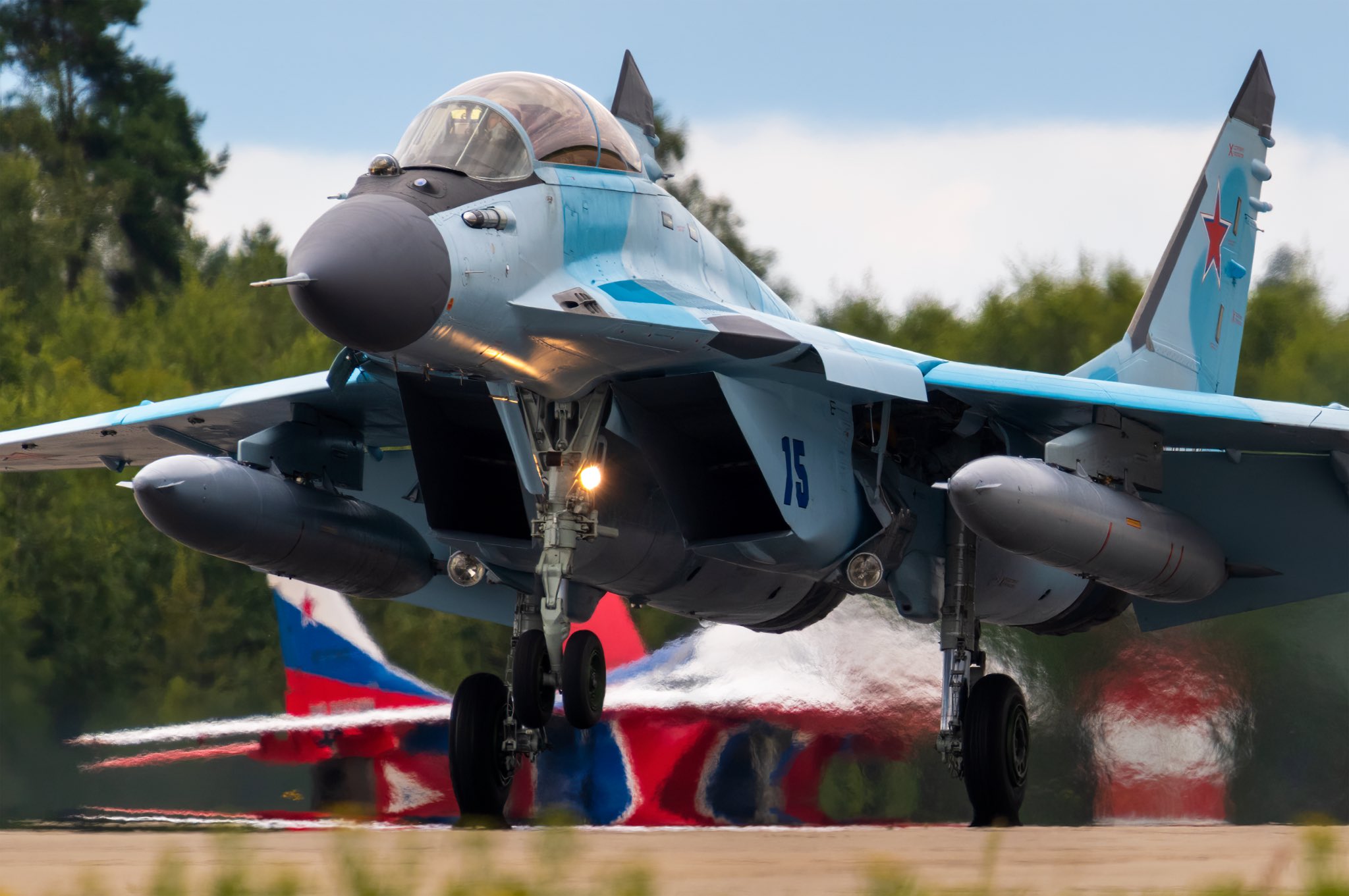
The aircraft featured a Russian non-removable NPK-SPP OLS-K electro-optical targeting and surveillance system pod, mounted directly to the aircraft below the right (starboard) fuselage on the engine nacelle in front of the elevators, was announced. It was capable of detecting ground targets up to 20 kilometers and sea targets up to 40 kilometers.
Unveiling the upgraded aircraft, Yuri Slyusar, the President of the Russian Aircraft Building Corporation, exuded confidence about the aircraft’s prospects. “The fighter aircraft has been specially designed for warfare amid increased intensity conflicts and highly dense air defense. The available high indicators have been achieved thanks to a set of onboard equipment mounted on the plane, along with a new optical location system and a radar signature reduced several times,” he reportedly said at the time.
The upgraded all-weather, day-and-night-capable aircraft reportedly had the capability to engage in air-dominance or air-superiority roles and to strike moving and stationary ground and surface targets. In fact, the MiG-35’s developers have advertised “reduced radar signature, a radar station with an active phased array antenna, a helmet-mounted target designation system, new engines with increased thrust, and the ability to act as a tanker. The aircraft can use all guided and unguided missiles and the latest guided bombs.”
A “tanker” role alludes to conducting the air-to-air refueling for other fighters while undertaking secondary aerial and ground surveillance missions.
This claim essentially positions the MiG-35 as an incredible force multiplier, particularly when it isn’t used as a top front-line fighter. For example, opposing fighters may target vulnerable support aircraft, such as aerial tankers and Airborne Early Warning (AEW) aircraft, to degrade one’s combat capability. However, some of that refueling capacity can be provided by a 4.5-generation aircraft—in this case, the MiG-35—which can also use its Radar Warning Receivers (RWR), Laser Warning Detectors (LWD), or Missile Approach Warning System (MAWS) to detect approaching missiles.
It is also worth mentioning that the MiG-35 has a maximum speed of 2,400 kilometers per hour and a range of 2,000 kilometers, increasing to 3,100 kilometers when equipped with external fuel tanks. Moreover, it can carry guided KAB-500Kr TV-guided bombs, laser-guided bombs, Kh-31A anti-ship missiles, Kh-31P anti-radar missiles, Kh-29TE, and Kh-29L air-to-surface missiles.
Despite this, the aircraft failed to impress buyers. While India eliminated the aircraft from the MMRCA contest, Egypt expressed interest and then chose the MiG-29M instead, and Bangladesh could not proceed with the purchase due to a shortage of funds.
The MiG-35 was first ordered by the Russian Aerospace Forces (VKS) in 2017, with 24 aircraft to be delivered by the end of 2027. However, only a small number of jets (fewer than 10) have been manufactured thus far, which is why it is not one of the top-line fighters regularly deployed by the VKS in combat.
The abysmal rate of production and low volume of orders signaled that Russia did not have confidence in its own fighters, and sent a message to foreign customers that the MiG-35 was a bad investment, particularly since Moscow seemed to support and promote the Su-30SM, Su-34, Su-35, and Su-57, all of which have fared well in combat.
Industrial flaws at Mikoyan, including a declining engineering base, talent loss to Sukhoi, and antiquated facilities, were blamed for the aircraft’s failure.
“Russian aircraft designers and engineers are still poorly paid and have low motivation. The smarter and better ones moved to the West in the late 1990s, and Russia’s global clout is also weakening. Meanwhile, the newer fifth-generation aircraft, the Su-57 and Su-75, are both from the Sukhoi stable. So, clearly, the MiG designs are getting left behind,” stated IAF veteran pilot and a popular aviation analyst, Air Marshal Anil Chopra (retd).
These flaws, combined with some apathy from the VKS, apparently prevented the MiG-35 from being delivered on schedule or with the stated technical capabilities. At the same time, though, experts believe the MiG-35 did not keep pace with the evolving nature of aerial combat and wasn’t stealthy or advanced enough for the 21st century.
Despite that, Moscow has refused to scrap the MiG-35 and has purportedly carried out further upgrades to make it more attractive to prospective buyers. Open-source data and conversations with Russian industry sources indicate that this latest version of the MiG-35 is very different from earlier models bearing this designation.
As Breaking Defense noted earlier, the VKS aircraft have not been outfitted with the Phazotron Zhuk-A AESA radar to reduce the cost of the aircraft’s entry into service, a move believed to be a dumb choice. In contrast to other VKS-operated fighter aircraft, the MiG-35 is not a particularly effective weapons platform without this radar, the publication emphasized.
The MiG-35’s ability to operate from far shorter runways and, if necessary, unimproved surfaces is another advantage. The louvered “blow-in” air vents used in earlier Russian aircraft have reportedly been removed from the MiG-35’s revised center wingbox. Additionally, the original MiG-29 system’s FOD-prevention doors, which shut off the primary air intake to enable operations in harsh conditions, have been removed.
According to reports, the wing of the MiG-35 has been redesigned, increasing its area from 408 square feet for the MIG-29 to 452 square feet. A larger wing area allows for improved maneuverability, a lower wing loading, and the potential to carry additional weaponry and/or external storage.
In November 2023, the General Designer of the United Aircraft Corporation (UAC), Sergei Korotkov, stated that the MiG-35 was deployed in the war in Ukraine. Similarly, some reports last year claimed that the MiG-35 was being used against Ukraine for air superiority, interception, and possibly strike missions, particularly since its modern avionics enable data sharing with Su-30SM2 and Su-35S aircraft.
However, these reports have been written off by critics as an attempt by Moscow to sustain export interest in the fighter.
In 2024, Yuri Slyusar of United Aircraft-Building Corporation (OAK) said that the most recent iteration of the MiG-35, now referred to as a “4+++ generation fighter,” will begin mass production in 2025. However, there is no confirmed evidence that mass production has started or scaled significantly.
For now, the MiG-35 remains in the pipeline, with the prospects of its mass production regularly raised amid concerns that the VKS has seen considerable attrition. However, the murky reputation of the MiG-35 precedes its airframe.
- Contact the author at sakshi.tiwari13 (at) outlook.com
- Follow EurAsian Times on Google News