After the May 2025 India–Pakistan aerial clash —where shots were fired at around 180–200 kilometers—France is reportedly rushing a new missile, COMET, meant to improve on the Meteor and boost the Rafale fighter jets by 2030.
Under Operation Sindoor, the Indian Air Force (IAF) launched precision standoff strikes against terror-linked targets inside Pakistan using advanced fighters and munitions without getting close to Pakistani airspace.
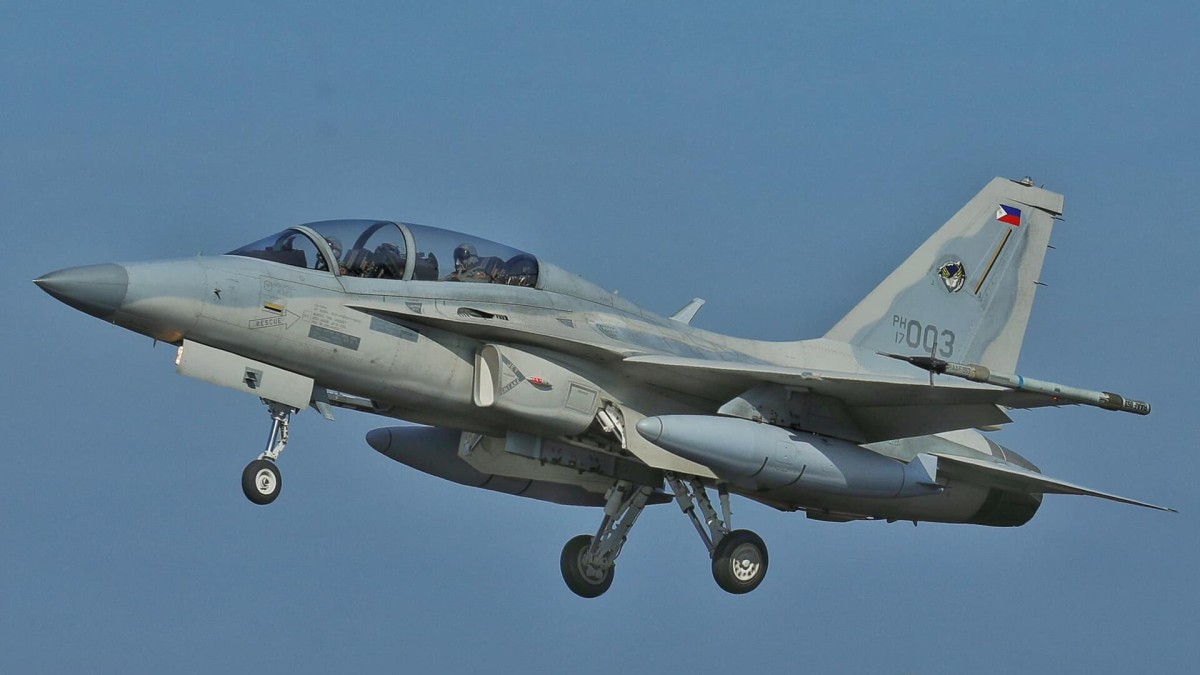
In response, the Pakistan Air Force (PAF) deployed its JF-17 and J-10CE fighters, equipped with long-range PL-15E air-to-air missiles acquired from China as part of its counter-operation named “Operation Bunyan al-Marsus.”
It claimed to have downed multiple Indian jets, including Rafale(s), using long-range PL-15 missiles. India also claimed to have destroyed scores of Pakistani warplanes, with the IAF suggesting up to 14. Neither side has officially confirmed the claims.
The aerial engagement between the two sides, conducted at ranges reported around 180–200 kilometers or more, underscored the effectiveness of long-range air-to-air missiles.
The Rafale jets currently field the Meteor, widely regarded as one of the most capable beyond-visual-range (BVR) missiles in the world. Powered by a ramjet that sustains high speed and energy throughout its flight, the Meteor has a range of about 200 kilometers and a large no-escape zone. It is complemented by the MICA with an approximately 80-kilometer range.
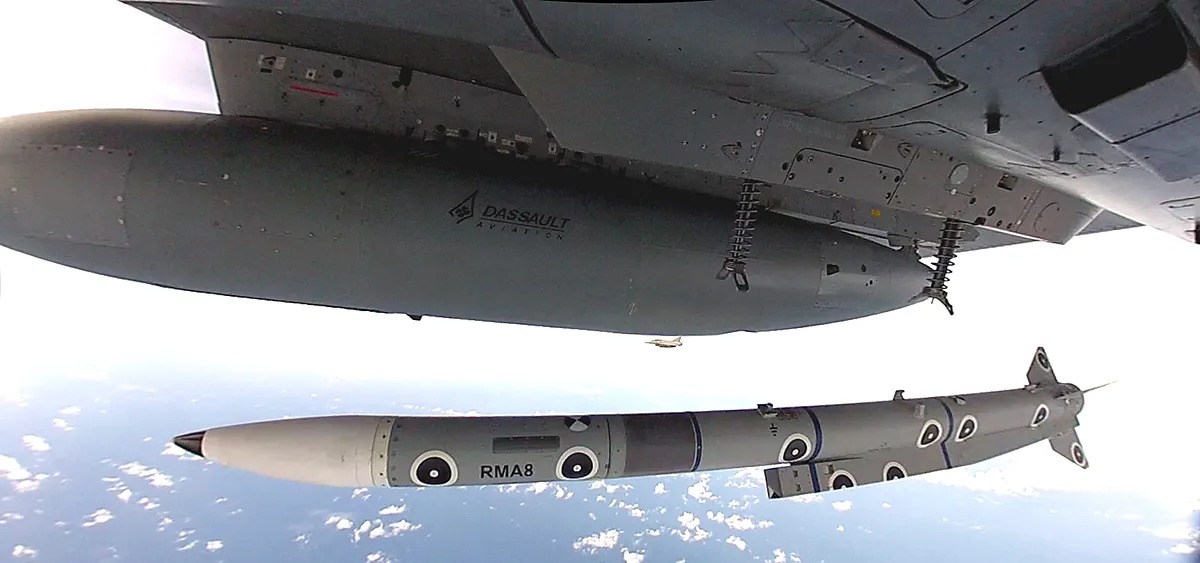
While the Meteor serves as a counter to the Chinese PL-15, it would be easily outranged by the Chinese PL-17 missile, which threatens not only adversary fighter jets but also force multipliers such as tankers and early-warning aircraft.
France recently launched a rapid-development program for a new very-long-range air-to-air missile known as COMET (or COMETE / “nouveau missile air-air à très longue portée”), intended as a high-end complement or interim successor to the existing Meteor BVRAAM.
Patrick Pailloux, the head of France’s Directorate General for Armament, revealed at a parliamentary hearing in April this year that the country aims to develop an air-to-air missile called Comet, with a longer range than the existing Meteor, by 2030.
“It’s a new way of working, to develop a new air-to-air missile by 2030,” Pailloux said at the hearing, acknowledging that the target date is “very ambitious.”
The design brief is deliberately minimal and focused, with the top boss emphasizing that the missile must “work and go far.” Notably, the Comet is reportedly described as a “successeur du missile METEOR” in planning documents, but DGA statements seem to suggest that it is a fast-track “portée rallongée” (extended-range) missile to be fielded before a more comprehensive future Meteor replacement.
Since France has set a 2030 deadline for the Comet missile, the weapon is likely intended as a necessary rapid-response effort to close a capability gap in very-long-range air-to-air combat.
At this stage, it is best understood as an interim or complementary very-long-range capability rather than a full replacement of the Meteor missile.
Public details currently remain limited because the program is still in its early stages. However, the missile is expected to have a range of up to 300 kilometers, exceeding that of Meteor.
It is likely meant to outperform current Chinese and Russian long-range air-to-air missiles of similar class, and is very likely optimized for high-value targets and long-range air superiority.
As of now, the Comet is expected to be equipped on the Rafale F4 variant, but incremental improvements may continue toward a more capable Rafale F5 later in the 2030s.
“As the chief of the French procurement agency said, the requirements are that “the missile works and goes far” and should be operational in 2030. So we probably won’t have a very sophisticated missile like the METEOR with its statoreactor, but more probably a “low-cost” missile with a dual-pulse solid rocket booster. The main question is for fire conduct. Rafale’s radar is quite small and probably cannot detect targets with small RCS very far away, so it will most probably need designation by other means, like through the future Global Eye AEW&C aircraft,” Etienne Marcuz, Associate Fellow with FRS, a French think tank on strategic and defense issues, said.
In addition to the Comet, France also signed a memorandum of understanding (MoU) with the UK to begin a 12-month cooperative study to evaluate potential next-generation missile designs and future air-combat threats. The study aims to identify the technologies needed for a replacement weapon and develop a development schedule.
A high-ranking veteran IAF official told the EurAsian Times on condition of anonymity: “New Fighter Jets (India plans to acquire 114 Rafales) will come with new armaments.”
BVRAAM is the Future
As modern combat shifts toward beyond-visual-range (BVR) engagements, countries are increasingly prioritizing long-range air-to-air missiles. In this new combat reality, the side that detects and fires first gains a decisive advantage.
Now, fighter jets can launch missiles at targets hundreds of kilometers away, enabled by advances in radar, sensor fusion, and datalinks, as well as off-board sensors on airborne early warning aircraft, other fighters, or even space-based systems for mid-course updates.
A primary driver for the shift to long-range missiles is the ability to threaten high-value assets (HVA) that serve as force multipliers in combat.
Since these HVAs, such as tankers, airborne early warning and control (AWACS) platforms, electronic warfare aircraft, and command-and-control planes, operate away from the front line and are relatively less maneuverable, long-range missiles optimized against these targets can disrupt an opponent’s ability to sustain operations by forcing tankers and radar aircraft to stay even farther away or risk destruction.
Without them, fighters lose endurance, situational awareness, and coordination, creating cascading effects across the battlespace.
These missiles enhance survivability and operational flexibility. Launching from greater distances keeps friendly aircraft outside the no-escape zones of enemy air defenses and opposing missiles, while larger “no-escape zones” of their own make it harder for targets to outmaneuver them.
The UK unveiled the Future Air Superiority Effectors (FASE) program—a next-generation air-to-air weapons initiative intended to succeed the Meteor. FASE aims to deliver a family of advanced air superiority effectors capable of engaging a wide range of targets. These include: High-end threats such as advanced fighters and electronic-warfare-protected targets, and Lower-end but high-volume threats.
Earlier this month, the US Navy unveiled the AIM-424 “Malice” Long-Range Air-to-Air Missile (LRAAM) with a range of about 463 kilometers. LRAAM sustains the Department’s first-look, first-shot, first-kill advantage by providing the aviators with greater reach, greater survivability, and greater tactical flexibility in the air-to-air fight,” it stated.

This is in addition to the AIM-174B Gunslinger, which has a range of about 240 to 280 kilometers, and the next-generation AIM-260, which would be able to neutralize targets at about 193 kilometers.
The enhanced focus on LRAAMs is meant to counter China, as the EurAsian Times explained in detail earlier. China has developed the PL-15, with a range of 200 kilometers, and the PL-17, with a range of 400 kilometers.
Chinese doctrine emphasizes “kill the eyes and ears first”—targeting enablers such as tankers and early-warning aircraft at long range to disrupt adversary operations and affirming anti-access/area-denial (A2/AD) strategies.
Russia has developed the R-37M, which has a range of 300-400 kilometers and reportedly travels at hypersonic speed. It is an advanced variant of the R-37, designed primarily to engage high-value airborne targets, including early-warning aircraft, tankers, reconnaissance platforms, bombers, and other C4ISTAR assets, at standoff ranges.
Meanwhile, South Korea is developing an indigenous long-range air-to-air missile, primarily for the KF-21 Boramae fighter, to match or surpass the Meteor.
India’s Defense Research and Development Organization (DRDO), on the other hand, is already working on its longest-range missile to date, the Astra Mk-3 named ‘Gandiva.’
According to reports, this missile can strike enemy aerial targets at ranges of 340 kilometers at an altitude of 20 kilometers and 190 kilometers at an altitude of 8 kilometers.
This is an incomplete list of active LRAAM programs. The common thread is clear: in an era of contested airspace and layered defenses, the ability to engage and destroy targets, especially critical enablers, at ever greater distances is reshaping air combat doctrine and procurement priorities worldwide.
- Contact the author at sakshi.tiwari13 (at) outlook.com
- Follow EurAsian Times on Google News