Pakistan’s conflict with Afghanistan is forcing the country to confront its own history and revisit its icons.
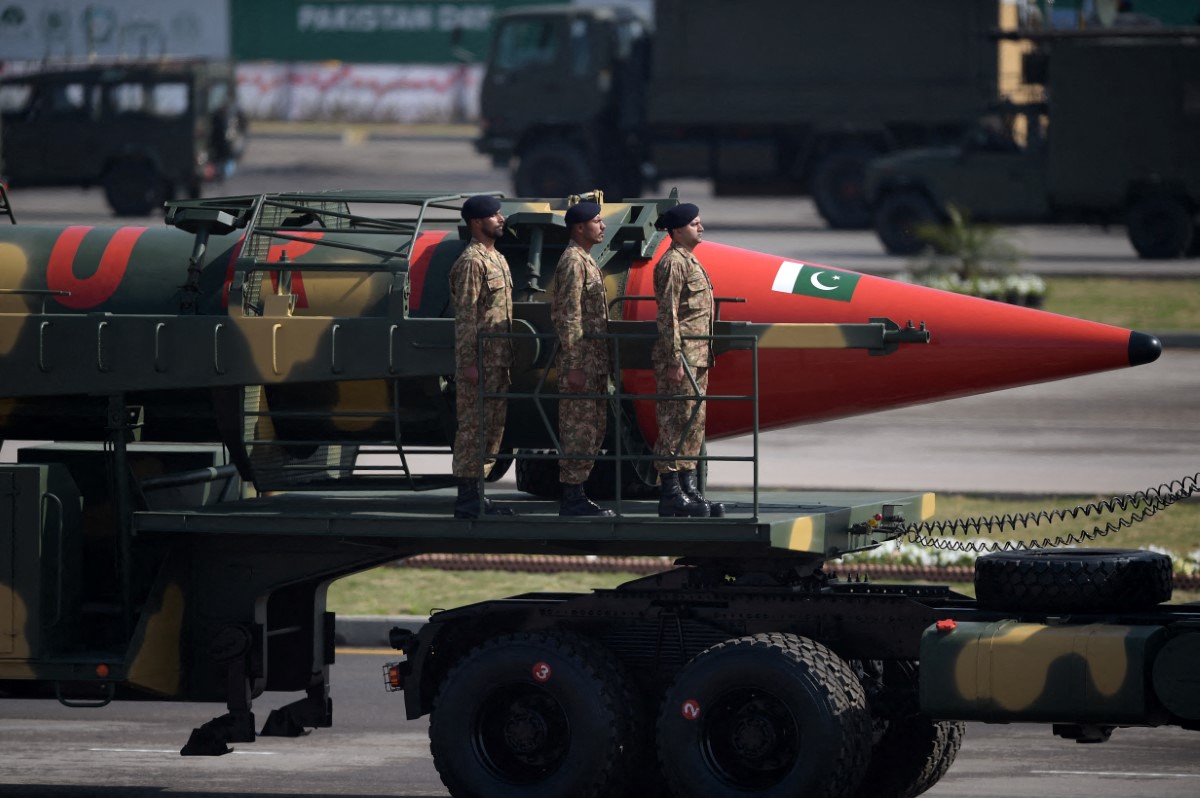
For decades, Pakistan has idolized Afghan and Central Asian Turkic nationals, kings, sultans, warlords, and invaders as its national heroes. It named its most potent missiles Ghaznavi, Ghori, Babur, Abdali, etc after them.
Pakistan has long glorified these warloards who rose to power by launching devastating invasions into the Indian subcontinent, including modern-day Pakistan.
For instance, Ghaznavi, Ghori, and Abdali were all Afghan kings and Sultans, who repeatedly invaded Punjab, which now forms the core of Pakistan. Similarly, Babur, while of Turkic origins, was based in Kabul for years before he invaded Punjab and Delhi and laid the foundation for the Mughal Empire in India.
Amid Pakistan-Afghanistan tensions, the narrative has been flipped on its head. These once-celebrated figures are now being openly criticized in Pakistani discourse and increasingly described as invaders and looters.
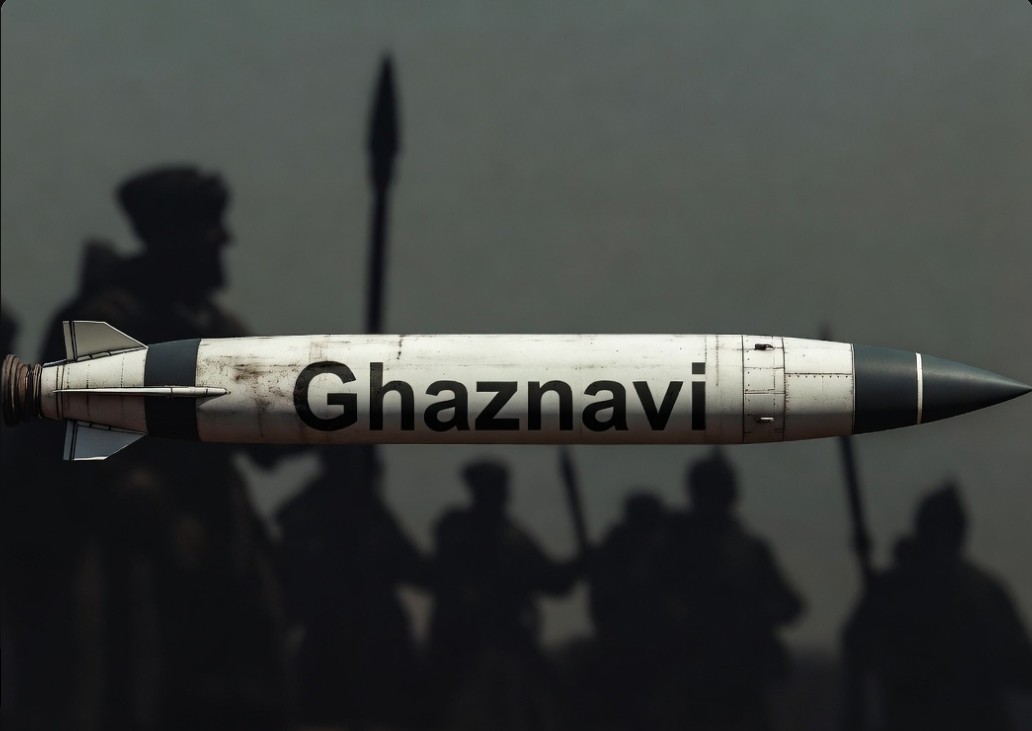
In a recent interview, Pakistani defense minister Khwaza Asif lamented that Islamabad chose Afghan heroes to name its missiles and that these names should be changed, as most of these historical figures were invaders and looters who only brought destruction and devastation to the land of Pakistan.
The video clip posted on Facebook on June 28 has gone viral.
“I do not consider Mahmud Ghaznavi a hero. He was a robber, thief, and bandit. He used to come from Afghanistan, loot India, and go back. We made him a hero, but I reject him,” Asif said.
He also said that Ghaznavi killed thousands of Ismailis based in Multan during his invasion of the Somnath temple in India.
He also agreed that it is time to change the names of missiles such as Ghaznavi and Abdali.
However, this is far more than a simple change of names. Renaming these missiles would require Pakistan to revisit and rewrite significant parts of its history, recasting some of its long-celebrated icons as invaders and plunderers, while searching for new local heroes.
What’s In The Name?
Pakistan, as an entity, came into existence in August 1947, following the partition of British India.
The land it occupies, however, has a continuous history stretching back thousands of years; yet in its desperate attempt to construct a national identity sharply distinct from India’s civilizational continuum, Pakistan not only rejected much of its pre-Islamic heritage but also chose to define its nationality almost exclusively through the prism of Islam and the Two-Nation Theory.
However, forging a new national identity also requires compelling historical icons, figures that citizens can relate to, take genuine pride in, and aspire to emulate.
Ironically, in this process, most of the historical figures Pakistan shortlisted were not of Pakistani origin, but were ethnic Afghans, Arabs, or Turks; furthermore, most of these figures were warlords, kings, or sultans, who actually invaded the land now occupied by Pakistan.
Pakistan naming its missile after Afghan kings can sound surprising to many, given the current hostile relations between Afghanistan and Pakistan.
In modern-day parlance, this would be akin to Ukraine naming its missile after the Russian empress Catherine the Great, who annexed Crimea and other parts of Western Ukraine and unified them with the Russian Empire in the late 18th century.
However, those who have followed Pakistan and the evolution of its military and security doctrine know that nothing here is surprising. Instead, this fits in with Pakistan naming most of its missiles after foreign raiders from the medieval period, most of them Turks and a few Afghans.
Several Pakistani missiles have been named after Muslim rulers who invaded India at various points in history.
Among them, Ghaznavi (Haft-III) is named after Mahmud of Ghaznvi, an ethnic Turk who ruled from Afghanistan and, according to legend, invaded India 17 times at the beginning of the 11th century.
Among his most famous or infamous exploits (depending on which side of the border you live on) is his 1025 AD invasion and destruction of the revered and famed Somnath Temple on the Gujarat coast.
Another Pakistani missile is named Ghauri-I and Ghauri-II, named after Mahmud of Ghor, another Afghan ruler who invaded India (and modern-day Pakistan) in the late 12th century.
After losing the first battle of Tarain (1191 AD) against the ruler of Ajmer, Prithvi Raj Chauhan, Ghori emerged victorious in the second battle the following year and laid the foundation of the Delhi Sultanate (1206-1526 AD) or Muslim rule in Northern India.
Similarly, Babur (Hatf-VII) is named after the founder of the Mughal Empire in India. Babur, an ethnic Turk, belonged to the Fargana valley in present-day Uzbekistan and first invaded Afghanistan and then India.
One of the Pakistani Navy frigates is named Alamgir, after Babur’s descendant Aurangzeb, particularly known for his cruelty and discriminatory practices against Hindus, such as imposing Jaziya, a religious tax applicable to non-Muslims, and destroying places of worship of Hindus like the Kashi Vishwanath Temple and the Krishna Janmabhoomi Temple in Mathura.
Another port in Sindh is named after Muhammad bin Qasim, an Arab commander who conquered the region in the 8th century and laid the foundations of Muslim rule in the Indian subcontinent.
The common theme among these names is that none of the weapon systems are named after a local hero.
Naming Pakistani weapon systems after these foreign invaders serves a twofold purpose.
First, they give the strategic message that all Pakistani weapon systems are targeted towards India, thus naming them after kings and Sultans who invaded India.
Second, these names seek to justify the ‘two-nation theory’ that led to the creation of Pakistan in 1947, thus consciously picking those rulers from history who are known for their violence towards Hindus or for destroying the places of worship of Hindus.
A second category of Pakistani weapon systems is named after heroes from Islamic history, though not particularly related to Islam’s history in South Asia. Thus, the missile series named Hatf, an Arabic term meaning ‘vengeance’ and an appellation for Muhammad’s lance.
Another Pakistani frigate, Zulfiquar, is named after Muhammad’s saber. Two Pakistani tank codenames, Al-Khalid and Al-Zarrar, pay tribute to famous Arabic commanders under Muhammad.
This serves to cement the identity-making process in Pakistan. It is worth mentioning that the very first time the term ‘Pakistan’ was used was in 1933, when a law student at Cambridge University used it to describe the “Muslim homelands” of western and northern India.
In the four-page booklet “Now or Never,” Chaudhary Rahmat Ali mentioned Pakistan for the first time. Even though Pakistan was founded explicitly in the name of Islam, the country had a vibrant and diverse history, and various religions, including Hinduism, Buddhism, and Sikhism, flourished in this land at different points.
However, by naming weapon systems exclusively from Islamic history, the Pakistani establishment is acknowledging its Islamic roots while discarding its Hindu, Buddhist, and Sikh history. It sends a crucial message that the modern Pakistani identity has no space for its Hindu, Buddhist, and Sikh past.
Another common theme is naming weapons in terms taken from Persian and Arabic languages, rather than from Urdu, Punjabi, Balochi, Pashto, or Sindhi, the local languages spoken in Pakistan.
Thus, one of Pakistan’s missiles is named Nasr, meaning ‘victory’ in Arabic. Another one is named Ababeel, ‘sparrow’ in Arabic, and Shaheen, ‘falcon’ in Persian. However, one would be hard-pressed to remember any Pakistani weapon system named after a term in the Punjabi language, spoken by nearly 37 percent of Pakistani citizens.
This is not just a semantic usage but a conscious choice on the part of the Pakistani establishment. Apparently, in the Pakistani psyche, even the use of local languages for naming weapon systems is risky, as local languages are dangerously linked to the pre-Islamic identity of Pakistani citizens.
India, on the other hand, has not overtly named its weapon systems after those Hindu kings who fought Muslim invaders.
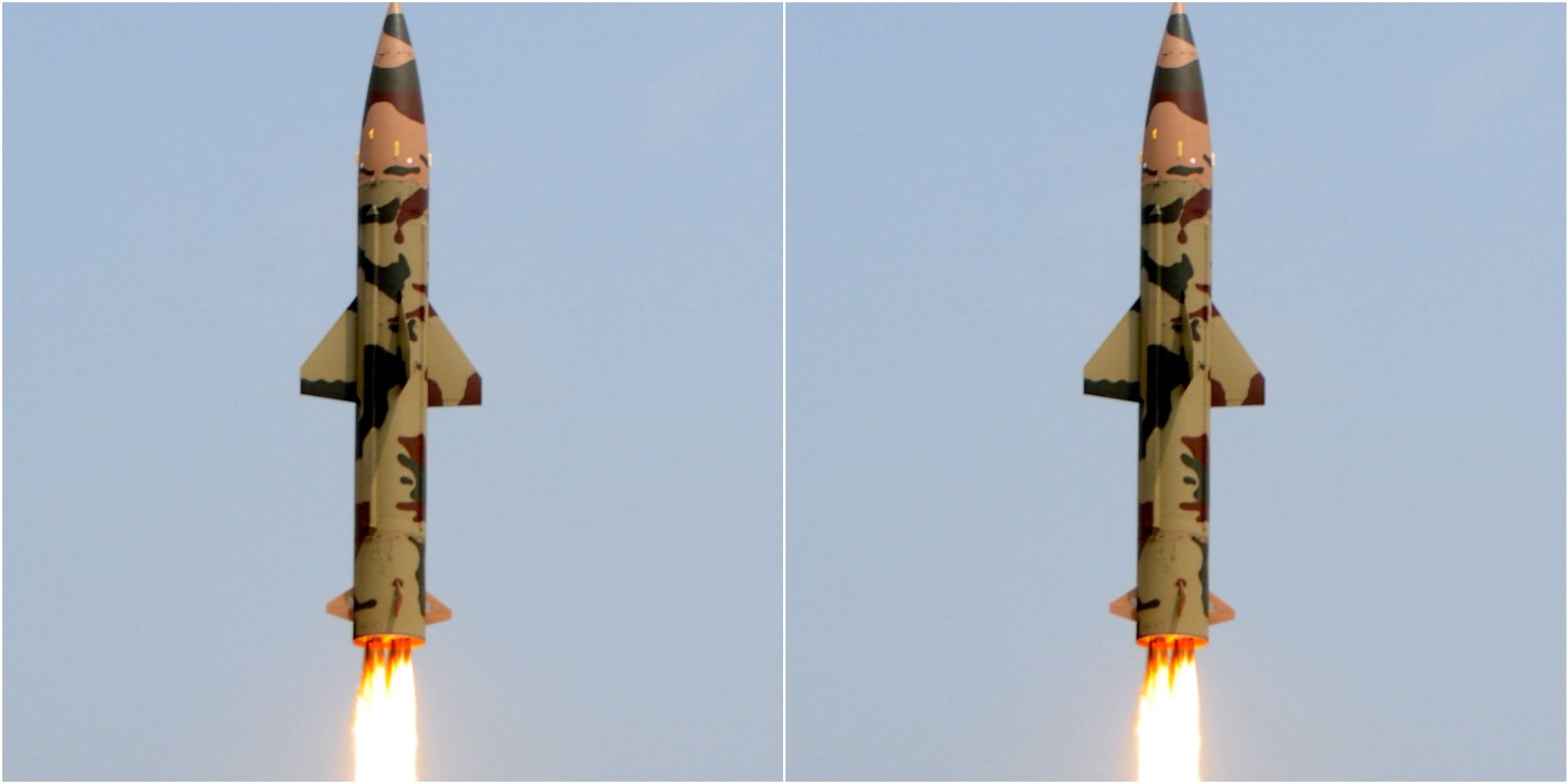
Instead, many Indian weapon names are taken from Sanskrit, India’s ancient language. Thus, Prithvi, meaning ‘Earth,’ is the name of a surface-to-surface missile. Akash, meaning ‘Sky,’ is the name of a surface-to-air missile. Arihant, meaning slayer of enemies, is the name of an Indian submarine.
Prachand, meaning ‘fierce,’ is the name of a light combat helicopter (LCH). Dhruv, meaning ‘unshakeable,’ is the name of an advanced light helicopter (ALH). Tejas, meaning ‘brightness,’ is the name of India’s latest Light Combat Aircraft (LCA).
Some Indian weapon systems are named after India’s epic literature. Thus, India’s tanks are named Arjuna and Bhishma, popular characters from the epic Mahabharata.
Another set of weapon systems is named after Vedic gods, such as Agni (intercontinental-range ballistic missiles), Varuna (the Indian Navy’s first square-rig sail training vessel), and Rudra (an armed version of ALH Dhruv).
India has also named weapons after Hindu kings, but not necessarily those who fought Muslim invaders. Thus, INS Vikramaditya, the Indian Navy’s first aircraft carrier, is named after a Hindu king who fought and defeated invaders from the West, but the Shakas, not Muslims.
Thus, India, as a secular country, has taken care not to name its weapons systems with overtly anti-Muslim symbolism. Also, notwithstanding Pakistan’s attempts to appropriate the Persian language with Islamic identity, India has also named its weapon systems in the Persian language. Thus, SEPECAT Jaguar, a British-French supersonic jet, was christened Shamsher, ‘Sword of Justice’ in Persian.
Indian Navy ships are also named Bahadur and Buland, Persian terms for ‘brave’ and ‘exalted.’
Thus, the nomenclature of weapon systems in India and Pakistan reveals much about the founding principles of these two states and the processes of identity formation in these countries after their partition in 1947.
Pakistan has not seen any contradiction in the names of its missiles to date. However, deteriorating relations with Afghanistan and repeated border clashes have forced the country to critically examine these names and revisit its history.
As the saying goes, the past has a way of catching up with the present.
It seems that the war with Afghanistan has brought that moment for Pakistan.
- Sumit Ahlawat has over a decade of experience in news media. He has worked with Press Trust of India, Times Now, Zee News, Economic Times, and Microsoft News. He holds a Master’s Degree in International Media and Modern History from the University of Sheffield, UK.
- VIEWS PERSONAL OF THE AUTHOR.
- He can be reached at ahlawat.sumit85 (at) gmail.com