OPED By PM Heblikar
Indian Prime Minister Modi is embarking on a renewed strategic journey (July 08, 2026) that will take him to important destinations in the Indo-Pacific region and towards the Pacific Island Countries.
Seychelles was the first of the several capitals he would visit in the coming weeks. It is therefore not only an opportunity to look beyond the bilateral and regional relationship but also to create new synergies.
India’s Indo-Pacific vision stands at a critical juncture. Over the past decade, the policy has evolved from a maritime security pact into an expansive framework encompassing strategic outreach, trade, technology, and supply chain resilience. Yet, despite the rhetoric of the “Act East Policy,” a persistent gap remains between strategic talk and economic execution.
To bridge this gap, India must adopt a model of “Technopolis Diplomacy”—a strategy that leverages sub-national innovation hubs as engines of foreign policy. By creating a formalized, multi-nodal corridor connecting Bengaluru, Penang, and Batam, India can move from being a regional security actor to a core economic integrator.
In an era where cities often generate greater economic influence than national capitals, India can accelerate its integration with ASEAN by building partnerships among complementary centers of technology, manufacturing, and logistics.
The Emerging Triangular Corridor: Bengaluru–Penang–Batam
The strength of this framework lies in connecting distinct, complementary nodes:
Bengaluru: As a globally connected Technopolis, Bengaluru provides the R&D, venture capital, and deep-tech expertise—spanning AI to aerospace—that drives innovation. Bengaluru is the foundation of this framework. To reiterate, it is no longer just a “back-office” IT capital; it is a globally connected Technopolis—a dense ecosystem of R&D, venture capital, and deep-tech innovation spanning AI to aerospace.
The world has recognized this: the QUAD nations (the US, Japan, and Australia) have established a major presence in Bengaluru through consulates and trade offices. In contrast, ASEAN countries lack an equivalent sub-national presence, creating a structural asymmetry. Closing this gap is essential for real-time business facilitation and building sustained institutional trust.
Yet ASEAN’s institutional footprint in Bengaluru remains comparatively limited. This represents a missed opportunity. If India seeks deeper integration with Southeast Asia’s economic architecture, Bengaluru must become a central platform for ASEAN engagement.
Penang: Known as the “Silicon Valley of the East,” Penang hosts a sophisticated cluster of multinational corporations focused on high-value semiconductor assembly, testing, and packaging (ATP).
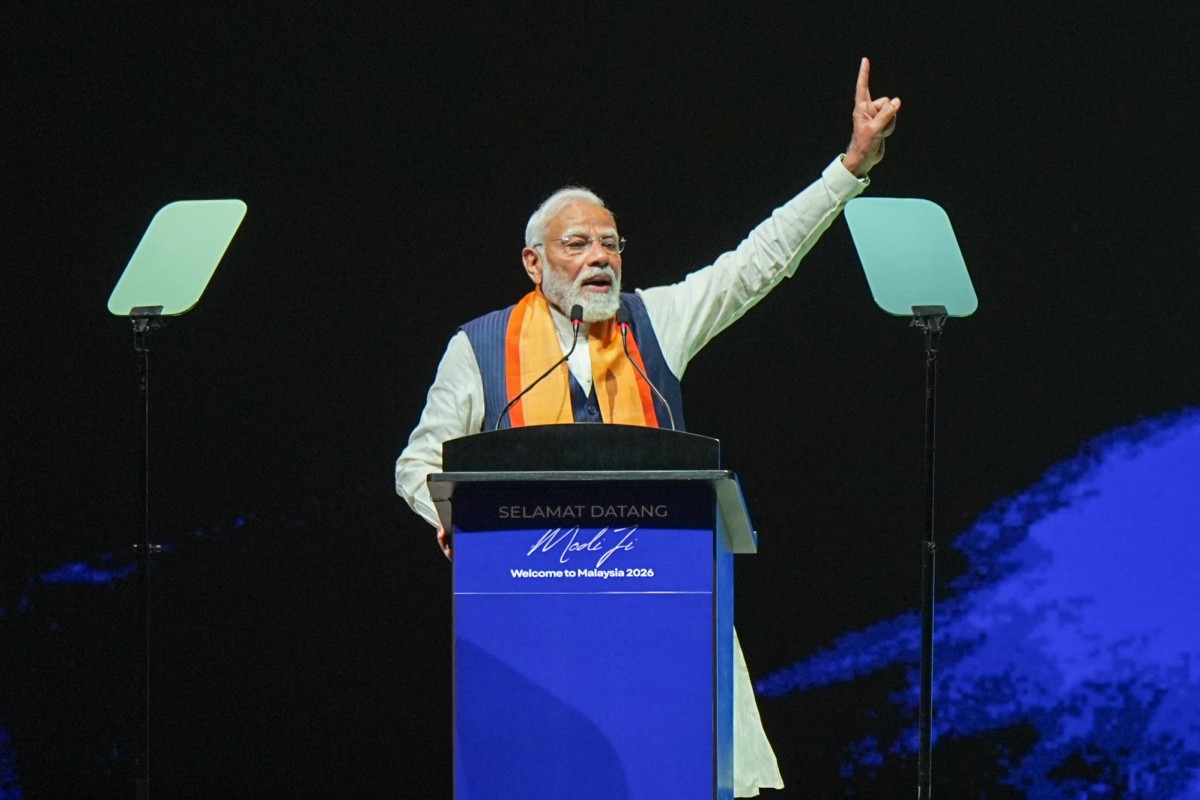
The Strategic Endorsement: Modi and Anwar
The strategic weight of this partnership was underscored by Prime Minister Narendra Modi during his official visit to Malaysia in February 2026. PM Modi declared that the “21st century is the century of India and ASEAN,” characterizing the 11-nation grouping as a “cornerstone of India’s Act East Policy”.
The joint statement released during the visit reaffirmed the Comprehensive Strategic Partnership (CSP) established in August 2024, with both leaders emphasizing that their partnership is one of “mutual value and strategic synergy”. Prime Minister Anwar Ibrahim reinforced this by noting that Malaysia shares a “special relation” with India, driven by deep historical links and a vibrant ethnic Indian community that serves as a “living bridge” between the two nations.
India also enjoys an advantage that many competitors cannot replicate. Malaysia’s vibrant ethnic Indian community serves as a living bridge between the two countries, creating reservoirs of trust, familiarity and social capital. Such intangible assets often prove as valuable as formal agreements in sustaining long-term economic partnerships.
The momentum for a Bengaluru–Penang corridor is already building through tangible commercial milestones:
- Trade Missions: The visit of a high-level Indian trade delegation to Penang in September 2025 signaled a renewed interest in sub-national industrial cooperation.
- Tourism and People-to-People Ties: The High Commission of India in Kuala Lumpur recently hosted a tourism fair, reinforcing the ties that underpin economic statecraft.
- The “Game Changer”: The establishment of direct flight connectivity between Bengaluru and Penang is the most critical catalyst. As PM Modi and PM Anwar agreed, connectivity is a “key determinant and enabler for enhanced economic cooperation”. A direct flight shrinks the distance between design and manufacturing, allowing the frictionless movement of engineers and venture capitalists who fuel both ecosystems.
Batam: Strategically positioned along the Strait of Malacca, Batam’s status as a Free Trade and Free Port Area makes it an ideal logistical and manufacturing hub for Indian firms looking to enter the Indonesian market.
Why Batam Fits the Framework
- Strategic Geography: Located directly on the international shipping routes of the Strait of Malacca, Batam serves as a vital logistics and manufacturing hub. As India looks to strengthen its “East Coast” as a trade and shipping hub, Batam serves as the natural maritime “counterpart” and gateway for Indian firms entering the Indonesian market.
- Special Economic Zone (SEZ) Advantages: Batam’s status as a Free Trade and Free Port Area offers investors significant incentives, including streamlined licensing and competitive operating costs. This mirrors the kind of “frictionless” environment your Technopolis model seeks to facilitate between Bengaluru and Penang.
- Synergy with “Making Indonesia 4.0”: Indonesia is actively pursuing its “Making Indonesia 4.0” strategy, which focuses on digital infrastructure and high-tech industrial growth. By leveraging India’s Digital Public Infrastructure (DPI) expertise, a corridor connecting India’s tech hubs (such as Bengaluru) to Batam’s manufacturing base creates a clear path for hardware-software integration, as in the Penang proposal.
Contextualizing for the 2026 Visit
The upcoming visit of Prime Minister Modi to Indonesia is expected to be a significant milestone, with a focus on accelerating economic cooperation, trade, and investment. The discussions are anticipated to cover key sectors such as:
- Pharmaceuticals and Medical Training: Expanding on existing health cooperation.
- Tourism and Digital Technology: Building on the existing Comprehensive Strategic Partnership.
- Trade and Investment: Following President Prabowo Subianto’s call to simplify bureaucracy and prioritize bilateral economic interests, Batam stands out as a prime location to showcase these “pro-investment” reforms
The inclusion of Batam aligns naturally with the growing strategic convergence between India and Indonesia. In recent years, leaders of both countries have emphasized stronger cooperation in maritime connectivity, supply chains, digital technologies and economic partnerships. While Sabang remains important from a maritime security perspective, Batam offers a complementary economic gateway closer to Southeast Asia’s manufacturing and logistics heartland.
Batam’s role is not to compete with Penang but to complement it. If Bengaluru represents the Brain of innovation and Penang the Muscle of advanced manufacturing, Batam serves as the Gateway.
The island’s strengths in industrial production, maritime services, logistics and export-oriented manufacturing make it an ideal node in a wider Indo-Pacific economic architecture. Its proximity to Singapore provides access to global finance and logistics networks, while its industrial zones continue to attract manufacturing investments from across Asia.
Conclusion: From Brain to Backbone
Viewed together, Bengaluru, Penang, and Batam form a powerful triangle. One generates ideas and innovation. Another transforms those ideas into products. The third connects products to regional and global markets. This integrated ecosystem reflects the realities of twenty-first century economic competition, where value creation is distributed across multiple geographies rather than concentrated within national borders.
For India, this framework aligns naturally with the growing strategic importance of its eastern seaboard. Major investments in ports, industrial corridors, logistics infrastructure and coastal economic zones are steadily transforming India’s East Coast into the primary gateway for engagement with Southeast Asia. Modernization efforts at Kolkata, Paradip, Visakhapatnam and Chennai are strengthening maritime connectivity across the Bay of Bengal.
The Andaman and Nicobar Islands further reinforce this strategic equation. Positioned close to the western approaches of the Strait of Malacca, they provide India with a unique vantage point linking the Indian Ocean with Southeast Asia. As economic activity increasingly shifts towards the Indo-Pacific, integrating India’s eastern coast with Southeast Asian industrial hubs becomes a strategic imperative.
The shift to Technopolis Diplomacy is a necessary evolution of India’s global strategy. It complements our maritime security efforts with tangible, high-tech industrial engagement. By embedding itself in regional supply chains and opening its East Coast as a gateway for ASEAN commerce, India enhances its economic influence while promoting ASEAN centrality.
- PM Heblikar retired as a Special Secretary in the Government of India. An expert on insurgency and counter-insurgency developments in India’s northeast, he had held several sensitive posts in the central government dealing with external security issues.
- This is an Opinion Article. Views Personal of the Author
- Mail EurAsian Times at editor (at) eurasiantimes.com